The ASUS ExpertBook A7 starts at $1,299.99 in the US, and the entry model gets the features that make this business laptop interesting: a 14-inch 3K OLED screen, a CNC-milled aluminum body, a glass haptic touchpad and a three-year manufacturer’s warranty. You don’t have to buy the top configuration to get that combination.
The value is in the parts you use every day and the support that comes with them. The $1,299.99 Core 5 model has the same listed screen, chassis, 16GB of memory, 512GB SSD and 65Wh battery as the $1,599.99 Core 7/Windows Pro version. Moving up the range changes the processor and Windows edition, rather than unlocking the premium display or touchpad.
The October US range runs from $1,299.99 to $1,599.99. All six announced configurations include 16GB of onboard LPDDR5X memory, a 512GB PCIe 4.0 SSD and a 14-inch 2880 × 1800, 120Hz OLED display. Core 7 adds $100; Windows 11 Pro adds $200. The entry model already includes the CNC aluminum construction, haptic touchpad and three-year manufacturer warranty.
Preorder the Core 5 / Windows 11 Home A7 for $1,299.99 at ASUS
What the extra $100 or $200 buys
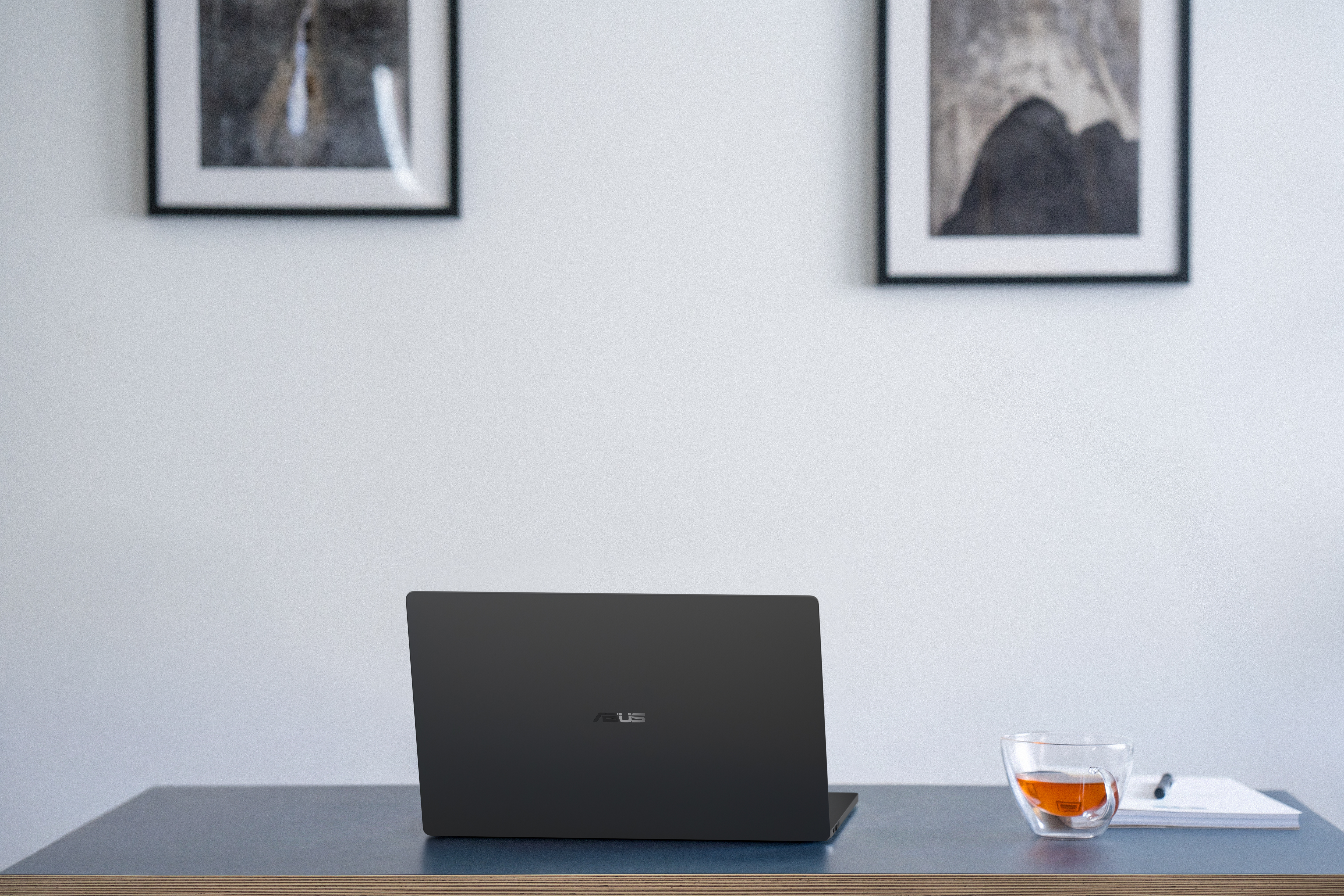
The $1,299.99 A7 pairs an Intel Core 5 320 with Windows 11 Home. Moving to the Core 7 350 brings the price to $1,399.99. Both Home configurations come in Eclipse Black or Lunar Silver, with no announced price premium for silver.
Windows 11 Pro starts at $1,499.99 with the Core 5 and reaches $1,599.99 with the Core 7. Both Pro models are listed in Eclipse Black. That’s a $200 premium over the corresponding Home configuration, with the same RAM and SSD capacity. Choosing both upgrades adds $300 to the base price.
For someone choosing a work laptop, establish whether your employer needs Windows Pro, then decide whether to spend the extra $100 on the processor. Both chips are listed with six cores and six threads; their maximum clock speeds are 4.6GHz for the Core 5 and 4.8GHz for the Core 7. Those specifications aren’t a measured performance comparison.
The base model has 16GB of onboard RAM, and ASUS lists 16GB as the maximum.
The OLED screen is included at the starting price
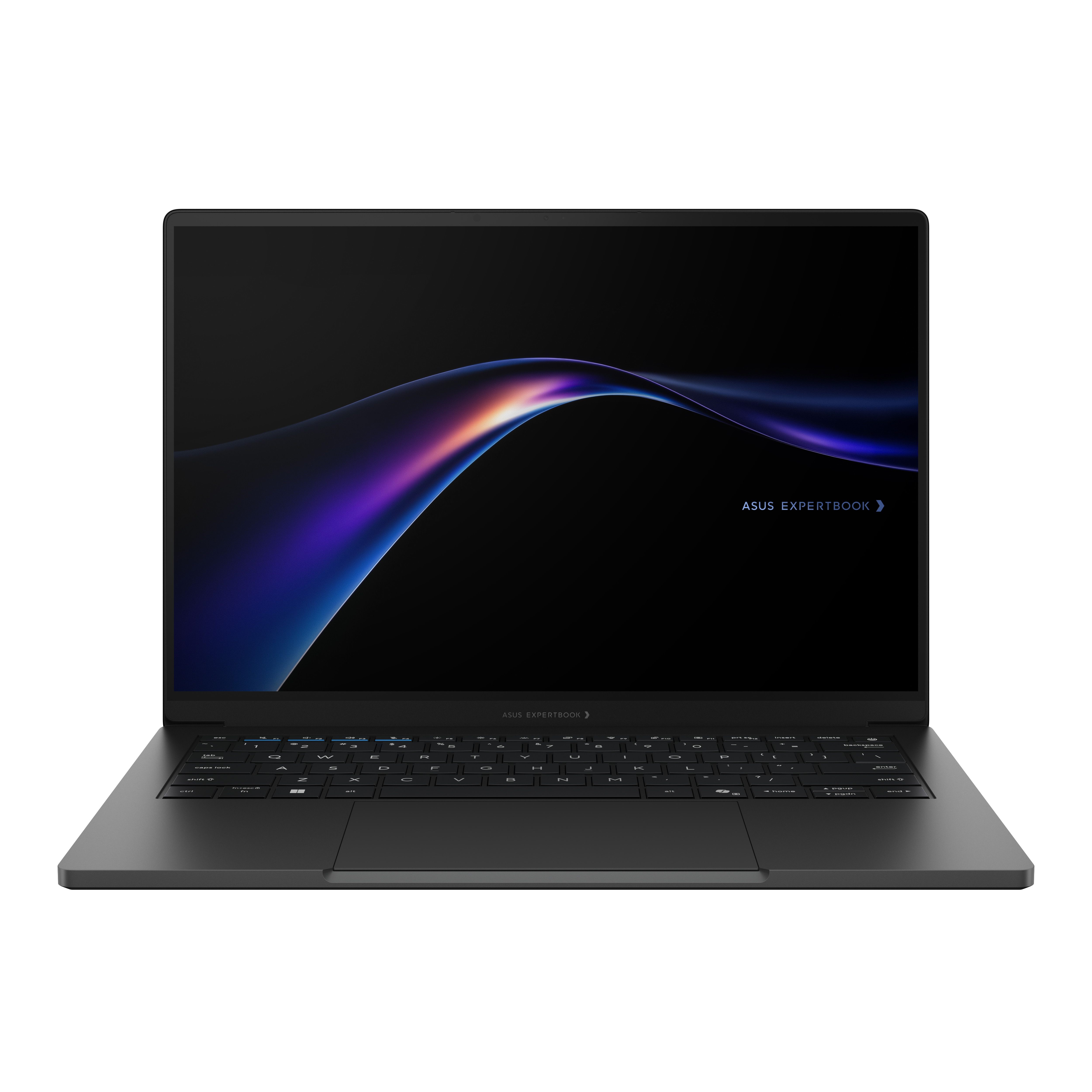
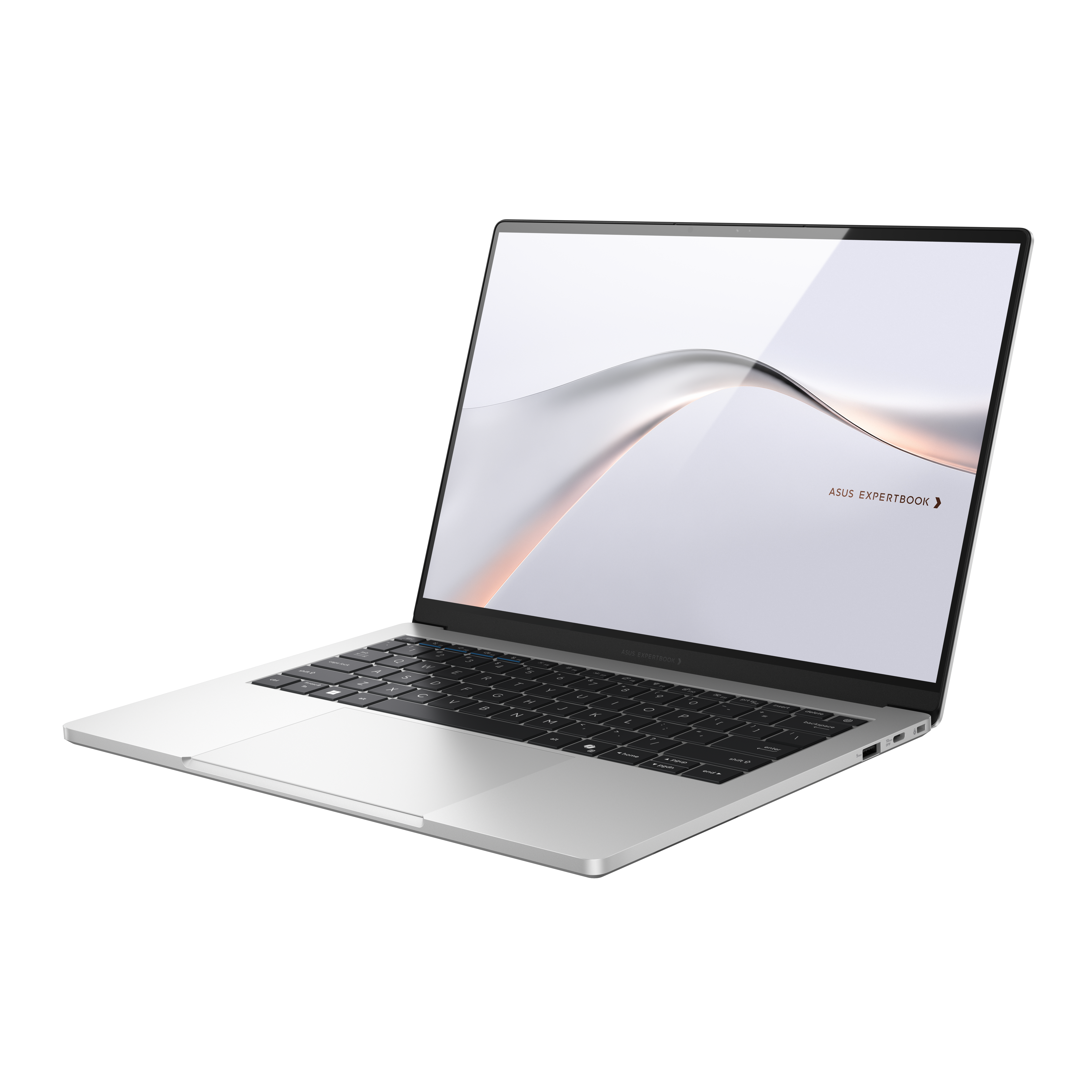
Every announced October US configuration has a 14-inch, non-touch OLED panel with a 2880 × 1800 resolution, a 16:10 aspect ratio and a 120Hz refresh rate. The taller screen format is useful for documents and spreadsheets, while the high resolution and refresh rate are features you keep even with the entry processor.
The US launch specifications also list 100% DCI-P3 color coverage, Pantone validation and VESA DisplayHDR True Black 600 certification. Those are useful details for someone who spends time with images, presentations and video, though they don’t replace an independent display test. ASUS lists 500-nit brightness separately from that HDR certification.
The selected Core 5/Windows Home configuration on the US Store lists an anti-glare display. ASUS’s release footnote makes anti-glare optional across the range, so check the exact configuration if that finish matters to you.
CNC aluminum and a glass haptic touchpad
The chassis is machined from a single block of 6000-series aluminum. The US launch sheet lists 2.82 pounds and a thickness of 0.46 inches. The construction and glass haptic touchpad are part of the base package, rather than reasons to spend another $300 on the highest-priced version. ASUS also lists MIL-STD-810H laboratory testing and its own durability tests in 24 categories; those are manufacturer test claims, not results from our hands-on use.
The haptic pad provides electronic click feedback through its glass surface. ASUS also designed the hinge to open with one hand. These are the kinds of physical details that matter whenever you open the laptop or work without a mouse; their feel and consistency still need hands-on testing.
A backlit keyboard, 1080p webcam, built-in speakers and an array microphone round out the everyday setup. The base model’s current Store specification additionally lists 1mm key travel and a spill-resistant keyboard. That gives the entry configuration a more complete work-laptop feature set than the processor name alone conveys.
Useful ports and a 65Wh battery
The Intel A7 includes two USB 3.2 Gen 2 Type-C connections that support charging and display output, alongside USB-A, HDMI 2.1 TMDS and a 3.5mm audio jack. You can connect a display, a conventional USB accessory and wired audio without making all three share a single adapter. Thunderbolt is not included on this Intel A7.
Wi-Fi 6E and Bluetooth 5.4 are included. The 65Wh battery comes with a 65W USB-C power adapter, so the listed package includes the charger as well as the laptop. MyASUS also includes system diagnostics and battery-health charging controls.
ASUS rates the A7 for up to 26 hours of local Full HD video playback in its own lab test, using the Core 7 model at 50% screen brightness. That figure describes a playback test, so it isn’t a measure of a day spent in calls, spreadsheets and browser tabs. Real workday runtime remains something to test.
Three-year coverage and five years of security updates

The support package is a substantial part of what the starting price buys. ASUS includes a three-year manufacturer’s warranty and promises five years of BIOS and driver security updates across the announced A7 range.
The base A7406CMA-DS54’s US Store listing spells out three-year international manufacturer coverage plus one year of domestic accidental-damage protection. International service applies when the product is purchased and serviced within ASUS’s covered countries or regions. Check the coverage countries and the terms for your configuration before relying on service abroad.
ExpertGuardian adds firmware-level protection, including BIOS protection and recovery features, a discrete TPM 2.0 chip and support for the Windows 11 Secured-core PC framework. Fingerprint sign-in is integrated into the power button, and a Kensington Nano slot provides a physical locking point.
Taken together, the screen, chassis, input hardware and longer support commitments give the base configuration a clear purpose for a freelancer, small-business buyer or employee shopping for their own machine. You can choose the least expensive processor and still get those features. Whether the extra processor or Windows Pro upgrade is worthwhile depends on the work and software requirements, rather than access to a better screen or more memory.
The ASUS Store lists the Eclipse Black A7406CMA-DS54 for preorder at $1,299.99, with Core 5 320, Windows 11 Home and 16GB/512GB. This is a preorder listing, not a confirmed immediate-shipping offer. ASUS also announced plans for AMD Ryzen AI models and a broader A7 range with configurations starting at $899 in January 2027. That lower price belongs to the later expansion; the October US configurations covered here are the Intel A7406CMA models.