Microsoft’s Surface Laptop Ultra is available to preorder from $2,599, with availability beginning October 16. The NVIDIA RTX Spark-powered laptop brings up to 128GB of unified memory, a 15-inch mini-LED touchscreen and magnetic USB-C charging to Microsoft’s high-performance Surface lineup.
Today’s Windows and Surface launch also opens preorders for the $5,999 Surface RTX Spark Dev Box, which ships in the US this November. Alongside the hardware, Microsoft is giving Windows new ways to run AI agents, combine local models with cloud services and carry out tasks directly from Search.
Price: Surface Laptop Ultra from $2,599 MSRP
Where to buy: Microsoft
Magnetic charging, with a regular USB-C port underneath
One of the Ultra’s most useful additions is Magnetic Connect. The included charging cable attaches magnetically to the USB-C port on the right side and releases easily. That same port still handles video, data and other USB-C devices.
Two more USB-C ports join HDMI, USB-A, a full-size SD card reader and a 3.5mm headphone jack. Microsoft says the laptop supports up to three 4K external displays with compatible displays, cables and accessories. For someone bringing footage back from a shoot, the built-in card reader and display connections cut down the accessories needed at a desk.
The chassis is less than 18mm thick and weighs under 4.5 pounds. Platinum and Nightfall finishes are available on selected configurations, and the storage drive is removable for service or upgrades.


What the Ultra’s hardware buys you
Microsoft’s launch specifications put NVIDIA’s Grace CPU and Blackwell RTX GPU together around a shared memory pool:
- Up to 20 CPU cores and 6,144 GPU cores
- Up to 128GB of total unified memory, shared between the CPU and GPU
- A 15-inch PixelSense Ultra touchscreen with up to 2,000 nits of peak HDR brightness
- A haptic touchpad 30 percent larger than the Surface Laptop 8th Edition’s
The memory capacity gives local AI models, large creative projects and developer tools more room to work together. The amount the GPU can address is lower than the system’s total and depends on the configuration and workload.
There are two display details worth knowing before ordering. The 2,000-nit figure is peak HDR brightness measured over a 10 percent window; sustained brightness and SDR brightness are lower. And the touchscreen supports fingers only: Surface Pen and Surface Slim Pen input are unsupported.
Microsoft describes the Ultra as a machine for local AI development, rendering and demanding creative work, with CUDA support and NVIDIA graphics features for supported games. Buyers should choose the memory and processor configuration for the applications they’ll run rather than assume the starting price includes the maximum specifications.
A $5,999 desktop for sustained local AI work
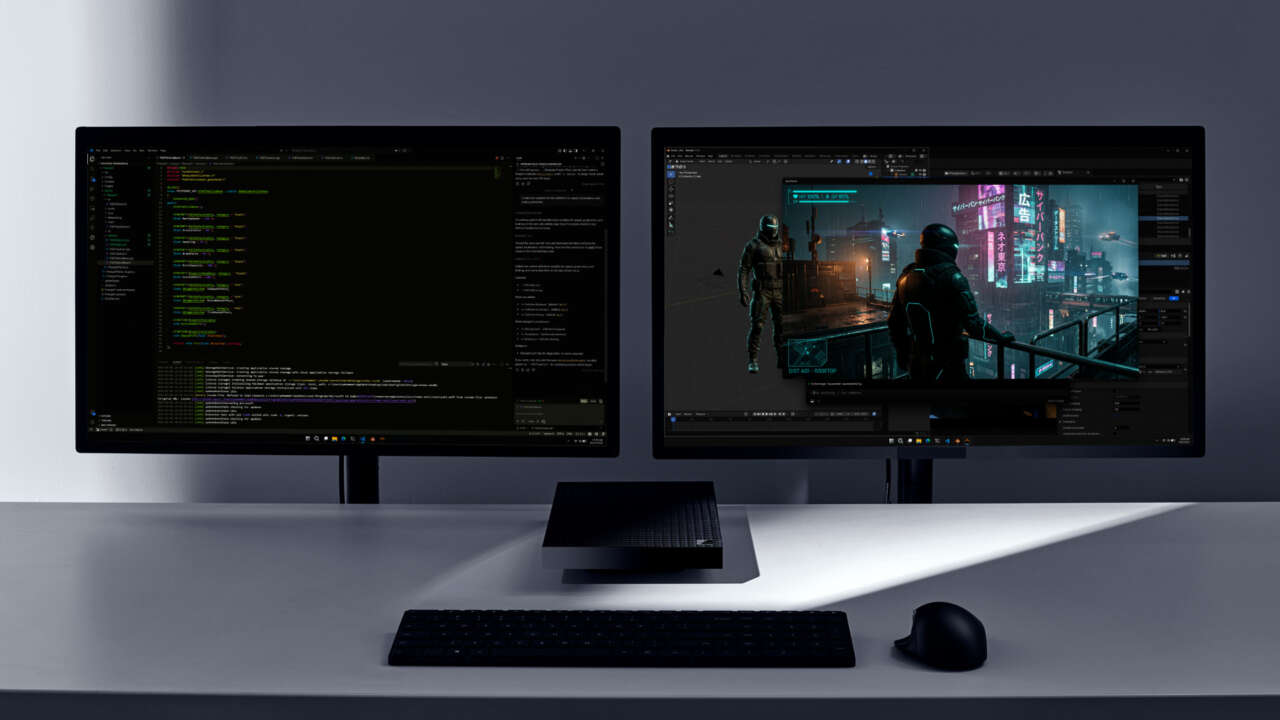
Surface RTX Spark Dev Box puts the same platform into a compact desktop with 128GB of unified memory. Its intended home is a developer’s desk, where model evaluation, local inference and longer-running experiments can keep working while the user’s laptop goes elsewhere.
The setup includes Visual Studio Code, Git, GitHub CLI, GitHub Copilot, WSL, Python and Node. That reduces the initial configuration work for someone building with the Windows and Linux toolchains on one machine.
The price and sales footprint are specific: $5,999 MSRP, available to preorder exclusively through Microsoft in the US, with shipping beginning in November.
Windows adds agent controls and actions in Search
Microsoft’s Windows announcement calls the combination of on-device and cloud AI “hybrid intelligence.” A local model can handle suitable work on the PC, while a cloud model supplies additional capability when the task needs it.
The releases have different timelines. Microsoft Execution Containers, or MXC, is generally available on Windows 11 today. It lets organizations define which files and networks an agent can access and enforce those policies while it runs. Supported agents integrate those controls into their experience.
Windows Search is also gaining actions, beginning with Windows Insiders in the Experimental channel today. Examples include switching to dark mode, dimming the screen, turning on Do Not Disturb and arranging windows. Optional Copilot integration in taskbar Search starts rolling out to select markets later this year.
For developers, GitHub’s HydraFusion will route work between local and cloud models in the GitHub Copilot app, Copilot CLI and Visual Studio Code. Its experimental preview arrives later in October. Copilot’s broader local-context, local-action and local-model features are expected on Copilot+ PCs over the coming months.
Microsoft also showed a simpler initial setup for popular agents on mini desktops, including a native Windows gateway and MXC integration for OpenClaw.


The launch extends beyond Surface
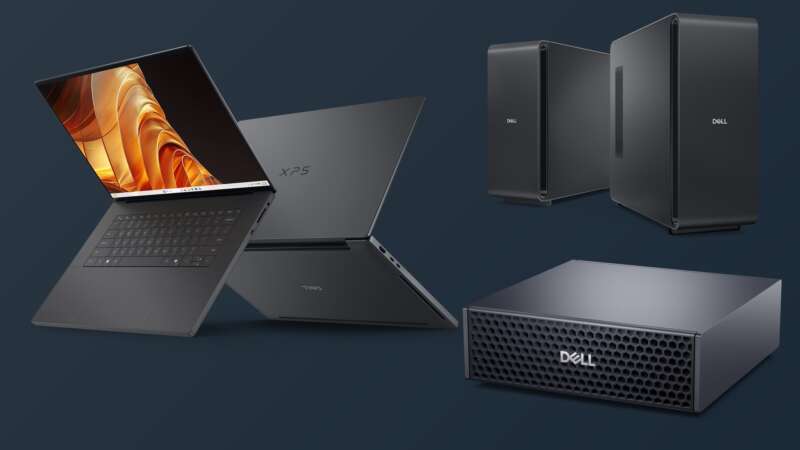
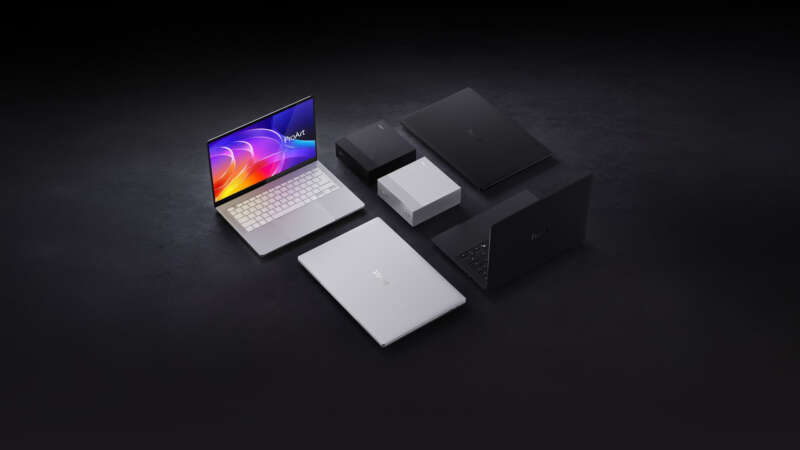
ASUS, Dell, HP, Lenovo and MSI are joining Microsoft’s RTX Spark laptop rollout. The announced lineup includes ASUS ProArt P14 and P16, Dell XPS 16 Creator Edition, HP OmniBook Ultra 16, Lenovo Yoga 9n 2-in-1 and MSI Prestige N16 Flip AI+. Microsoft says preorders open today and shipping begins October 16.
Price: Surface RTX Spark Dev Box $5,999 MSRP
Where to buy: Microsoft
For a Surface buyer, the immediate choice is between a portable creator laptop starting at $2,599 and a $5,999 developer desktop with 128GB of memory. The software arrives in stages, so the buying decision starts with the workload and hardware configuration you need today. The local and cloud AI additions then expand what that machine can do as they roll out.