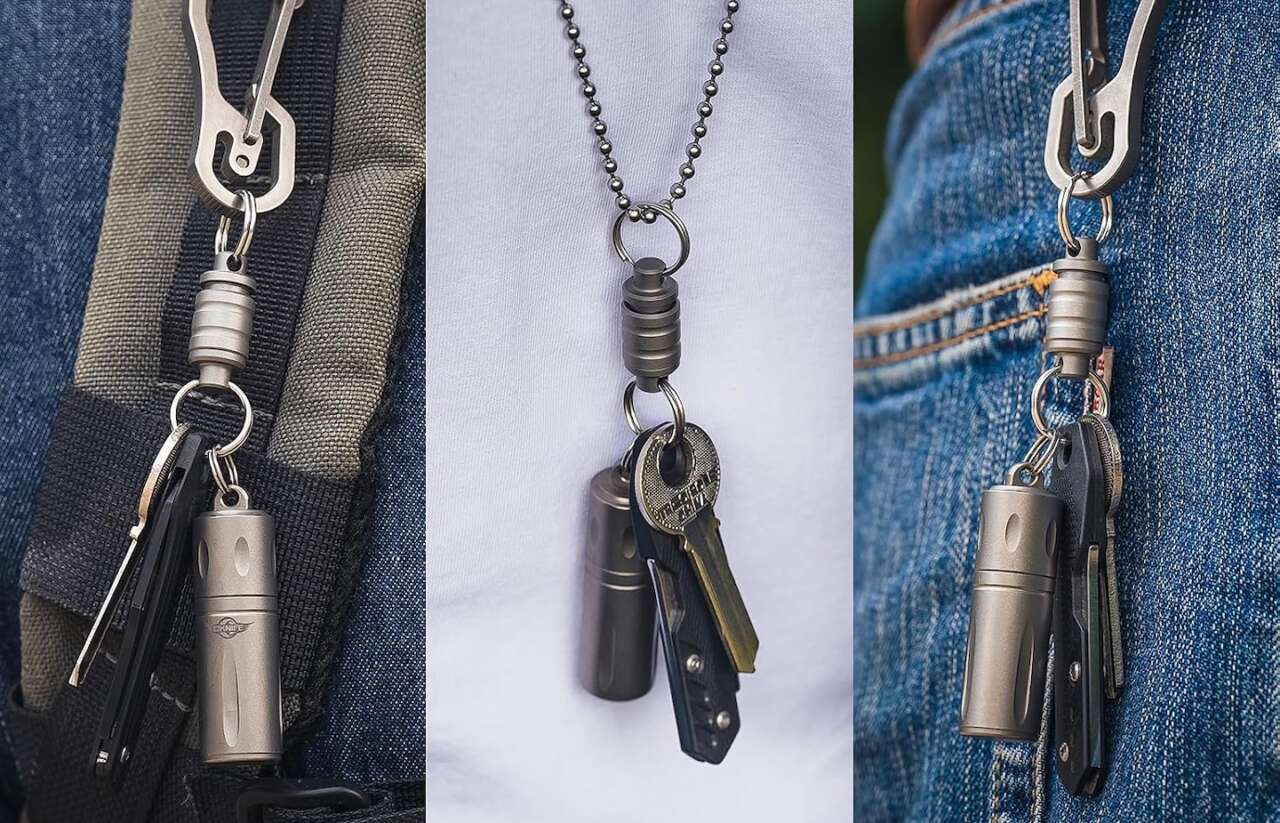
Taking one key or tool off a crowded keyring should not require prying open a stubborn split ring. The OKNIFE Otacle R1 Magnetic Keychain Connector solves that problem by putting a quick-release connection between two parts of your keychain. Pull the connector apart and your car key, flashlight, or other small EDC item separates from the rest of the bundle.
Price: $14.99
Where to Buy: Amazon
The R1 does not rely on magnets alone. OKNIFE says it combines an integrated pair of magnets with a bead-lock mechanism, providing magnetic assistance when reconnecting the two halves and bead-lock retention when they are joined.
Pull Apart to Release, Snap Together to Reconnect
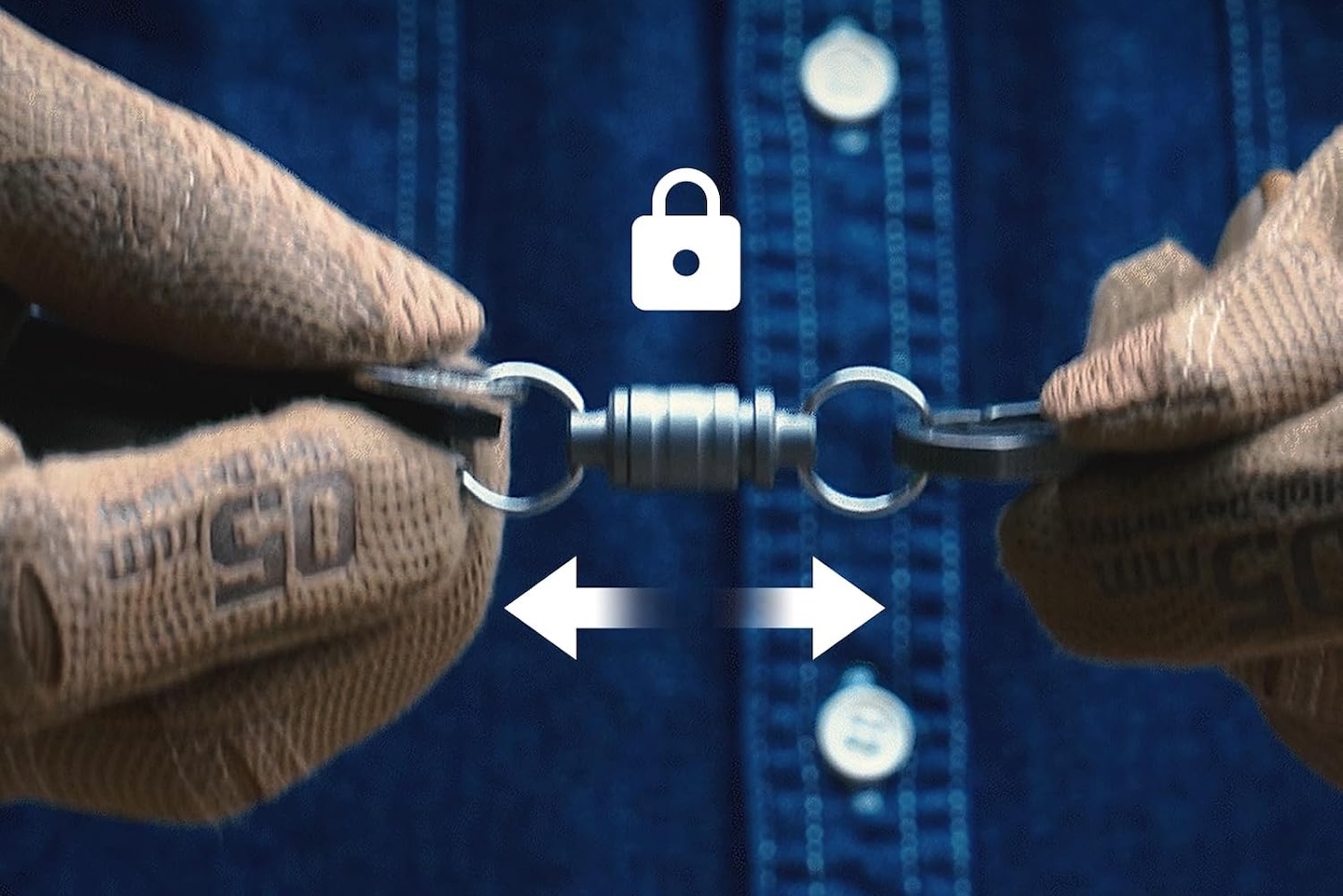
The operating method is refreshingly simple. According to OKNIFE, you pull the two halves apart to separate the keychain and snap them back together to reconnect it. The magnets help bring the sections together, while the bead-lock mechanism contributes to keeping the connection secure.
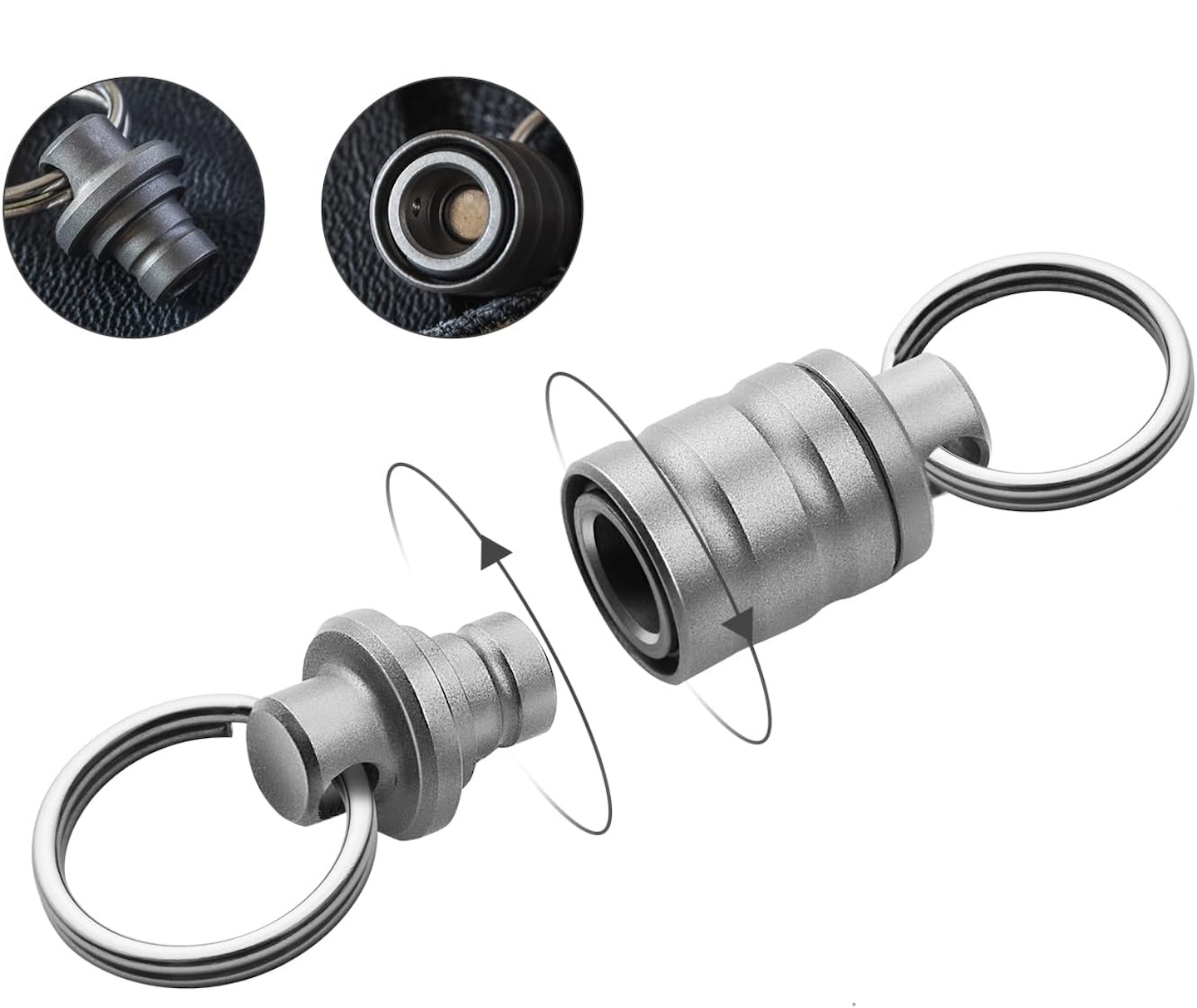
That is an important distinction from a basic magnetic keychain connector. A magnet-only design has to balance easy separation against enough magnetic attraction to prevent accidental release. OKNIFE describes the R1 as adding bead-lock retention rather than asking the magnets to provide all of the retention. The source does not explain the mechanism’s internal construction or separately rate the magnets and bead-lock retention.
OKNIFE rates the complete system for a 5 kg, or roughly 11-pound, weight capacity. That is a manufacturer rating, not independent evidence that the connector will withstand every snag, impact, or sudden load encountered during daily carry.
The R1 is best understood as a magnetic-assisted connector with bead-lock retention, not simply by the strength of its magnets.
It Adds Very Little Bulk
OKNIFE lists the R1 at 1 inch (25.4 mm) long, with supplied stainless-steel keyrings measuring approximately 0.43 inch (10.8 mm) in diameter.
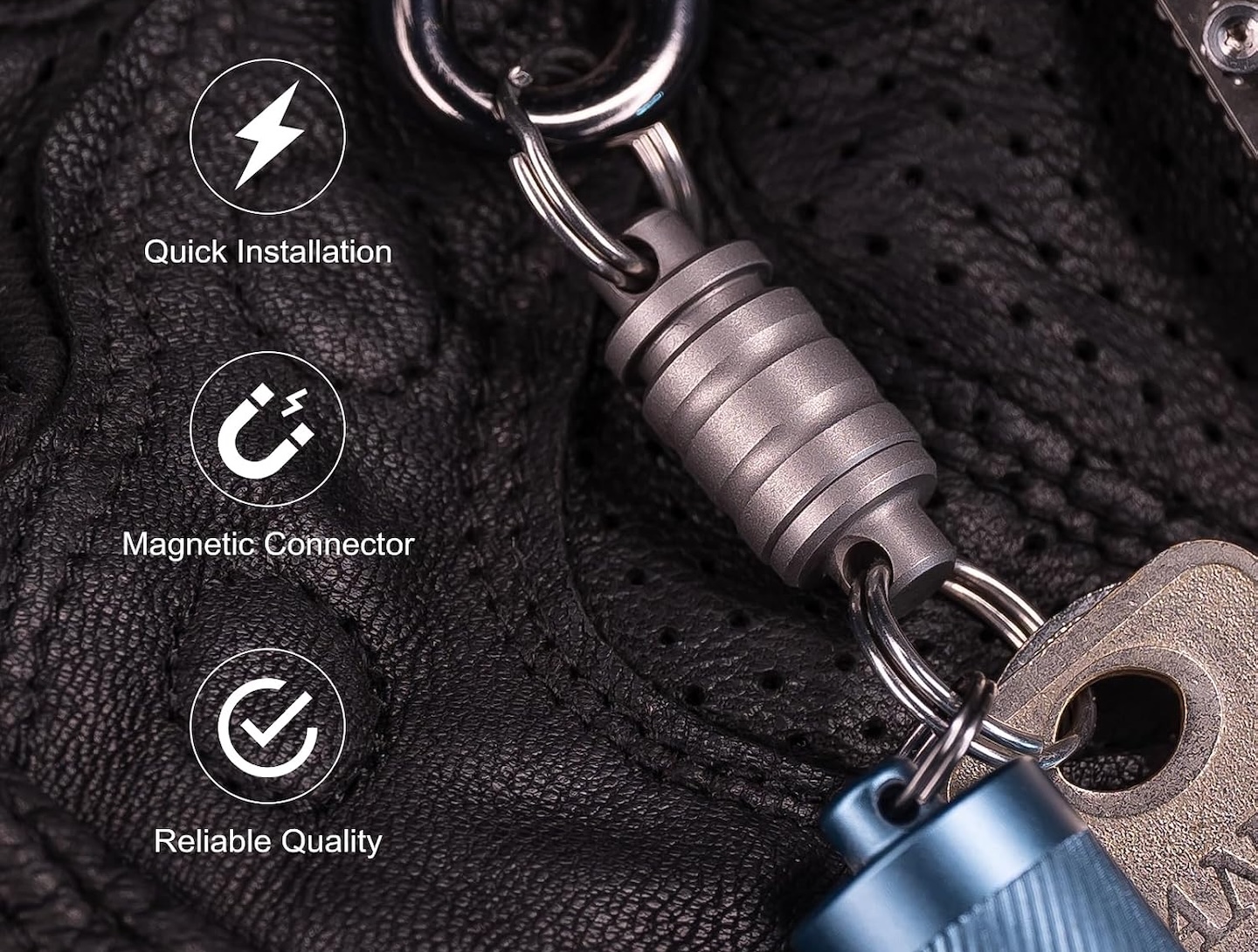
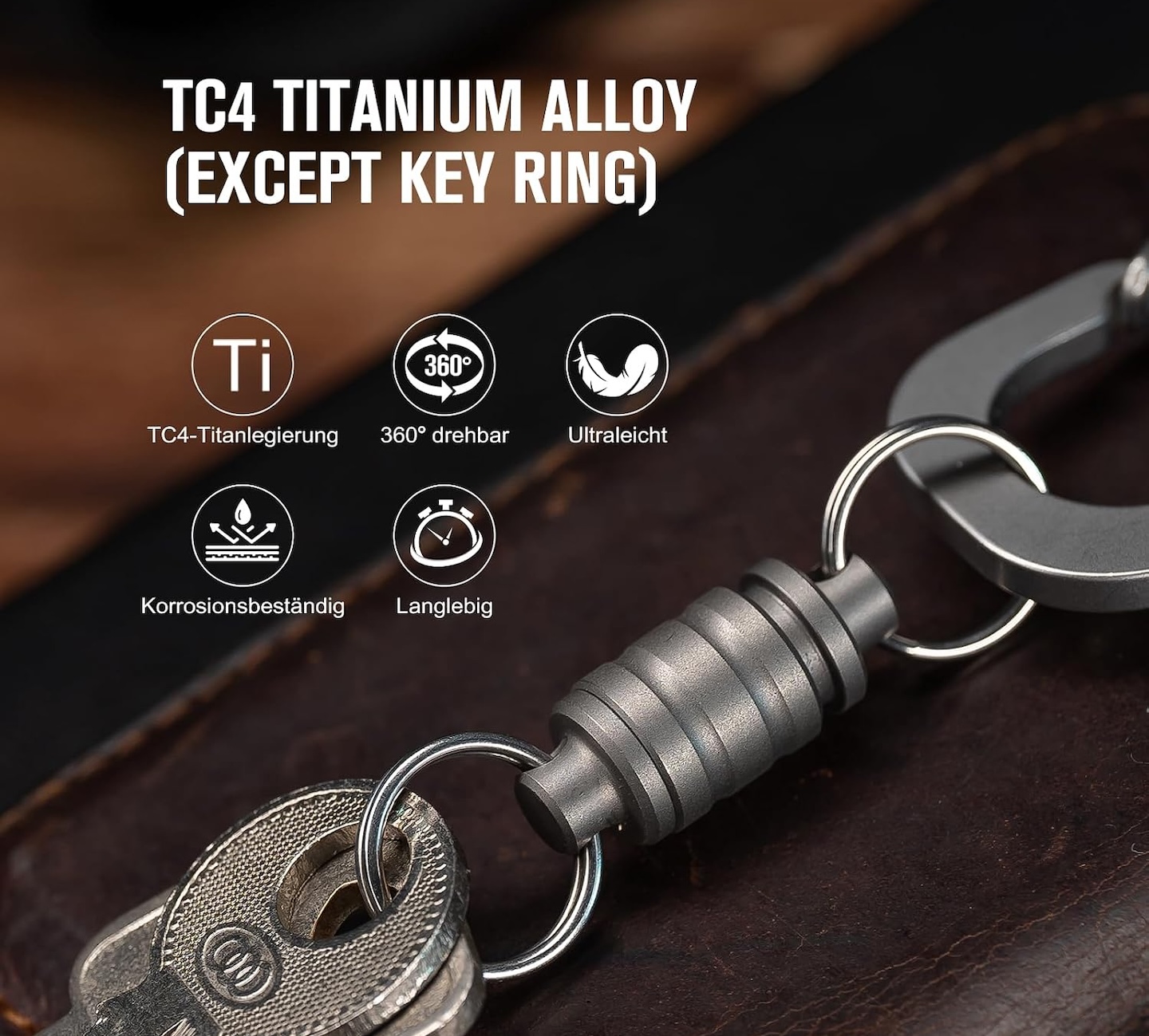
The TC4 titanium version weighs 0.25 ounce (7.1 grams) for the connector itself. The brass version weighs about 11–12 grams, depending on which OKNIFE figure is used: its overview lists 11.8 grams (0.41 ounce), while its detailed specification table lists 11 grams (0.39 ounce). Each listed stainless-steel keyring adds 0.03 ounce (0.8 gram).
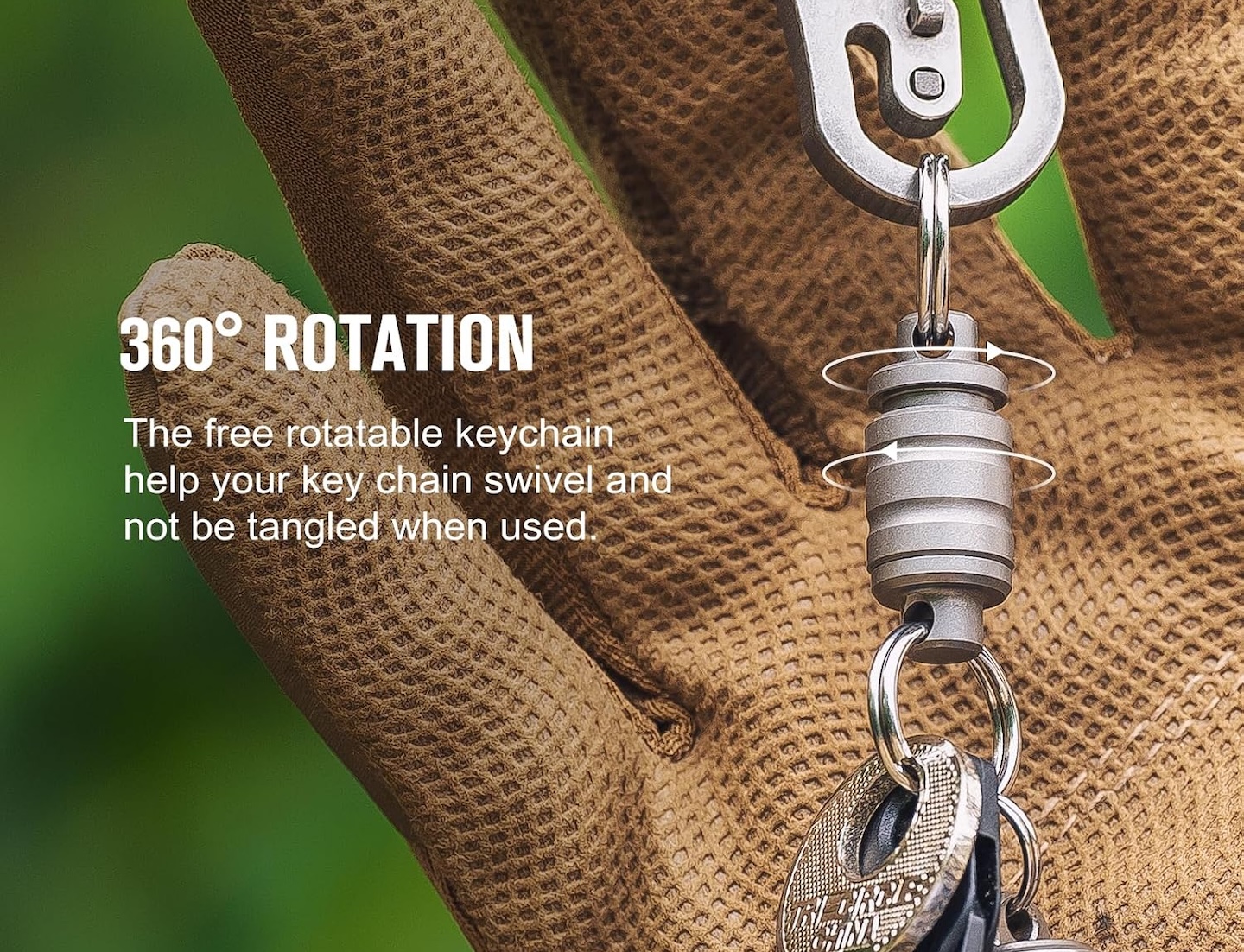
The R1 also incorporates a 360-degree swivel, allowing attached items to rotate instead of forcing the whole key bundle to twist. That can be useful when the connector sits between a fixed attachment point and keys or accessories that move around in your pocket.
It Turns One Keychain Into Separate Modules
The practical advantage becomes clearer when you divide your carry into groups. Put your car key on one side and house keys on the other, and you can hand your vehicle key to a mechanic without giving them your entire keychain. Attach a small flashlight separately and you can remove it for use without keys swinging from your hand.
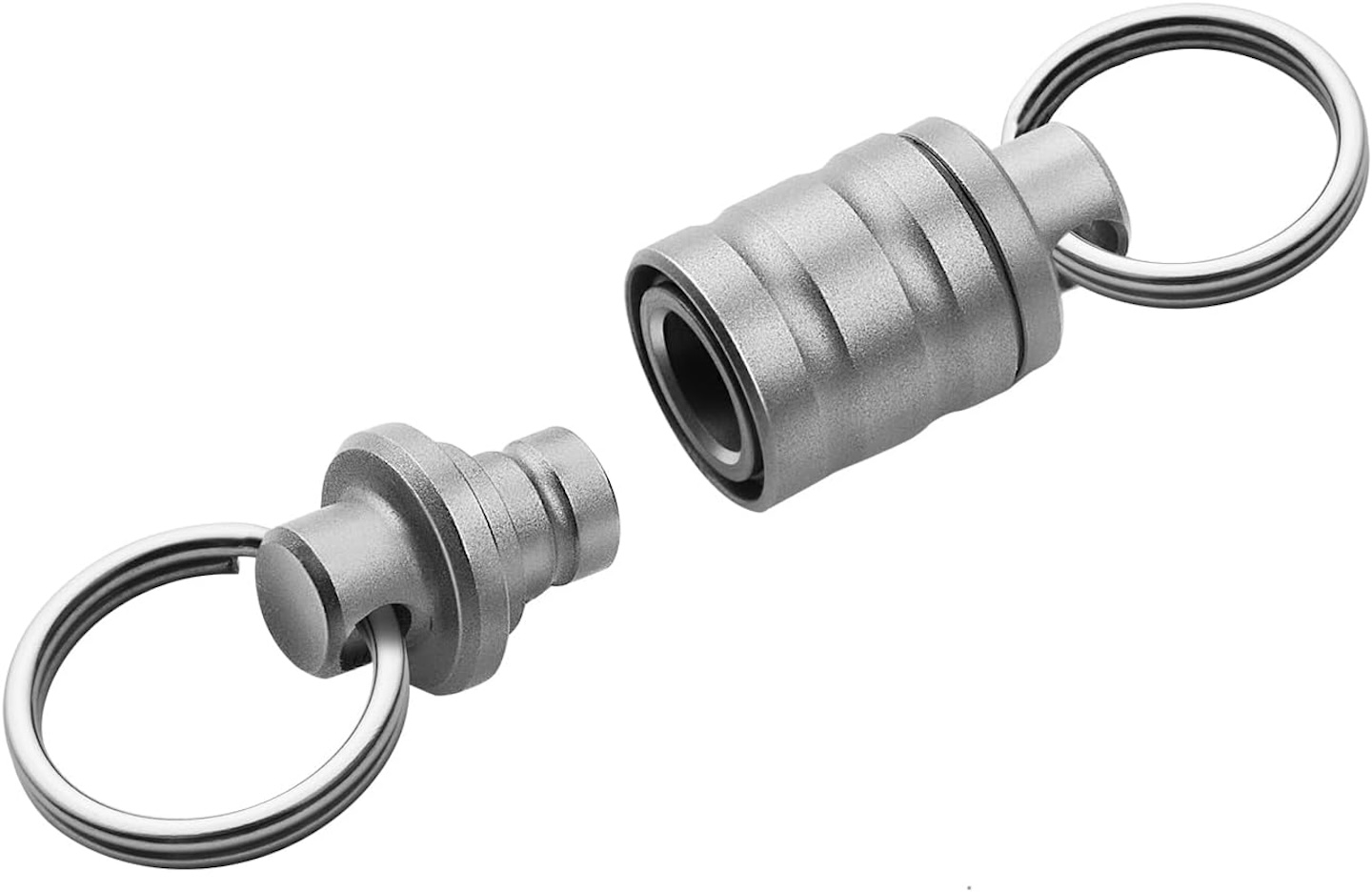
The two included keyrings also make the concept flexible. Keys, compatible clasps, carabiners, and other small EDC accessories can be arranged around the connector without permanently changing the rest of your setup.
Small Size Comes With a Tradeoff
Making the R1 compact enough to disappear into a keychain means there is not much surface area to grip. Someone trying to minimize pocket bulk may appreciate the tiny body, while a person wearing gloves or frequently handling keys in rain may prefer something larger and easier to grasp.
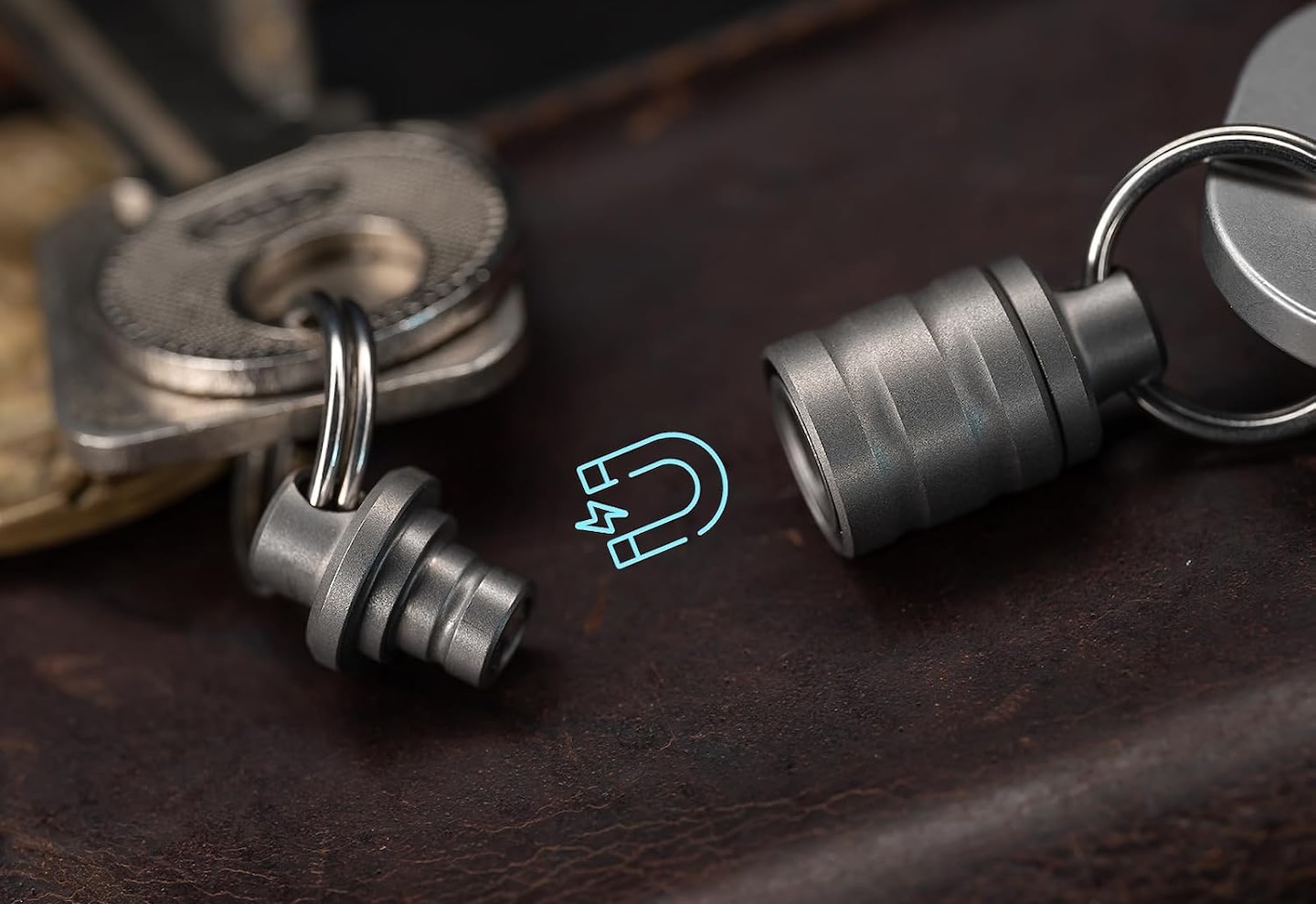
There is also another connection in your carry system that can potentially fail. OKNIFE’s 5 kg rating should not be treated as a blanket durability claim.
For ordinary keys and small EDC accessories, the R1’s convenience is easy to understand. For safety-critical equipment, the available evidence is not sufficient to recommend relying on it.
Titanium or Brass?
Both versions perform the same basic job, so the choice largely comes down to weight and appearance.
The TC4 titanium model has a sandblasted finish and is the lighter option at 7.1 grams for the connector. The brass version uses a satin finish and weighs about 11–12 grams, depending on which OKNIFE figure is used.
Titanium makes more sense if you are trying to keep an already crowded keychain light. Brass is the more obvious choice if you prefer its appearance or have other brass pieces in your EDC setup.
Neither material is the real reason to buy the R1. The practical upgrade is being able to divide your keys into separate groups without repeatedly opening split rings.
Who Should Buy the OKNIFE Otacle R1?
The OKNIFE Otacle R1 makes the strongest case for someone who regularly separates the same item from a keychain. Car keys are the obvious example, but flashlights, small EDC accessories, and separate groups of keys can benefit from the same arrangement.
It makes less sense if your keys always stay together. A conventional split ring is cheaper, mechanically simpler, and removes another potential failure point from your carry.
The R1’s strongest argument is not OKNIFE’s 5 kg load rating. It is the combination of magnetic alignment, bead-lock retention, compact dimensions, and a 360-degree swivel.
Price: $14.99
Where to Buy: Amazon
If you regularly carry an entire bundle simply because removing one key or tool is inconvenient, the Otacle R1 gives you a cleaner way to split that bundle apart and reconnect it when you need everything together again.