Moving from a smartphone to a full-frame camera can feel like trading simplicity for image quality. Suddenly, there are exposure modes, autofocus settings, interchangeable lenses, and enough controls to make leaving the camera in Auto tempting.
Price: $1,399.95
Where to Buy: Nikon
The new Nikon Z5IIC takes an unusual approach to that problem. Nikon has retained much of the imaging hardware and performance of the Z5 II but repackaged it in a flatter body without an electronic viewfinder. It then added prominent Scene modes, touchscreen operation, and easy access to downloadable Imaging Recipes.
Nikon announced the Z5IIC at a suggested price of $1,399.95 for the body or $1,699.95 with the NIKKOR Z 24-50mm f/4-6.3 lens. It is expected to become available in mid-October 2026. B&H lists the body for preorder at $1,396.95. The Z5IIC is not a cheap entry into interchangeable-lens photography; instead, it is aimed at photographers who want full-frame Nikon hardware but prefer composing on a screen rather than looking through a viewfinder.
Losing the Viewfinder Changes the Camera
The most obvious difference is visible before you switch the Z5IIC on: there is no electronic viewfinder.
Removing the EVF hump creates a smooth, flat top. Nikon says the streamlined shape is easier to slide in and out of a bag, while the grip is designed to provide a secure hold.
You will compose using the 3.2-inch vari-angle touchscreen, which supports familiar gestures including swiping, pinching, and double-tapping. Touch controls also extend to focusing and releasing the shutter.
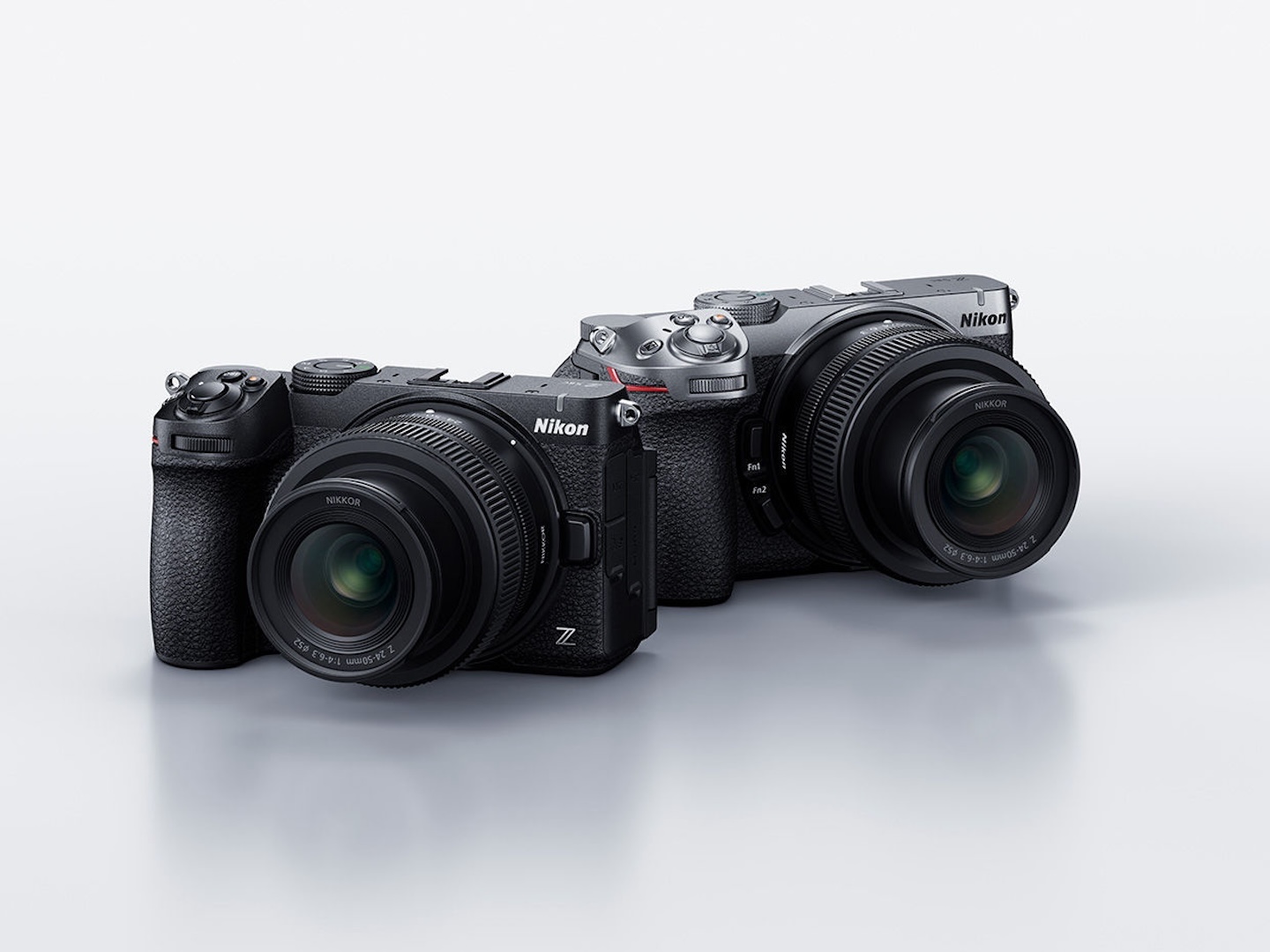 That could make the transition from smartphone photography less intimidating, but losing the EVF is a meaningful compromise rather than an automatic improvement. A viewfinder can be valuable in bright sunlight and gives photographers another way to stabilize the camera against their face.
Whether this design works depends largely on how you prefer to shoot.
Nikon Kept the Important Imaging Hardware
Behind the flatter body is a 24.5-megapixel full-frame CMOS sensor paired with Nikon’s EXPEED 7 processor. Nikon says the Z5IIC delivers the same level of performance as the Z5 II, although that is the company’s positioning rather than a conclusion from our own comparative testing.
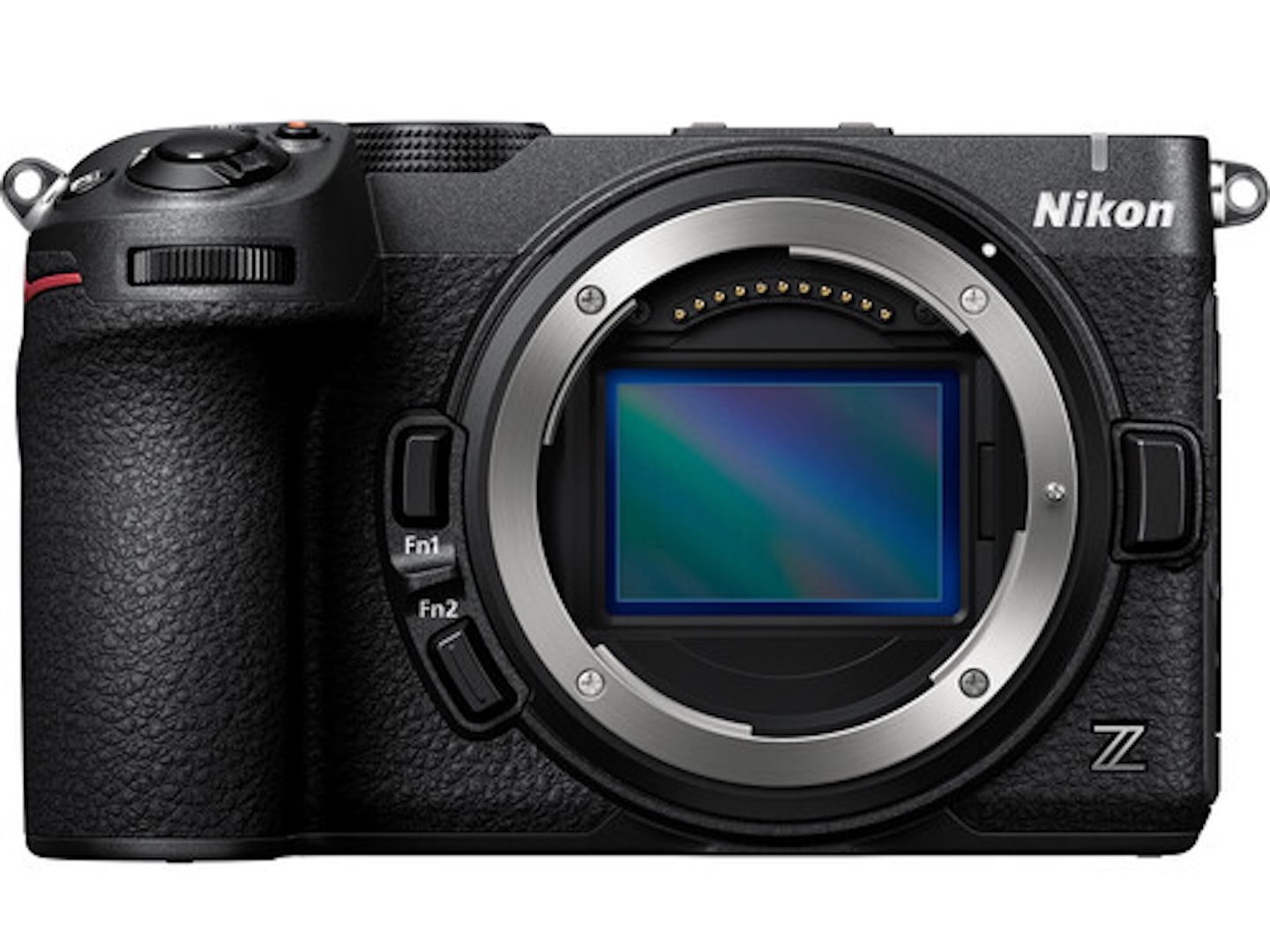 The camera also has five-axis in-body image stabilization. Nikon rates the system for up to 7.5 stops at the center of the frame and six stops at the periphery, based on CIPA 2024 testing with the NIKKOR Z 24-120mm f/4 S at its telephoto end.
Those figures come from standardized testing and should not be interpreted as a guarantee that every photographer will consistently achieve 7.5 stops of correction in every situation.
Autofocus includes 10 types of subject detection and 3D-tracking. Nikon says its deep-learning technology can recognize subjects automatically, while Auto mode analyzes the scene and adjusts autofocus alongside exposure settings such as aperture, shutter speed, and ISO.
Scene Modes Make Their Full-Frame Nikon Debut
One of the more revealing additions is not hardware at all.
The Z5IIC is Nikon’s first full-frame mirrorless camera with Scene modes on its mode dial. There are 15 options covering situations including portraits, pets, food, sports, night landscapes, and twilight. Selecting one allows the camera to automatically adjust more than six settings, including white balance and Picture Control.
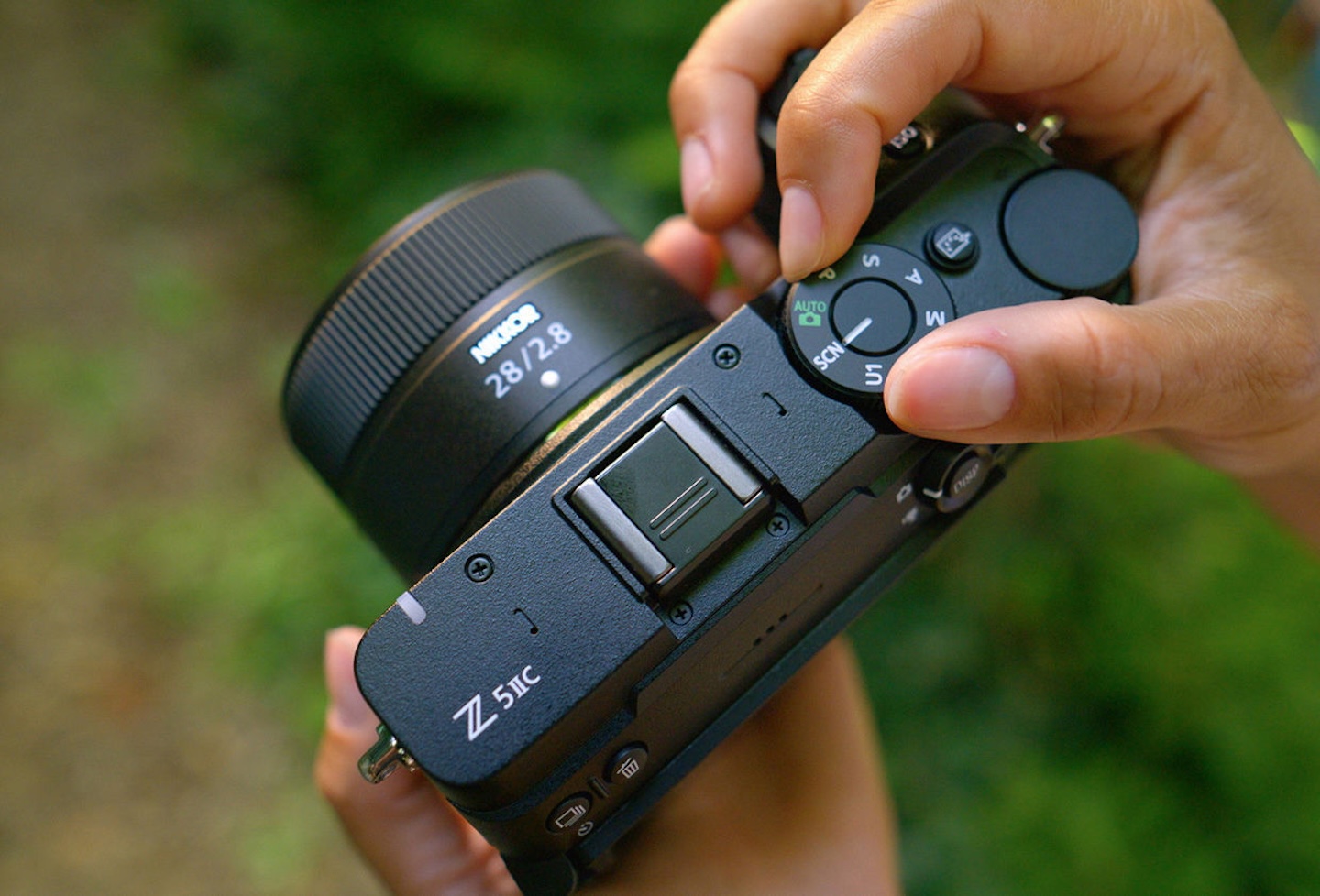 There is also a dedicated button for Imaging Recipes downloaded through Nikon Imaging Cloud. These presets, created by Nikon and other creators, provide ready-made looks without requiring photographers to configure the settings themselves.
Nikon has also included the Film Grain function introduced on the Zf, giving users another way to change the appearance of photos and supported video.
None of these features guarantees a better photograph. Their practical benefit is reducing the amount of setup required before someone can experiment with different looks and shooting situations.
Video Is More Serious Than the Controls Suggest
The Z5IIC is not limited to casual still photography. It records 4K UHD video at up to 60p, although 50p and 60p use a DX-format crop. Full HD recording reaches 120p.
More surprisingly, Nikon’s specifications include 12-bit N-RAW internal recording to an SD card. Nikon notes that supported formats are limited and recommends a V90-rated card for N-RAW. The camera also supports N-Log, waveform monitoring, time codes, and other video tools.
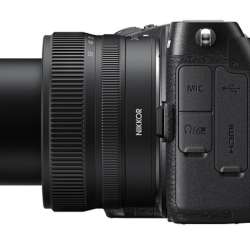
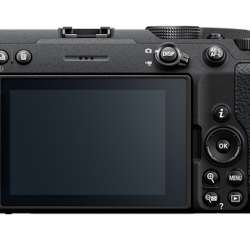
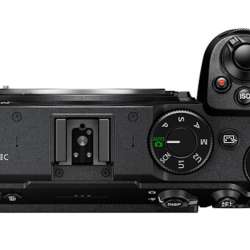
A REC lamp and red frame indicator make it easier to see when recording is underway. There is also Product Review Mode, which is designed to shift focus to an object held close to the camera, plus USB connectivity that allows the Z5IIC to function as a streaming camera when connected to a computer.
Those features make it far more capable for video than the beginner-friendly controls initially suggest. Anyone buying specifically for video should still remember that 4K/60p is not full-width capture.
There Are Other Compromises
The missing EVF is not the only consideration. The Z5IIC has a single UHS-II-compatible SD card slot, which may matter to photographers who want the redundancy provided by dual-card recording.
 Nikon has nevertheless retained some durability features. The company says magnesium alloy is used in key areas of the body and describes the camera as designed with attention to dust and drip resistance. That is useful for everyday outdoor shooting, but it should not be interpreted as making the camera waterproof.
The Z5IIC is available in black or silver, although Nikon says availability begins in mid-October 2026. Nikon’s suggested retail price is $1,399.95 for the body only or $1,699.95 with the NIKKOR Z 24-50mm f/4-6.3 lens. B&H lists the body at $1,396.95 for preorder and the kit at $1,696.95. Retailer prices can change.
Who Should Buy the Nikon Z5IIC?
The Z5IIC makes the most sense for someone who wants full-frame Nikon hardware but prefers screen-based shooting over using a viewfinder. Smartphone photographers moving into interchangeable-lens cameras are an obvious audience, particularly if Scene modes, touch controls, and Imaging Recipes make the transition easier.
It could also make sense as a second Z-mount body for someone who specifically values the flatter design.

The decision becomes harder if you regularly shoot through a viewfinder, work frequently in bright outdoor conditions, or need dual memory cards. Those buyers should compare the Z5IIC carefully with Nikon bodies that retain an EVF and additional storage options.
That is what makes this camera interesting. Nikon has not tried to simplify full-frame photography by removing the full-frame sensor, stabilization, sophisticated autofocus, or advanced video tools. It has changed how photographers interact with them.
Price: $1,399.95
Where to Buy: Nikon
Whether that is an improvement comes down to one surprisingly simple question: when you take a photograph, do you still want to put the camera up to your eye?