
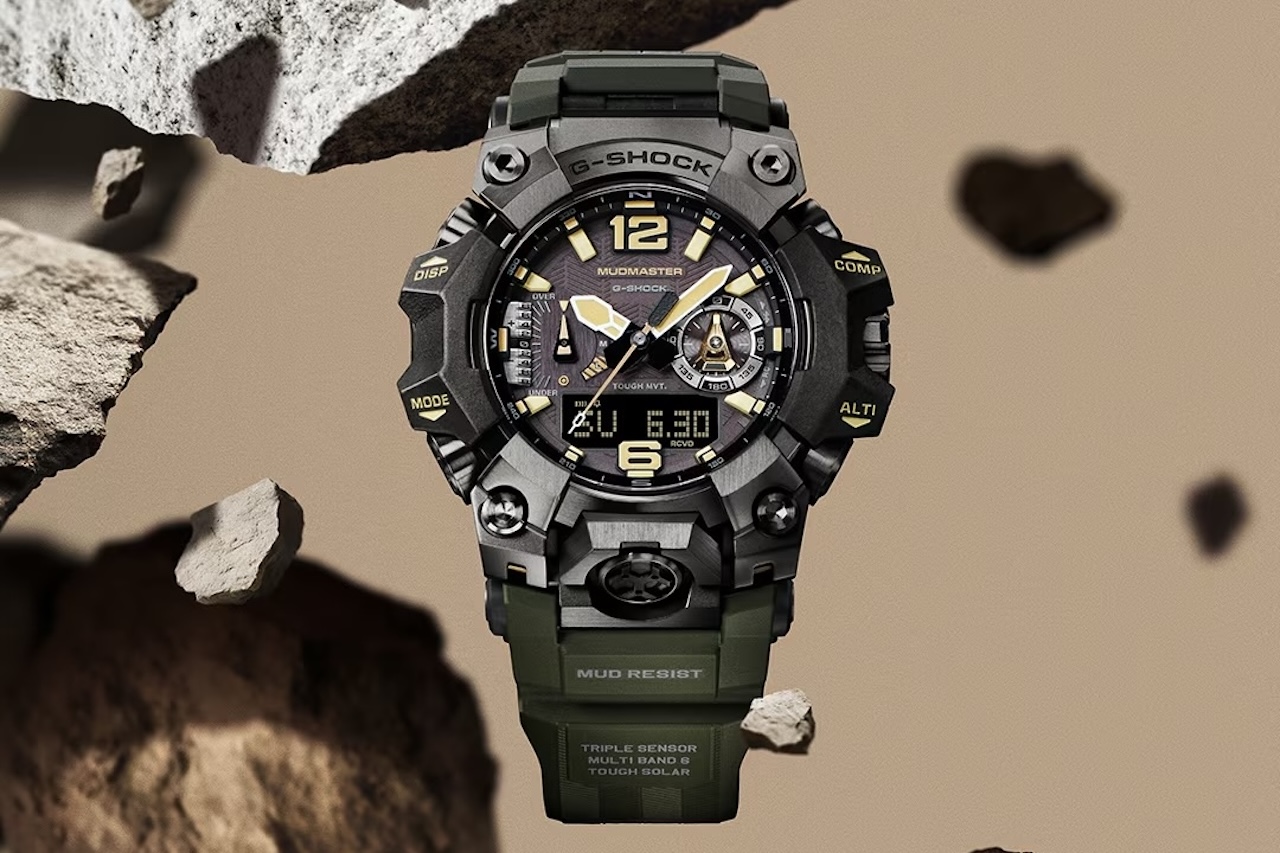
Buying a rugged outdoor watch can quickly turn into paying for functions you rarely use. Even relatively affordable G-Shocks already provide excellent impact and water resistance, so stepping up to one of Casio’s Master of G models only makes sense if the additional sensors and protective hardware solve problems you actually encounter.
Price: ¥132,000 (About $856)
Where to Buy: Casio
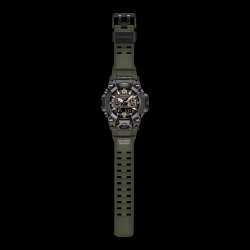
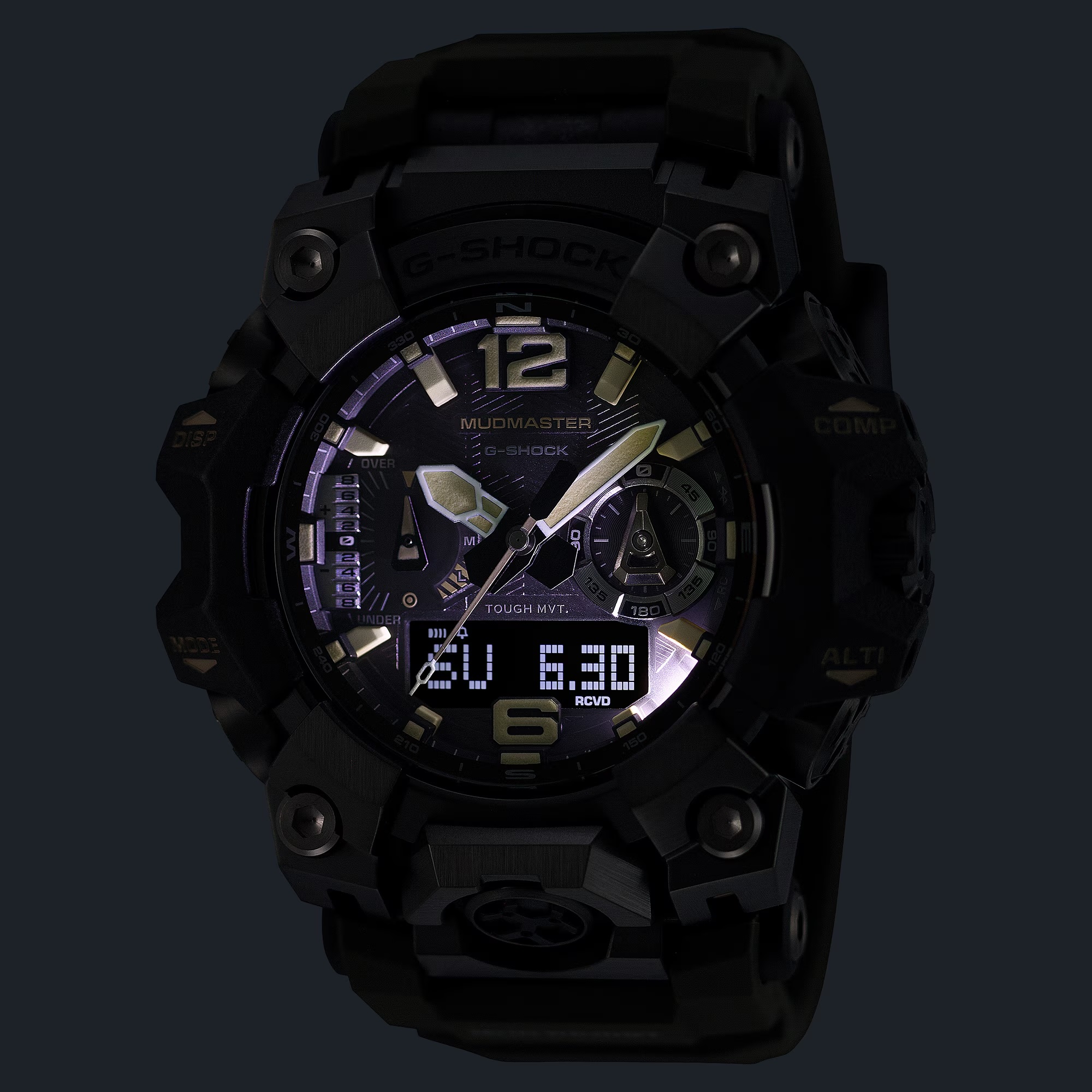
The Casio G-Shock Master of G Mudmaster GWG-B1000-1A3JF makes that distinction especially clear. It combines a digital compass, altimeter, barometer, thermometer, solar charging, radio-controlled timekeeping, smartphone connectivity, and mud-resistant construction in one large analog-digital watch. The new 1A3 version adds an olive-green resin band to the dark GWG-B1000 platform rather than introducing an entirely new generation.
All of that capability comes with considerable size and cost. The watch measures 58.7 x 52.1 x 16.2 mm, weighs 114 grams, and carries a Japanese suggested retail price of ¥132,000, including tax. For someone who only wants a tough everyday watch, that is a lot of hardware. For hikers, field workers, and outdoor users who will actually consult the sensors, the extra capability becomes easier to justify.
The Triple Sensor is the main reason to move up
The GWG-B1000-1A3 uses Casio’s Triple Sensor system to provide direction, altitude, barometric pressure, and temperature information. Those functions are what separate it most clearly from a simpler G-Shock.
The digital compass measures bearings from 0 to 359 degrees and can display 16 directions. It also includes bearing memory, magnetic-declination correction, calibration functions, and automatic horizontal compensation. Casio says that compensation helps maintain accurate direction measurement when the watch is tilted, but that remains a manufacturer performance claim rather than an independent test result. Calibration and surrounding magnetic conditions can still affect compass readings.
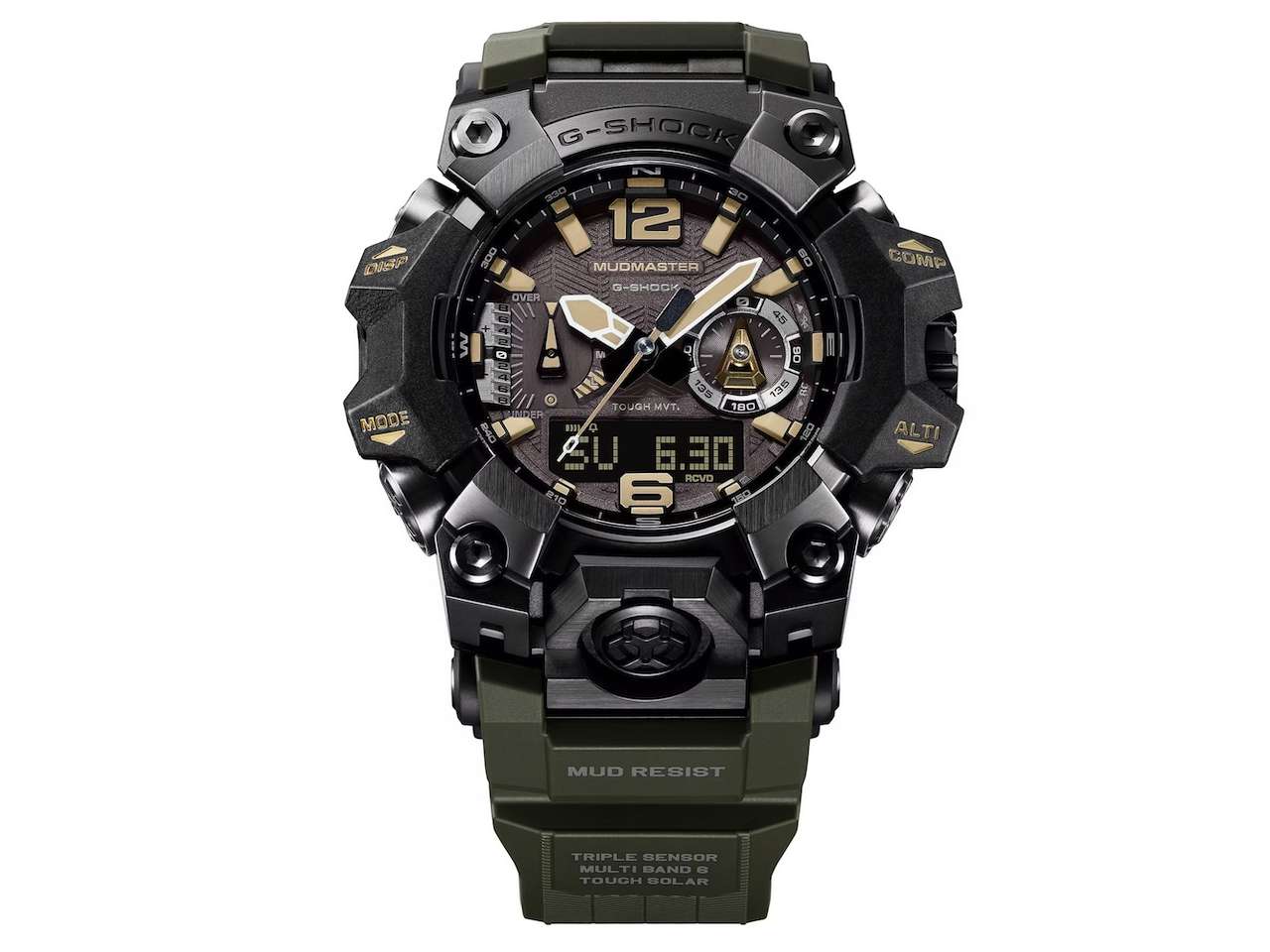
The altimeter covers -700 to 10,000 meters in one-meter increments and can store up to 30 manually recorded readings. It can also track maximum and minimum altitude, cumulative ascent and descent, altitude differences, and altitude trends.
There is an important practical limitation. The watch calculates altitude from atmospheric pressure rather than GPS positioning, which means changing weather can influence the indicated altitude. That makes it useful for following elevation changes during a hike, but buyers should not interpret the reading as an independently verified GPS elevation.
The barometer shows trends, not forecasts
The barometer measures atmospheric pressure from 260 to 1,100 hPa and can display a graph showing changes in pressure. The watch can also alert the wearer when it detects a significant pressure change.
That information can be useful outdoors because rapid pressure movement may accompany changing weather conditions, but the distinction between measurement and forecasting matters. The GWG-B1000 measures atmospheric pressure; it does not replace a dedicated weather forecast.
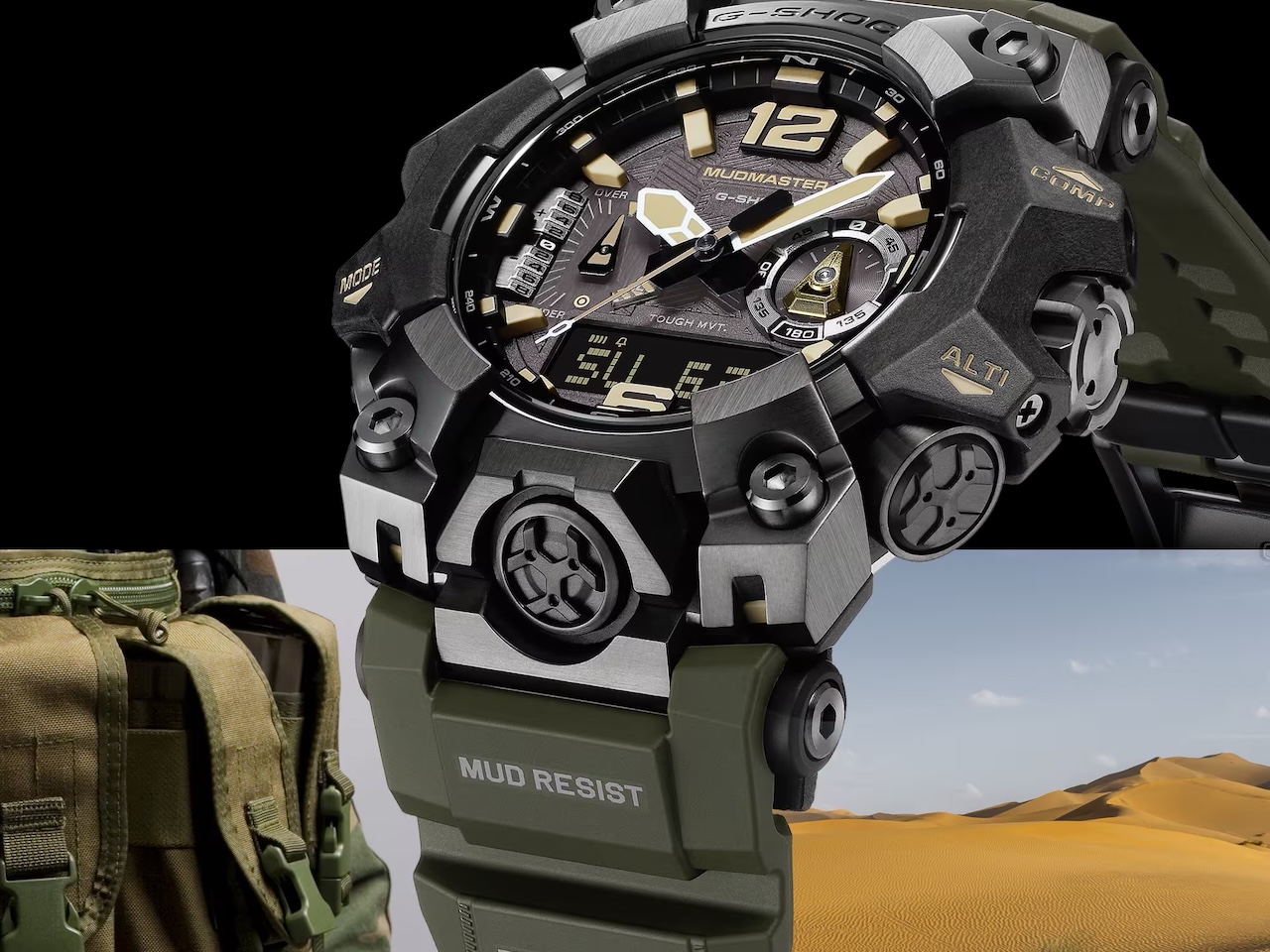 Temperature measurement covers -10 to 60 degrees Celsius in 0.1-degree increments. As with most wrist-worn thermometers, body temperature can affect the reading while the watch is being worn. For a better indication of ambient temperature, the watch needs time away from your wrist and other sources of heat.
Together, these sensors make more sense for someone who spends significant time outdoors than for a buyer attracted mainly by the Mudmaster’s appearance.
The case is built around mud, shock, and vibration
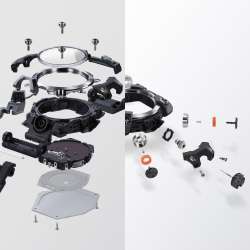
Casio gives the GWG-B1000-1A3 a Carbon Core Guard structure together with shock resistance, vibration resistance, and Mud Resist dust-and-mud protection.
The case and bezel combine stainless steel with bio-based resin, while the resin band also uses bio-based plastic. Casio says the core case uses carbon-fiber-reinforced resin to protect the module while helping keep the overall dimensions and weight under control. That is Casio’s design rationale, although at 52.1 mm wide, the resulting watch is still unmistakably large.
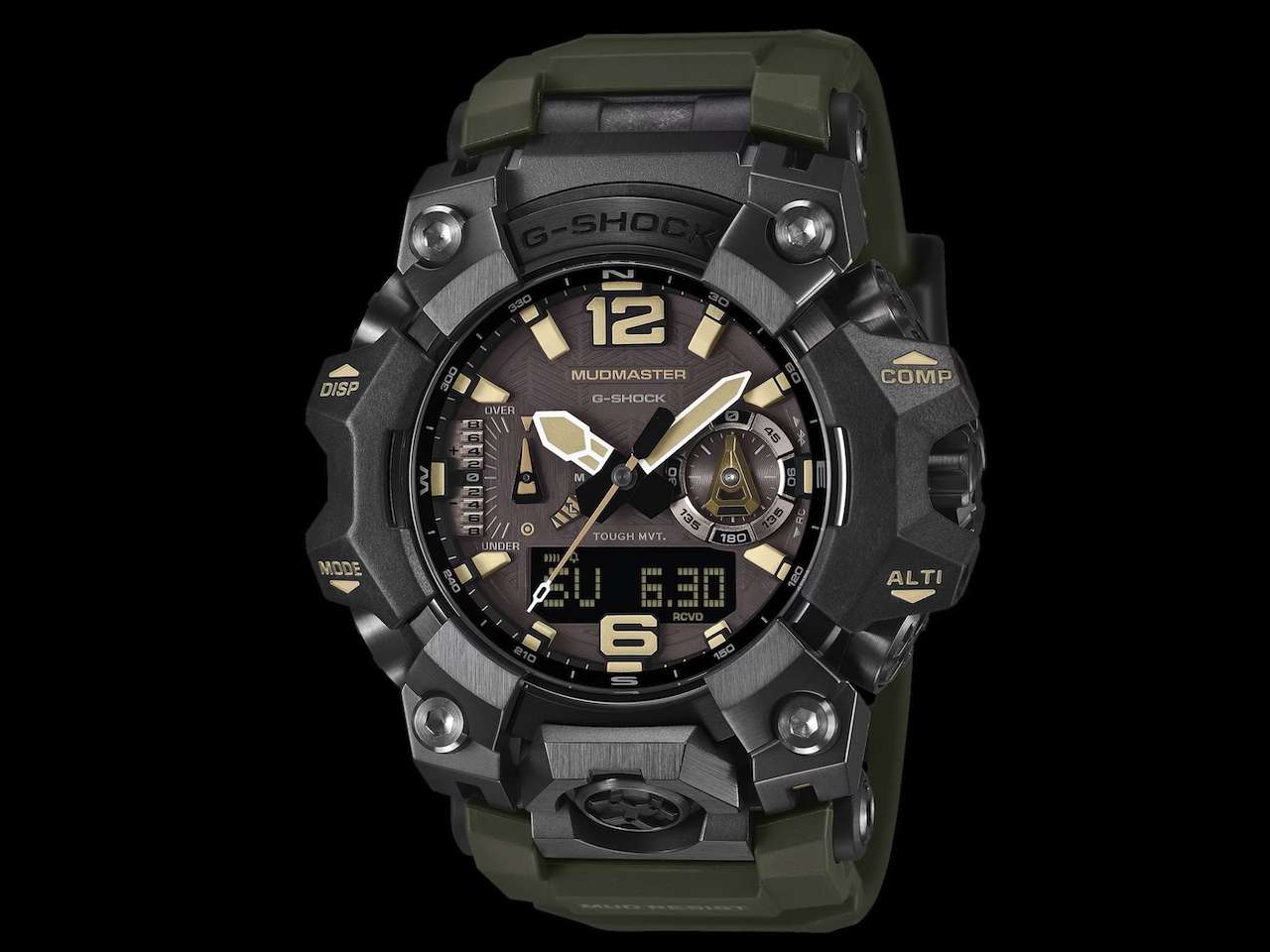 The watch uses a sapphire crystal with an anti-reflective coating, along with a screw-lock crown and 200-meter water resistance. Those specifications reinforce the Mudmaster’s field-oriented positioning without requiring buyers to rely on the aggressive styling alone.
The new 1A3 does not fundamentally change that architecture. Its olive-green band and dark case give the established GWG-B1000 platform another visual option while leaving the functional package largely unchanged.
Solar, radio, and Bluetooth handle routine work
Casio combines Tough Solar, Multi-Band 6, and Bluetooth smartphone connectivity, giving the watch several ways to keep itself running and accurately set.
Multi-Band 6 can correct the time using supported radio signals in compatible regions, while a paired smartphone provides another method of automatic time adjustment. When neither radio synchronization nor smartphone connection is available, Casio specifies conventional quartz accuracy of plus or minus 15 seconds per month.
From a full charge without further light exposure, Casio rates operating time at approximately six months during normal use or about 24 months with power saving enabled.
Bluetooth also does more than correct the clock. Through the Casio Watches app, the watch supports features including Location Indicator, which can point toward a location recorded with the watch or set through the app, and Mission Log, which can combine route information from a phone with altitude data recorded by the watch.
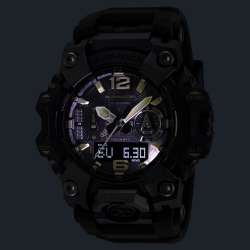
On the watch itself, there is world time for 55 cities across 38 time zones plus UTC, sunrise and sunset information, five alarms, a 24-hour stopwatch, a 60-minute countdown timer, and dual white LED illumination.
Who is the GWG-B1000-1A3 for?
The Mudmaster makes the strongest case for someone who spends enough time outdoors to use its sensors rather than simply admire them. Hikers can make use of altitude and pressure trends, while field workers may value the mud-resistant construction, solar charging, compass, sapphire crystal, and automatic time correction.
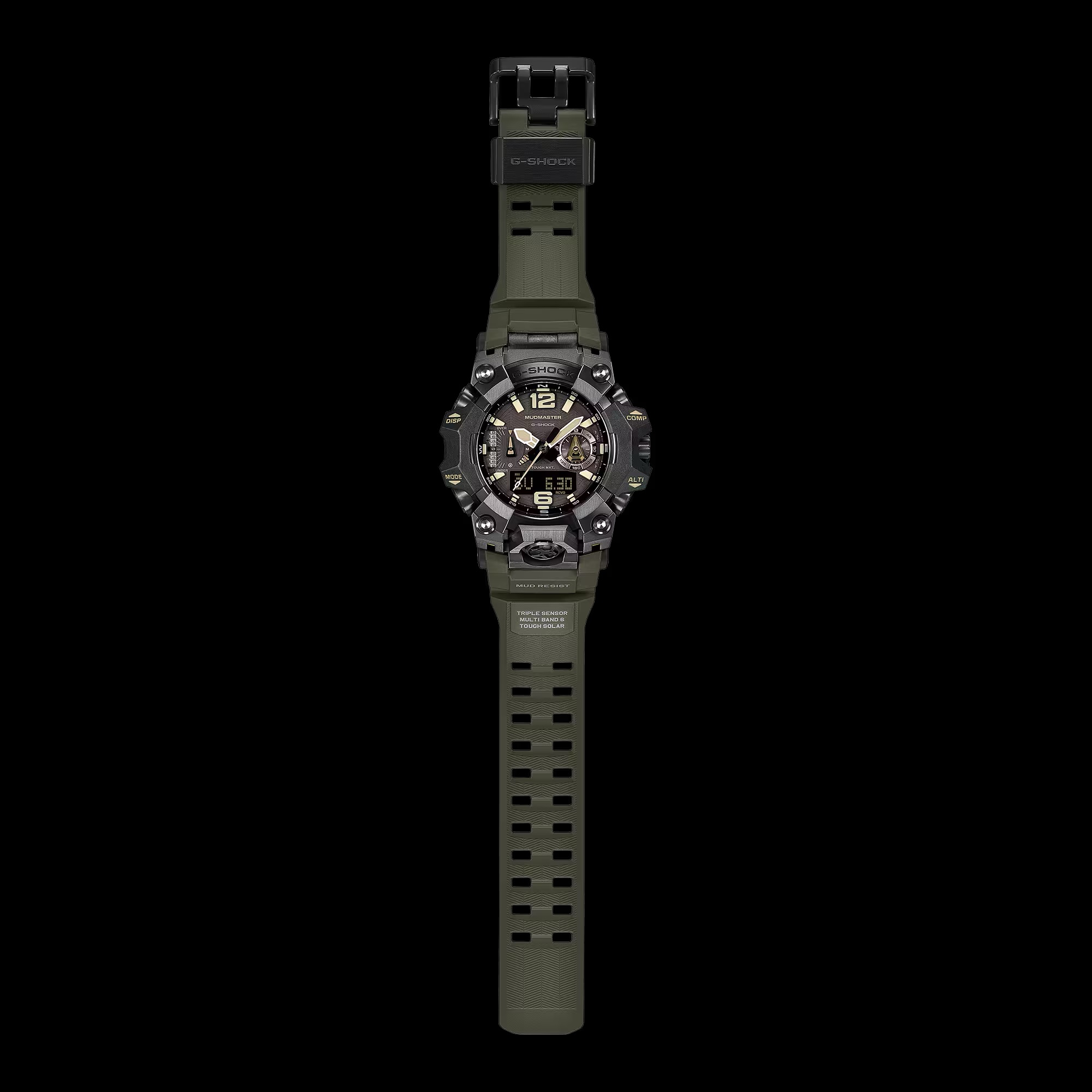
It is a weaker value proposition for someone who mainly wants G-Shock toughness around town. At 52.1 mm wide and 16.2 mm thick, the GWG-B1000-1A3 makes no attempt to disappear on the wrist, and its ¥132,000 price puts it well above mainstream G-Shocks that already provide excellent shock resistance and 200-meter water resistance.
Price: ¥132,000 (About $856)
Where to Buy: Casio
If the compass, altimeter, barometer, solar charging, Bluetooth functions, and mud-resistant construction would mostly sit unused, a cheaper G-Shock is the more sensible purchase. If those are tools you genuinely expect to use outdoors or on the job, the GWG-B1000-1A3 gives its considerable size and price a much stronger justification.
Auto Amazon Links: No products found.
