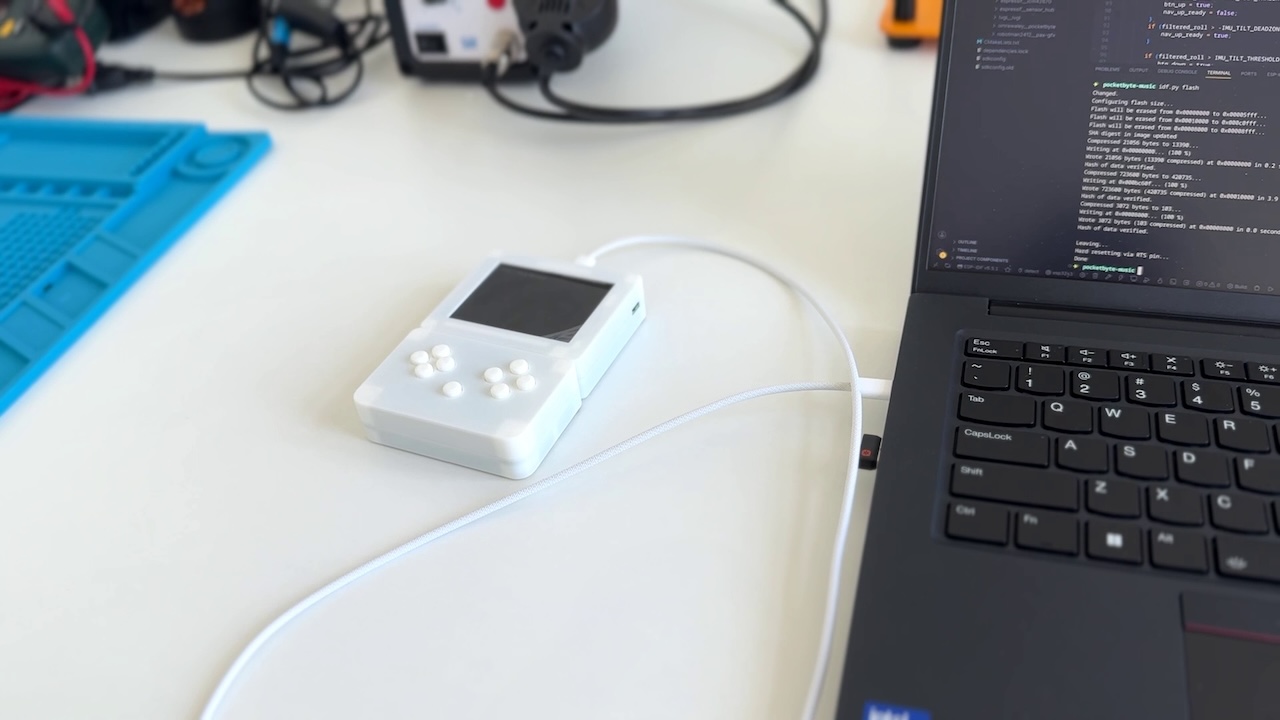
Most pocket handhelds ask you to pick a control scheme at checkout and live with it. Pocketbyte, a pocket computer built by a 16 year old in Toronto, answers with a magnetic port on the bottom edge that lets the whole bottom half come off. Snap on a gamepad for games, pull it, click on a QWERTY board, and the same 75 x 55 mm block becomes a note taker.
Price: TBD
Where to Buy: Pocketbyte
A magnetic port on the bottom edge does the real work
The core module measures 75 x 55 mm, which Pocketbyte puts at roughly the size of a credit card. That block carries the screen, the processor, the battery, and nothing you’d call a control scheme. Controls arrive as attachments, and the lineup Pocketbyte shows covers a gamepad, a Blackberry-style QWERTY keyboard, a breadboard module for wiring your own circuits, and an iPod-style click wheel.
The connection is magnetic, with a pin array carrying power and data across the seam, and Pocketbyte has published the port specification so outsiders can build against it. Swapping takes no tools and no screws, which is the difference between a modular device and a device you’re merely allowed to take apart.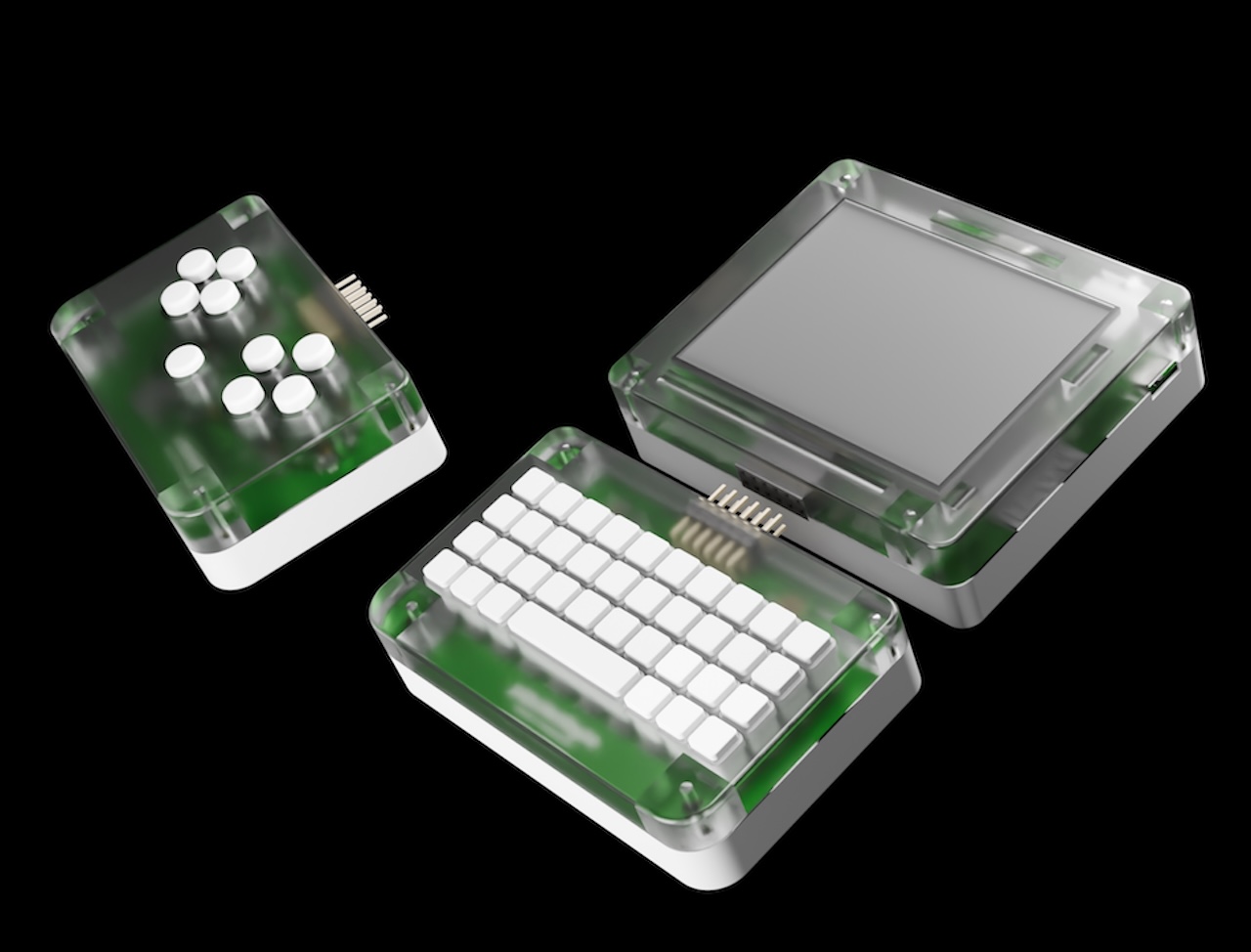
Hot-swapping is the part that changes how you’d actually use the thing. You aren’t locked into a form factor for the life of the device, which is what most pocket handhelds ask of you. Pocketbyte frames this as infinite custom controllers, and that’s the marketing copy talking: four module concepts appear on the site and no DevKit has shipped yet. The port itself is real, and a published port spec sitting next to a public GitHub repo is an open door rather than a locked accessory program.
The spec sheet sets a deliberate ceiling
Pocketbyte runs on an ESP32-S3, a dual-core Xtensa LX7 clocked at 240MHz with 8MB of PSRAM. That’s a microcontroller-class part rather than a phone chip, and the choice shapes what the device can and can’t do. Instant-on behavior and long runtime come easy at that tier, while heavy emulation doesn’t.
The rest of the sheet reads like a careful budget instead of a compromise. You get a 2.8 inch IPS LCD at 320 x 240 that Pocketbyte describes as sunlight-readable, a microSD slot supported up to 32GB, and a 1500mAh Li-Po cell that charges over USB-C. Audio runs through a mono speaker or a stereo 3.5mm jack, and the wireless side splits duties, with Wi-Fi moving data on and off the device and Bluetooth LE handling multiplayer and accessories. Software support starts with C, and Lua sits on the roadmap as an eventual option.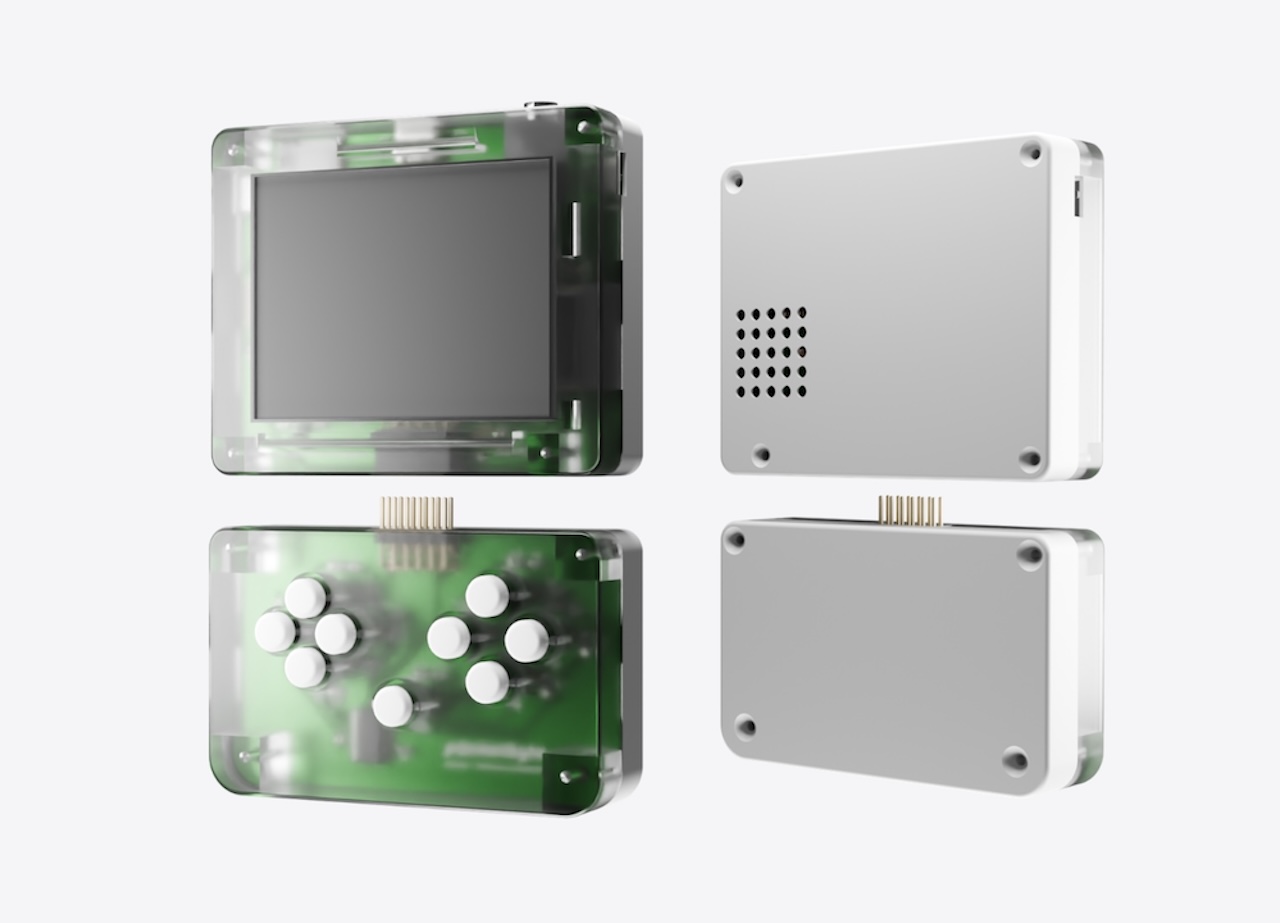
Emulation is the demo, but apps are the argument
Retro-Go does the heavy lifting on emulation, and the systems Pocketbyte lists cover NES, Game Boy Color, Sega Master System, SNES, and Sega Genesis, with DOOM, Quake, and a PICO-8 port of Celeste sitting alongside them. The videos on the site run from June and July of this year and cover the Celeste port, the music player, and a build diary.
Temper the SNES and Genesis line before you get excited. A 240MHz dual-core microcontroller with 8MB of PSRAM handles 8-bit libraries comfortably and gets selective as you climb into 16-bit territory, so compatibility is going to be a per-title conversation rather than a blanket yes. Pocketbyte’s own phrasing is that it plays comfortably up to SNES and Sega Genesis, which is a claim rather than a measured result. Nobody outside the project has published numbers for Pocketbyte specifically, and 16-bit is reliably where hardware in this class runs out of headroom, so that end of the list is the part to check before you commit.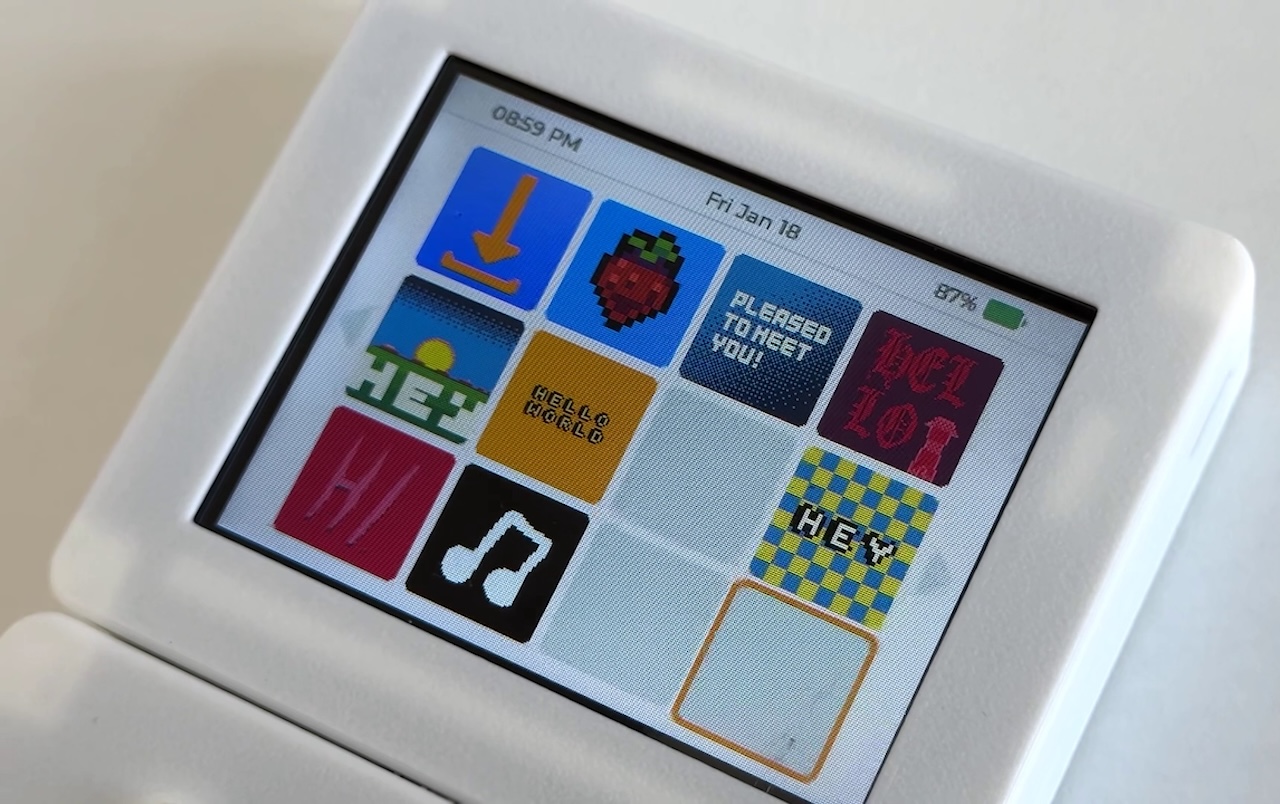
The more interesting claim lives somewhere else entirely. PocketbyteOS runs full applications, and the roster includes a text editor whose notes sync with Notion, Obsidian, or any REST API you point it at, an MP3 and WAV player that reads cover art off the card, and an on-device App Store that pulls community software down over Wi-Fi with nothing sitting between a developer and a release. That’s what separates it from the pile of cheap emulation handhelds [TO FILL: internal link to TG’s Retroid Pocket Nova launch coverage], because those devices do one job and this one is trying to be a small general-purpose computer.
Writing software for it means C with ESP-IDF and FreeRTOS, and the library, firmware, and app store all sit on GitHub, with the C library specifically licensed under Apache 2.0. Hardware files aren’t released, which is the one spot where the open source label currently stops short.
A 16 year old in Toronto has been at this since 2023
Om Rawaley is 16, lives in Toronto, and has been building electronics for over six years. The idea traces back to 2023 and a want for a hackable portable device for both playing and making games, which turned into a concept called the FlamingoBoy. That one never got past being a small side project. December 2024 is when Rawaley decided the appetite for a device like this went well past one person, and Pocketbyte started.
Solo hardware projects carry obvious risk, and pretending otherwise would waste your time. What sits on the other side of the scale is that the code is on GitHub, the module spec is public, and the documentation is already written, which gives the device a life beyond one founder’s attention span in a way a closed product never gets.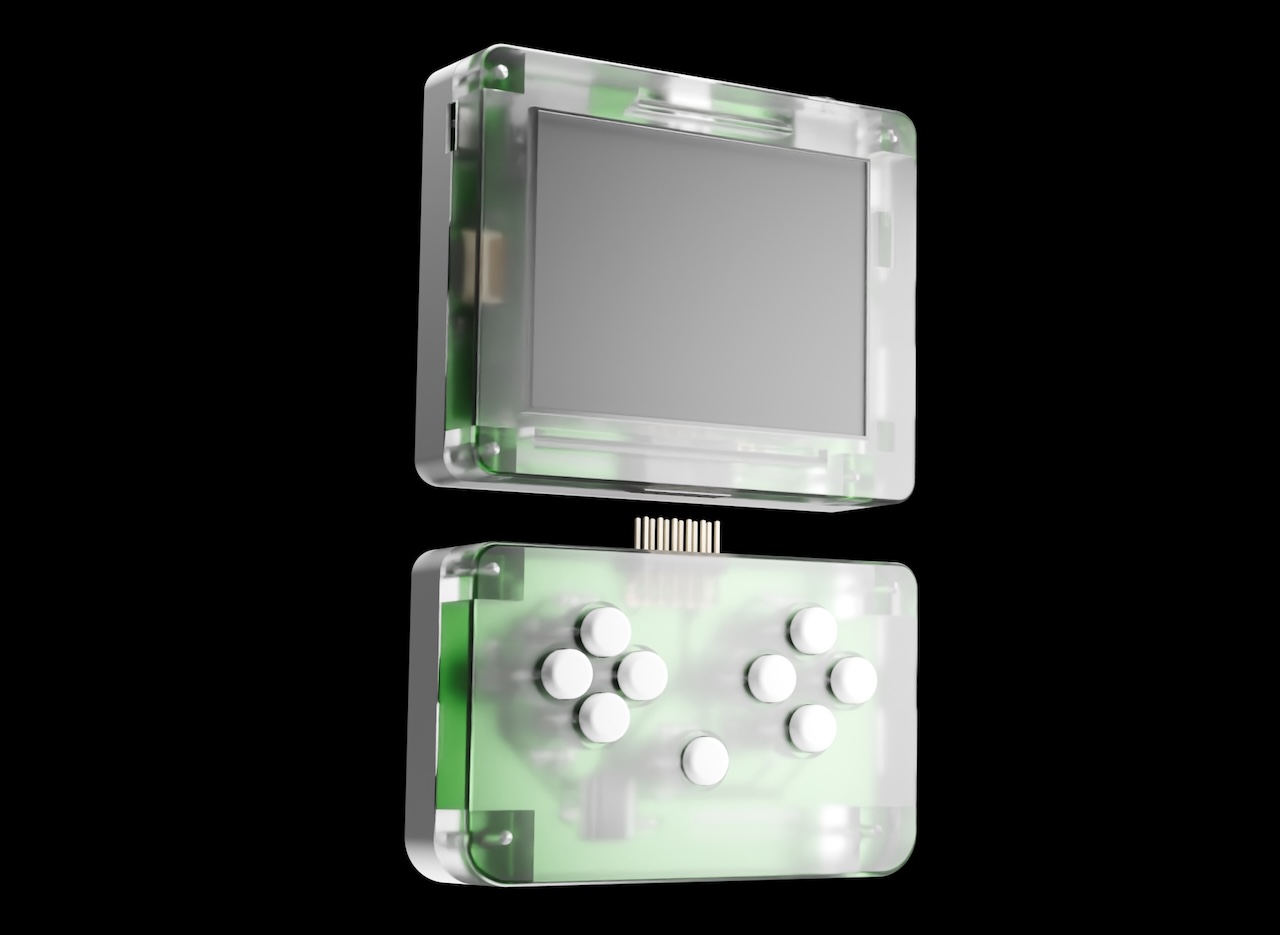
What Pocketbyte still hasn’t priced or dated
Price isn’t locked, but a number does exist. Pocketbyte’s FAQ says there’s no official price at the moment and that DevKits will likely land in the $70 to $100 USD range, which is the company’s own estimate rather than a listing. Pre-orders open this summer, the first batch is limited, and the kits are aimed at early adopters and developers whose feedback shapes the next revision.
Storage caps at 32GB, which is generous for retro ROMs and thin for a music library. If you’re picturing this as an iPod replacement, count your files first.
Runtime is the other blank. Pocketbyte lists a 1500mAh cell and says “hours of gameplay,” which isn’t a number anyone can plan around. A microcontroller at 240MHz driving a 320 x 240 IPS panel should be frugal by handheld standards, though frugal covers a wide range. We’ll measure it ourselves once a unit lands on the desk.
Who should be watching this one
The audience here is people who like the idea of a device they can open, modify, and write software for. If you want a polished emulation handheld with a deep library and no setup, buy something running Android and move on with your day. If you want an ESP32-S3 handheld with a documented expansion port and a published spec anyone can build against, this is the more interesting object on the table.
Price: TBD
Where to Buy: Pocketbyte
Pre-orders open this summer with a limited first batch, and that’s where a promising open source project either ships or joins the long list of well-documented concepts. We’ll cover the final pricing the day Pocketbyte opens orders.