The Keychron V5 Max and the NuPhy Air75 V2 share a spec sheet: QMK/VIA firmware, a 1,000 Hz 2.4 GHz link, Bluetooth and a 4,000 mAh battery in each frame. The split is physical, and it starts with the numpad.
Keychron keeps the numpad and adds a knob. NuPhy drops both and cuts the frame to 13.5 mm.
Layout math is the whole comparison
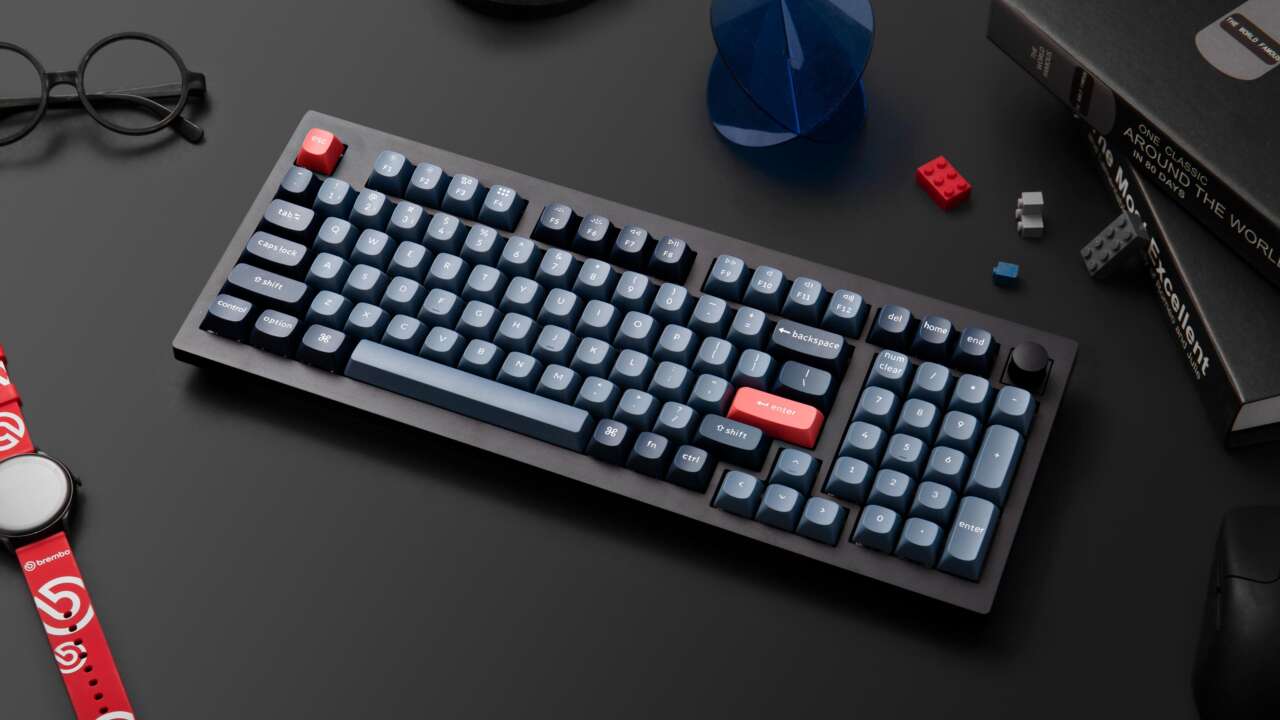
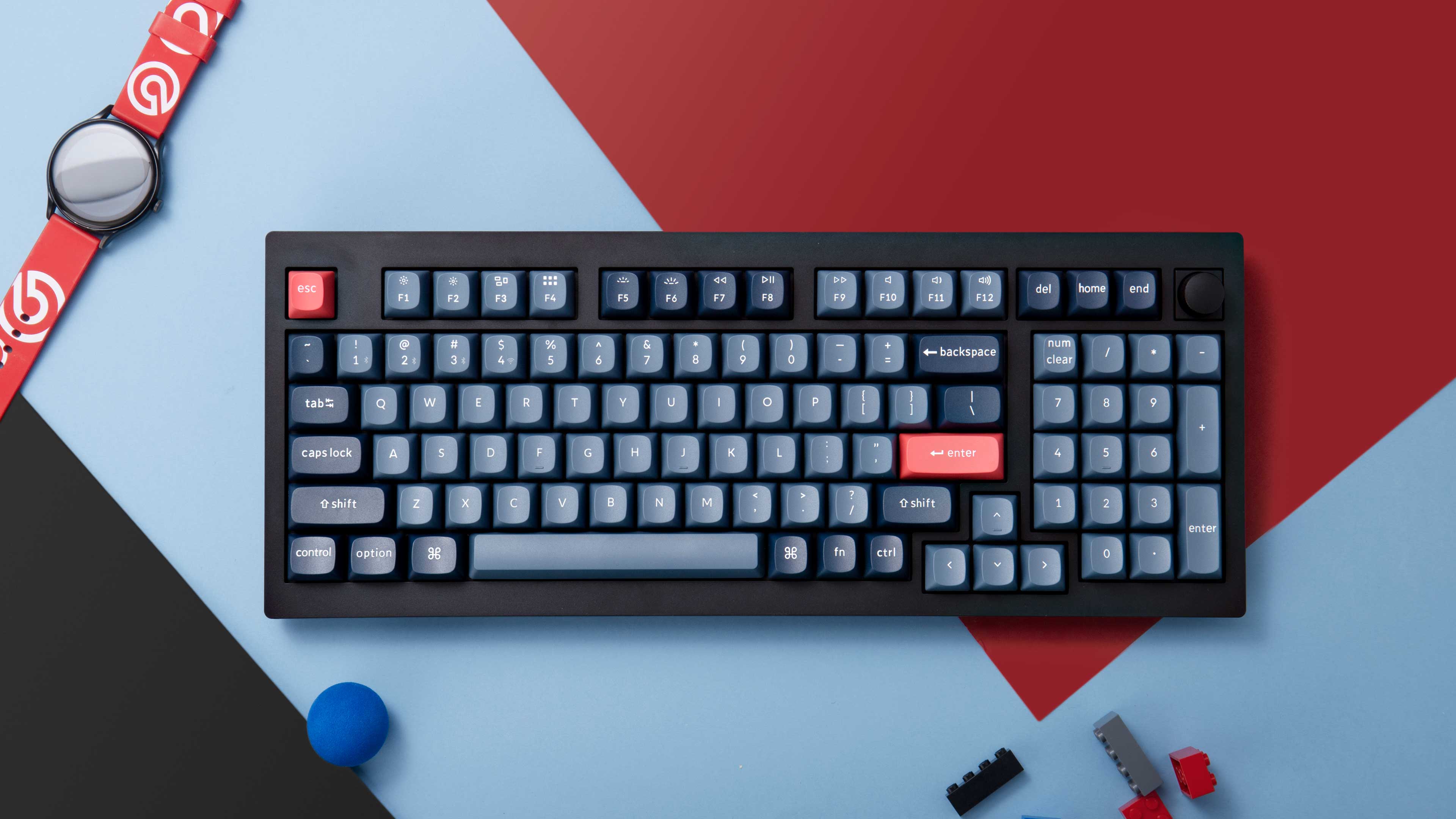
The V5 Max packs 100 keys into a frame measuring 391.5 by 148.7 mm, so the numpad survives without the sprawl of a traditional full-size board that runs closer to 440 mm across. Keychron squeezes that layout down with a compressed right edge, which keeps the arrow cluster separate from the main block instead of burying it under a function layer. A knob sits in the top right corner above the numpad for volume and scrolling duty.
Dedicated keys change how number work feels across a long day of spreadsheets, budgets and data entry. Layered number rows get the job done, though they never match the rhythm of a real pad.
Price: $89.24 on Amazon at check, against a $104 list price
Where to buy: Buy on Amazon
The Air75 V2 answers with 84 keys inside a 316.4 by 132.5 mm frame, and the missing 75 mm of width lands exactly where a mouse wants to travel during a workday. A shorter board also centers the letter keys in front of the shoulders, which quietly fixes the left-shifted typing posture that wide boards impose for hours at a time.
Height changes how each board types
The V5 Max is a full-height board with a gasket mount, a polycarbonate plate and hot-swappable Gateron Jupiter switches under double-shot PBT keycaps in the taller OSA profile. The gasket gives each keystroke a small amount of give, so the board lands softer than a rigid tray-mount design at the same price. Switch swaps take seconds with a puller, and the south-facing sockets accept the standard three-pin and five-pin switches already sitting in most drawers.
That flex is the comfort play for long writing sessions at a fixed desk, and the Keychron feels planted while it types. Writers who log long days at one desk feel that softness most, since the frame absorbs the small shocks a rigid board passes straight into the fingers and wrists over thousands of keystrokes every week.
Price: $59 on Amazon
Where to buy: Buy on Amazon
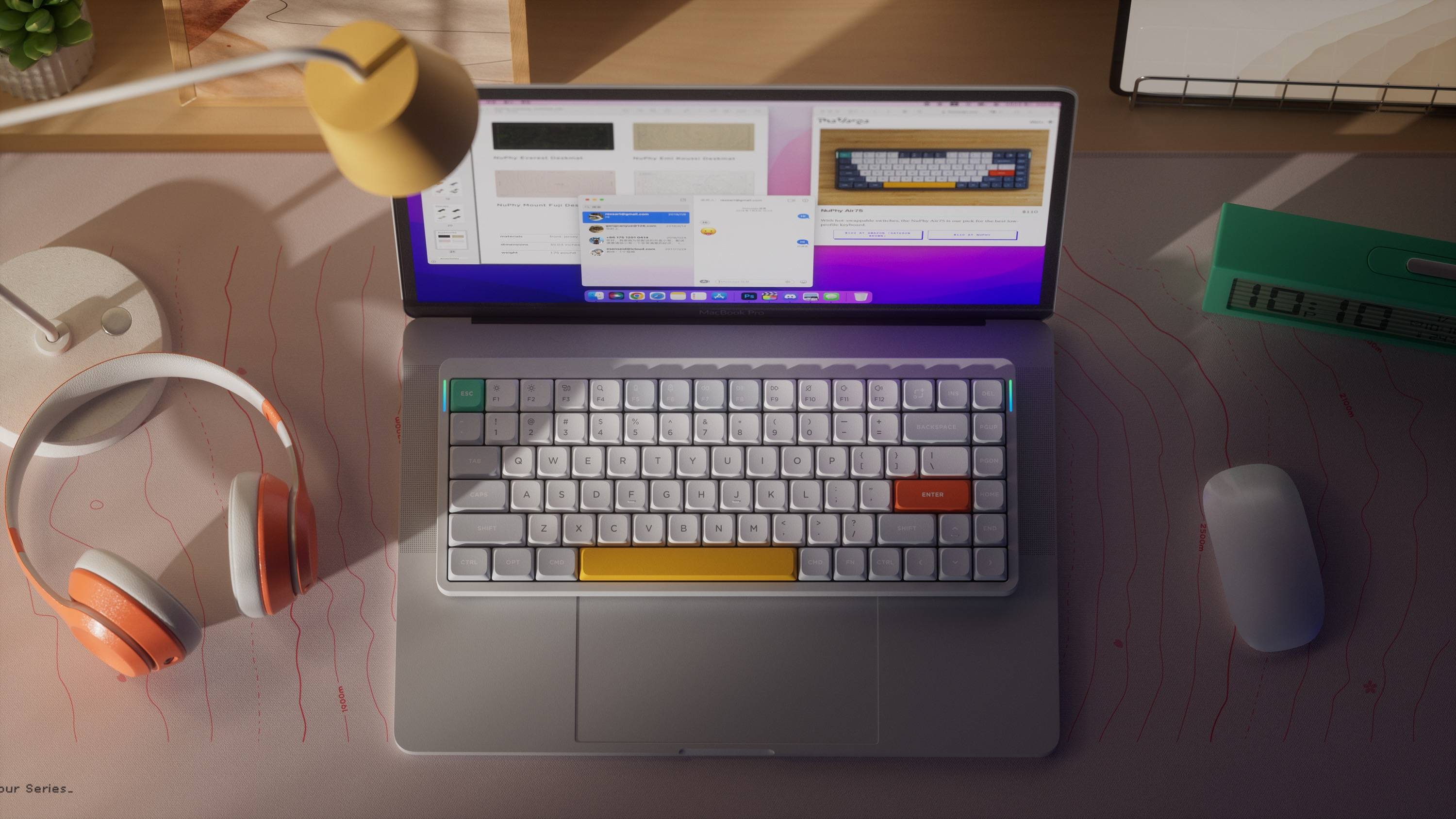
The Air75 V2 stands 13.5 mm tall in an aluminum top frame, and its Gateron low-profile switches travel 3.2 mm against the longer stroke of a standard switch, so typing feels quick and flat. NuPhy adds fold-out AirFeet that let the frame sit between the rows of a laptop keyboard, turning the laptop itself into the desk stand. That deck trick solves the hotel-desk problem in seconds, and no riser or separate stand has to ride in the bag.
Battery, links and the travel question
Both boards carry the same 4,000 mAh cell, and the rated endurance lands close: up to 190 hours for the Keychron with its backlight off, up to 220 hours for the NuPhy with its lights off. Lighting breaks the tie, dropping the V5 Max to about 100 hours and the Air75 V2 to 35 to 57 hours with every lamp lit. The Keychron holds three Bluetooth pairings, while the NuPhy holds four across its links.
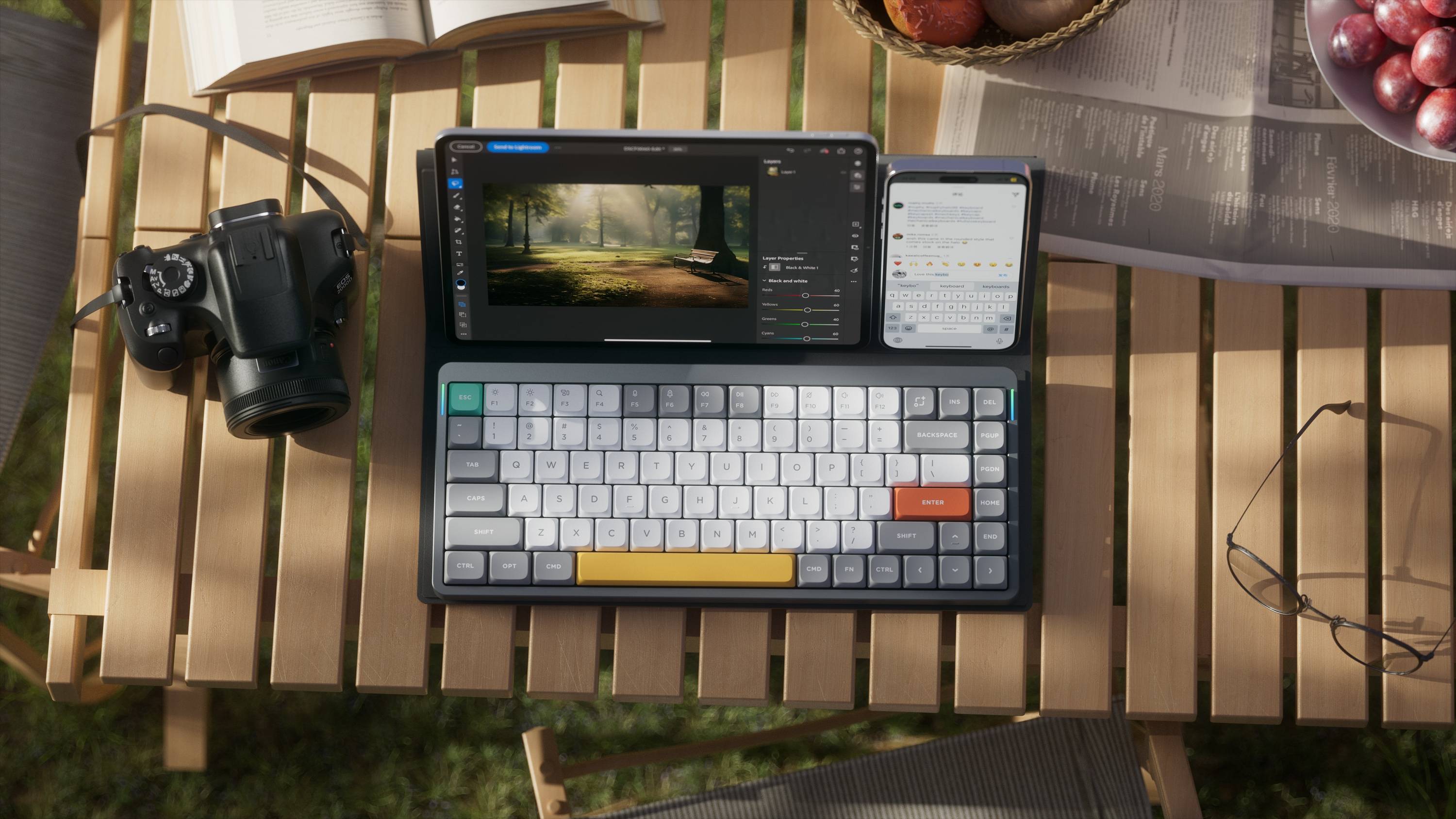
Weight settles the travel side without much debate, since the Air75 V2 weighs 598 g against 925 g for the V5 Max in the same bag. The NuPhy also holds four device pairings at once, which suits a rotation between a laptop, a tablet and a phone across one day.
The verdict
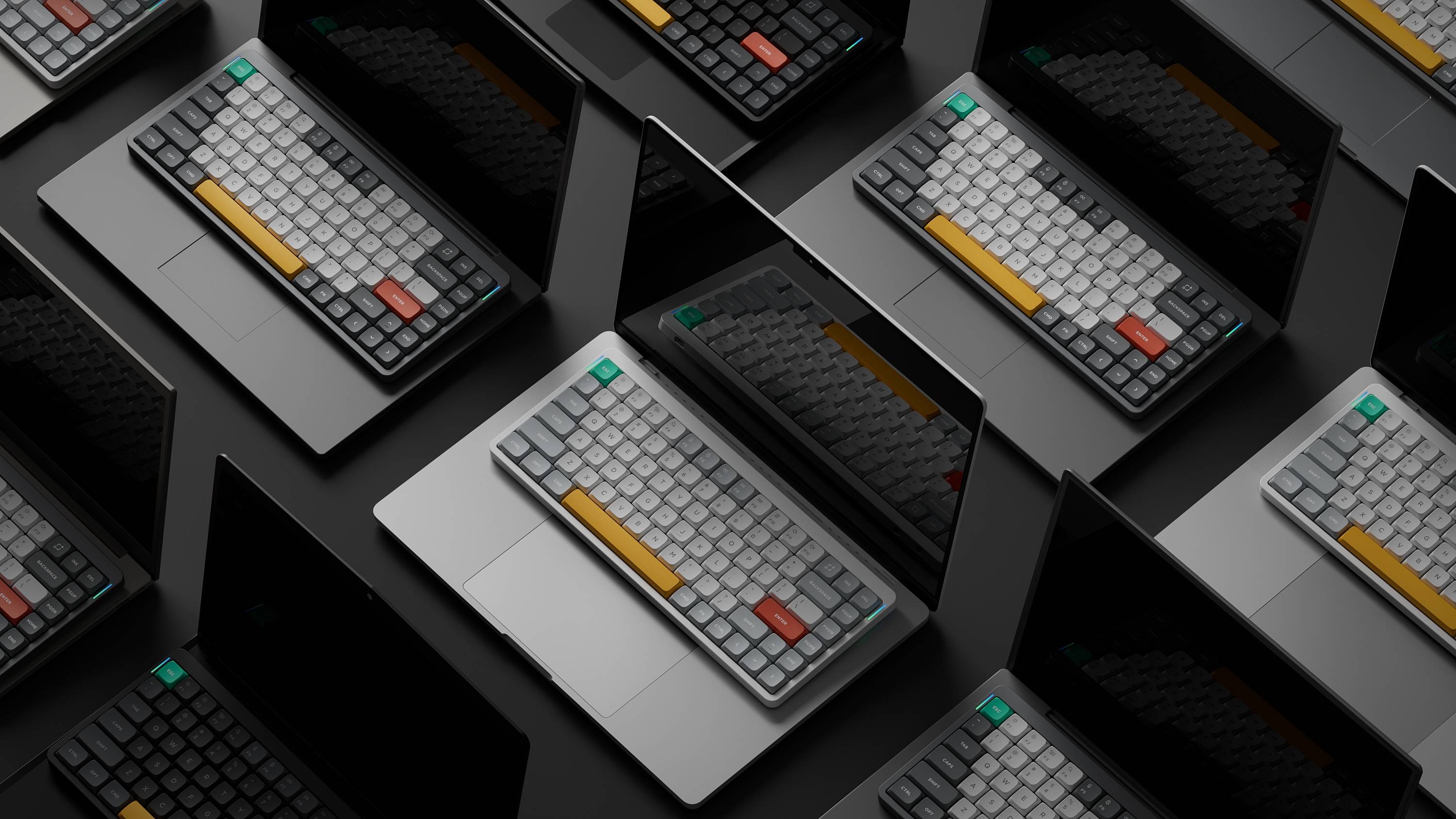
Spreadsheet-heavy desks and daily number work point straight at the V5 Max, which runs $89.24 on Amazon against a $104 list price. The gasket mount and the knob sweeten the pick, though the layout itself stays the deciding fact every day.
Travel kits and laptop-first setups point at the Air75 V2, which runs $59 on Amazon. It rides over a laptop keyboard and slips into a bag at 598 g.