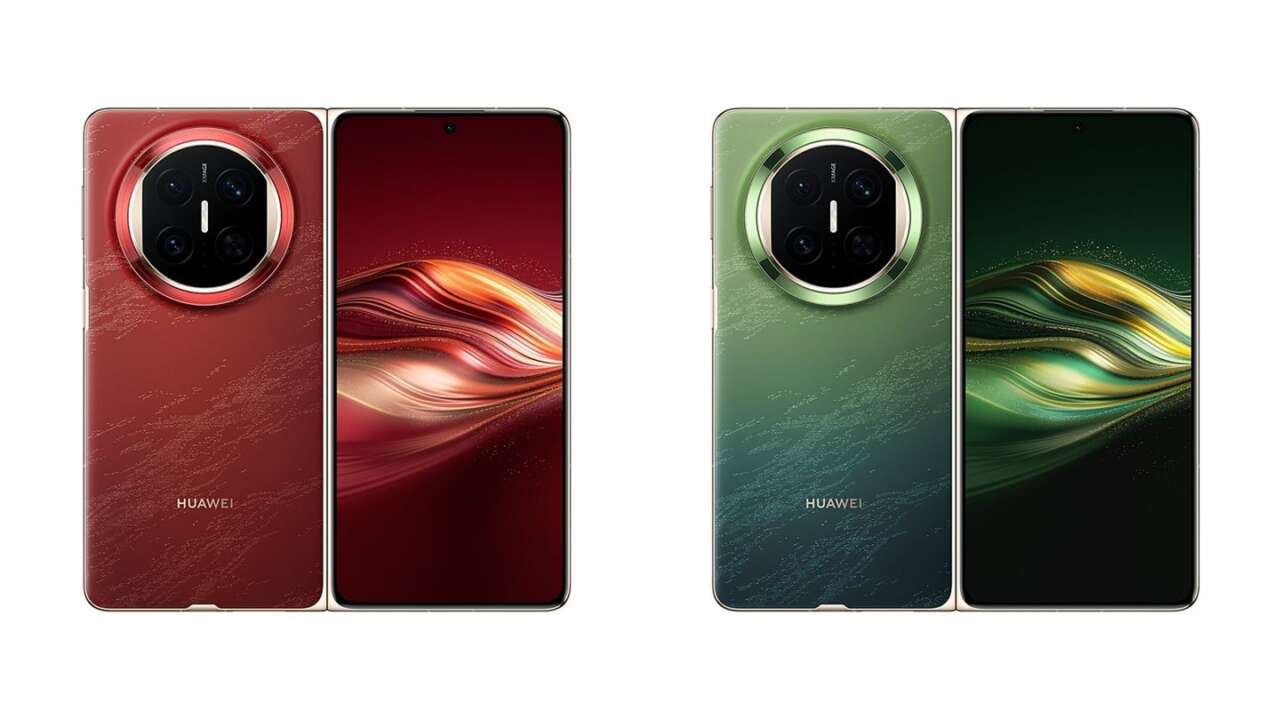
Huawei’s Mate X8 is the thinnest foldable the company has ever built. Open, it measures just 4.2mm thick. Around that frame sits an 8.2-inch inner display, and a new magnetic hinge works to keep the big panel flatter than on any Mate X before it.
China gets it first, and possibly only, since Huawei hasn’t announced an international release or any US sales channel. American buyers are looking at an import rather than a phone on a store shelf.
Price: From 12,999 yuan (China); the closest US alternative, the HONOR Magic V5, is $1,350
Where to buy: Buy on Amazon; Buy at Huawei
Two bigger displays and a flatter fold
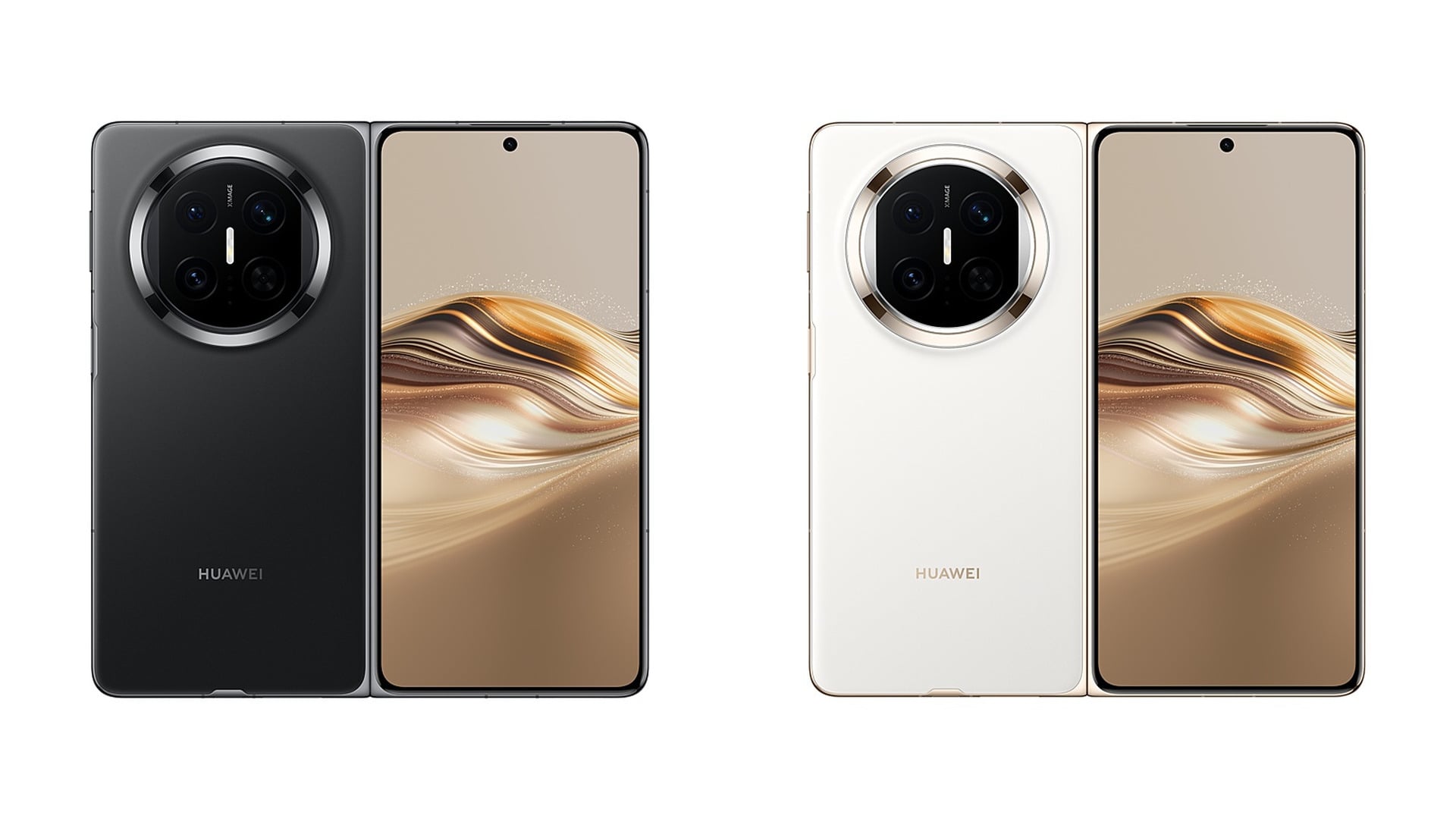
Unfolded, the inner display runs 8.2 inches at 2424 x 2340, up from 8 inches on the Mate X7, with a near-square shape, 1-120Hz LTPO refresh and 1440Hz PWM dimming under ultra-thin glass. Brightness peaks at a claimed 8,000 nits locally, and the panel can drop to a single nit in the dark.
Closed, you’re working on a 6.54-inch cover screen at 2444 x 1132. It’s a dual-layer OLED with the same 1-120Hz LTPO range and 1.07 billion colors. At 12,000 nits of local peak brightness, Huawei rates it brighter than the inner panel, and both screens support HDR Vivid, so highlights carry the same punch inside and out.
Huawei spent the engineering budget on the hinge. A magnetic flattening system, built from a 0.1mm magnetic composite and an aerospace-grade steel laminate, pulls the inner screen flatter as it opens, cutting the crease height difference to as low as 15 microns and improving screen flatness by 90%.
Glare gets attention too. A nine-layer anti-reflective coating holds reflectance to 0.9%, which should keep the big panel readable outdoors. Cover glass splits by edition, third-generation Kunlun Glass on the standard model and second-generation Xuanwu Kunlun Glass on the Collector’s Edition.
Kirin 9050 Pro and a 6,200mAh battery
Every Mate X8 runs the Kirin 9050 Pro. It’s the same Logic Folding Tau silicon Huawei puts in its tri-fold, built on a 9-core, 16-thread CPU, a Maleoon GPU with second-generation ray tracing and a Da Vinci NPU doing the AI work. Huawei’s claimed gain over the Mate X7 is 31% overall, with GPU rendering up 40% and the NPU running 140% faster than the chip it replaces.
Battery capacity jumps to 6,200mAh, up from about 5,500mAh on the Mate X7, and that’s the largest cell Huawei has fitted in a single-fold phone, sized for the 8.2-inch panel it has to feed. IP58 and IP59 ratings cover dust and water, and the phone runs HarmonyOS 7.
Folded, the phone measures 8.95mm thick, down from 9.5mm on the X7. A merged cellular and Wi-Fi antenna design triples the antenna area for a claimed 2dB signal gain. It’s a spec sheet aimed at the two complaints foldable owners actually raise, battery life and the crease, rather than at novelty features.
Four cameras, plus one you bolt on

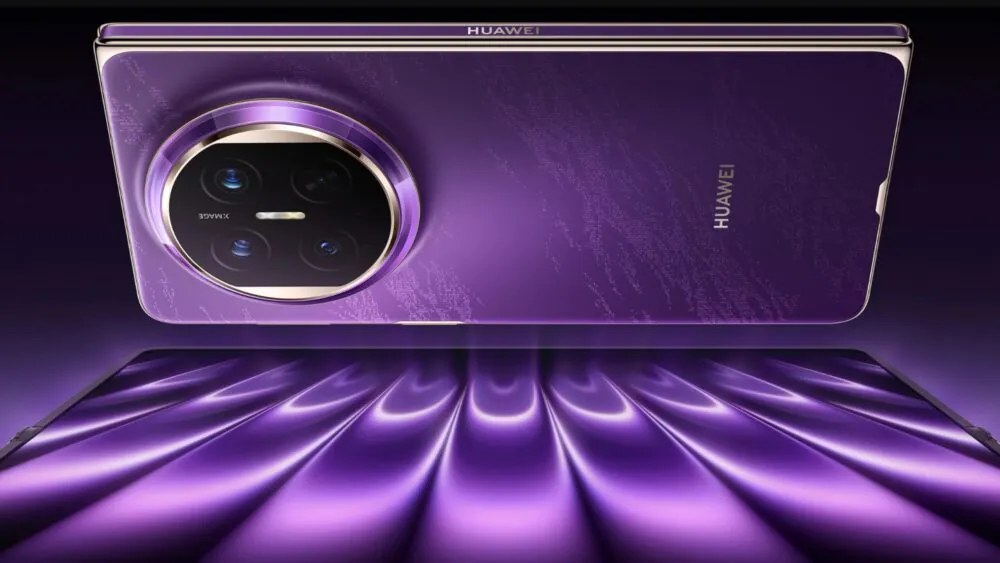
Rear cameras start with a 50-megapixel main unit carrying a variable aperture and optical image stabilization. Alongside it sit a 40-megapixel ultrawide, a 50-megapixel periscope telephoto at 3.5x optical zoom, and a third-generation Red Maple multispectral sensor that handles color accuracy across the set, all of it arranged inside the circular ring.
The main camera splits by version. Standard models use a 1/1.56-inch sensor with an f/1.4 to f/4.0 variable aperture, while the Collector’s Edition gets a larger 1/1.28-inch sensor opening to f/1.49. Low light is what both sensors are built for, and the bigger one stays reserved for Collector’s Edition money.
Every Mate X8 also supports Huawei’s Ruiying Z10 modular camera, a separate 1-inch, 50-megapixel unit with its own optical stabilization that mounts to the phone. Huawei offers it as a kit with a control handle and connector shell, aimed at shooters who want a longer optical range without carrying a second camera body.
Built thinner, finished in brocade
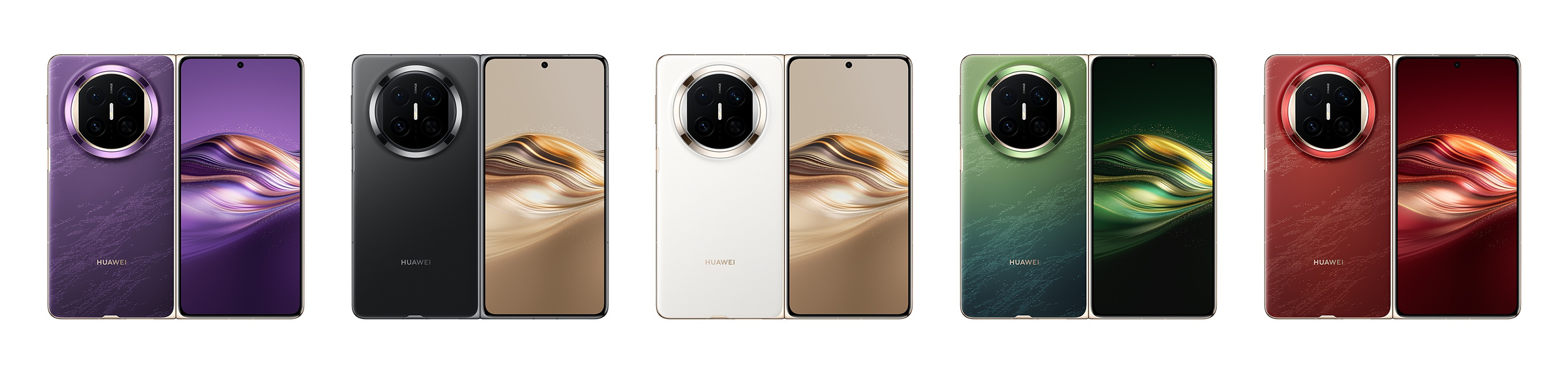
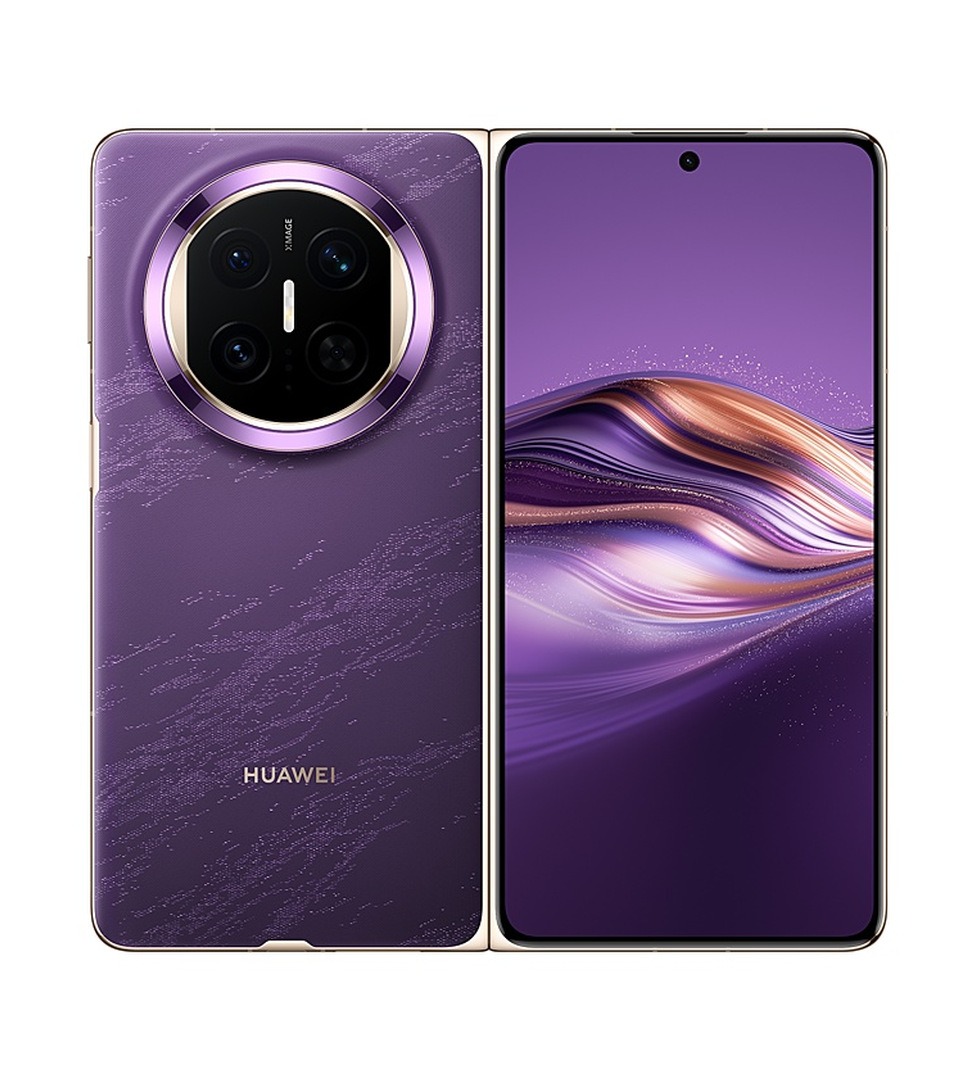
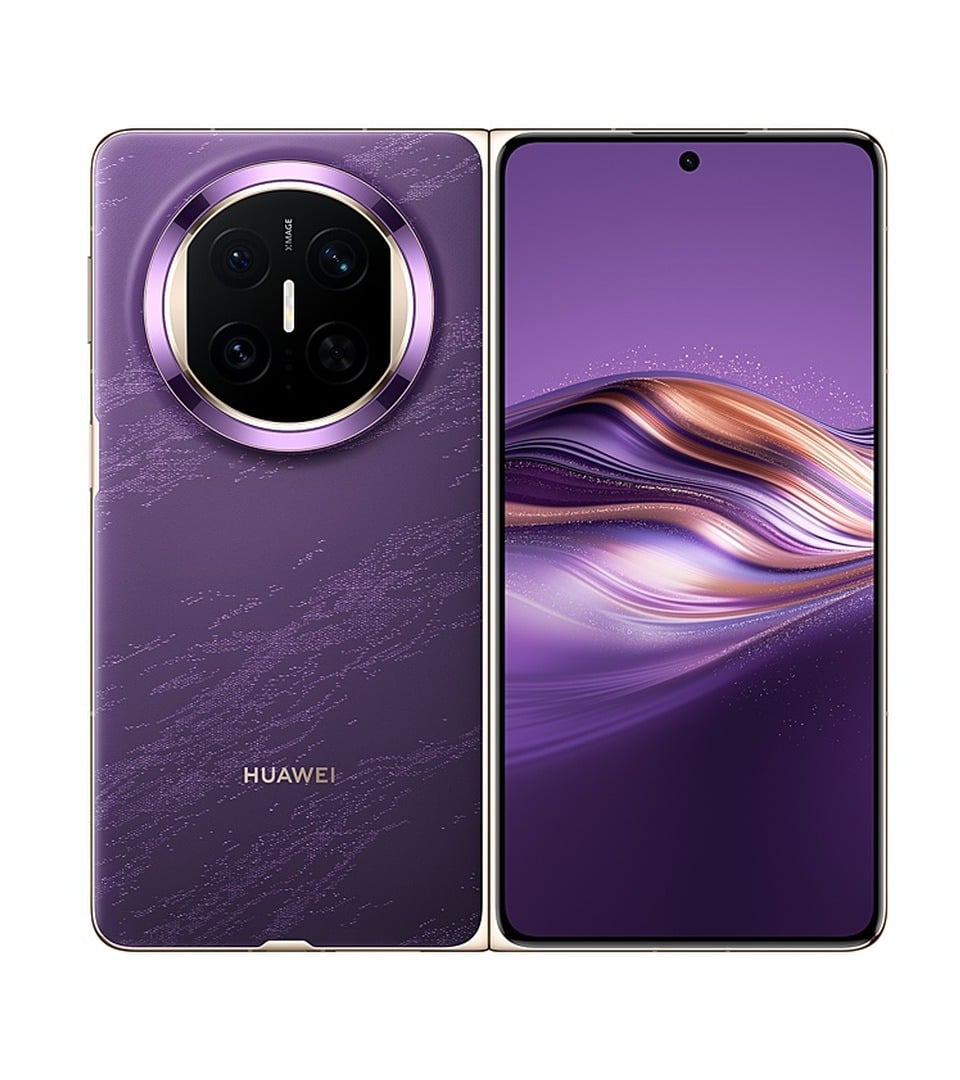
A circular camera ring sits at the center of the back panel, and the design leans into texture. Texture does the talking here. Three of the five finishes, Purple Gold Brocade, Qingyun Brocade and Danxia Brocade, carry a woven brocade pattern across the back, the silk-weave finish Huawei has carried across its recent flagships. Snowy White and Azure Sky Black keep a plain finish instead.
At 4.2mm open and 8.95mm closed, the X8 trims roughly half a millimeter from the X7 in both directions. The Collector’s Edition shares the same body, the same chip and the same camera hardware outside the main sensor, with its differences sitting in memory, cover glass and which finishes reach the top configurations.
Price and availability
Pricing starts at 12,999 yuan in China for 12GB of RAM and 256GB of storage. The 512GB version runs 13,999 yuan. That matches the Mate X7’s starting price exactly. Collector’s Editions with 16GB of RAM cost 15,999 yuan at 512GB and 16,999 yuan at 1TB, and a 2TB model tops the range at 20,999 yuan in two colors, Purple Gold Brocade and Azure Sky Black.
Pre-sales opened in China through Huawei’s own store and authorized retailers, with open sales following on December 4 and the 2TB model on December 20. Pricing or timing for any market outside China hasn’t been announced, and Huawei phones aren’t sold through US carriers or retailers.
Price: From 12,999 yuan (China); the closest US alternative, the HONOR Magic V5, is $1,350
Where to buy: Buy on Amazon; Buy at Huawei
The Mate X8 refines the foldable formula rather than reinventing it: bigger and brighter screens, a thinner body, a much larger battery, a brighter cover screen and a hinge aimed squarely at the crease. For US readers it stays a watch-from-across-the-water product until Huawei says otherwise, and the foldables Americans can actually buy aren’t standing still in the meantime.