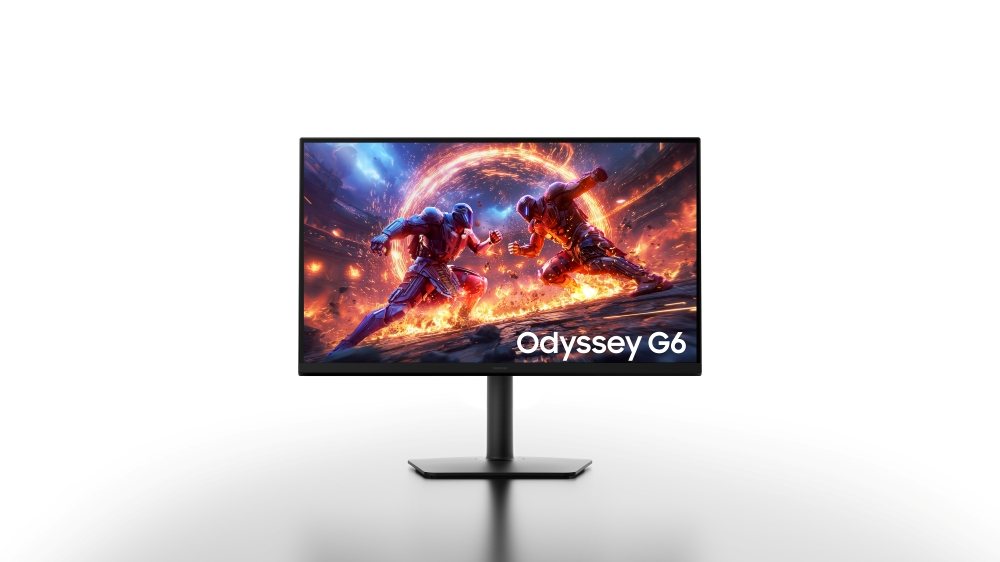
Samsung’s Odyssey G6 G60H is a 27-inch IPS gaming monitor that runs at 600Hz at its native QHD resolution. Its Dual Mode drops to HD and pushes the refresh rate to 1,100Hz.
Samsung Odyssey OLED G6 (G60SF), 27-inch QHD QD-OLED gaming monitor, 500Hz, LS27FG602SNXZA
Price: $649.99
Where to buy: Buy on Amazon
The G60H has been a long time coming, and its headline number grew while it waited for a release slot. Samsung first showed this monitor with a 1,040Hz Dual Mode figure, then raised the final launch specification to 1,100Hz in HD while holding native QHD at 600Hz, and that upgrade is the story here. A monitor that sat on show floors as a 1,040Hz headline is shipping as a 1,100Hz one, and the QHD mode underneath it didn’t move at all. That growth is the story.
Two refresh rates, two resolutions
Dual Mode is a trade, and Samsung states its terms plainly on the product page for anyone who reads past the big number. At the panel’s native QHD resolution of 2,560 by 1,440, the G60H runs at up to 600Hz, which works out to a new frame roughly every 1.67 milliseconds. Switch to Dual Mode and the resolution falls to HD while the refresh rate climbs to 1,100Hz, cutting that frame interval to about 0.91 milliseconds for each new frame. Speed costs sharpness here. The 1,100Hz mode gives up the pixel density that makes a 27-inch QHD panel look crisp, and it gives that density up in the fast, flat arenas where competitive players spend their time.
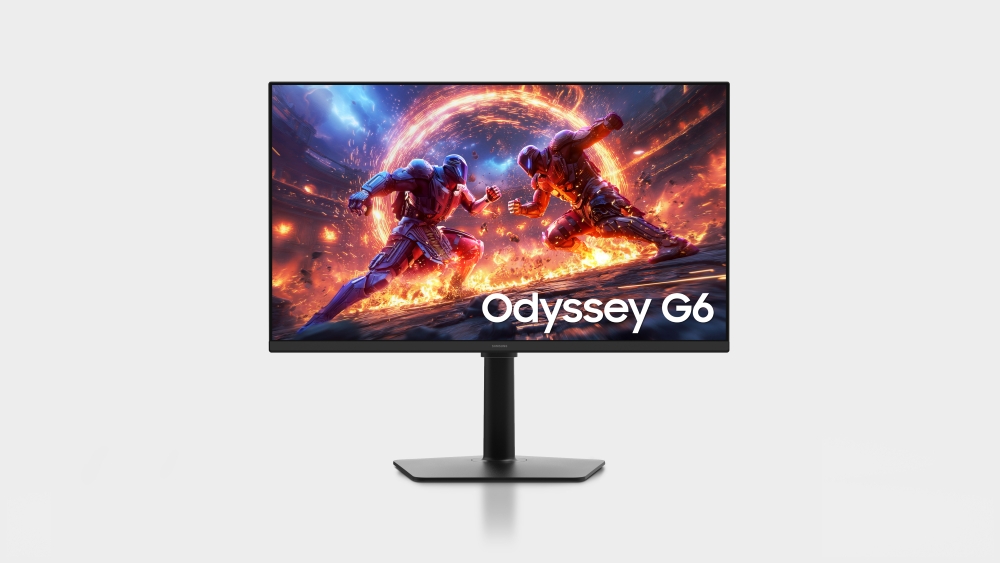
Feeding either mode takes current hardware, and Samsung’s own footnotes draw the lines that the headline skips over entirely. The monitor carries one DisplayPort 2.1 input and two HDMI 2.1 inputs, and Samsung notes that AMD FreeSync Premium doesn’t support the 1,100Hz mode at all. Radeon RX6 series cards and anything below them don’t support refresh rates of 1,000Hz or higher, and Dual Mode plus the native 600Hz rate aren’t supported on macOS at all. G-Sync Compatible support covers NVIDIA cards, though Samsung’s footnote ties both sync systems to compatible graphics cards from each maker rather than to the monitor alone. A fast panel is only half the purchase. The graphics card, the cable and the game engine all have to reach the same number before the screen can show it.
The panel, ports and stand around the speed
Underneath the refresh race sits a flat 27-inch IPS panel with 178-degree viewing angles in both directions and a 1ms gray-to-gray response time. Samsung rates typical brightness at 400 nits with a 450-nit peak, lists a 1,000:1 contrast ratio, and covers 99 percent of the sRGB gamut with support for one billion colors. HDR support runs to HDR10 and HDR10+ Gaming, and the feature list adds Odyssey Clear Motion for reduced motion blur, a Virtual Aim Point on-screen crosshair and Auto Source Switch+ for jumping to a device that just powered on. IPS contrast is the weak point. A 1,000:1 ratio won’t produce the deep blacks of an OLED panel, and Samsung doesn’t pretend otherwise anywhere in its specifications.
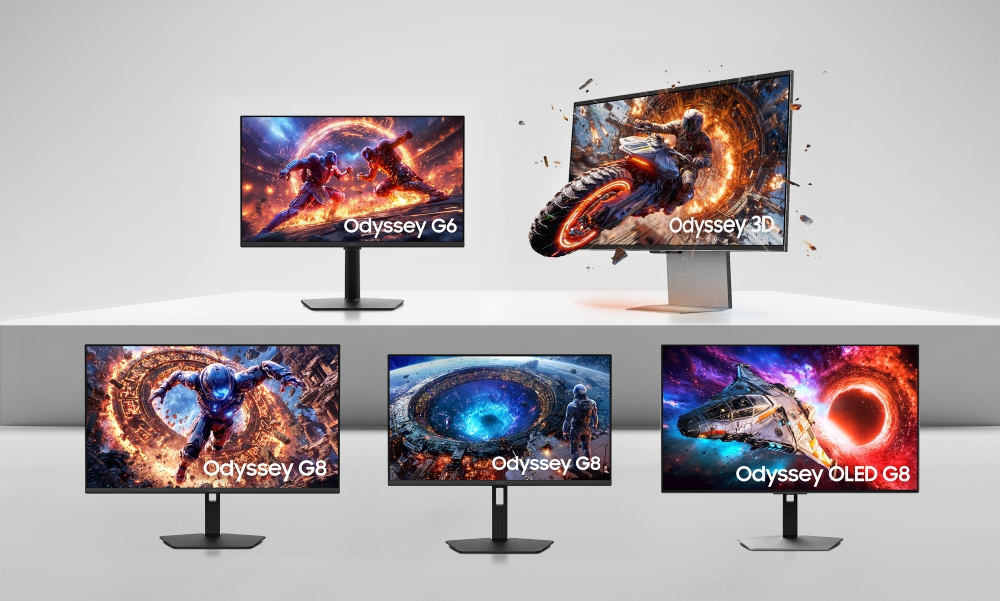
The stand and the port layout suit a desk that hosts more than one machine, which is where a monitor at this level usually ends up living. Height adjusts by 105 millimeters, the panel tilts, swivels 45 degrees each way and pivots a full 92 degrees into portrait, and a 100 by 100 millimeter VESA mount covers wall and arm setups. Two USB-A 3.2 Gen 1 downstream ports hang off a USB-B upstream connection, and a headphone jack handles audio out for a headset or a soundbar. The monitor itself carries no speakers at all. No speakers, no shortcuts. The set weighs 5.0 kilograms with the stand fitted, draws up to 78 watts, and ships with both an HDMI cable and a DisplayPort cable in the box. None of this is glamorous on its own. It’s the difference between a spec sheet trophy and a monitor that fits into a working setup on the first afternoon.
Samsung puts the G6 on sale globally in the second half of 2026 and says plainly that timing varies by market, with pricing announced market by market as each launch lands. For US buyers that means the two facts that decide a purchase, the dollar price and the on-sale date, are still open as this piece publishes today. Readers who want a high-refresh Samsung on the desk this week already have one, and it takes a different route to speed than the G60H does. The Odyssey OLED G6 G60SF pairs a 27-inch QD-OLED QHD panel with a 500Hz refresh rate and a 0.03ms response time, trading the G60H’s raw frame count for OLED contrast and near-instant pixel response instead.
Samsung Odyssey G6 (G60H), 27-inch QHD IPS gaming monitor, LS27HG602ENXZA
Price: TBD, Samsung hasn’t announced a US price yet
Where to buy: Buy at Samsung
The G60H is built for one reader, the competitive FPS player whose rig already pushes frame rates that a 240Hz or 360Hz screen can’t display in full. That player gets a real choice on one panel, 600Hz at full QHD for ranked sessions that reward detail, or 1,100Hz at HD when motion clarity outranks everything else on the screen. Everyone else should hold off until Samsung names a US price, because the $649.99 Odyssey OLED G6 already delivers 500Hz with OLED blacks today, and it does so at a price a buyer can actually pay this week.