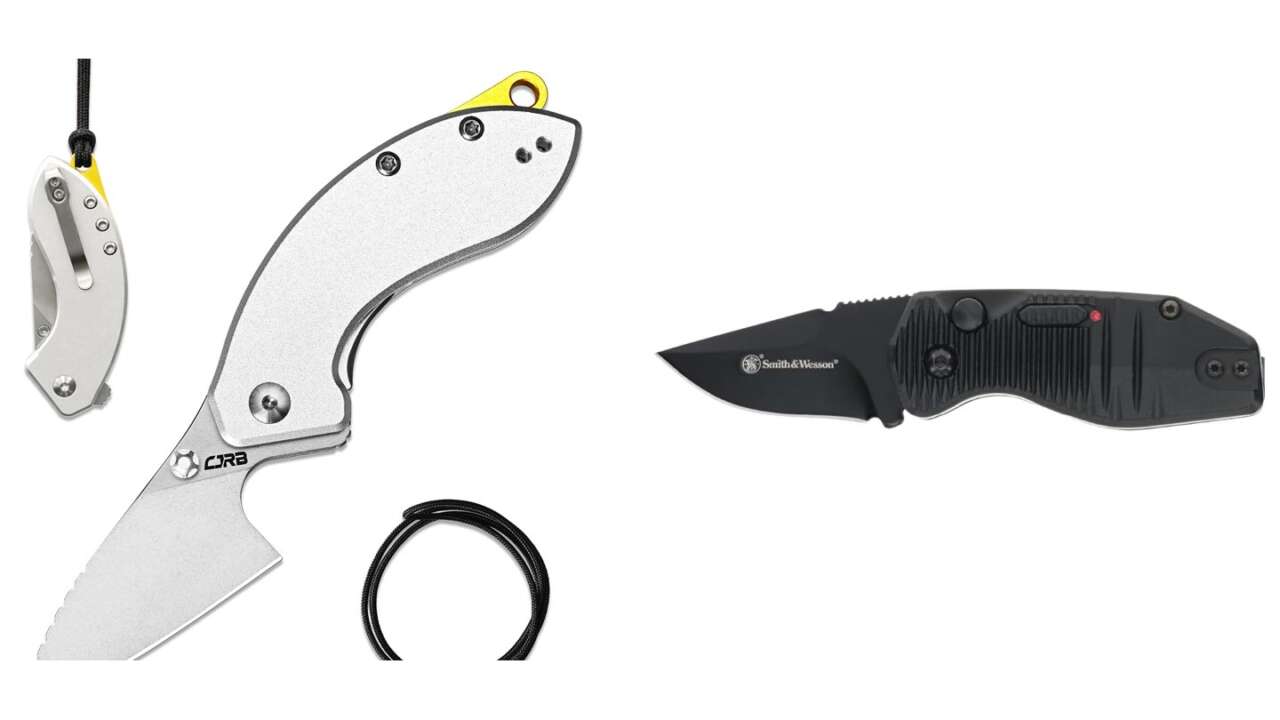
Two of the smallest folding knives on Amazon right now take opposite routes to the same pocket. The CJRB Spud is a 1.71-ounce folder with a 2.34-inch blade.
The Smith and Wesson Special Ops Mini costs $27.99 more for less knife. Price inversions like this usually hide a spec sheet ambush somewhere. Here the ambush runs the wrong way, because the cheaper knife also carries the better blade steel, the longer edge, the lighter frame, and the longer list of owners vouching for it.
The Mini starts this comparison from behind. CJRB is Artisan Cutlery’s budget line.
The Spud is its neck-knife-sized folder, designed by Jake Diaz around a detachable lanyard clip. Smith and Wesson’s knife line runs on the badge instead, selling tactical styling through sporting-goods shelves to buyers who never open a knife forum.
The Spud is the rational knife
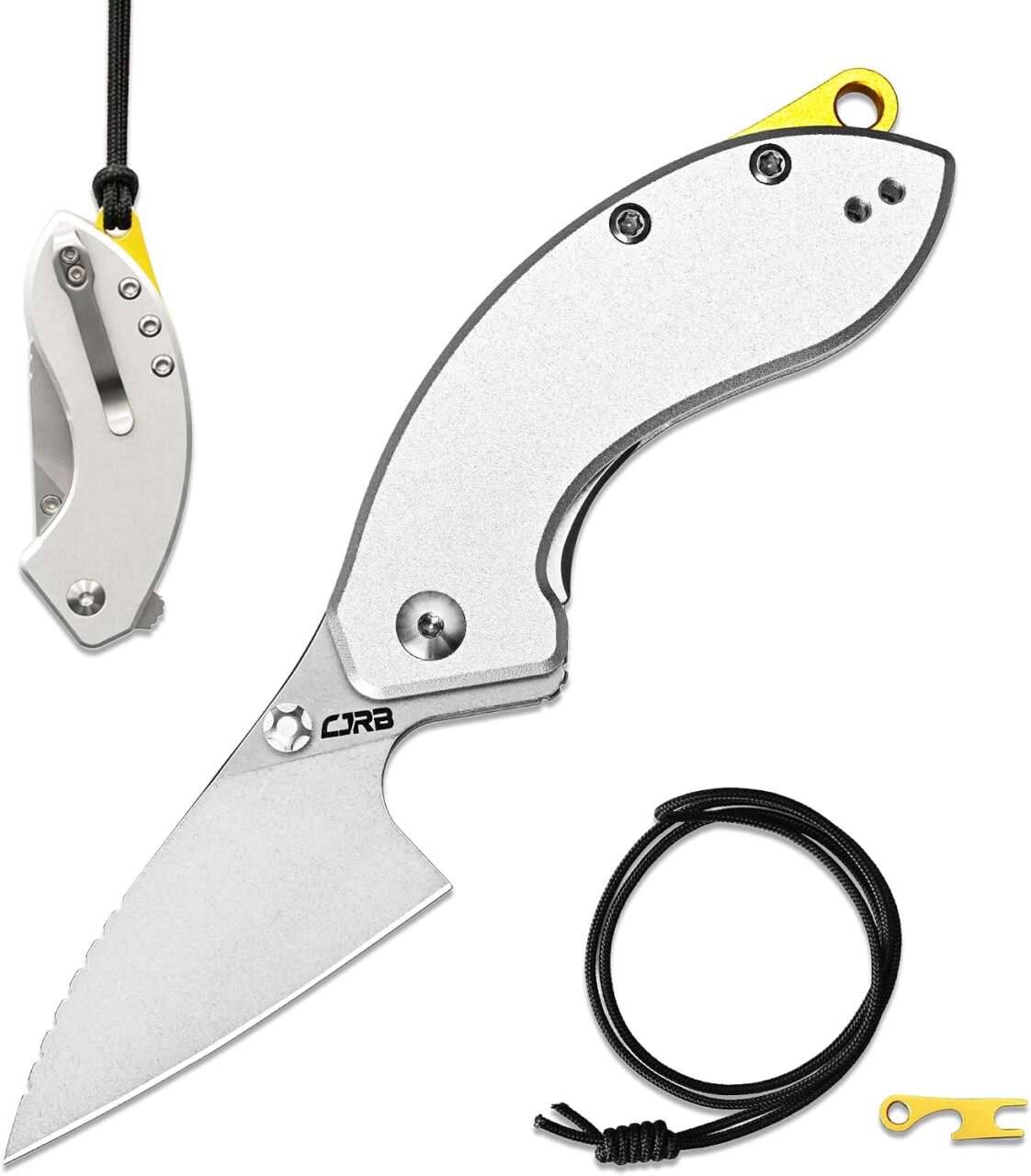
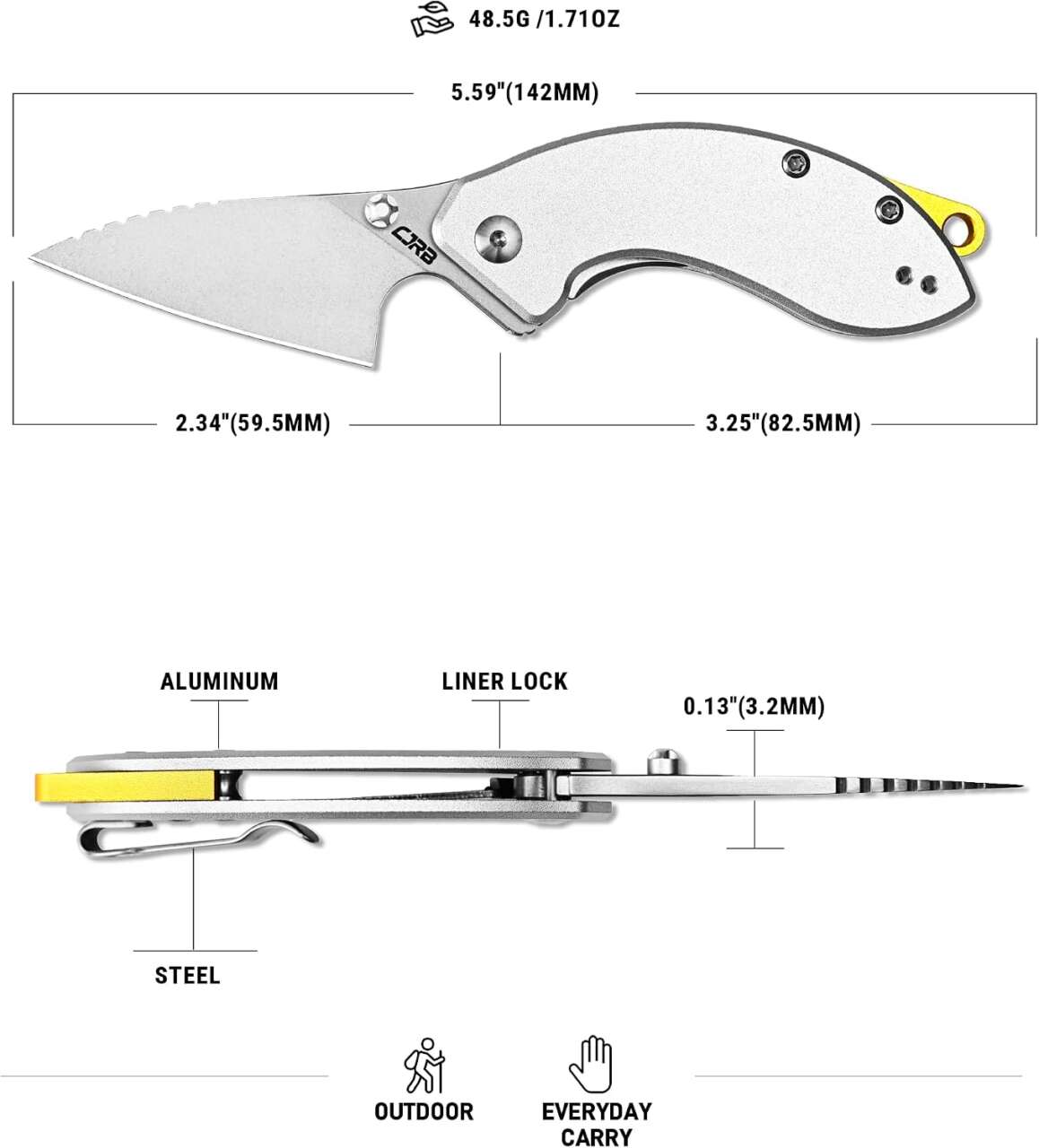
Start with the steel, because AR-RPM9 settles most debates at this size. It’s Artisan Cutlery’s proprietary steel, tuned for edge retention in budget blades, and it outclasses the AUS-8 sitting in the Mini on every published measure that owners in this class actually track. The blade runs 2.34 inches in a sheepsfoot profile with a serrated spine section, shaped for draw cuts, box work, and the blister packs that defeat fingernails.
Price: $35.99 (save $17.33, 33% off list $53.32)
Where to buy: Buy on Amazon
Its handle is aluminum at 3.25 inches closed, and the whole knife weighs 1.71 ounces, light enough to forget on a lanyard or lose in a fifth pocket. It simply disappears.
A nested steel liner does the locking, the same plain job it does on knives three times the price. Nothing about the Spud feels experimental, and that restraint is the design’s best quality at $35.99, because small knives usually fail by being cute first and useful second, and this one is a tool first.
The detachable lanyard clip is the Spud’s party trick, a gold tab that pops off the handle. It turns the knife into a neck knife on the included cord, the oldest carry method there is.
Around a neck it rides flat and silent. It comes off with one pull when a pocket or a drawer makes more sense.
The Mini is the emotional one
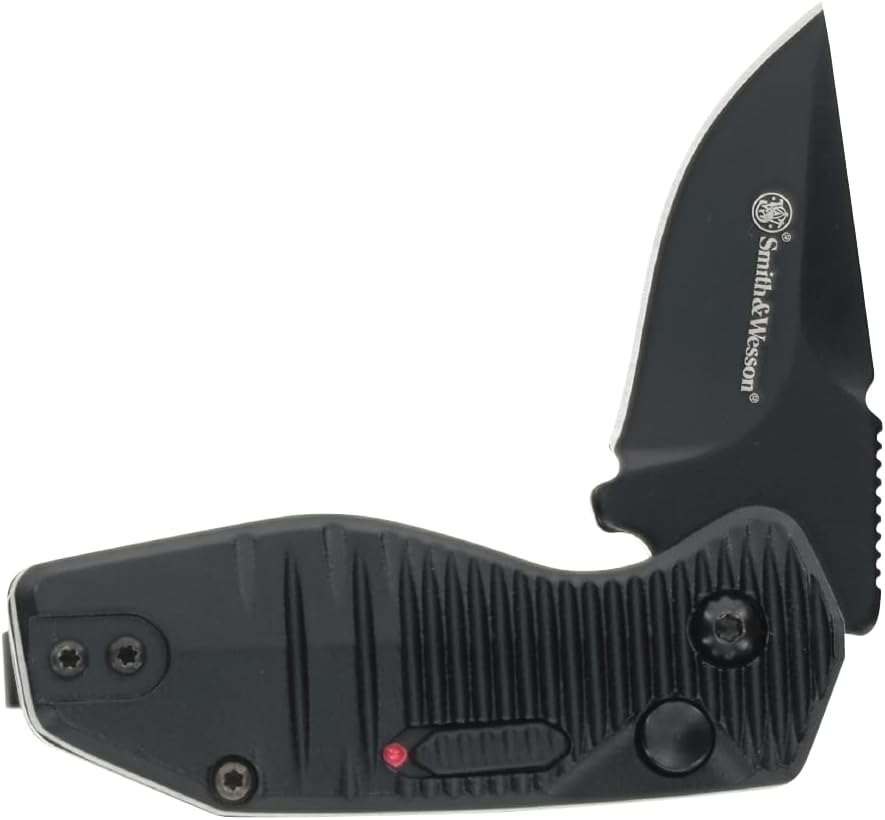
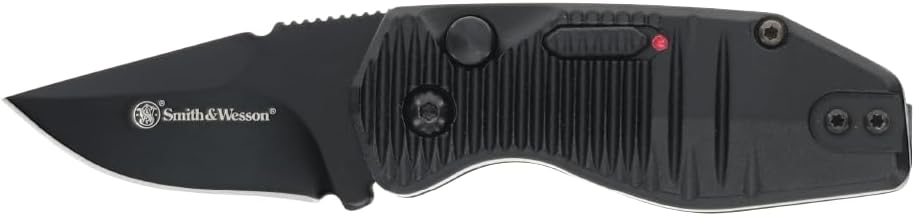
Smith and Wesson’s Mini sells a feeling the Spud doesn’t stock, two inches of blacked-out tactical in a 2.75-inch aluminum handle. Its AUS-8 blade is the older, softer steel, easy to sharpen on almost anything and quick to dull on cardboard, and at $63.98 with no discount showing, the spec sheet gives up the fight early.
Price: $63.98
Where to buy: Buy on Amazon
What it has is presence, since the textured handle, the black coating, and the red-dot safety slider all look like equipment rather than accessory at a glance. The safety is a real feature at this size, locking the blade shut inside a pocket or a bag until the slider moves, and parents buying a first knife will clock it immediately. Ten ratings at 3.7 stars say buyers aren’t convinced yet.
None of that makes it a bad knife, just an expensive one. Smith and Wesson moves a lot of knives through sheer shelf presence, and judged on a pegboard against gas-station knives and blister-pack folders, the Mini looks like serious kit.
Carry them and the gap narrows
Deep-carry hardware is the Mini’s best feature, a clip that buries the knife in a pocket with almost nothing showing above the seam line. The Spud counters with options, a steel pocket clip for the pocket and a detachable lanyard clip with a cord for neck carry or a key ring. Two carry systems beat one, but the Mini’s one is the discreet one.
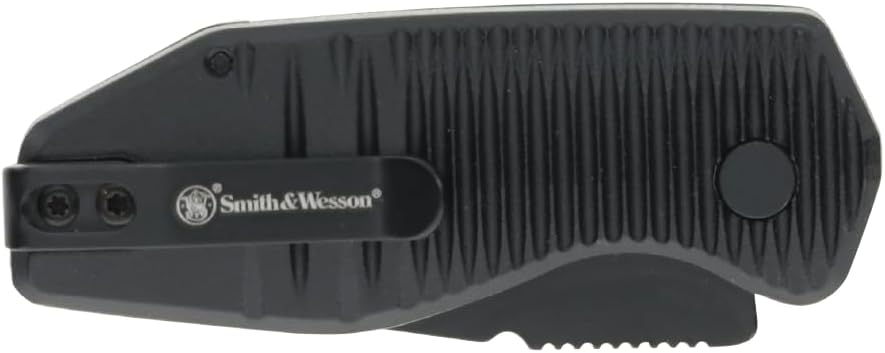
In a fifth pocket both vanish, and at these weights neither one announces itself against a leg. The difference shows up at the desk, where the Spud’s silver aluminum looks like a tool and the black Mini looks like a statement nobody asked about. Weights tell the same story. The Spud’s 1.71 ounces undercut almost everything with a pivot, while the Mini spends its money on coating and badge instead of lightening the load.
Ounces never negotiate with a spec sheet. Neither knife asks its owner to learn anything, and both open one-handed. The choice is temperament, priced at $27.99.
The verdict
Buy the Spud unless the Mini’s look is the reason, because the CJRB wins on steel, blade length, weight, carry options, and price at the same time, without asking its owner to forgive a single spec. That’s five categories, and a comparison that lopsided usually means one product is a generation ahead of the other. Here it mostly means one brand charges for its name and the other one doesn’t.
The Mini is for the buyer who wants the badge and the blackout, and there’s nothing wrong with that purchase made with open eyes. Everyone else should take the better steel and keep the $27.99. Small-knife money usually buys a toy or a compromise, and the Spud is neither, which is why it keeps showing up in fifth pockets, while the Mini will sell anyway, on shelves where the badge does the talking. Simple as that.