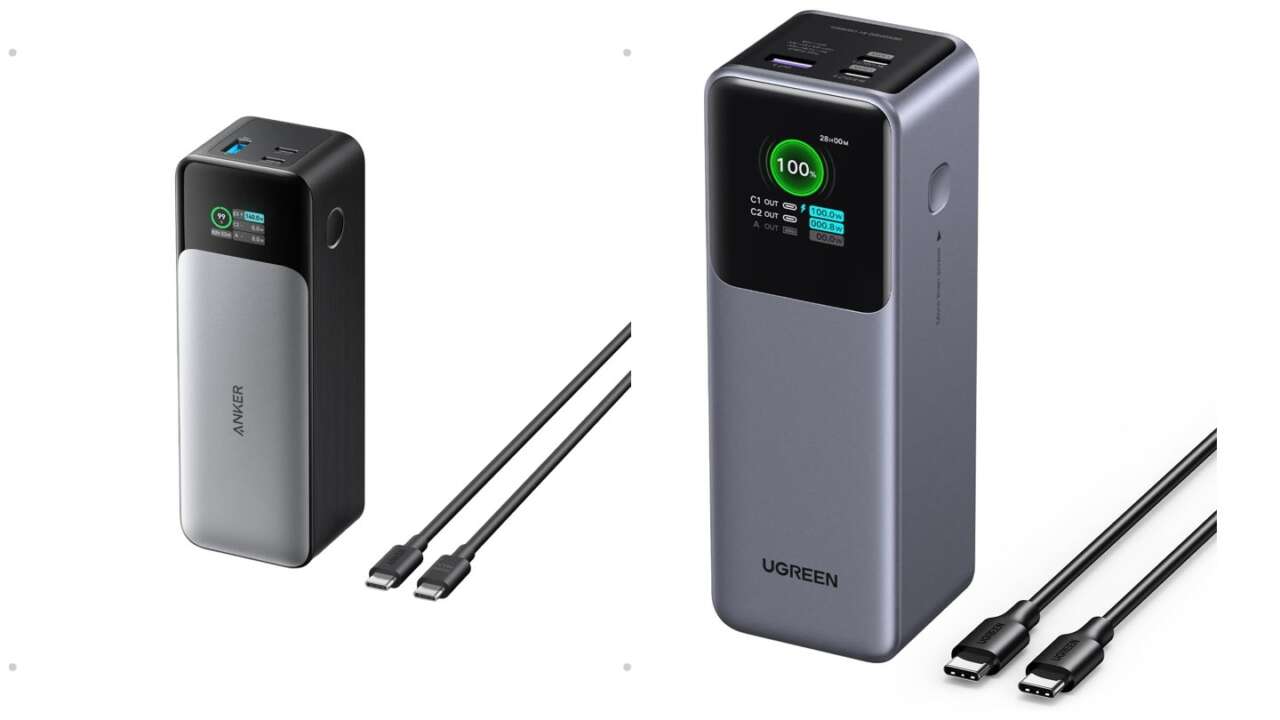
Two laptop power banks lead the class, and their spec sheets point in an odd direction. Anker’s 737 is the smaller, pricier one, betting on speed in both directions, while UGREEN’s Nexode simply carries more of everything and somehow charges less for the privilege.
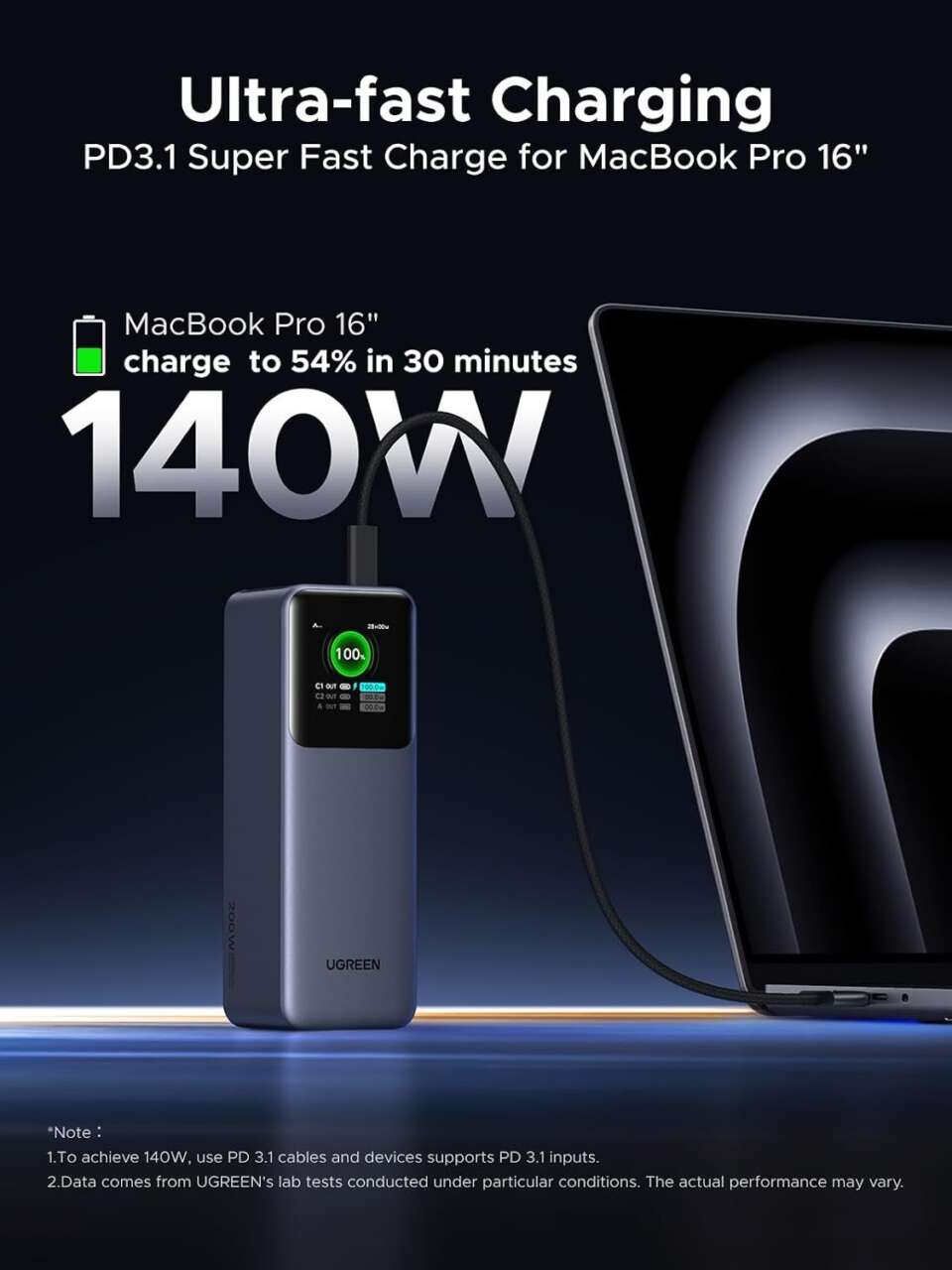
The 737 holds 24,000mAh, pushes 140 watts across three ports, and reports its charge state on a smart display, all at $109.99. The Nexode holds 25,000mAh, pushes 200 watts across three ports behind a color TFT display, and it’s selling for $79.99 against a $129.99 list price. That gap is the story of this matchup.
On paper, the UGREEN wins before the conversation starts, because it leads on capacity, on output, and on price all at once. The Anker’s case rests on how fast it refills itself after a long day, and on a much longer line of buyers ahead of you.
Brand history explains the pricing. Anker charges a premium for the name it built over a decade, and the 737 is its flagship bank, while UGREEN spent years as the cable-and-hub value pick and priced the Nexode like it still has something to prove.
Price: $109.99
Where to buy: Buy on Amazon
Where the UGREEN pulls ahead
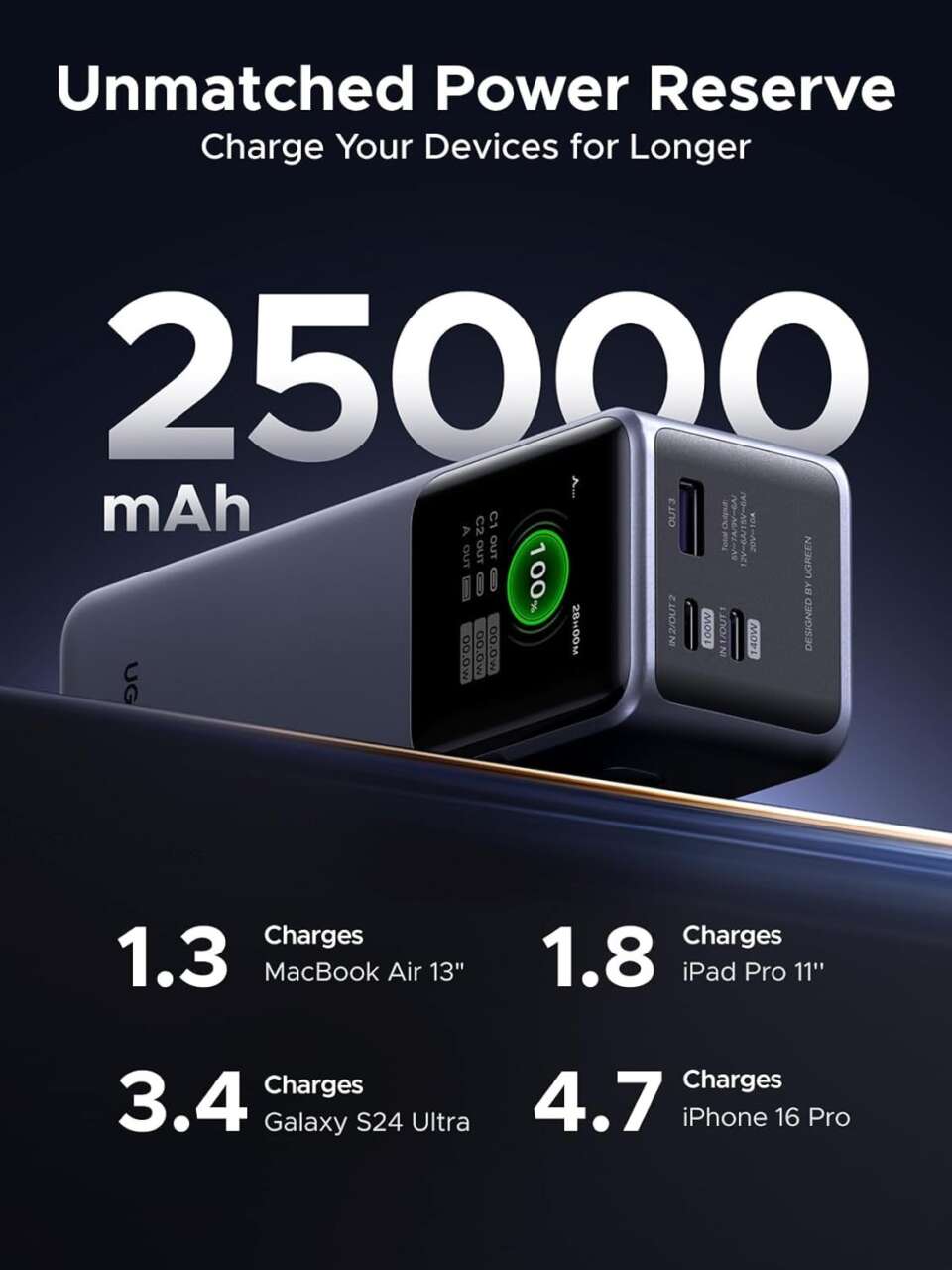
Start with the arithmetic, because the arithmetic here is genuinely rude. The Nexode holds 1,000mAh more than the 737, and it spreads 200 watts across its three ports where the Anker tops out at 140, so a hungry laptop and a fast-charging phone can both drink at full speed.
That headroom is why a bank this size exists, because a 16-inch laptop under load can pull 100 watts or more on its own. The UGREEN still has half its output left over for everything else in the bag. Few banks in this class can say that.
Put numbers on a normal workday and the gap stays. A laptop sipping 65 watts leaves the Nexode 135 watts for a phone and earbuds, while the same laptop on the 737 leaves 75, enough for one phone at full speed and nothing hungrier until the laptop lid closes.
It also speaks the newest charging language. PD 3.1 support means the Nexode is ready for the laptops arriving next year. The ones on desks today are covered too, and that future-proofing costs you nothing.
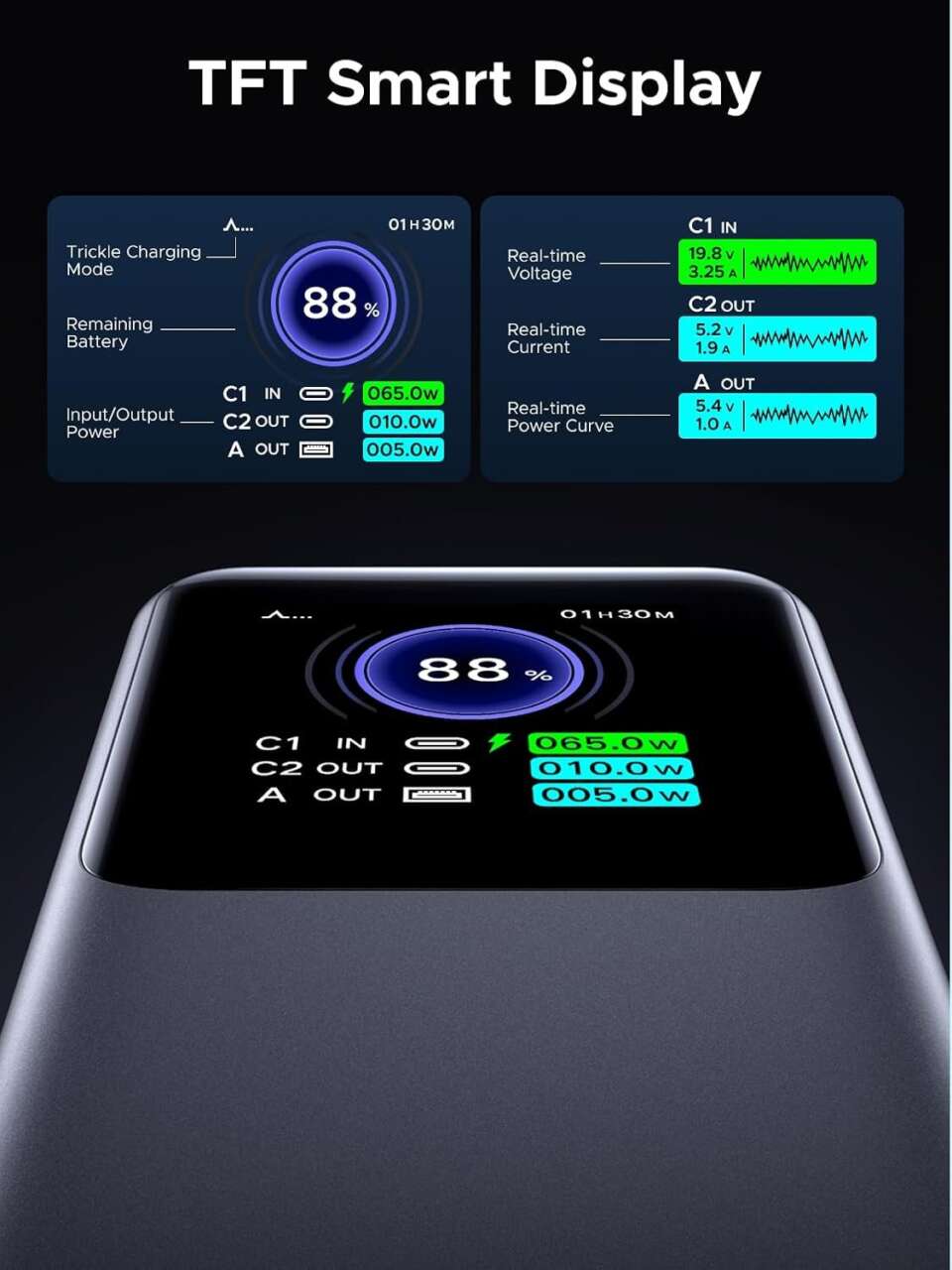
Its TFT screen is the one flourish, a color display where most banks print four dots and call it a gauge, and you can read the charge state across a tray table in sunlight without picking the bank up. Small luxury.
Price: $79.99 (save $50.00, 38% off list $129.99)
Where to buy: Buy on Amazon
Where the Anker answers back
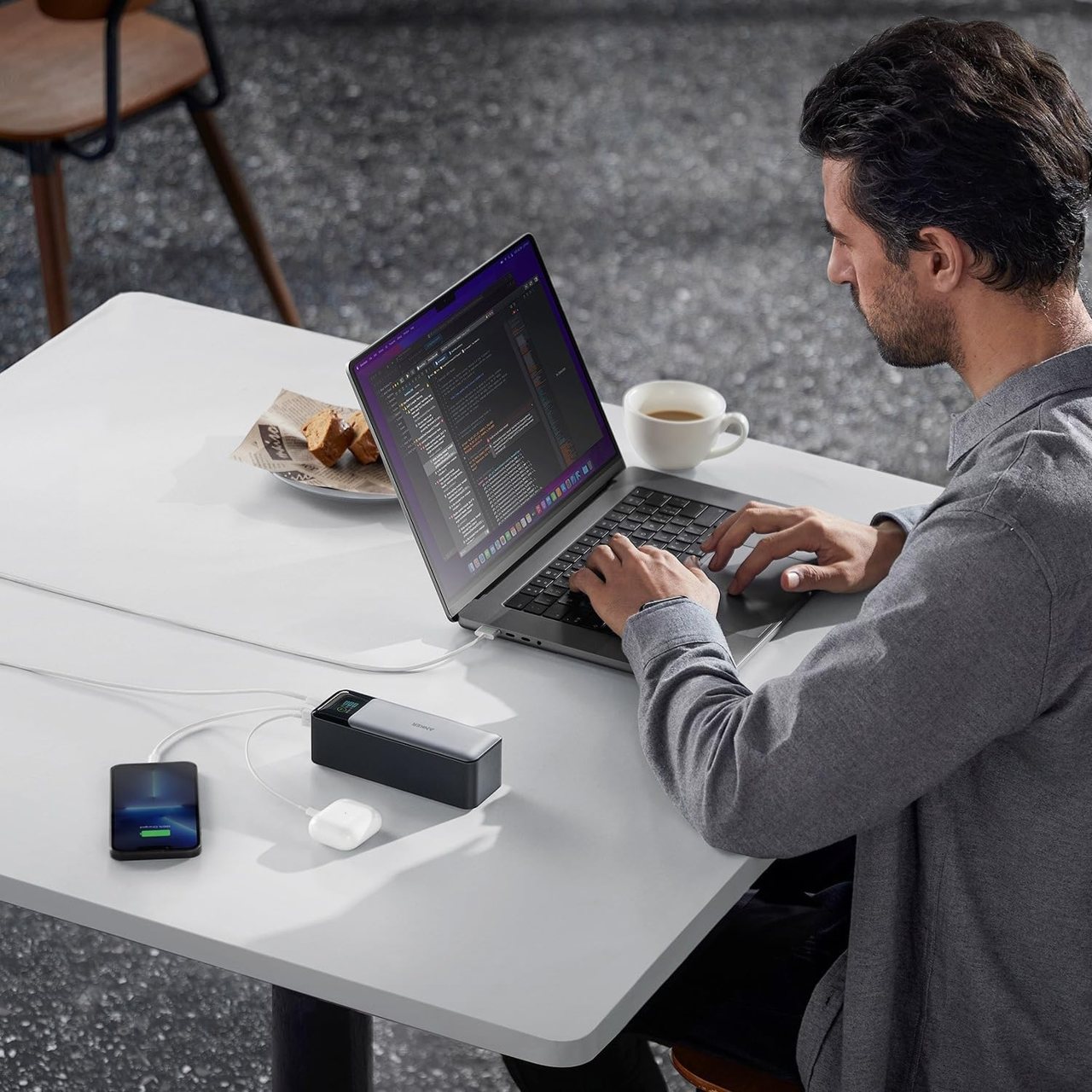
Anker’s party trick runs in reverse. Feed the 737 from a wall charger and its spec sheet puts a recharge at 52 minutes, so the bank you drained on a flight is full again before a layover ends, and speed back in is the rare part.
Years on sale have made its failure modes known, and that’s a spec of its own. A newer bank at a lower price asks you to trust the listing, while this one asks you to trust a longer line of owners.
Then there’s the crowd. A 4.4-star average across 17,839 ratings is a different kind of evidence than the same 4.4 stars across the UGREEN’s 3,703. Volume talks to buyers who’ve been burned by a no-name bank before.
None of that erases the price, though it does explain who’s been paying the extra thirty dollars all this time, and why they keep doing it. The UGREEN buyer keeps the change.
Ports, displays and daily carry
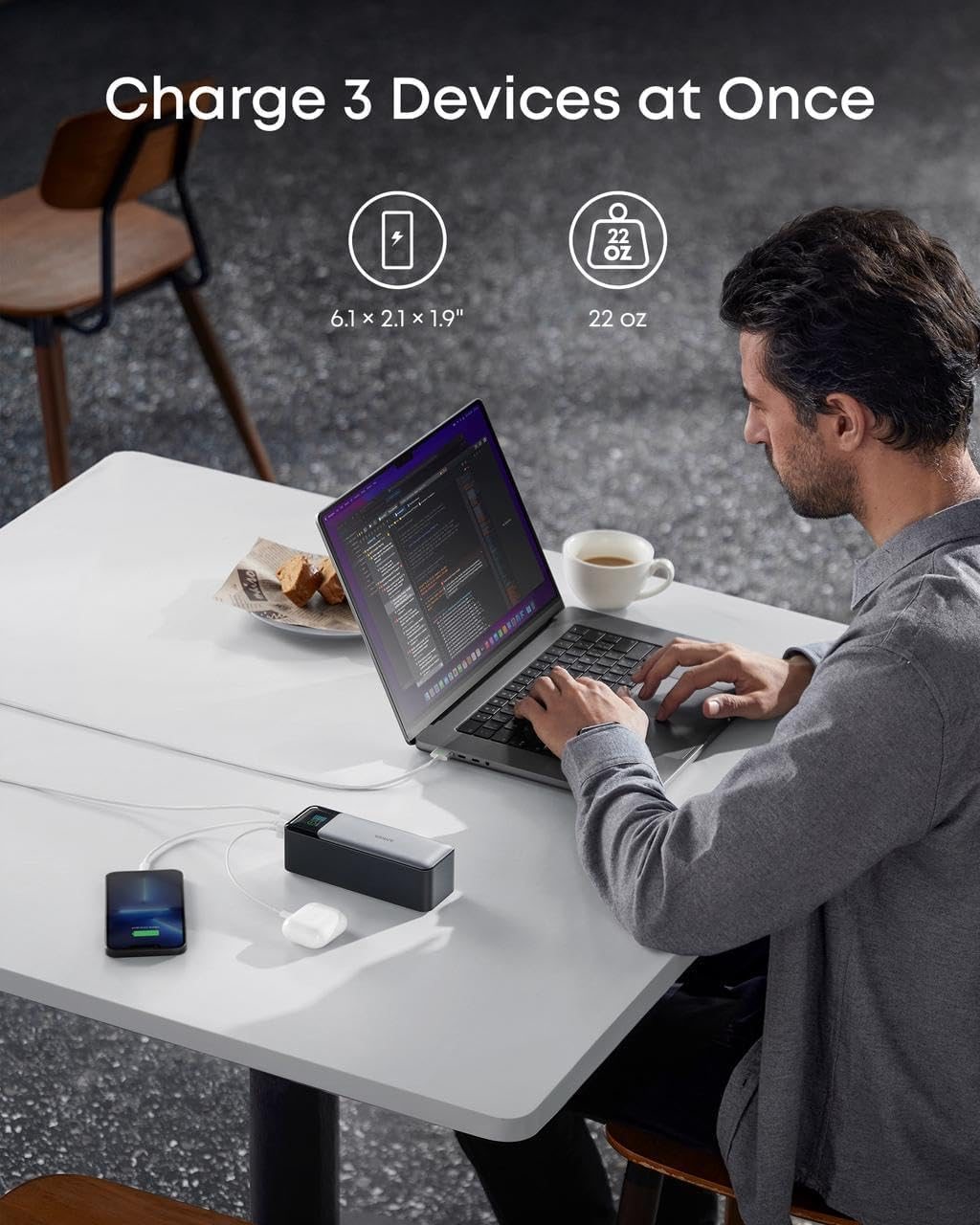
Both banks split three ports between USB-C and USB-A, and both wear their charge state on a screen you can actually read. They’re built for one job, keeping a laptop alive away from a wall, and the differences that survive the spec sheet are the refill speed, the output ceiling, and the size of the receipt.
Screens sound like a gimmick until a bank dies mid-flight with no warning. Four dots can’t warn you. A percentage you can read at a glance changes how you ration what’s left.
Neither of these is a pocket bank, and neither pretends to be. They live in carry-ons and desk bags, next to the laptop they feed, within reach of the seat pocket, and they come out when a battery warning does, the rest of the day riding along as insurance.
Both also stay under the 100 watt-hour ceiling airlines set for spare batteries in the cabin, which is quietly why this class tops out where it does. A bank much bigger than these two stops being a carry-on item and starts being a negotiation at the gate, and neither maker wants that fight.
The verdict
The UGREEN Nexode is the default pick for a bag carrying a big laptop and a phone that both charge fast: the stronger bank at the lower price by every measure on the page. The Anker 737 suits travel days built on short turnarounds; a bank that refills in under an hour fits a life the spec sheet can’t see.
Phone-only carriers should skip both and buy half the capacity for half the money, because these two exist for people whose laptops leave the desk and who want one brick charging everything they carry. Between them, the UGREEN is the default and the Anker is the specialist with one trick nobody else in this class can match at any price.