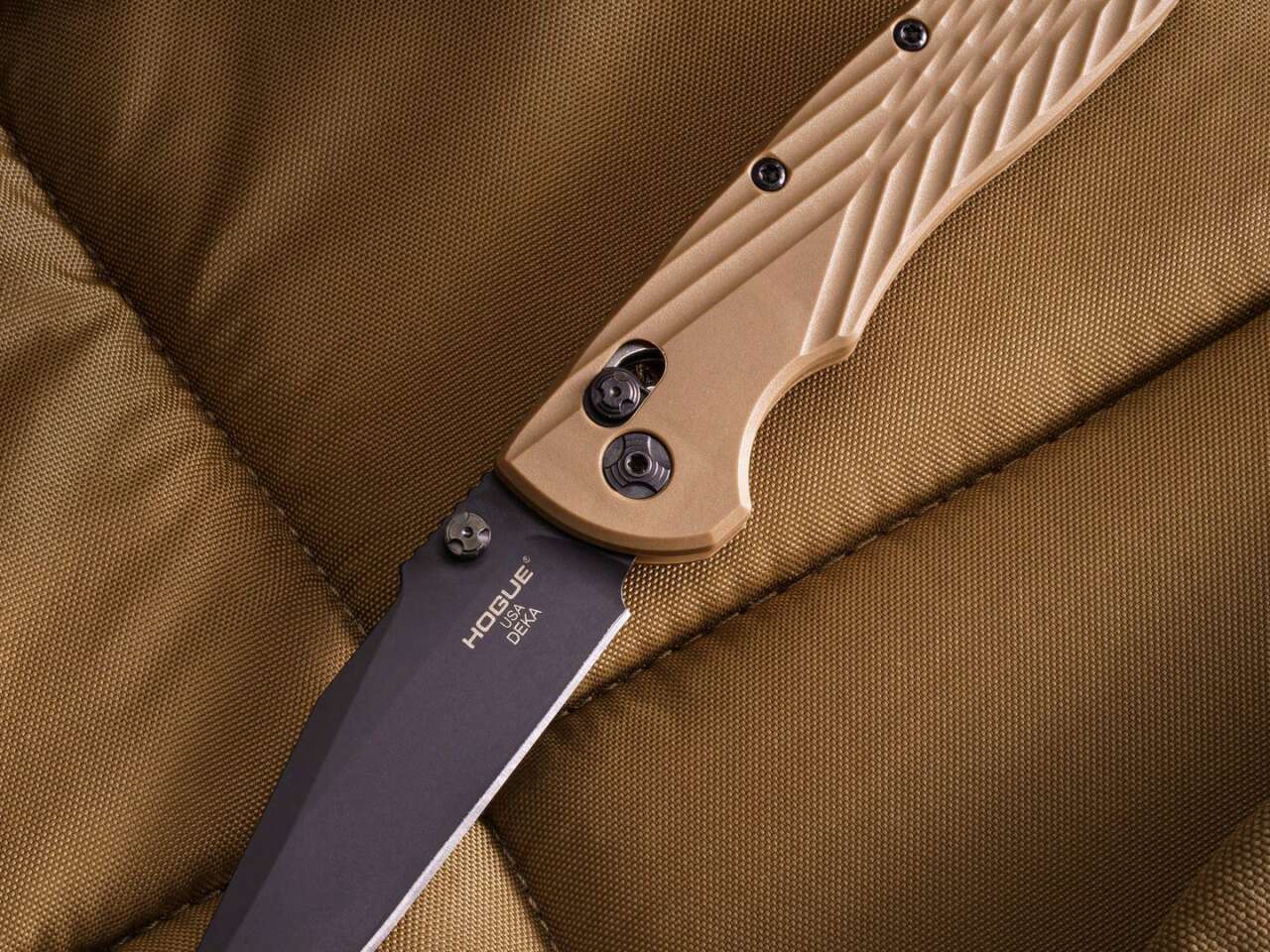
CPM MagnaCut has moved into the Deka line, and it changes the knife. The Deka was the catalog’s lightweight pick at 2.1 ounces, and now its 3.25-inch blade runs MagnaCut, the steel known for toughness, edge retention, and corrosion resistance in equal parts.
Price: $138.56 (save $18.90, 12% off)
Where to buy: Buy on Amazon
MagnaCut earned its following by refusing the usual trade that older powder steels imposed, where you picked between an edge that lasts and a blade that shrugs off hard use. This recipe delivers both while barely rusting at all, which is exactly why Hogue picked it for the flagship everyday carry. The treatment is serious, too. Cryogenic processing takes it to 62-64 HRC, with a flat grind and an edge that’s hand sharpened and honed before the knife leaves Nevada.
Why MagnaCut is the headline
Most knife steels ask you to choose your compromise before you ever cut anything with them. Stainless grades resist rust and give up toughness, tool steels take a beating and give up corrosion resistance, and the hard super steels hold an edge for ages right up until they chip. MagnaCut was formulated specifically for knife blades to break that triangle, using a powder recipe that keeps its carbides fine and evenly spread through the whole blade.
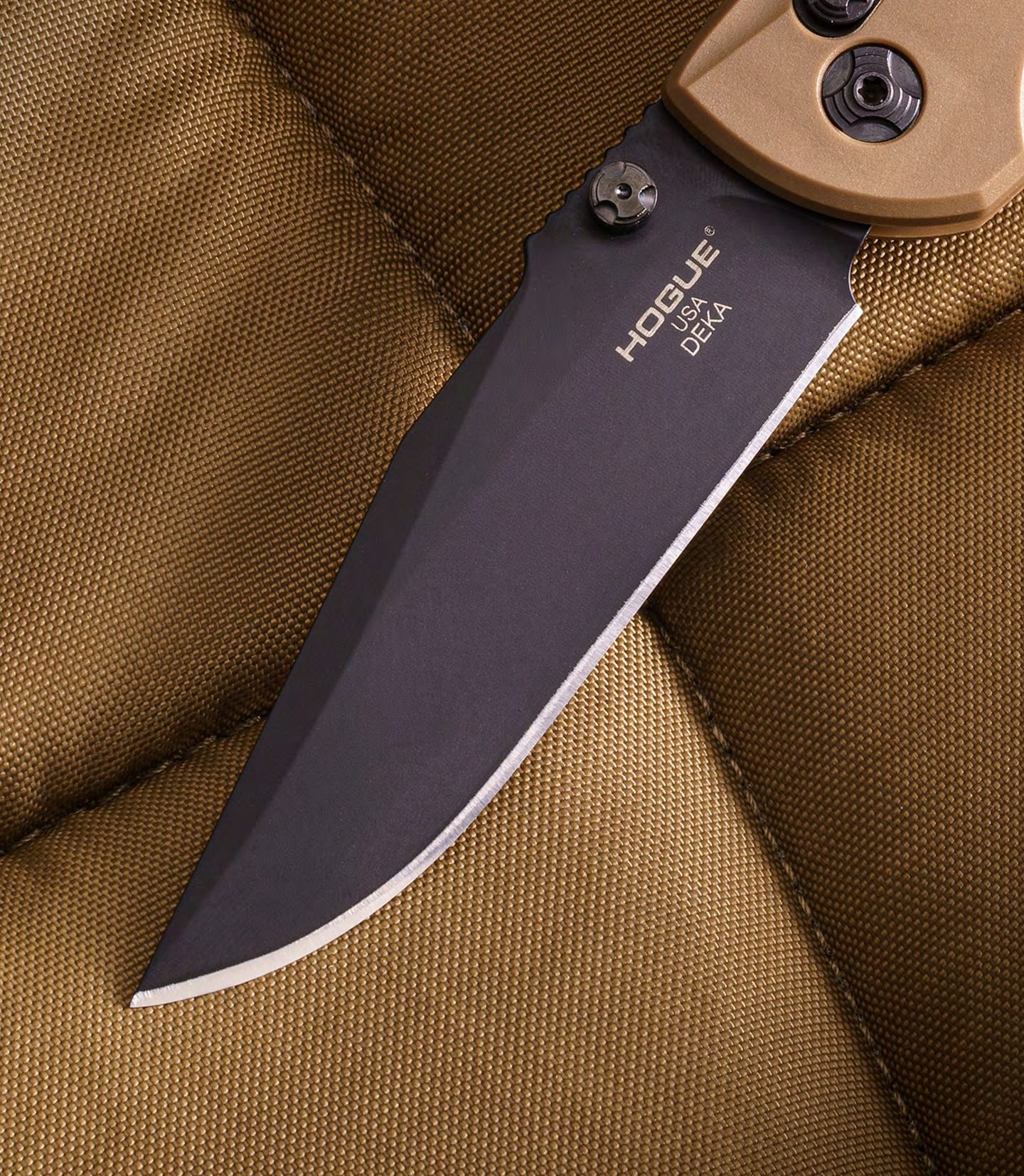
In daily use, that shows up as a blade that keeps a working edge through cardboard, rope, wood, and zip ties at work without demanding a sharpening session every weekend. It also shrugs off pocket sweat and summer humidity, which is where lesser stainless folders quietly start to pit. Putting it in a 2.1-ounce knife is the statement. This steel usually shows up in heavier, pricier hardware.
The frame is the weight story
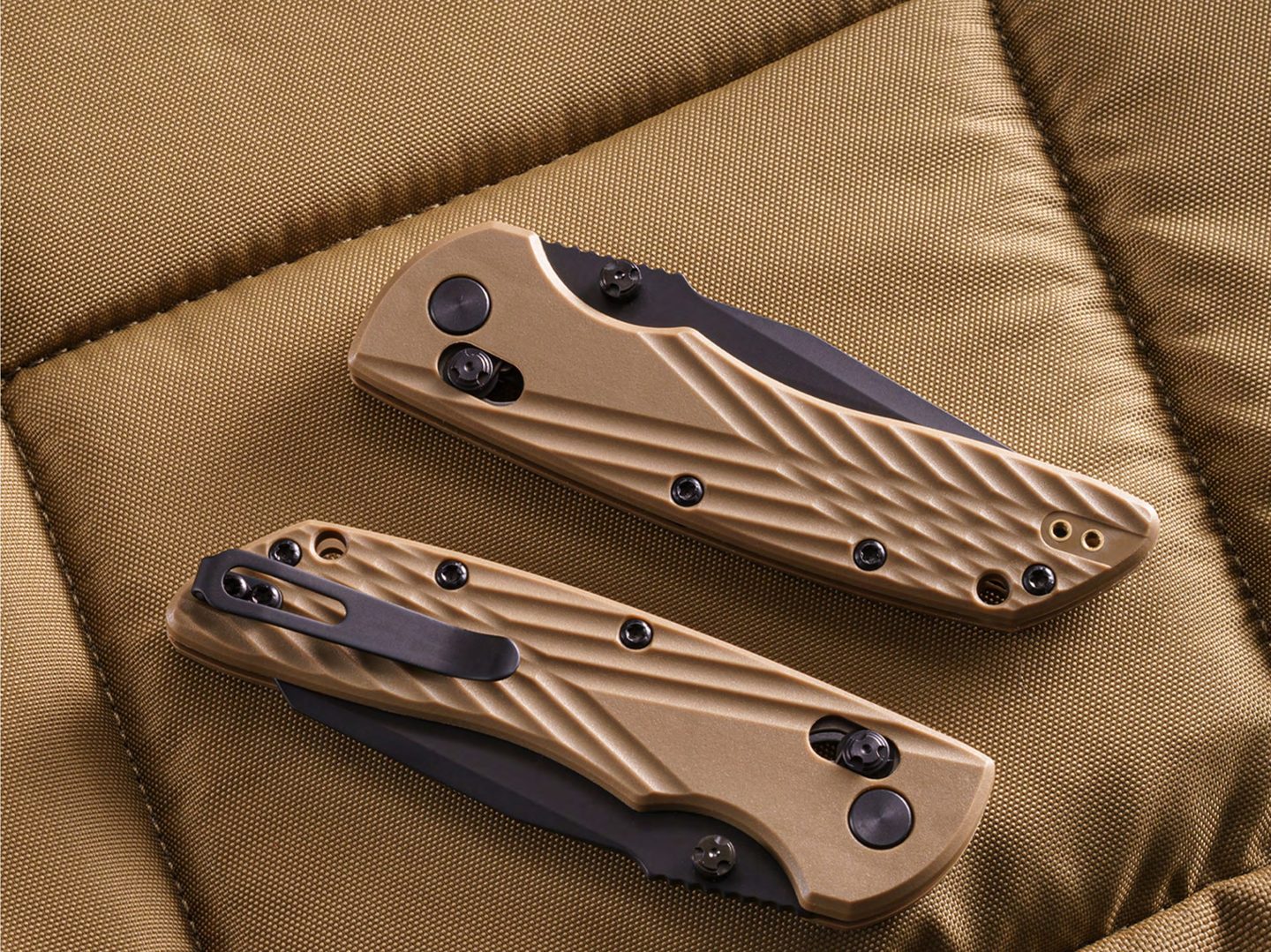
The handle is Polyamide Nylon 12, a glass-fiber-reinforced polymer with a crosshatch texture molded into it. Hogue picked the material for dimensional stability, which is engineer-speak for a frame that doesn’t swell, shrink, or warp when the weather turns. Stainless liners run inside it for structure and lock support. The whole knife still weighs 2.1 ounces, so it disappears in a pocket in a way metal-frame folders this size simply don’t.
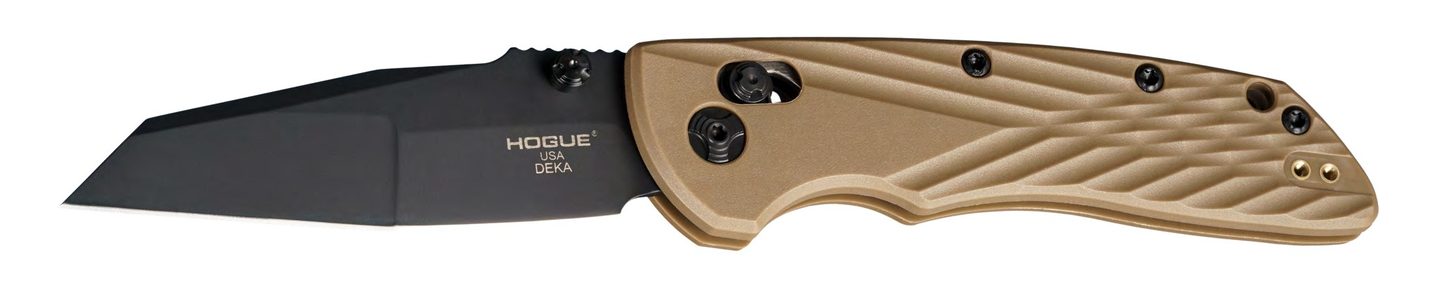
Closed, the Deka measures 4.25 inches, and open it’s 7.5 inches overall, with a blade just under a tenth of an inch thick and a footprint that vanishes in a front pocket. That’s a full working size, not a keychain toy. The proportions explain the comparisons against pricier knives running lesser steel, and Allen Elishewitz’s ergos show in every curve of the handle.
The polymer frame never gets bone cold in a January pocket or slippery in wet hands. The handle fills the hand without printing through a pocket. The crosshatch texture does the gripping without the cheese-grater feel of aggressive G10, so the knife slides in and out of a pocket without eating the fabric.
The ABLE Lock runs from both sides
Hogue’s ABLE Lock is a bar lock, and it works from either side of the handle. Pull the bar back with a thumb or a finger and the blade swings free, which makes the knife genuinely ambidextrous instead of lefty-tolerant, from the pocket, one-handed, without looking. Thumb studs do the opening, one on each side. There’s no spring assist to wear out or to complicate life under stricter local knife rules.
The pocket clip rides deep, reverses for left-side carry, and carries tip-up the way most people want it. A lanyard hole sits at the butt for anyone who ties a fob or fishes the knife out of deep pockets with gloves on. Every Hogue knife is made in the USA, and the company behind it has three generations of manufacturing in the same family, which shows in how finished the Deka feels at this price.
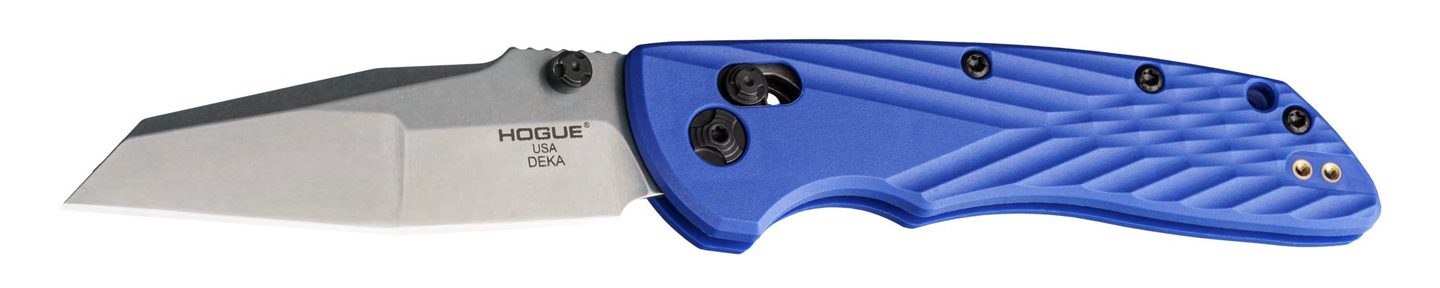
The MagnaCut run covers eight models in the maker’s release, split between two blade shapes and three frame colors, with clip points stonewashed at a $149.95 list and the modified Wharncliffe in black Cerakote at $159.95. Amazon’s $138.56 on the blue clip point undercuts Hogue’s own list, which makes it the version to grab first while the discount lasts.
Two kinds of buyers should be looking at this knife. If your current folder came from a gas station counter, the Deka is a different universe for under $140. And if you’re carrying a heavier premium folder now, this is the one that gives your pocket a day off without giving up steel. Either way, the MagnaCut version is the Deka to own, because the steel was the one thing the original design was missing.
If you’ve waited for a MagnaCut folder that doesn’t punish your pocket, this is the one. It’s light enough to forget, strong enough to use hard, priced under the maker’s own sticker for the blue clip point at the link above, and it asks nothing of your belt. The Deka was already an easy recommendation before any of this. The steel upgrade makes it the first one to show anybody shopping this class for an everyday carry.