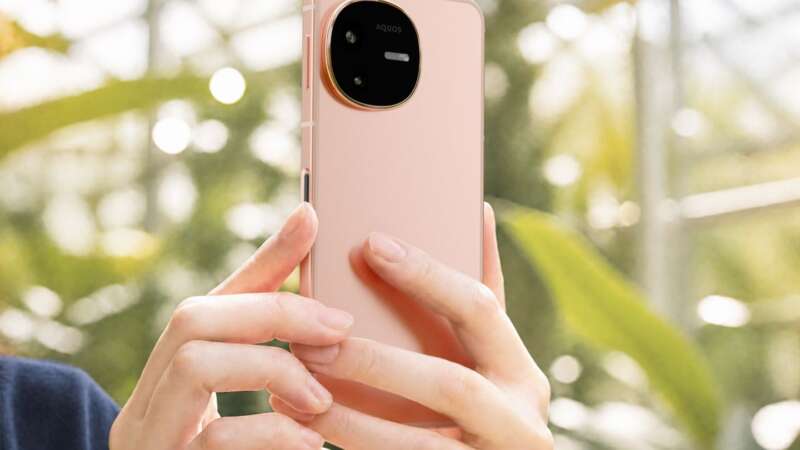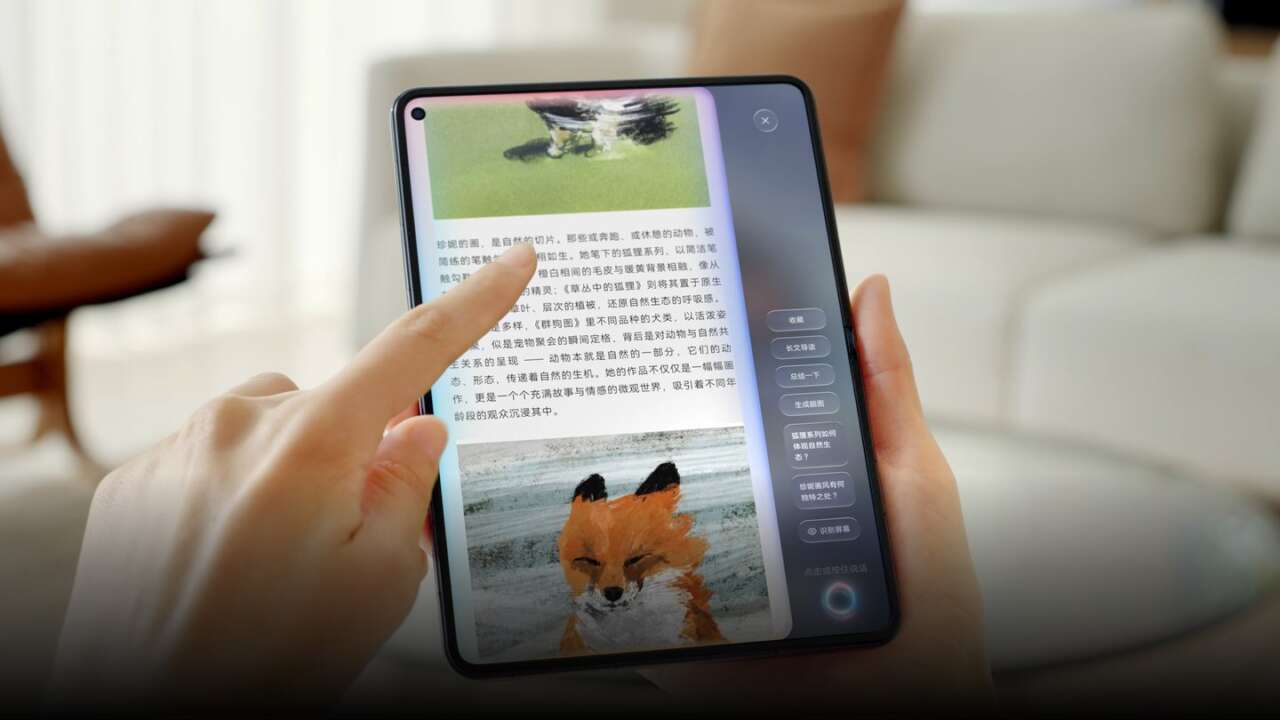
Huawei’s Pura X Max is a foldable that opens wide instead of tall, unfolding to a 7.7-inch screen shaped like a tablet rather than a phone book, and it’s the latest in Huawei’s wide-fold family, sold in China.
Folded shut, it’s a 5.4-inch phone with a screen you can actually use one-handed for calls, messages and quick replies. Open it and the trade flips. Video fills the frame edge to edge, documents read at full width, and games get the landscape view they were drawn for.
Price: $1,549.99 at Amazon for the Samsung Galaxy Z Fold8 (256GB, Graphite), the book-style fold US buyers can order today
Where to buy: Buy on Amazon
The catch is geography: it runs HarmonyOS 7, it lives in Huawei’s app world, and Huawei hasn’t announced a US release or US pricing.
Wide screens on both sides of the fold
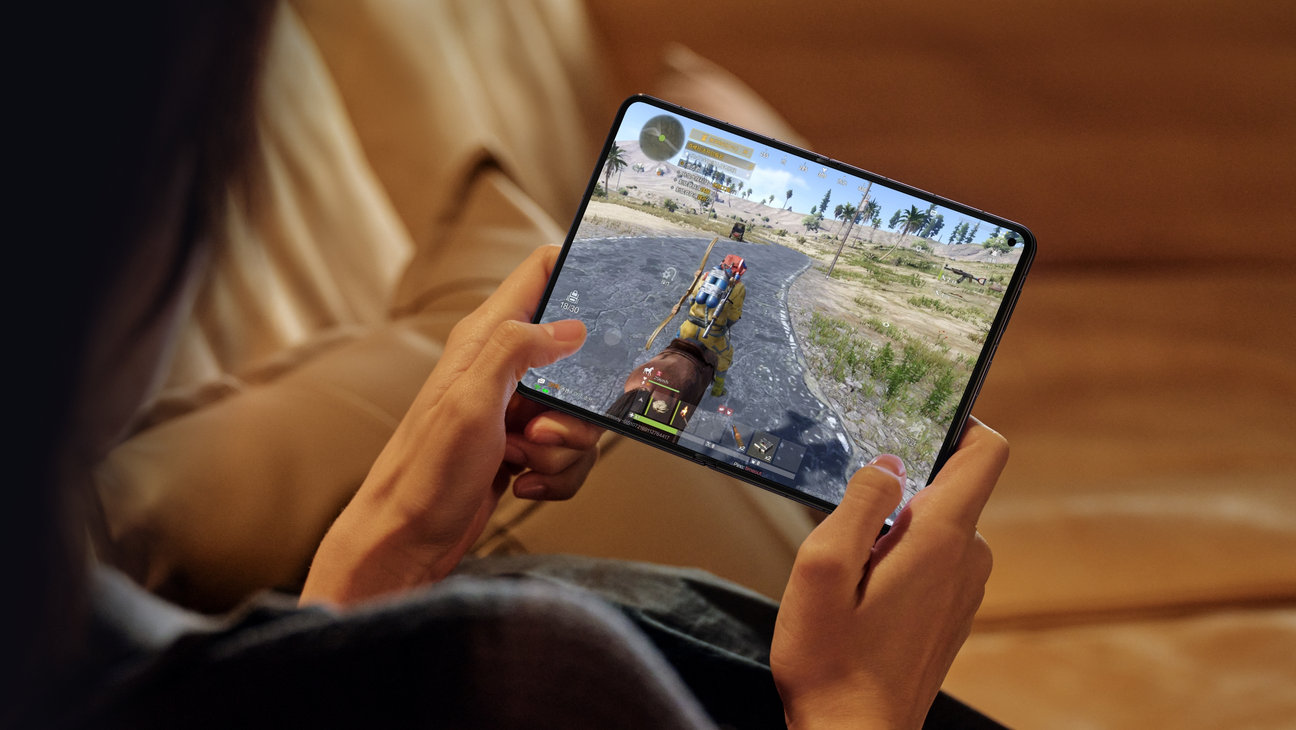
Book-style folds open into a tall rectangle that’s two phone screens side by side, and apps treat it that way. A wide fold opens into something closer to a small tablet, and the difference shows up in the first minute of a video.
The inner OLED measures 7.7 inches at 2,584 by 1,828 pixels, a wide rectangle rather than the tall slab a book-style fold opens into, and Huawei pairs it with a 5.4-inch outer OLED at 1,848 by 1,264. Both panels run 1 to 120 Hz LTPO 2.0 adaptive refresh. They push 1.07 billion colors in the P3 gamut and dim at 1440 Hz.
Huawei started this shape with the first Pura X, and we covered that phone when it landed. The Max stretches the same idea until the outer screen stops feeling like a notification window and starts working as the phone itself.
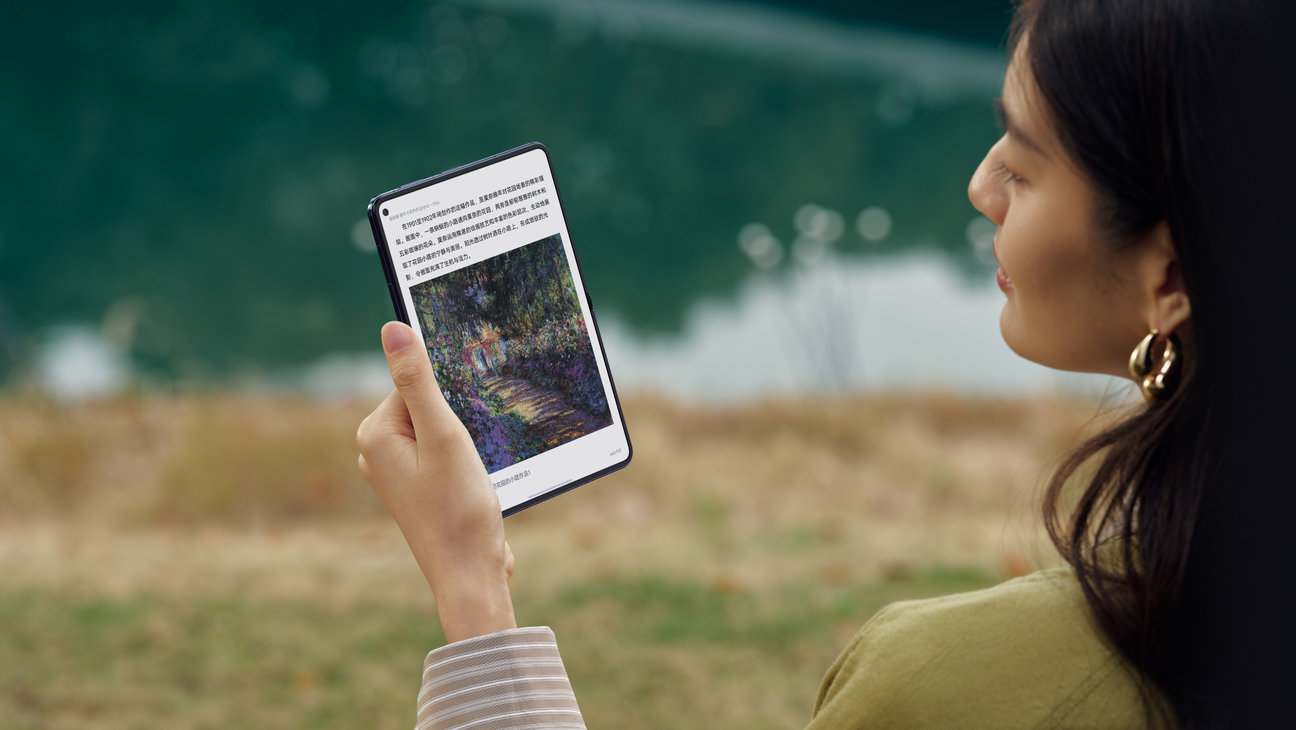
Reading is where the shape pays off, because a page on the inner screen carries more words per line at a size your eyes don’t have to chase. Spreadsheets and documents open at full width too, with room for the columns a tall fold crops and the margins it eats.
Neither screen feels like the spare.
A periscope zoom and a variable aperture main camera
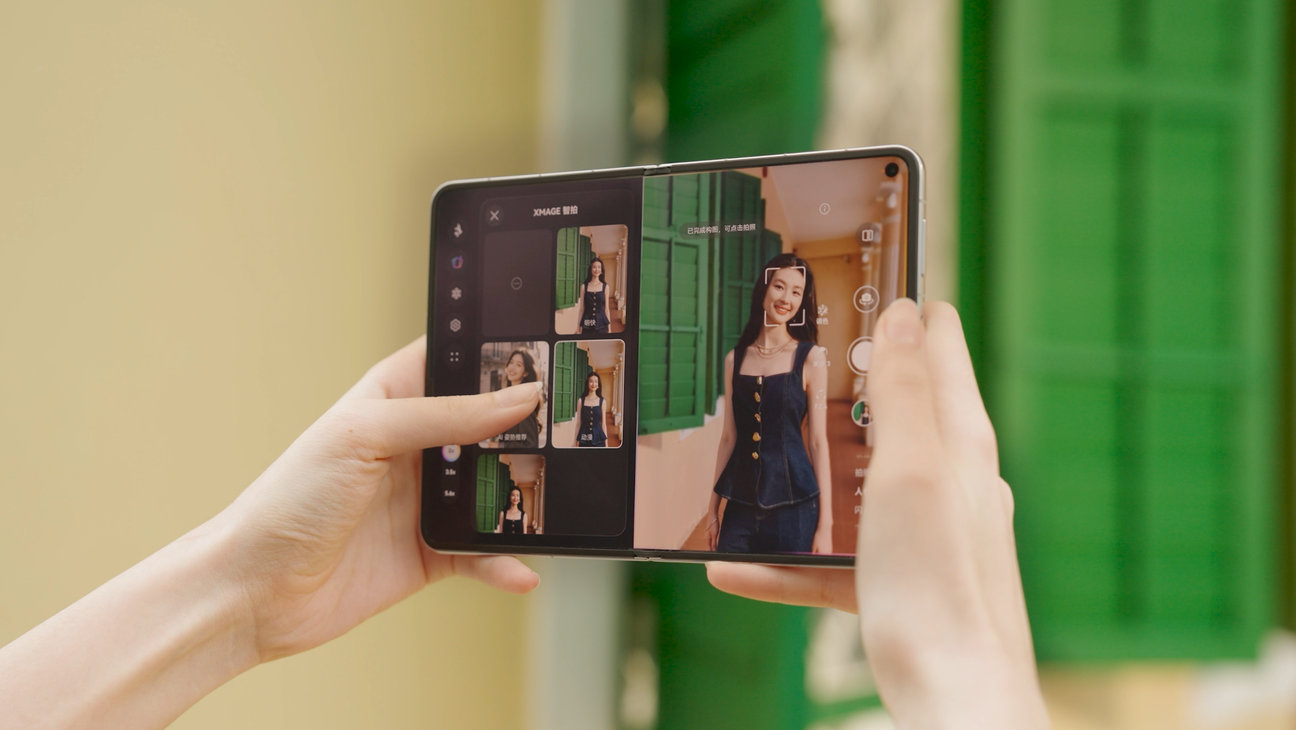
The main camera is a 50MP unit with a physical aperture that stops from F1.4 to F4.0 across ten steps, an RYYB sensor and optical stabilization. Beside it sits a 50MP periscope telephoto at F2.2 with stabilization and 3.5x optical zoom, plus a 12.5MP ultrawide, and Huawei’s second-generation Red Maple color camera rides along to keep colors consistent across all three.
Selfie cameras sit on both screens, 8MP each, and the rear array records 4K video, while XMAGE adds pose suggestions and composition guides, so the phone coaches the shot instead of just taking it.
The zoom range runs from a 13 mm ultrawide view through the 24 mm main to an 81 mm telephoto, with 7x optical-quality zoom and 100x digital reach past that. Portraits get the variable aperture’s background blur the real way: from the lens, not a software guess.
That’s a flagship camera stack.
Thin when open, sealed when splashed
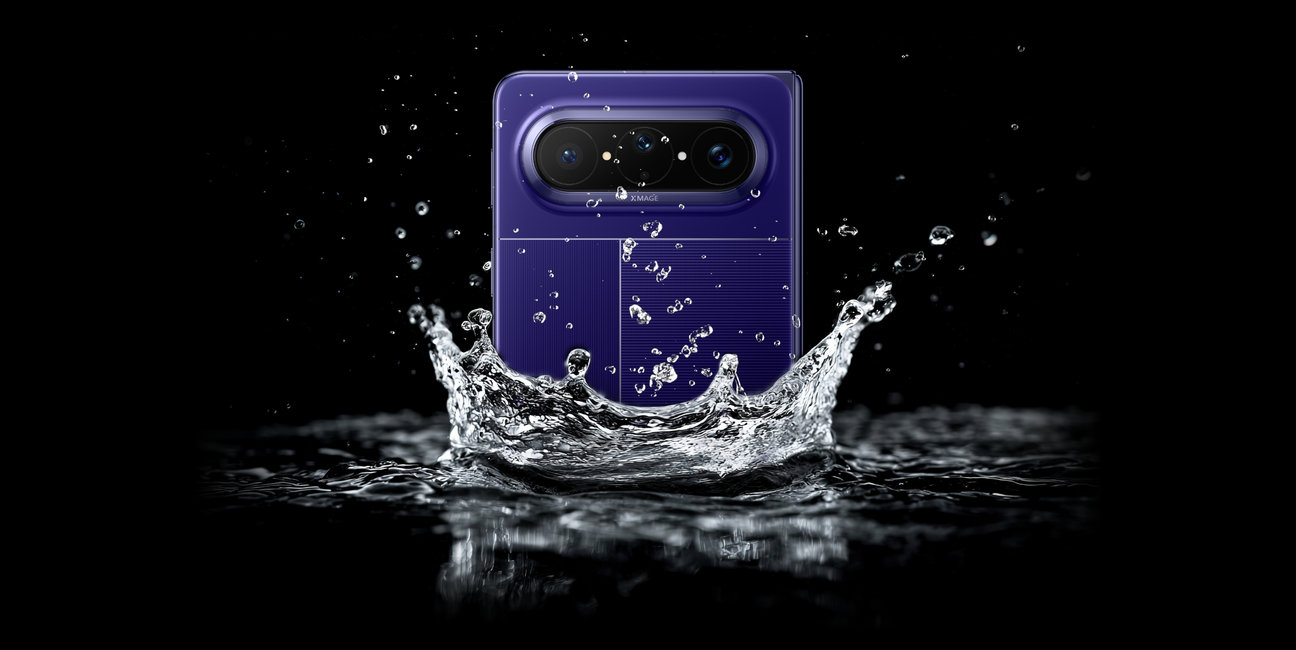
Open, the phone measures 166.5 mm wide and just 5.2 mm thick. Folded down, it measures 85 mm wide and 11.2 mm thick at 120 mm long. Weight is about 229 grams with the battery in. The outer screen wears second-generation Kunlun Glass, and the inner panel is a composite laminate built to take the folding.
The hinge is Huawei’s water-drop design, its core parts cut from rocket steel. The phone carries IP58 and IP59 ratings from lab testing. Huawei is blunt about the limits: it isn’t a professional waterproof phone, and the ratings fade with wear.
At 229 grams it’s no feather, though the weight spreads across a wide body instead of stacking in a tall one, and folded it runs 120 mm long, shorter than most slabs, so it pockets like a wallet.
Water resistance around a moving hinge is genuinely hard.
Kirin power and a 5,300 mAh battery
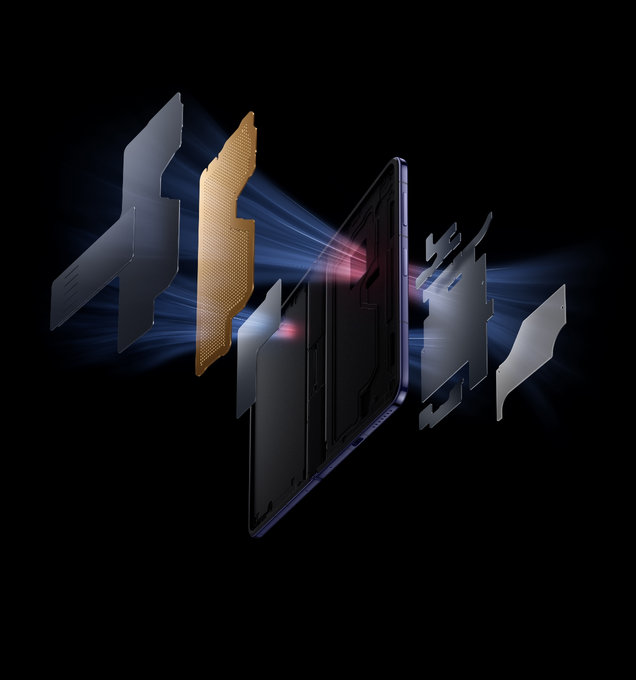
A Kirin 9030 Pro chip runs HarmonyOS 7, and the battery is rated at 5,300 mAh typical, 5,150 mAh minimum, sealed inside the body. A vapor chamber and graphene spread the heat, the speakers are a new ultra-thin design, and the spec sheet rounds out with Wi-Fi 7, Bluetooth 6.0 and a USB 3.1 Gen 1 Type-C port.
Huawei also supports its M-Pen 3 Mini stylus on the big screen, sold separately, and there’s no memory card slot, so the storage tier you pick on day one is the storage you keep.
The cooling hardware is oversized for a phone this thin. A vapor chamber and graphene sheets pull heat off the chip. The speakers follow the same thinking, a new ultra-thin design with virtual sound field processing, so landscape video sounds as wide as it looks.
Nothing in this spec sheet is a cut corner.
| Spec | Detail |
|---|---|
| Inner display | 7.7-inch OLED, 2,584 x 1,828, 1-120 Hz LTPO 2.0 |
| Outer display | 5.4-inch OLED, 1,848 x 1,264, 1-120 Hz LTPO 2.0 |
| Chip | Kirin 9030 Pro |
| System | HarmonyOS 7 |
| Memory | 12GB RAM with 256GB or 512GB storage, Collector’s Edition 16GB with 512GB or 1TB |
| Rear cameras | 50MP variable aperture main (F1.4-F4.0, OIS), 50MP periscope telephoto (3.5x, OIS), 12.5MP ultrawide |
| Front cameras | 8MP outer screen, 8MP inner screen |
| Battery | 5,300 mAh typical |
| Size | 120 x 85 x 11.2 mm folded, 166.5 mm wide and 5.2 mm thick open |
| Weight | About 229 g |
| Resistance | IP58 and IP59 |
Seven colors and a China-only sale
The color list runs seven deep, starting with Bordeaux Red and Nice Blue. Interstellar Blue, Vitality Orange, Zero White, Olive Gold and Phantom Night Black round it out. Storage starts at 12GB of RAM with 256GB or 512GB, and the Collector’s Edition steps up to 16GB with 512GB or a full terabyte of storage.
Seven colors is a real lineup, not a token gesture.
Price: Sold in China only, with no US listing
Where to buy: See it at Huawei
In the box you get the phone, a charger, a USB-C cable and a clear case, with the outer screen’s protective film already fitted. The Pura X Max is on sale in China now, and Huawei hasn’t announced a US release, a US price or any plan to sell this phone outside China.