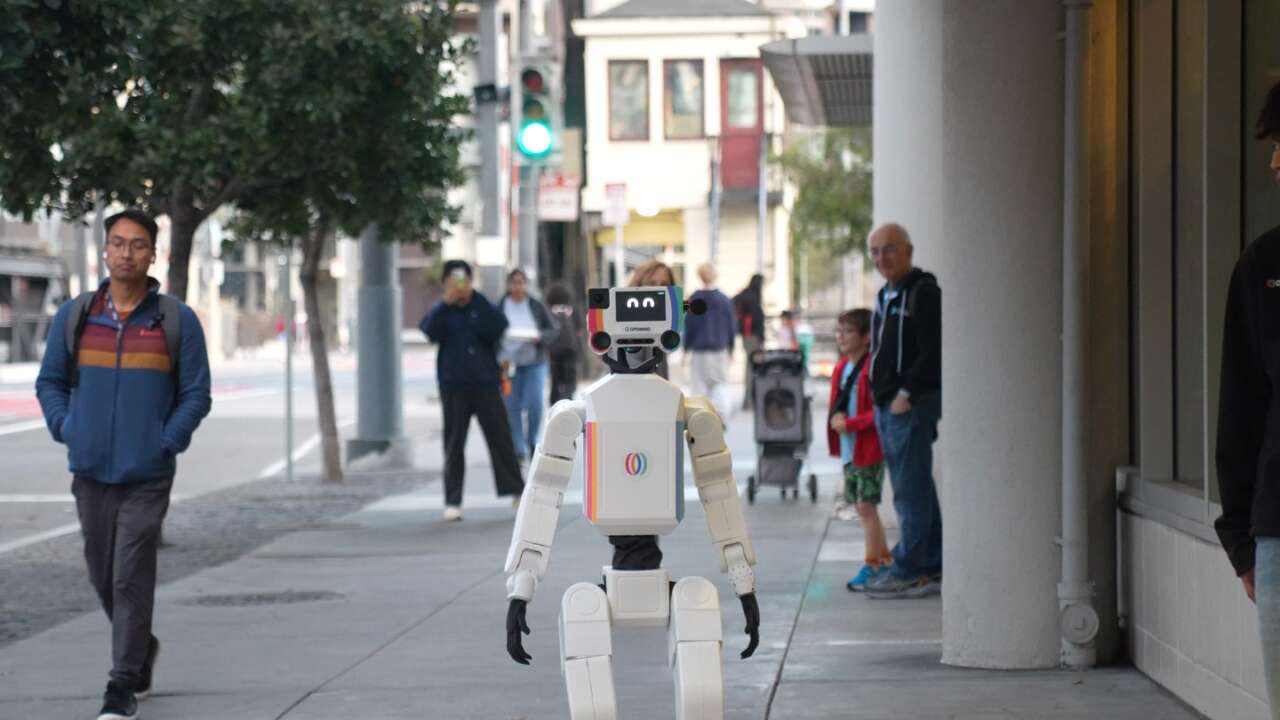
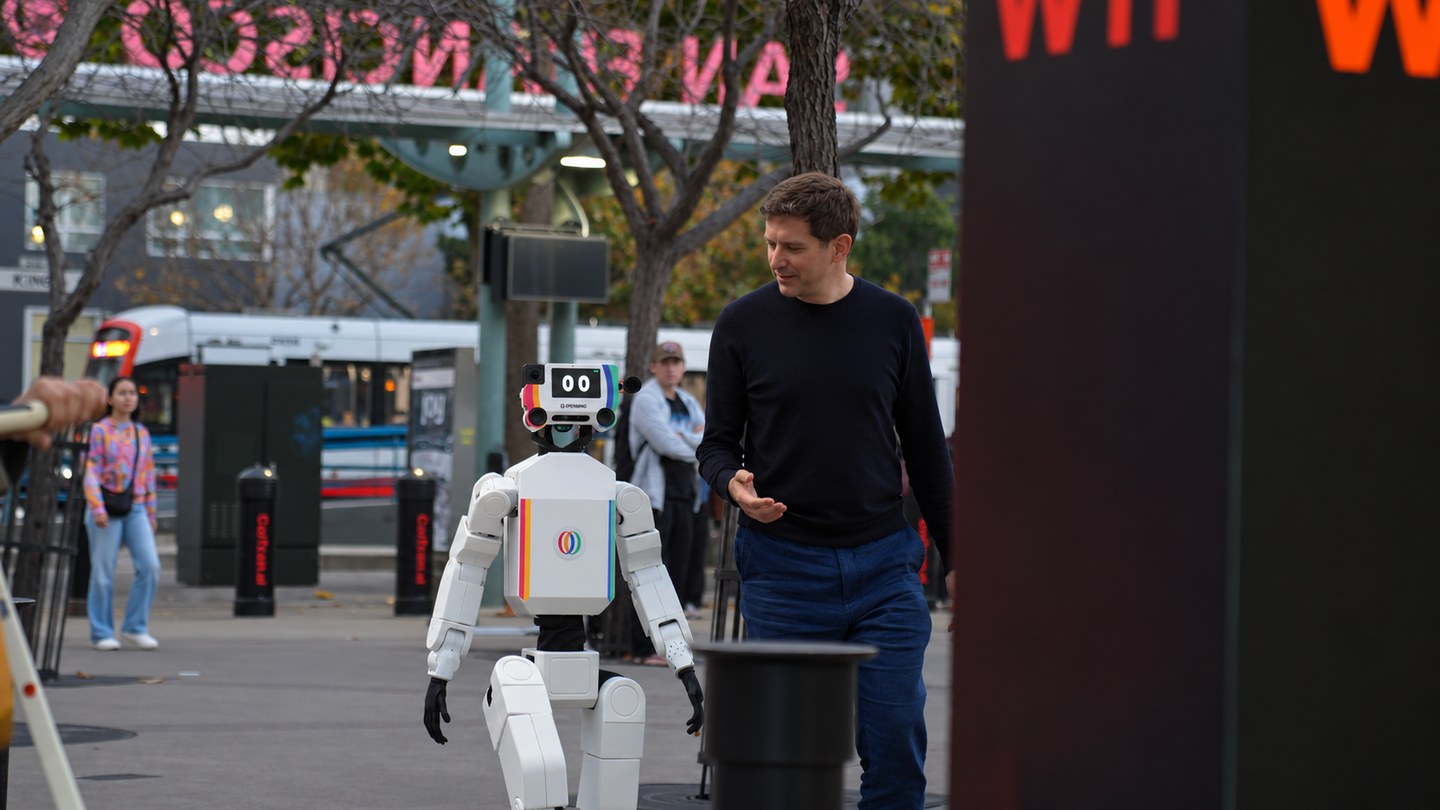
Iris is a humanoid robot whose control loop now runs partly through living human neurons grown in a lab. Stanford bioengineer Jan Liphardt and his team connected the cultures remotely, and she reacts to basic social cues.
The loop runs through a dish, not a chip
Iris’s cameras capture what she sees, and an API carries that feed out of the robot entirely, to living cultures of human neurons sitting on electrode arrays in labs overseas. The neurons fire in response, the electrodes pick up the spikes, and those spikes convert into outputs that flow back to Iris and shape what she does next. The arrays work in both directions, pushing electrical impulses into the neurons and reading what comes back.
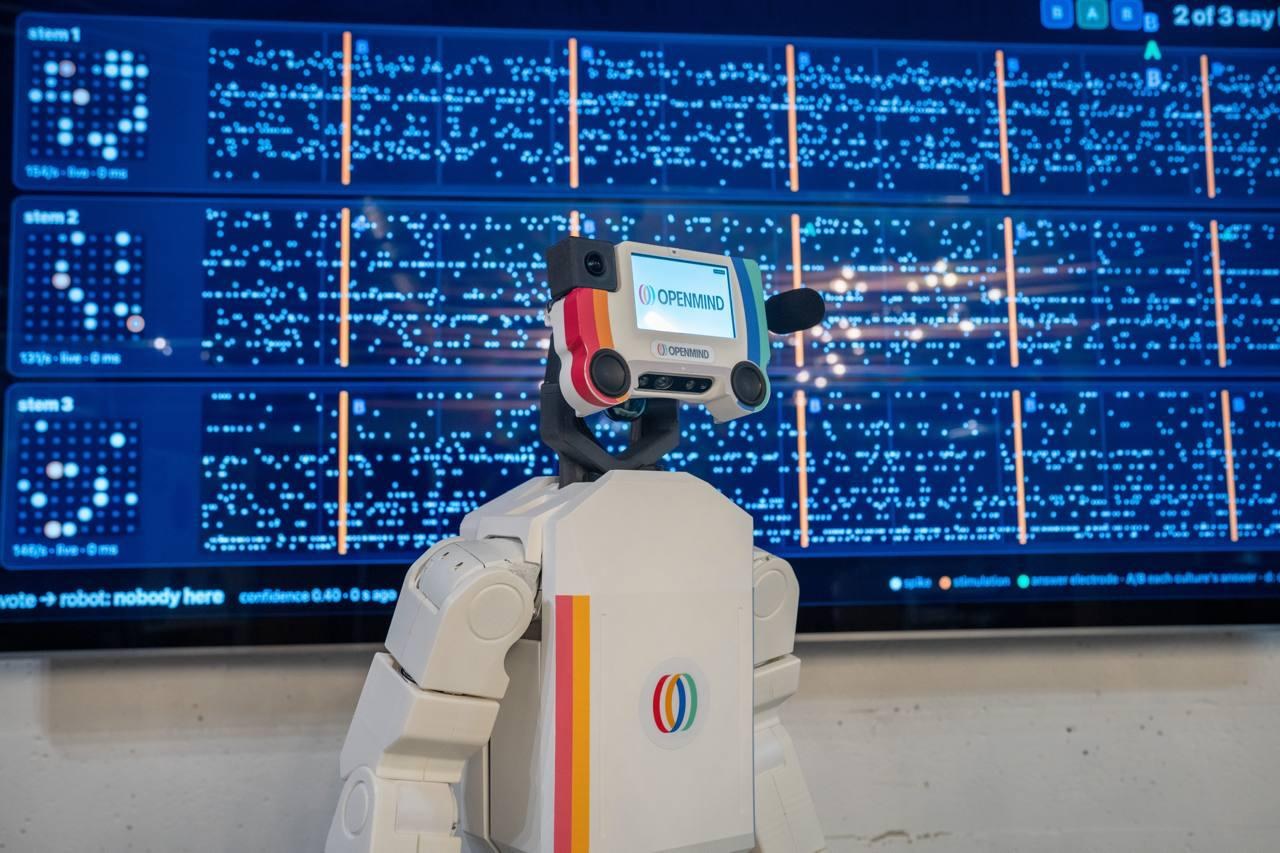
No chip sits in that seat.
The cultures never left home, since the flat 2D set lives in Australia and the 3D set lives in Switzerland, while Iris walks streets on the other side of the world. The biology never rides along, because a culture needs a lab bench and stable conditions, and a robot’s day out offers neither.
Liphardt’s team rented the neurons the way a startup rents servers, buying access to both platforms instead of building a wet lab. That choice is why the loop crosses the planet, since the tissue stays where the benches and the feeding schedules are.
Both platforms grow the same starting material, human cerebral cortex neurons derived from induced pluripotent stem cells, which are adult cells wound back to a stem state and then coaxed into becoming brain cells. The difference is the shape they grow in, flat sheets on an array against balls of cells called spheroids, and that shape decides almost everything that follows.
Iris is OpenMind‘s humanoid, and Liphardt founded the company to build the operating system for robots that work with people. Wiring her judgment through living tissue is the strangest test that stack has faced. The neuron work sits on top of that stack rather than replacing it, since the cameras, the API and the robot’s body all stay conventional.
Fresh cultures answer fast, and then they age
Across nearly 500 simulations, the team measured 94 percent decoding accuracy on fresh 2D cultures, with responses landing between 150 and 240 milliseconds after the input arrived. Decoding accuracy is the share of runs where the cultures’ firing pattern produced the response the input called for.
The spheroids reached 91 percent, though their answers sometimes took as long as two seconds to come back. Two seconds is a long pause mid-conversation.
That gap separates a reflex from a delay, because the flat cultures answered fast enough for Iris to work a room in something close to real time. Engage with her and the loop registers an interested person in front of the cameras, and she answers that engagement. Turn away and close your eyes, and she cools.
People read each other faster than that, and a quarter second still lands inside the rhythm of a conversation, while two seconds lands like a snub.
The spheroid is the shape closer to real tissue, and it lost on speed and on lifespan in the same tests.
The 2D cultures stayed viable for more than 100 days on their arrays, long enough to cover a real deployment instead of a demo. The spheroids survived only a few days. As the cultures aged, Iris’s lag grew and her temperament drifted with it, so the same robot answered the same room differently from one week to the next.
A chip fails on a schedule a spreadsheet can predict, while a culture fades on biology’s schedule, and a home robot that slowly gets slower and stranger is a support problem nobody has priced yet.
Liphardt counts that drift as a feature, saying there’s “something quite attractive about the notion of each robot having their own personality,” wrong answers, deaths and all. His stated direction runs toward the home, where a robot could adapt to one family’s habits and preferences on living neurons instead of a standard chip.
The trade cuts both ways, since a processor grown from cells can hold a family’s patterns in a form that’s harder to copy or steal, and it still ages like the tissue it is.
Liphardt’s version is blunter: wire a home robot this way and “you have more confidence that that information cannot be copied or stolen.”
The ethics questions stay narrow for now, because the donor consent behind the stem cells was fulfilled and the cultures are simple sheets and balls of cells. No evidence says these cultures can experience anything. Liphardt draws his own line at complexity, since hooking arrays like these to animals or people, or growing far more elaborate structures, changes the calculation entirely.
Every extra week of culture life is a week the robot keeps the personality it started with. The team’s stated next job is keeping those cells alive longer.