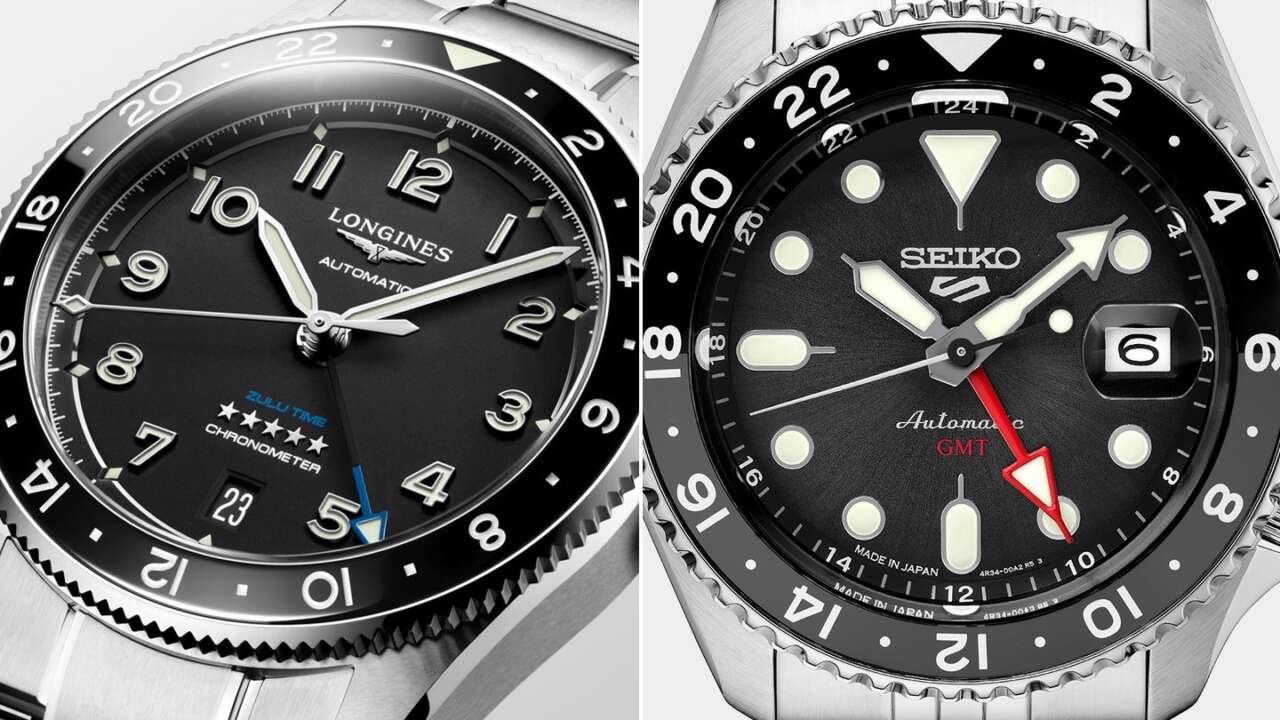
Two GMT watches sit on the same desk. Both are steel, both run automatic movements built in-house, both track a second time zone on a 24-hour hand and a third on a rotating bezel, and both are rated to 100 meters. One costs $3,550. The other costs $495.
That gap is the whole piece. The expensive watch is the Longines Spirit Zulu Time 39, a COSC-certified flyer GMT whose local hour hand jumps on its own when you land. The inexpensive one is the Seiko 5 Sports GMT SSK001, a caller GMT that sets its 24-hour hand instead. What the extra $3,055 buys is a specific kind of convenience, plus finishing. Where the Seiko closes the gap is everywhere else.
Seven times the money. Not seven times the watch.
Zulu started as a letter, not a watch name
Zulu is the aviator word for universal time, the Z in the phonetic alphabet, and Longines has been building dual-time watches since its first one in 1925 carried the Zulu flag on its dial. The Spirit line is the modern carrier of that history, built as a pilot watch first and a travel watch second.
Seiko’s claim is different, and shorter. The SSK001 was the first Seiko 5 Sports watch with a GMT function, dropped into the SKX case shape Seiko fans had worn for decades. No heritage campaign. Just a fourth hand at a price nobody else was charging for a mechanical GMT.
Both watches answer the same boarding-pass problem. They solve it in opposite directions.
The Longines jumps its own hour hand when you land
A flyer GMT is built around the person wearing it. Land in a new city, pull the crown, and the local hour hand clicks forward or back in one-hour steps while the 24-hour GMT hand keeps home time untouched and the seconds keep running. The date follows the local hand. That’s the Spirit Zulu Time’s party trick, and it’s the single biggest thing the money buys here.
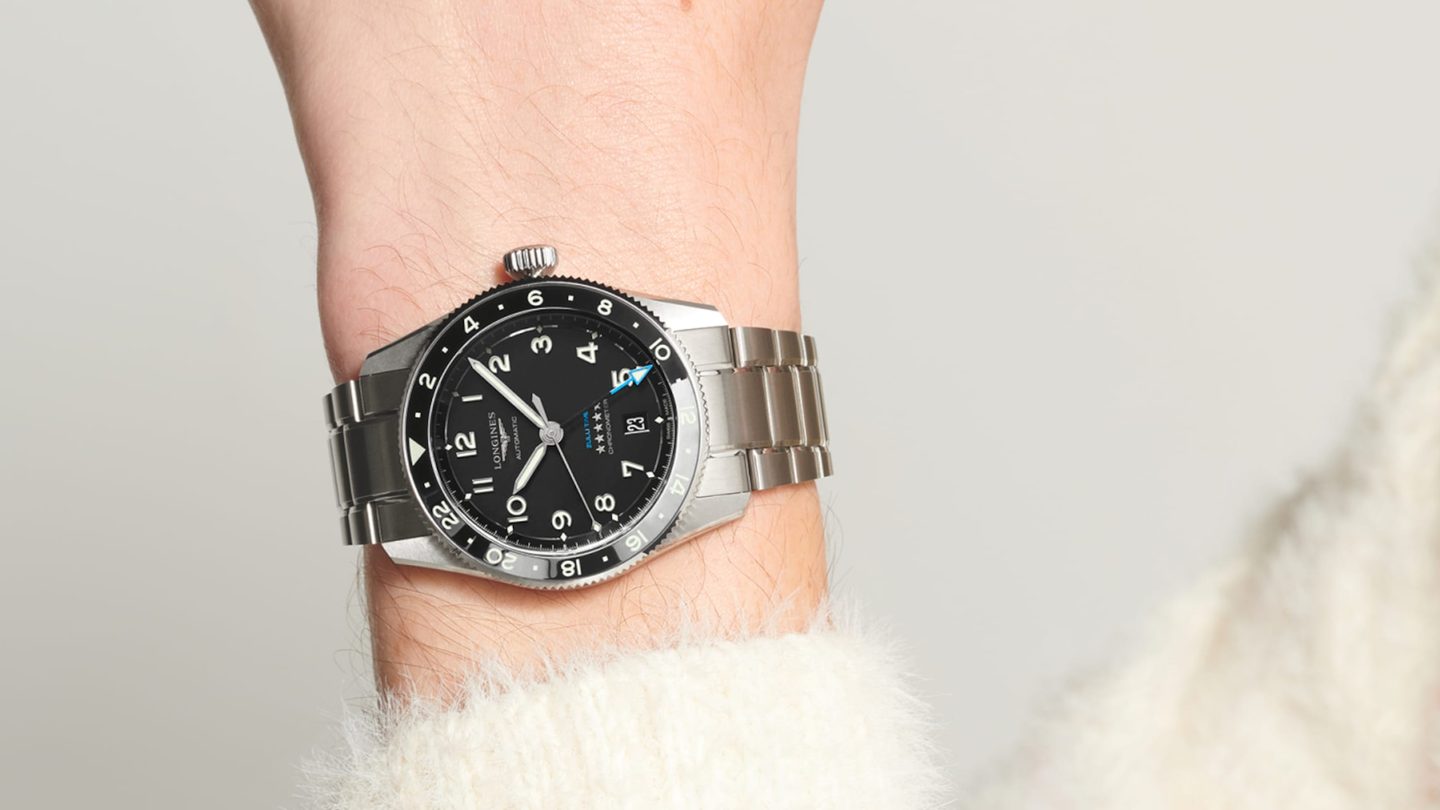
The movement is Longines calibre L844.4, an exclusive self-winding GMT calibre with a silicon balance spring, and the finished watch is chronometer-certified by COSC. It beats at 25,200 vibrations per hour and runs up to 72 hours off the wrist, so a Friday-to-Monday break doesn’t stop it.
Three days of reserve. Most GMTs at any price give you two.
The case is 39mm of stainless steel and 13.5mm thick, under a sapphire crystal coated against reflections on both sides. The bidirectional bezel carries a ceramic insert with the 24-hour scale, the crown screws in, and water resistance runs to 10 bar.
Five stars sit under the Zulu Time name on the black matt dial, a nod to the grades Longines once stamped on its precision movements. The date sits at 6 o’clock, where it balances the dial instead of breaking up the 3.
Longines Spirit Zulu Time 39 L3.802.4.53.6
Calibre L844.4, COSC-certified flyer GMT · 39mm steel case, ceramic bezel · Sapphire crystal · 72-hour reserve
Price: $3,550
Where to buy: Buy at Longines
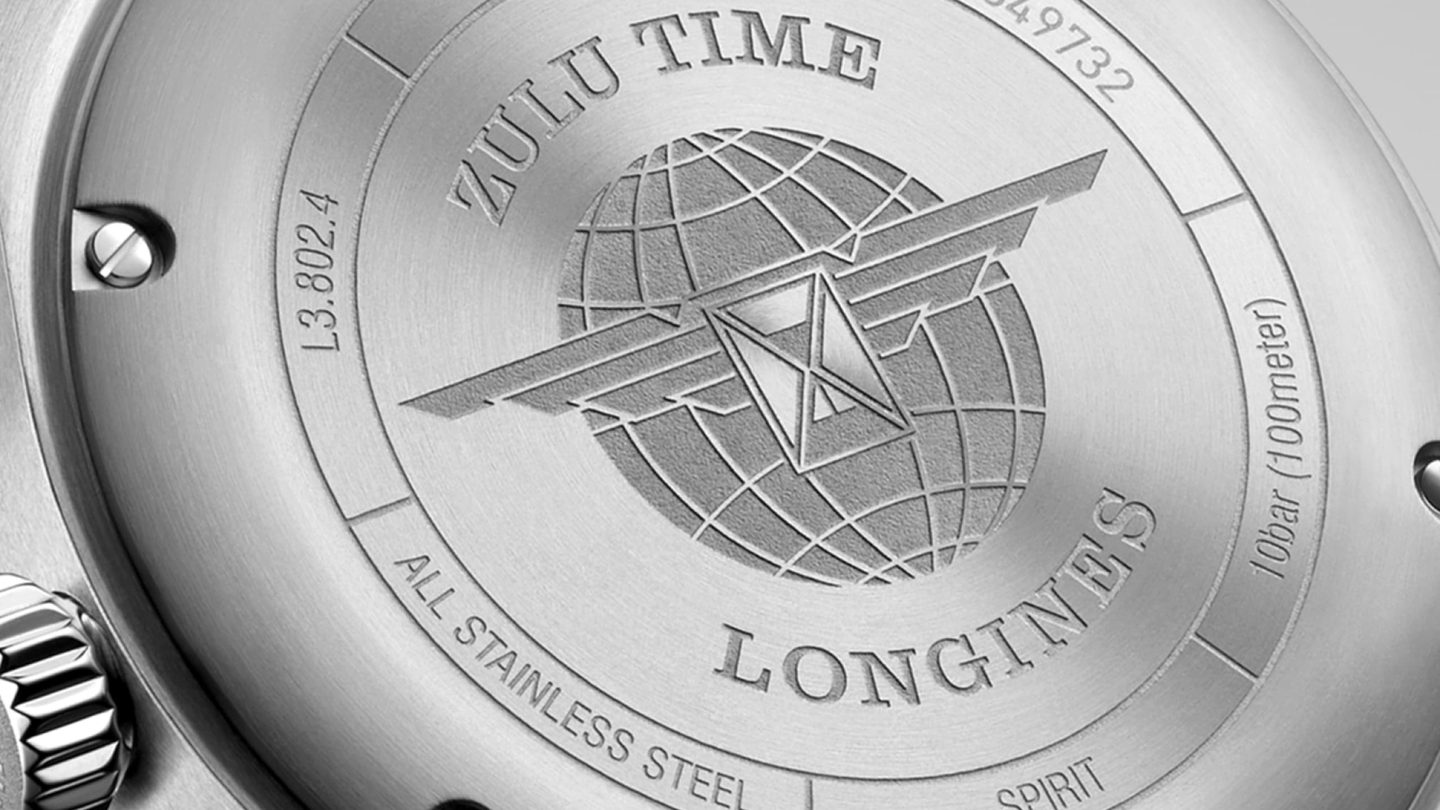
Flip it over and the caseback is closed steel, engraved with a globe and the winged hourglass. No view of the movement. Longines sells this watch on certification and use, not on display. The engraving carries the reference and the 10 bar rating around the rim, and it’s a working back, meant to be opened by a watchmaker and nobody else.
The Seiko sets its GMT hand and keeps the $3,055
A caller GMT works the other way around. The 24-hour hand is the one that adjusts independently, set to the office, the family or the connecting hub you keep calling, while the local hands stay where they are. Frequent callers love the layout. Frequent flyers feel the difference at the arrival gate, where resetting local time means resetting the whole handset and the date with it.
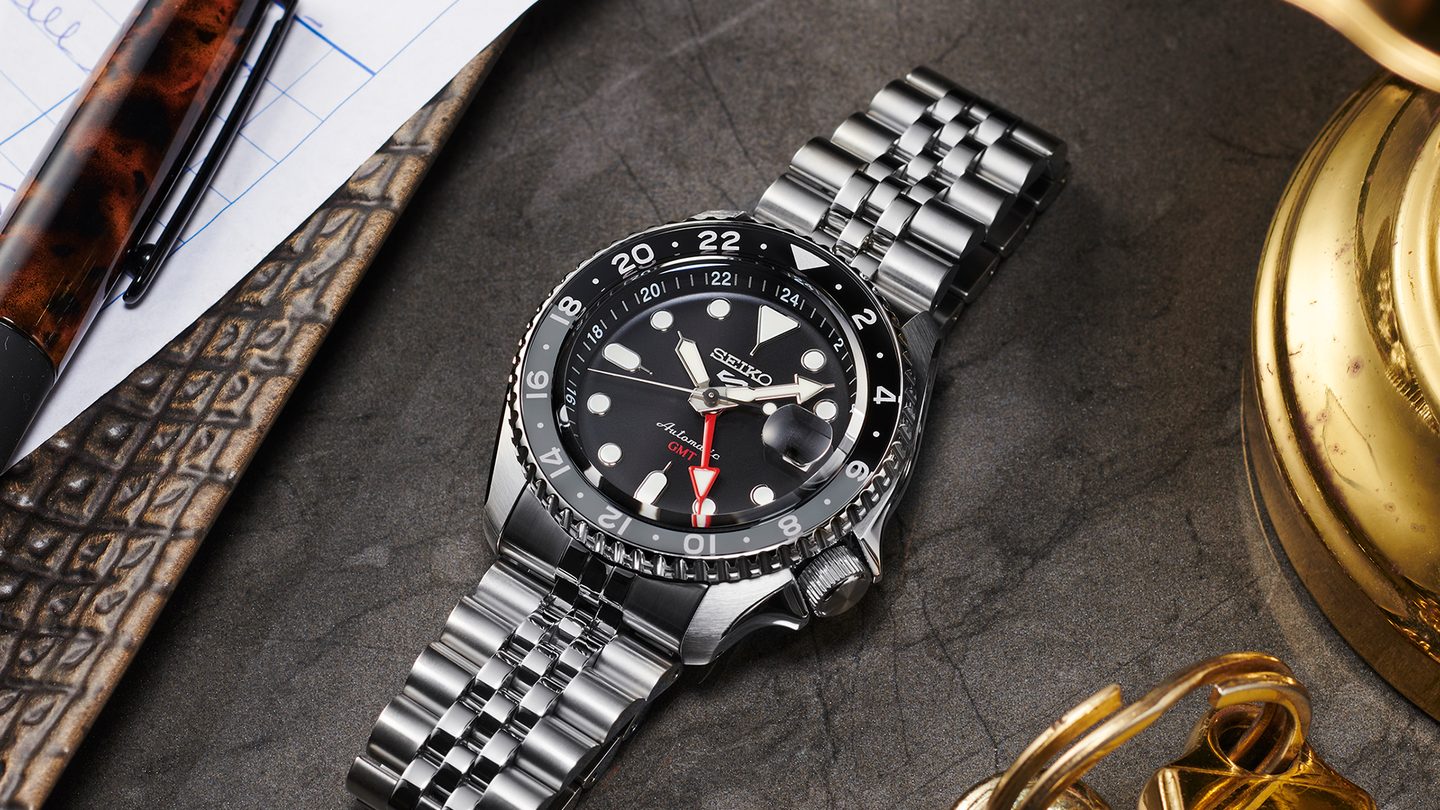
Inside the SSK001 sits Seiko’s calibre 4R34, built on the 4R family that powers half the affordable mechanical watches worth owning. It runs 24 jewels, beats at 21,600 vibrations per hour, hand-winds, hacks, and holds about 41 hours of reserve. Ours is the workhorse spec sheet of the last decade, with a GMT hand added.
The case runs bigger. At 42.5mm across, 13.6mm thick and 46mm lug to lug, the SSK001 wears like the SKX diver it descends from, on a five-row steel bracelet with a tri-fold clasp and lock. The crystal is Hardlex, Seiko’s hardened mineral glass, where the Longines runs sapphire. That’s a real gap, and it shows up in the table below.
Then the Seiko starts clawing ground back.
Its black and gray 24-hour bezel rotates, so the watch tracks a third zone the same way the Longines does.
The red GMT hand reads at a glance against the black dial, the date gets a magnifier, and LumiBrite fills the hands and markers. The caseback screws down and shows the movement through glass, which the $3,550 watch doesn’t do. We have covered the family before, including the Seiko 5 Sports SKX GMT limited edition that put a maroon sunray dial on this same US GMT platform.
Seiko 5 Sports GMT SSK001
Calibre 4R34 caller GMT · 42.5mm steel case · Hardlex crystal · See-through caseback
Price: $495
Where to buy: Buy on Amazon
Where the gap shows and where it closes
| Spirit Zulu Time 39 | Seiko 5 Sports GMT SSK001 | |
|---|---|---|
| Movement | Longines calibre L844.4, COSC chronometer | Seiko calibre 4R34 |
| GMT type | Flyer, jumping local hour hand | Caller, independent 24-hour hand |
| Case | 39mm stainless steel | 42.5mm stainless steel |
| Crystal | Sapphire, anti-reflective both sides | Hardlex |
| Water resistance | 10 bar (100 meters) | 10 bar (100 meters) |
| Power reserve | 72 hours | About 41 hours |
| Price | $3,550 | $495 |
Read the table top to bottom and the pattern holds. The Longines wins the movement rows, the crystal row and the size row for smaller wrists. The Seiko ties water resistance, ties the third-zone bezel trick, and wins the caseback and the price by a margin that still looks like a typo.
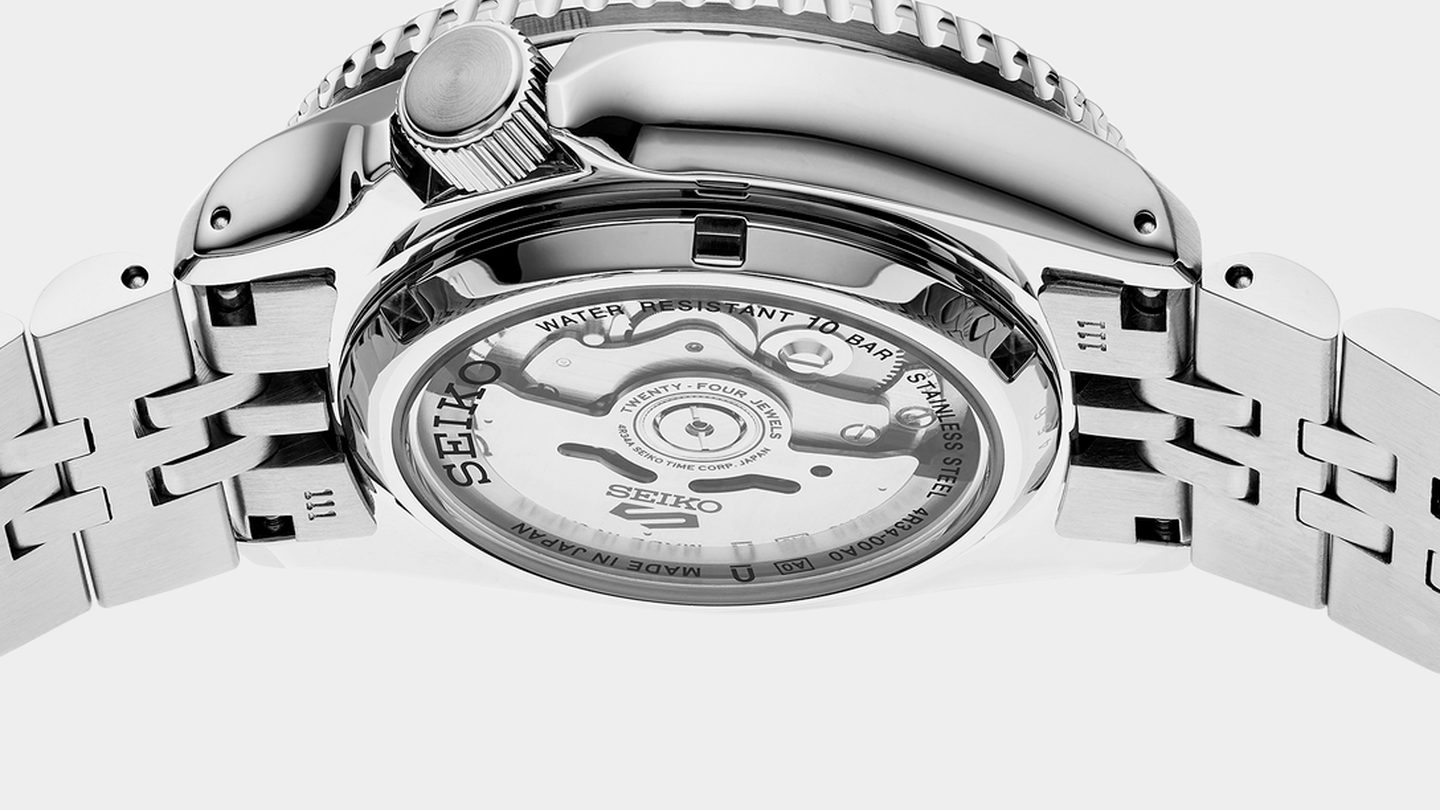
Ownership tilts the same way. The Longines carries chronometer certification, a silicon balance spring that shrugs off magnetic fields, and Swiss finishing throughout. The Seiko carries a movement any competent watchmaker on earth can service, in a case you won’t baby through an airport.
One watch asks for care. The other asks for a boarding pass.
So the pick is about how you actually cross time zones. If you fly weekly and change local time at every landing, the Longines earns its money in the first month: jump the hour hand, keep home time running, take three days of reserve and a certified movement, at $3,550.
If your second zone lives on a screen of calls and a few trips a year, the Seiko gives you the same three-zone readout, the same 100 meters and a movement with decades of service history behind it, at $495, with $3,055 left for airfare.
The gap buys a better tool for one specific job. The rest comes down to finishing, certification and name, and Longines prices that stack at $3,055.