PowerGo’s Aurora 03 runs five drivers per side, and one of them breaks the pattern.
Four of the five make sound the way earphones always have, with coils and diaphragms doing the pushing. The fifth is a MEMS solid-state driver, a sliver of silicon that flexes to move air, with no coil wound anywhere inside it. It’s the newest driver technology in the earphone business, and until recently it showed up mostly in premium true wireless buds.
PowerGo Aurora 03-MEMS Tribrid In-Ear Monitors
MEMS solid-state driver with 1DD and 3BA per side · 3D-printed high-transparency resin housing · Three independent sound tubes
Price: $169 Super Early Bird on Kickstarter ($159 Secret Link tier, $179 Early Bird)
Where to buy: Back it on Kickstarter
The campaign is live on Kickstarter and already funded several times over. Backers have pledged $16,100 against a $2,550 goal, more than six times the target, from 87 backers. Hong Kong-based PowerGo launched the run on October 21, and the clock runs out on Saturday, November 21.
Five drivers and three technologies in one shell
Each side carries the MEMS driver, one dynamic driver and three balanced armatures. PowerGo calls the layout a tribrid, and the name fits a shell that mixes three driver technologies instead of two.
MEMS drivers come out of the same world as phone microphones, where silicon parts get etched rather than assembled. That gives the technology two selling points conventional drivers struggle to match: very fast response, and consistency from one unit to the next, since every driver comes off a production line that prints them alike. We walked through how MEMS drivers work, and why they’re turning up in earphones now, in our MEMS driver explainer from earlier today.
The supporting cast covers the ranges a MEMS driver doesn’t reach on its own.
A dynamic driver brings the physical push that low notes need, the kind of air movement you feel as much as hear. Balanced armatures are small, quick and easy to aim at a narrow band, so three of them can split the mids and highs between them instead of one driver straining to cover everything above the bass. Each technology does the job it’s shaped for.
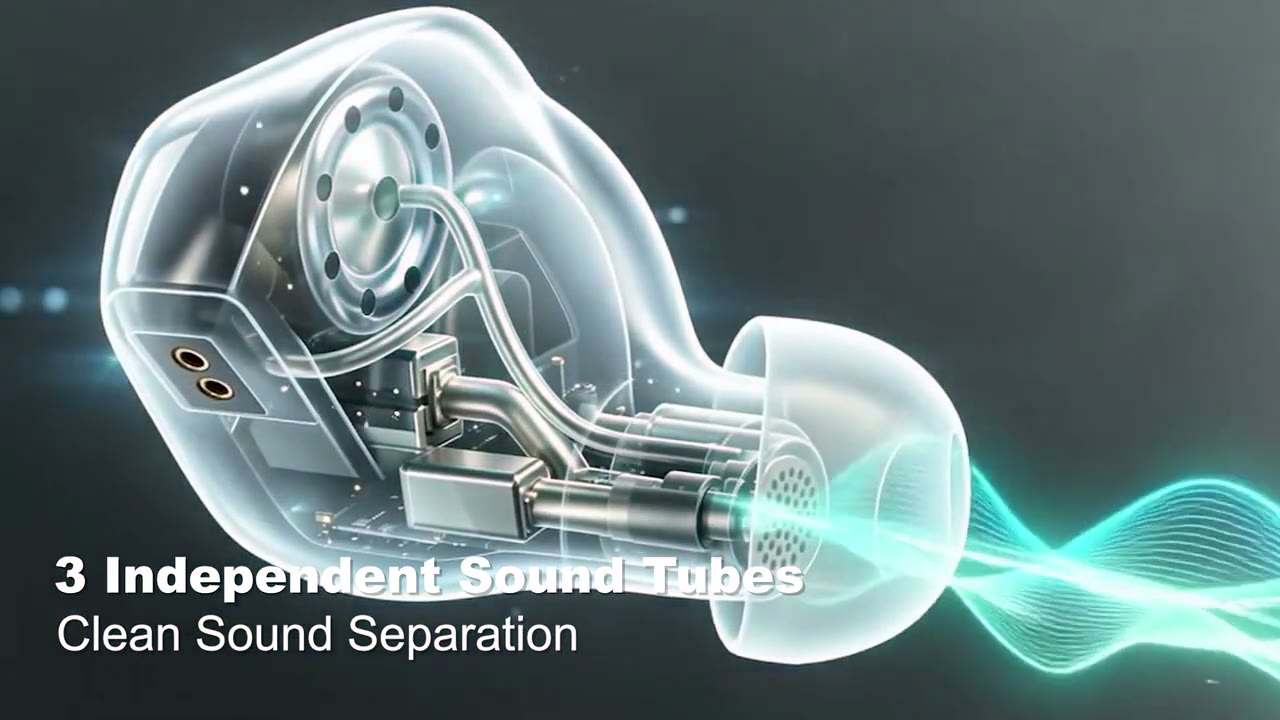
Splitting the work five ways only helps if the handoffs stay clean. PowerGo routes the drivers through a gold-plated crossover board, and the campaign film’s cutaway shows each driver group getting its own path to the ear: three independent sound tubes run from the drivers to the nozzle. It’s a tidy answer to the usual hybrid problem, where five drivers share one tube and arrive as a blur.
A printed resin shell with a feather on its face
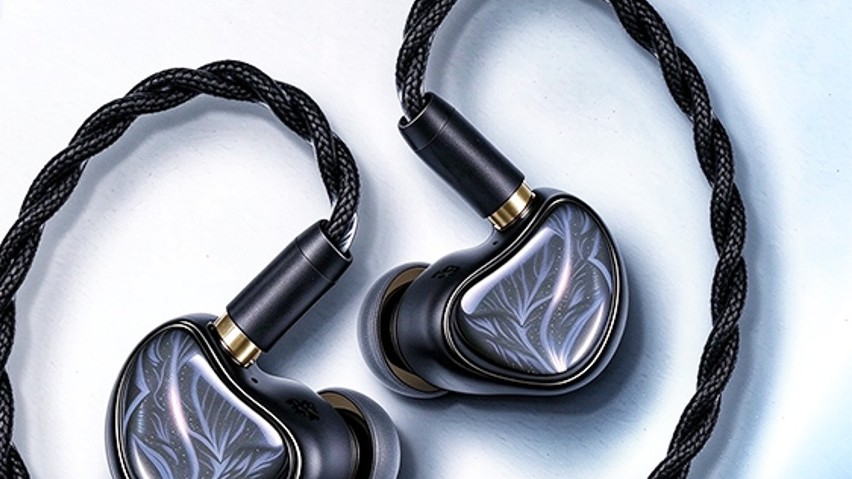
The housing is 3D-printed from high-transparency resin, tinted dark, with a silver feather pattern spreading across each faceplate under the gloss. Gold rings circle the cable connectors. The cable itself is a thick black braid that loops over the ear, the way stage monitors are worn, and the film shows the earpieces sitting deep and flush once they’re in.
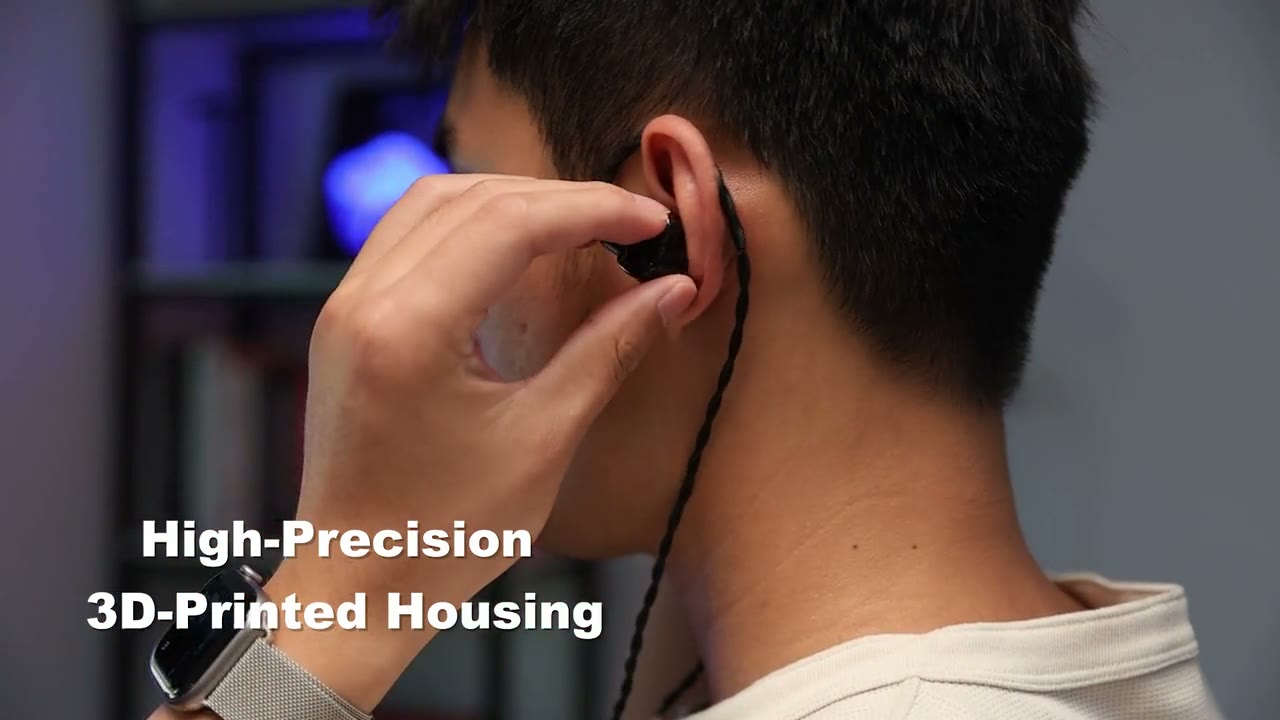
Nothing about the shell looks oversized, which counts for plenty when five drivers share the space.
Swappable ear caps and a February shipping window
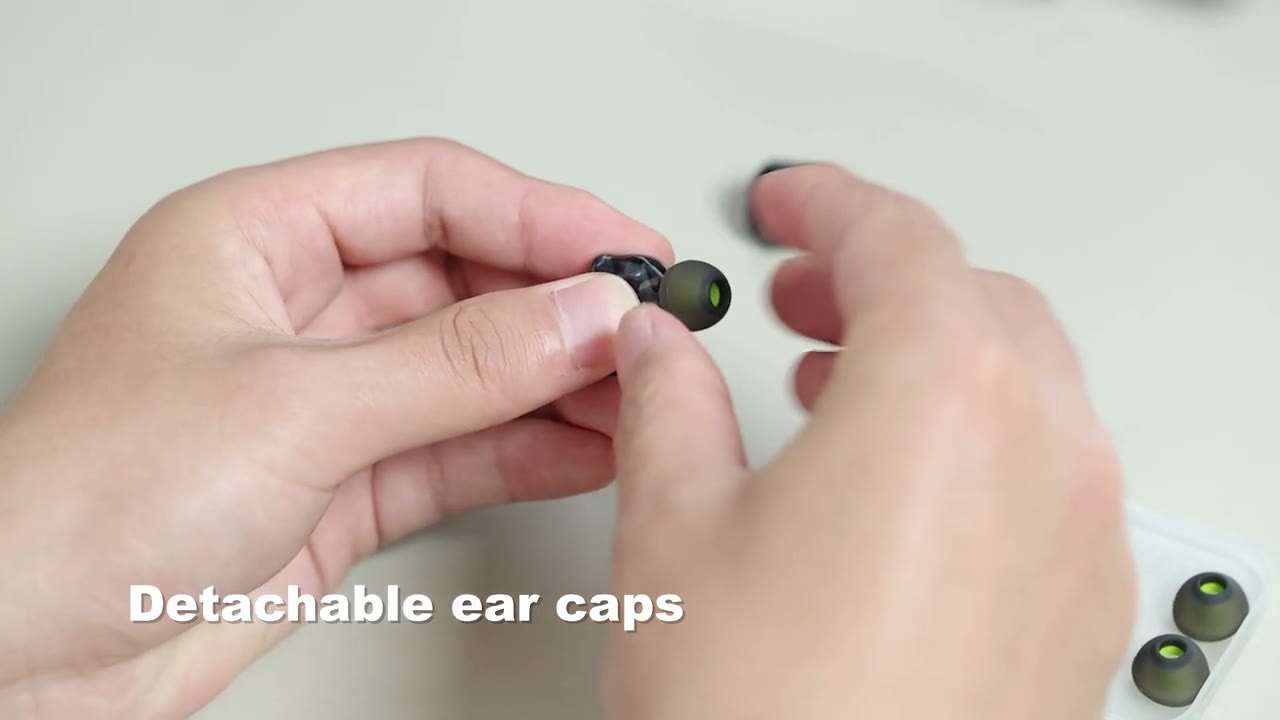
The tips swap by hand. PowerGo calls them detachable ear caps, the campaign film shows them pulling straight off the nozzle, and spares wait in the included ear-cap box. Tip rolling is the cheapest fit fix in the earphone hobby, so a design that treats the caps as a replaceable part starts ahead of one that glues them down.
Adapters fill out the add-on list: a 4.4mm to 3.5mm HiFi adapter at $15, plus hi-res adapters in USB-C and Lightning versions for phones that dropped the headphone jack. PowerGo estimates delivery in February 2027, roughly two months after the campaign closes, which is a sane gap for a first production run if the tooling is already done.
The tiers and the ten-day clock
Pledges start at $159 through the campaign’s Secret Link tier, which 23 backers had claimed at the last check. Super Early Bird is $169, capped at 100 backers, with 60 gone and 40 slots left at that price when the page was checked. Early Bird follows at $179 for a single pair.
Multi-pair tiers shave a little per set. Two pairs run $319 in the Couple Package, three run $469, and a five-piece set is $779, all aimed at households and gift lists rather than collectors.
The campaign page shows 14 comments and one creator update so far. A modest thread, but an active one.
Context helps the price land. A MEMS hybrid already selling at retail, the Binary EP321, lists at $309.99 on Amazon, so a $169 pledge for a five-driver MEMS design undercuts the going retail rate for the technology by a wide margin.
The crowdfunding caution still applies in full: the money funds a production run that hasn’t happened yet, and February is an estimate rather than a promise.
Kickstarter runs all-or-nothing, and this campaign cleared its goal weeks ago, so pledges will be charged when the clock ends. Set against that, backers are being offered the newest driver technology in the category at a pledge price well under retail, from a campaign that cleared its goal in its first weeks. Ten days remain on the clock.
PowerGo Aurora 03-MEMS Tribrid In-Ear Monitors
MEMS solid-state driver with 1DD and 3BA per side · 3D-printed high-transparency resin housing · Three independent sound tubes
Price: $169 Super Early Bird on Kickstarter ($159 Secret Link tier, $179 Early Bird)
Where to buy: Back it on Kickstarter