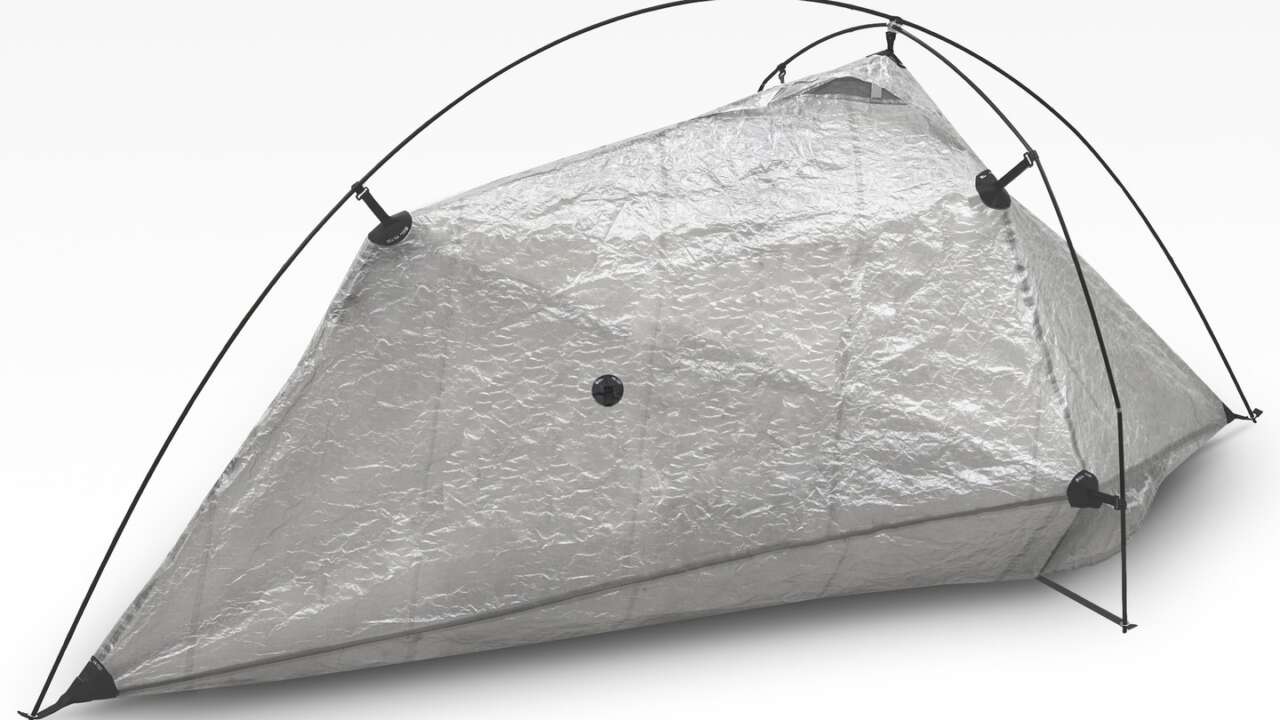
Four hundred ninety grams, frame included. Field Record builds the FR-SCD in Japan as a single-wall, freestanding solo tent, and the maker’s own weight claim counts the Easton carbon poles in that number. No stakes-versus-shelter games, no asterisk pointing at a trail weight three lines down. The whole shelter, as pitched, weighs about what a full water bottle does.
Price: $944 (¥149,600)
Where to buy: Field Record
Field Record is a small Japanese maker, and this tent isn’t new. It’s been in the catalog since 2023, sold built to order, in a category where most sub-500-gram shelters come from big ultralight brands with dealer networks. This one comes from a workshop, one order at a time.
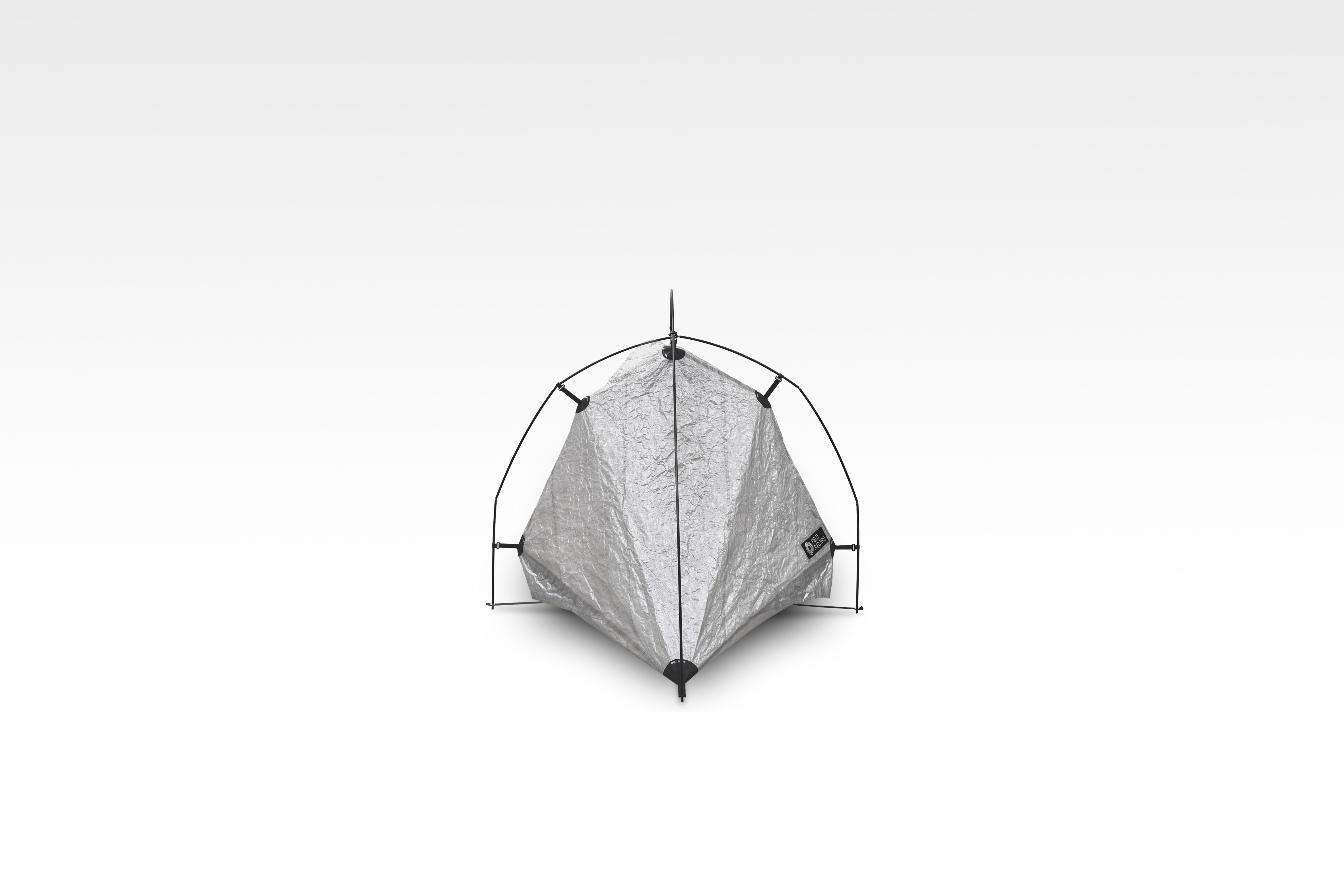
The carbon frame makes it freestanding. Most shelters at this weight pitch with trekking poles or a thicket of stakes and guylines, and they sag the moment the ground won’t take a stake. A carbon frame holds the shape on rock slabs, wooden platforms, and snow, which is exactly where ultralight hikers end up sleeping when the trail runs out of dirt.
Single-wall construction is where the weight saving comes from. One layer of fabric does the weatherproofing and the interior at once, so there’s no separate fly to carry, pitch, or flap in wind at 2 AM. Pitching is one step: frame up, body on, done. In rain, that speed counts for more than the spec sheet suggests.
Dyneema walls, carbon bones
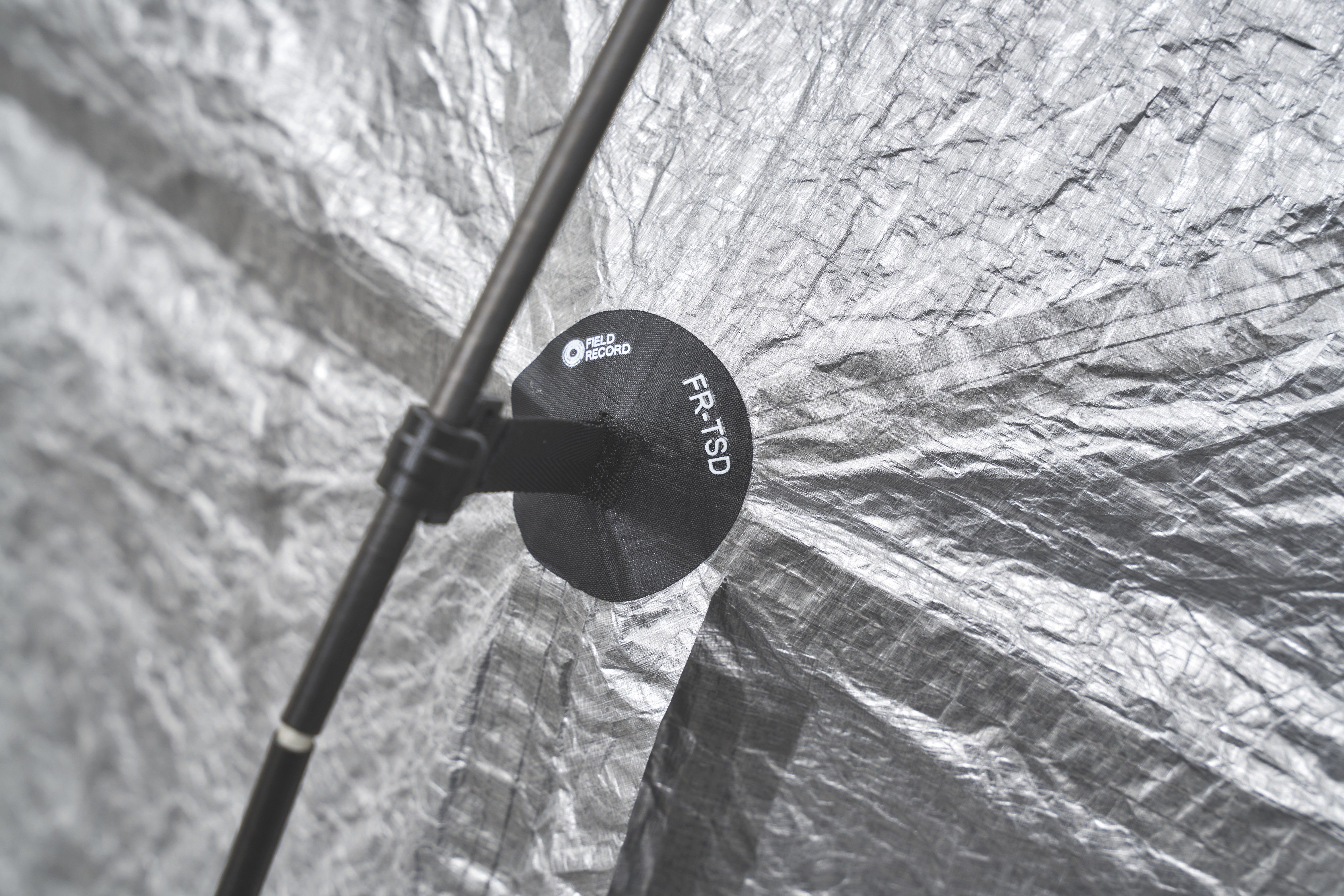
Fabric is Dyneema Composite Fabric, the crinkly white laminate ultralight hikers know from tarps and packs. Poles are Easton carbon. After sewing, the body gets bonded seam treatment, and 12 reinforcement points use DCF patches bonded the way the maker builds its tarp systems. Field Record licensed the Dyneema logo from Avient Protective Materials for this project, a small detail that says the fabric is the genuine article.
Four vents and an airflow-friendly profile move air through the tent to cut the moisture single-wall shelters collect overnight. It won’t erase condensation, and the maker doesn’t claim it will. It manages it, which is the realistic brief for a single wall.
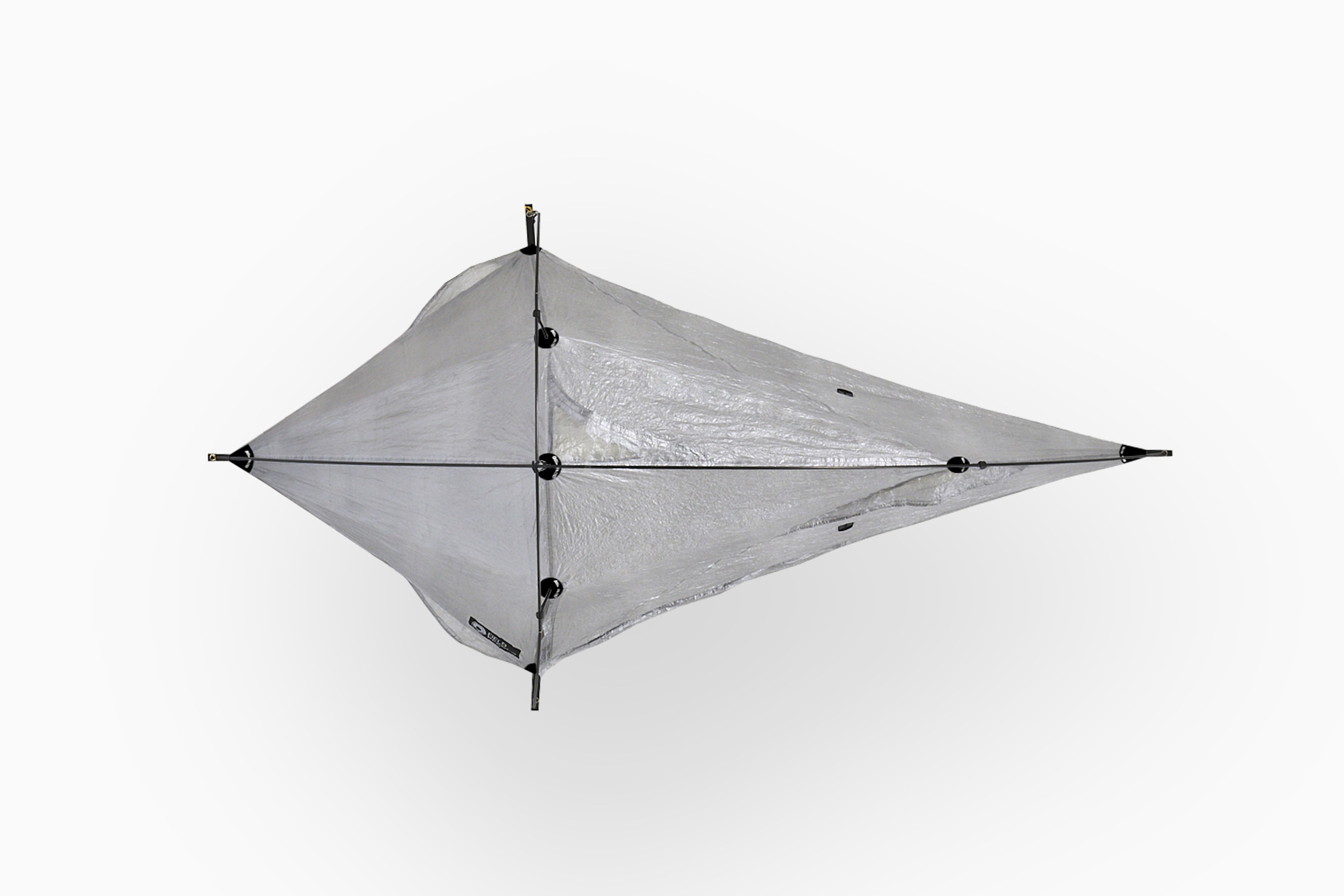
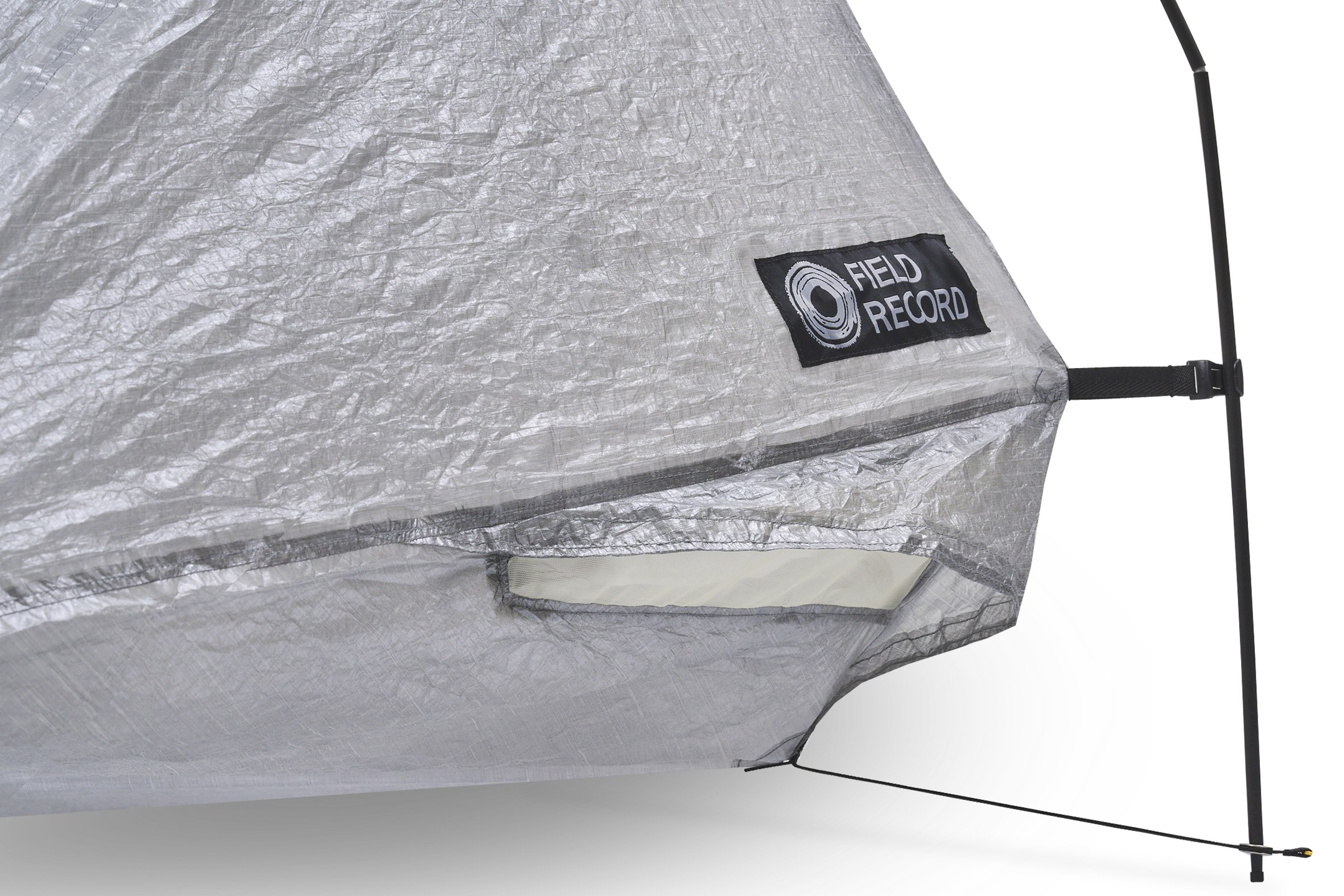
Condensation management deserves one more line, because single-wall buyers get surprised by it. Warm air inside hits cold Dyneema and beads up. Vents at four points keep air moving across that surface, and the profile sheds the drip line away from the sleeping area. Cold, still nights will still test it. Every single-wall owner learns the towel trick eventually.
Who this is for
Solo hikers counting grams for long trails are the obvious buyers, and bikepackers get the same benefit, since the shelter pitches without relying on the bike or a pole set. Anyone who camps mostly at drive-up sites is paying for weight savings they’ll never feel. The price buys grams, full stop.
Comparison shoppers will land on the usual Dyneema names out of the US cottage industry. The Field Record pitch against them is build origin and the frame: hand-built in Japan, freestanding out of the bag, no pole improvisation. Whether that’s worth a three-month wait is a call each buyer makes alone.
Ordering one
Every tent is built to order, and the lead time currently runs about three months. International shipping is available. Duties and customs fees land on the customer, a few countries can’t be shipped to at all, and payment runs through PayPal only. Order by the purchase form, or by email with your name, product, quantity, address, and phone number if the form won’t take your payment.
Used examples surface on resale listings in Japan now and then. Owners hold onto them. The three-month queue at the workshop door says production isn’t racing to catch up with orders.
Price is ¥149,600, which converts to $944. A two-person Duo version runs 650 g at ¥220,000, about $1,388, on its own page. Both sit far past mainstream tent money. Dyneema fabric and hand labor in Japan cost what they cost, and neither is getting cheaper.
Price: $944 (¥149,600)
Where to buy: Field Record