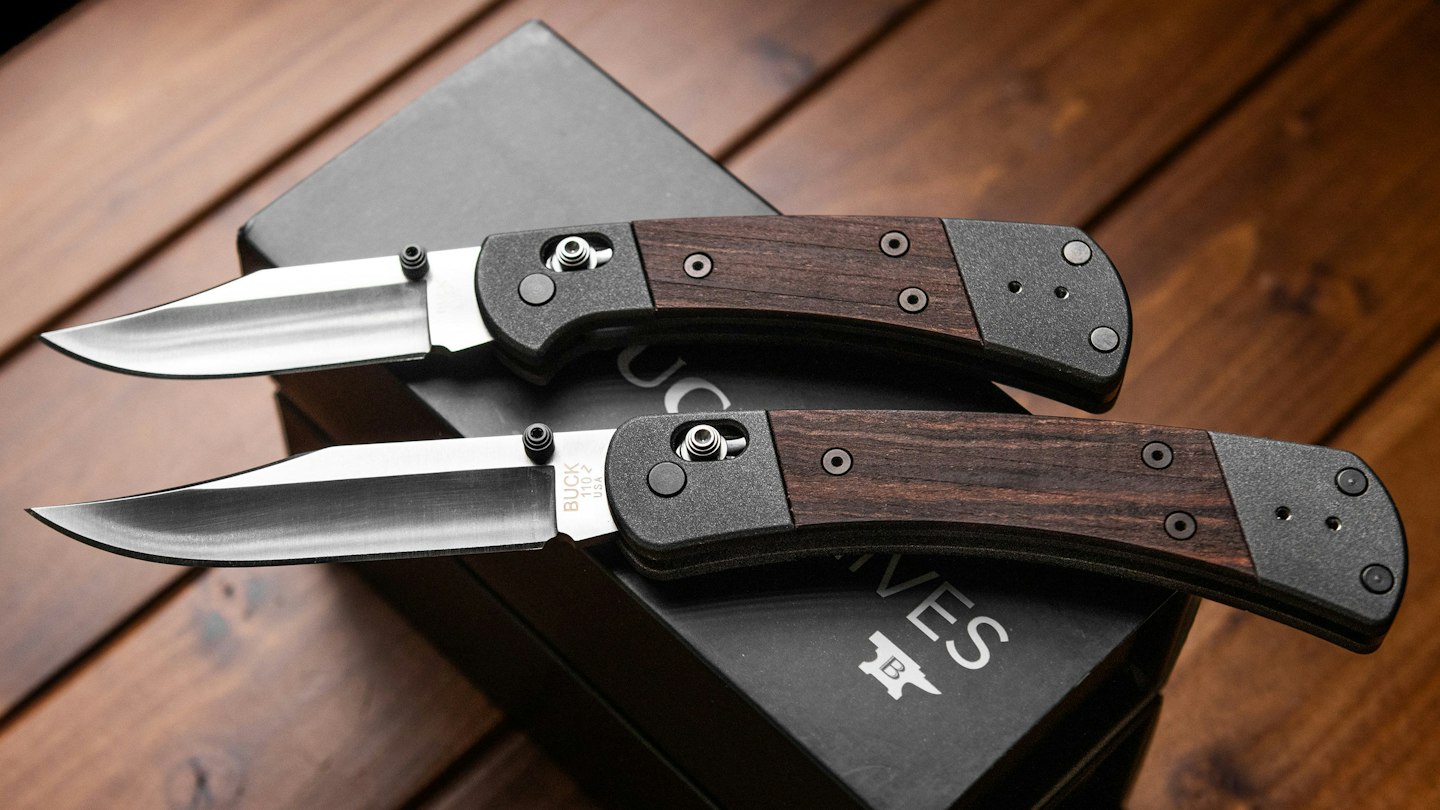
Sixty-two years is a long time to open a knife with two hands and a thumbnail. Buck’s 110 Folding Hunter arrived in 1964, sold more than 15 million copies, and turned into the folder every other folder gets compared against. Copied is not too strong a word. That silhouette, brass bolsters over ebony with a clip point on top, became the default shape of an American hunting folder.
Carrying one the old way asks for patience, though. A lockback needs both hands, a nail nick, and a belt sheath, since the original weighs 7.2 ounces and never came with a pocket clip. Buck built the 110 Crossbar Elite and 112 Crossbar Elite to fix exactly that, and the fix starts with the lock itself.
Context explains why the original earned its following. Fixed blades did the heavy work in 1964, and folders were pocket jewelry by comparison. A folding knife strong enough to take a fixed blade’s place changed what hunters carried, and the design has been in production ever since.
Price: $254.99
Where to buy: Buck Knives
Price: $244.99
Where to buy: Buck Knives
A lock that works with one hand
Crossbar hardware replaces the lockback outright. Pull the bar back with a thumb or a fingertip and the blade swings free, and the same motion works from either side of the handle. Deployment runs through dual thumbstuds, so the knife opens one-handed, closes one-handed, and never asks your other hand to leave the rope, the reins, or the box you are cutting open.
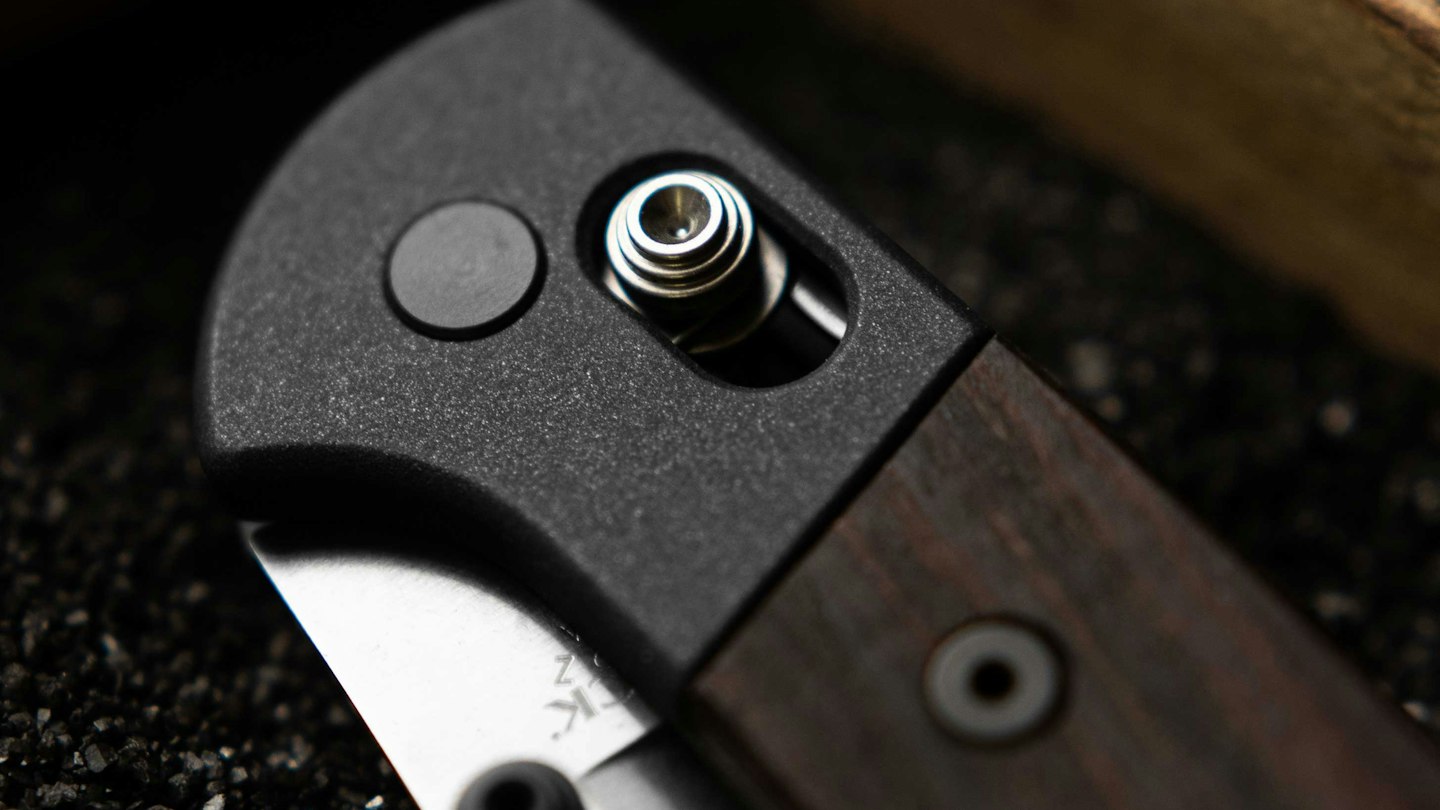
Buck first put this lock on its Range series, then carried it over once the mechanism had proven itself in a modern frame. Putting it in the 110 is the bigger statement. For six decades the lockback was part of the identity, and Buck is not retiring it. Traditional lockback versions stay in the lineup, untouched, right beside the new option.
MagnaCut where 420HC used to sit
Steel gets the same treatment as the lock. Working 110s have run on 420HC for years, a dependable steel that sharpens fast and gives up its edge just as fast. Both Crossbar Elites run MagnaCut instead, with Buck’s BOS heat treatment pulling the balance of edge retention, toughness, and corrosion resistance the steel is known for.
Satin finishes keep the blades looking like Bucks. Clip points keep the profiles, too, with a sharpening choil cut at the base so a stone can reach the full edge. Nothing about the outline changed. Everything about how the blade performs did.
Heat treatment is where that performance gets decided. MagnaCut’s recipe balances hard and tough on paper, and the heat treat decides how much of that balance survives into a finished blade. Buck runs its proprietary BOS process on these, the same treatment program the company built its premium steel reputation on.
Full size or compact, same recipe
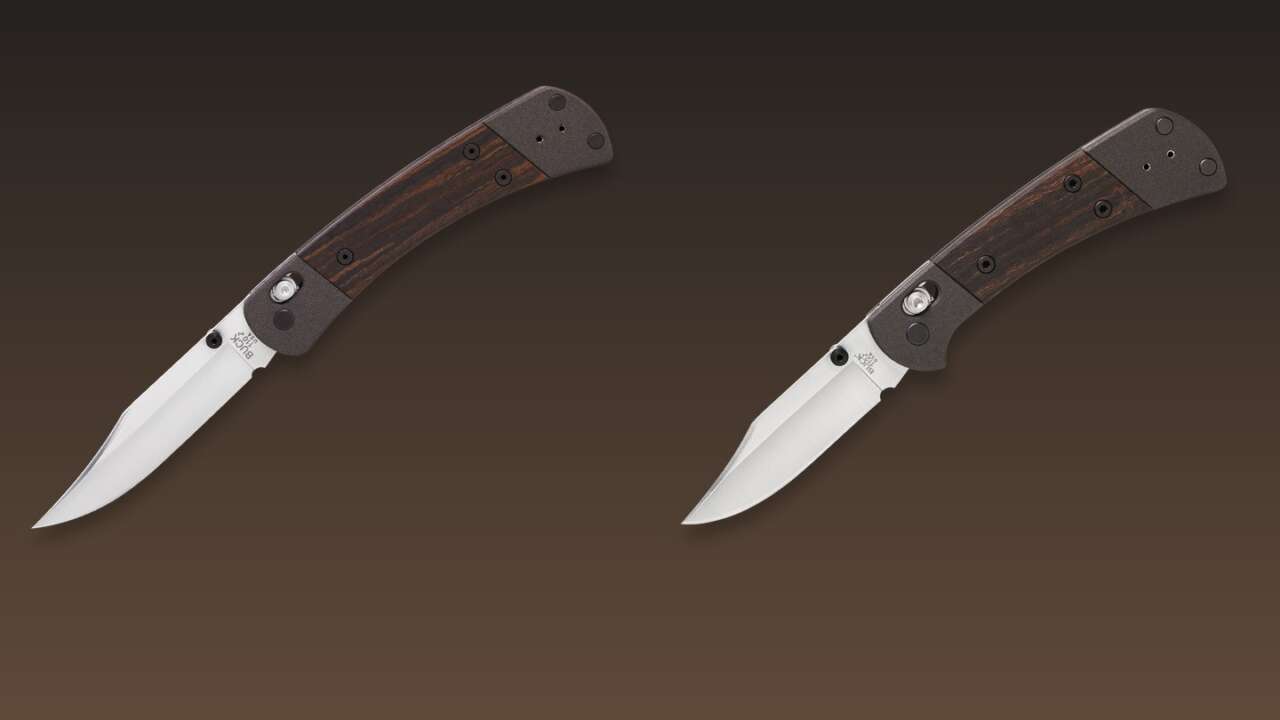
Full-size money buys the 110, with a 3.75-inch blade and 8.625 inches open. Numbers tell the real story, though. Aluminum construction drops the weight to 3.5 ounces, roughly half the original, in a handle about half an inch thick. A folder that lived in a belt sheath for 60 years now rides in a pocket without printing like a tool roll.
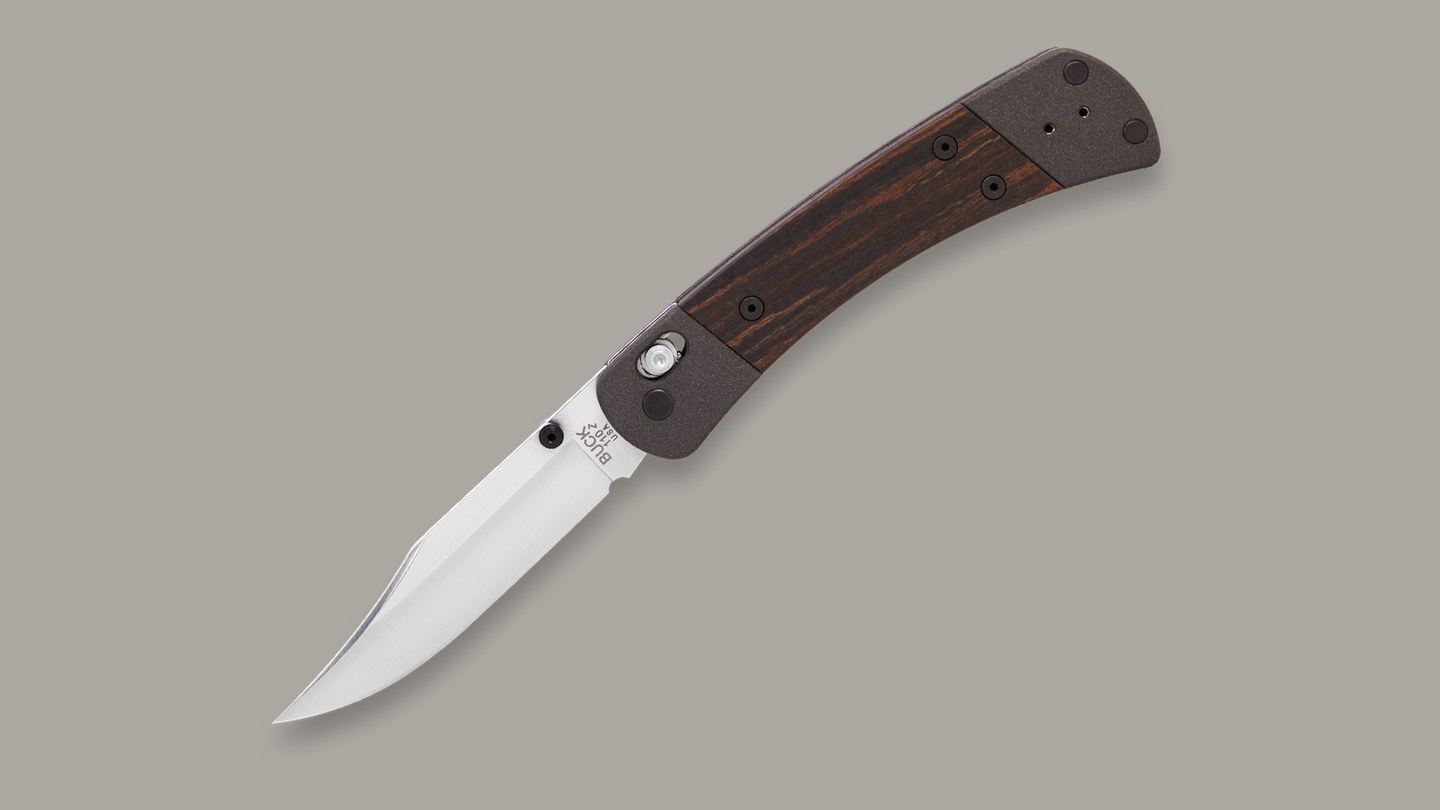
Compact carry points to the 112. Its blade runs 3 inches even, and the whole knife weighs 3.1 ounces. Every other part of the recipe carries over: MagnaCut, the crossbar lock, dual thumbstuds, the same handle build. Picking between them is a hand-size and pocket-depth call, not a quality call.
Aluminum where the brass used to be
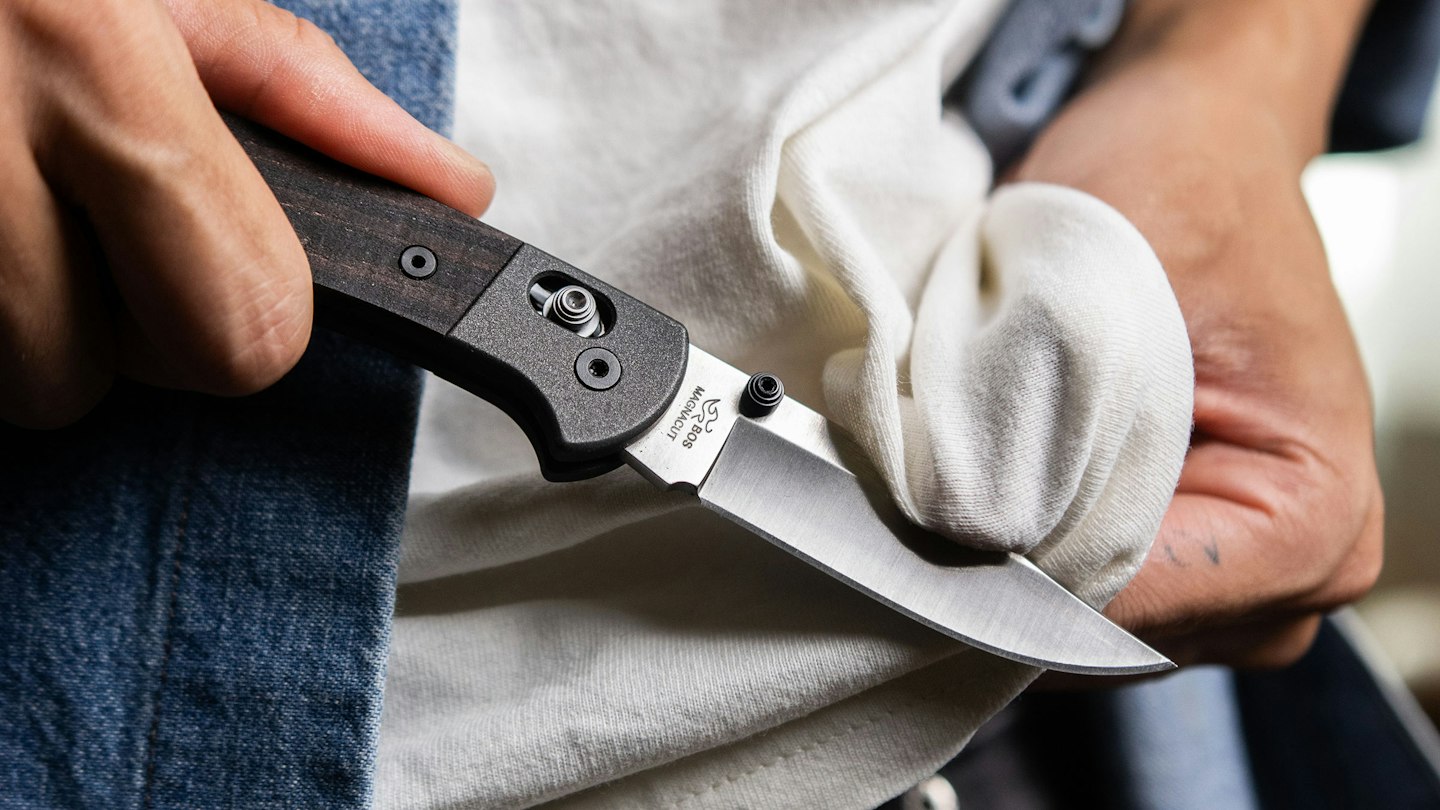
Brass bolsters defined the original’s look and most of its weight. Cobalt Cerakote over aluminum takes their place here, and DymaLux Macassar ebony inlays keep the warm, dark grain the ebony originals are known for, in a stabilized material that shrugs off weather. From across a room, it still reads as a Buck.
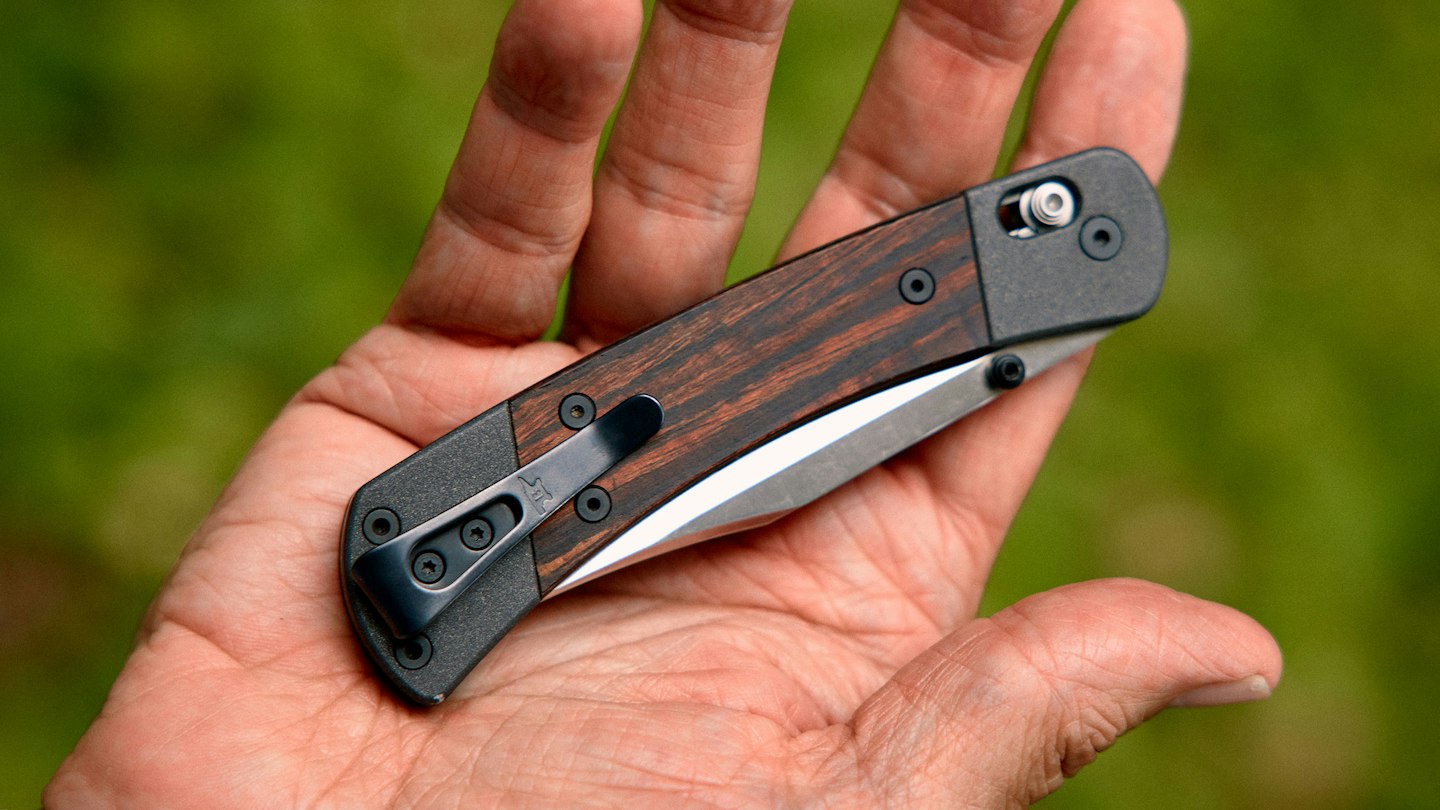
Carry hardware finishes the modernization. A black nitride deep-carry clip mounts for left or right carry and comes off entirely if a sheath is more your speed. Both knives are made in Post Falls, Idaho, and both carry Buck’s Forever Warranty.
What the update costs
Pricing lands at $254.99 for the 110 and $244.99 for the 112, direct from Buck and through authorized dealers. Premium steel and a new lock explain the step up over a standard 110, and the comparison that counts is against other MagnaCut folders, where these prices sit in the middle of the pack rather than above it.
Buyers who grew up on the lockback lose nothing here, since that knife is still built exactly as it was. Buyers who wanted the silhouette without the two-handed ritual finally get it. Between the two, the 112 is the easier daily carry, while the 110 is the one that feels like the original in the hand, only faster.
Price: $254.99
Where to buy: Buck Knives
Price: $244.99
Where to buy: Buck Knives
Icons usually get protected from change. Buck changed the two things that dated these knives, the lock and the steel, and left everything people recognize alone.