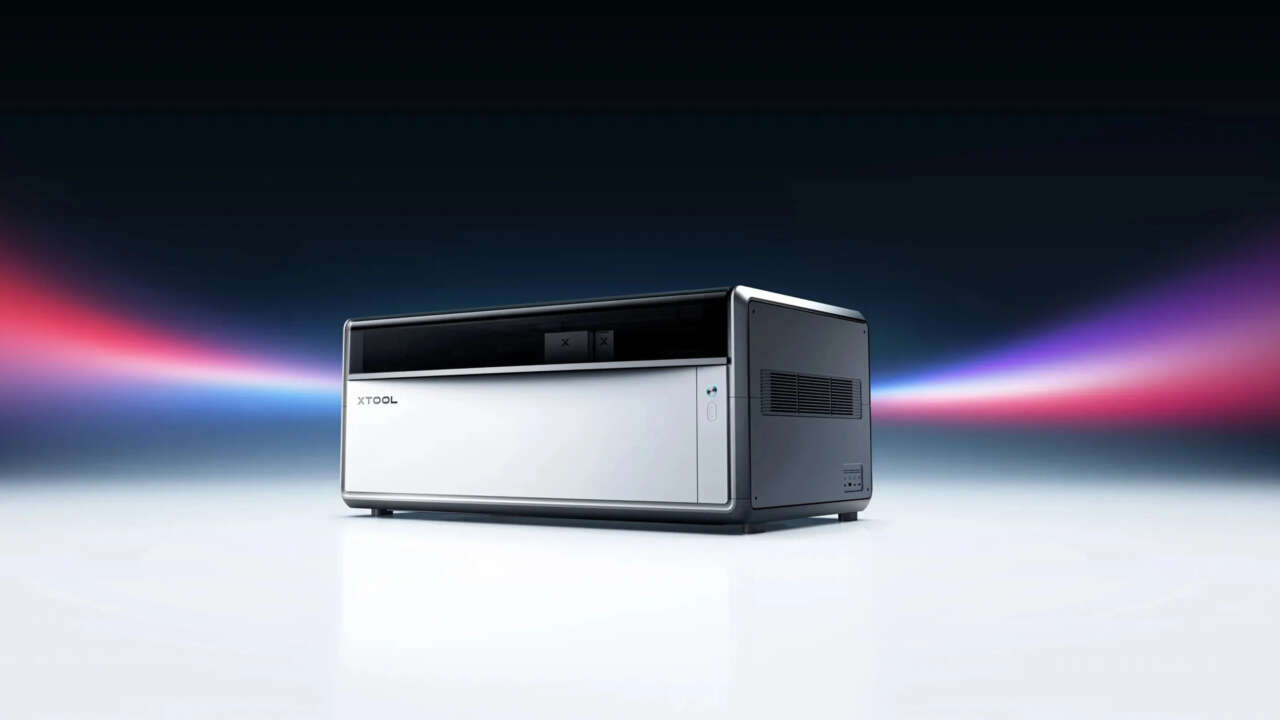
If you’ve ever looked at a laser cutter and wished it had a larger work area, faster engraving, or a way to handle another material, you’ve probably arrived at the usual answer: another machine. The X1 is being built around a more ambitious idea. It aims to put large-format motion, fast scanning, and swappable laser sources into one platform.
The interesting part isn’t the feature count. It’s the engineering needed to make those features work together. In an X1 engineering video, the team walks through three problems that shaped the machine: how it moves a beam across a large area, how different laser sources share an optical path, and how the frame stays steady enough for either system to be useful.
A large work area and fast engraving want different kinds of motion
A gantry carries a laser across a broad workspace. A galvo system steers the beam quickly within a smaller area. Each solves a different job, which is why putting both names on a feature sheet wouldn’t, by itself, solve the X1’s problem.
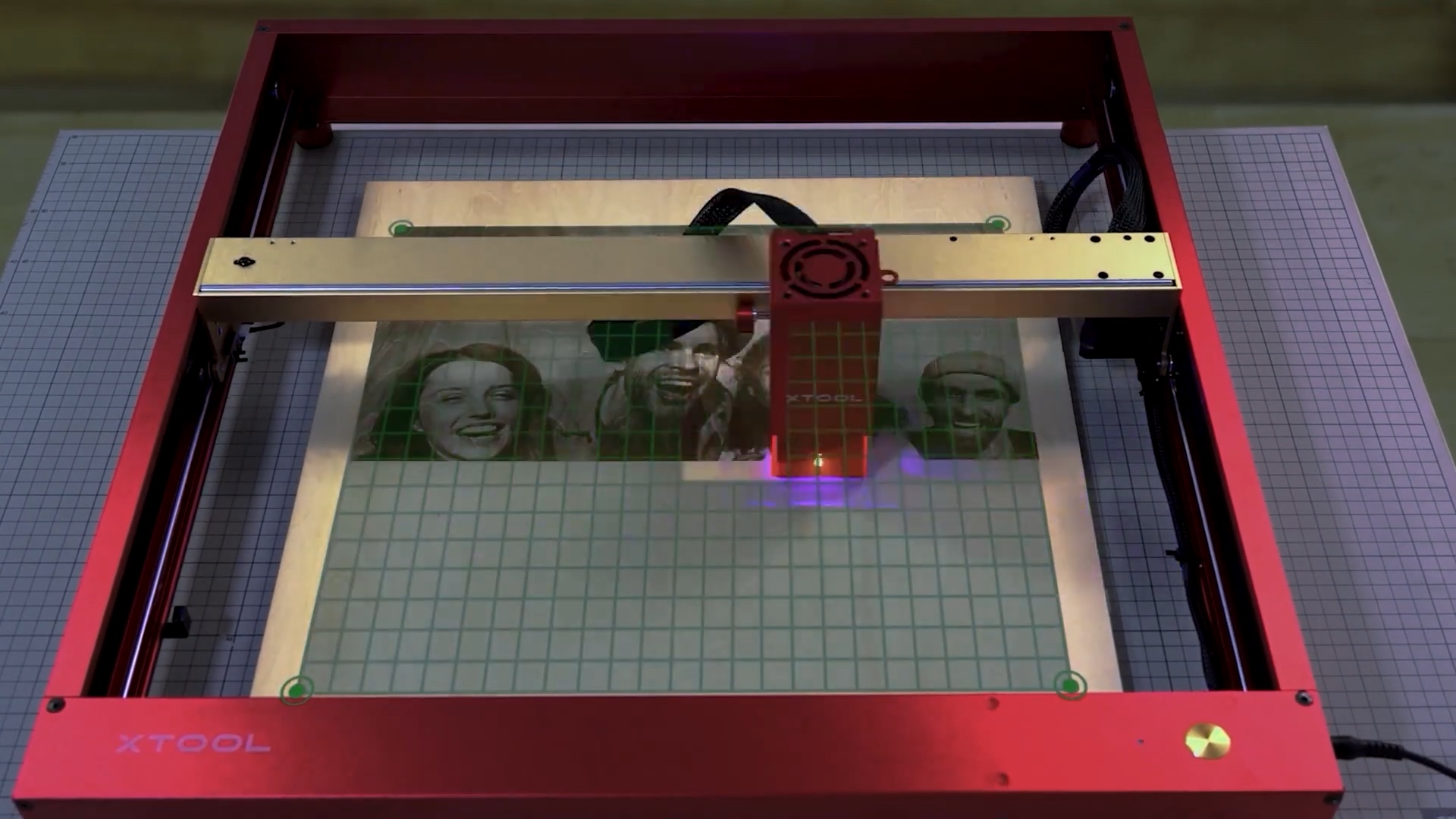
The team first tried bringing the two motion systems together. According to the video, testing showed that they interfered with each other. The answer was a hybrid motion system that synchronizes galvo scanning with gantry travel. The galvo works on one zone while the gantry moves the scanning area across the larger workspace. The video calls this a “flying galvo.”
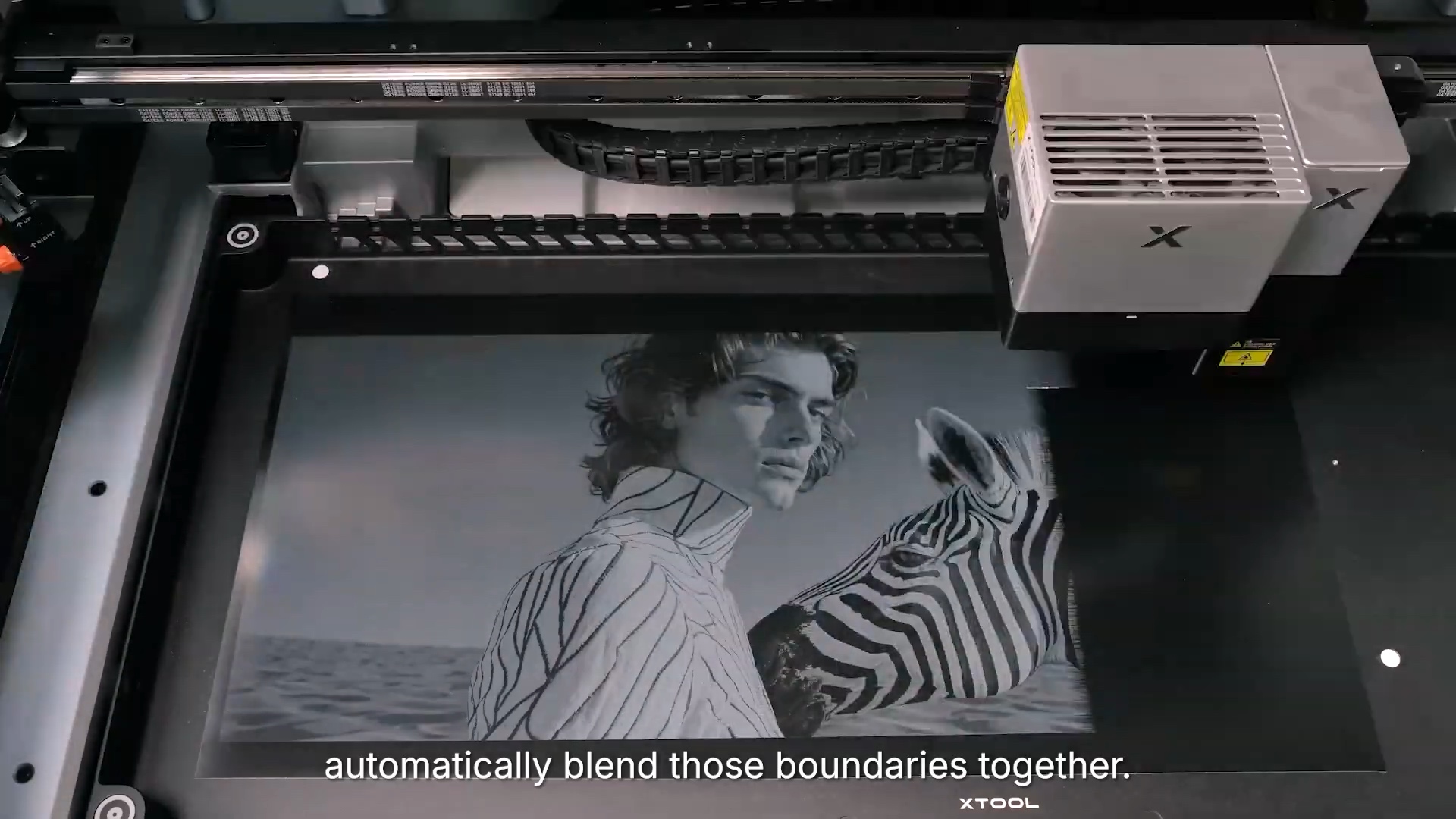
Picture engraving a design too wide for a single galvo field. X1 divides that design into zones, works across them, and joins them into one larger result. That gives the fast scanner room to work beyond its usual field, but it creates a new question: can you see where one zone ends and the next begins?
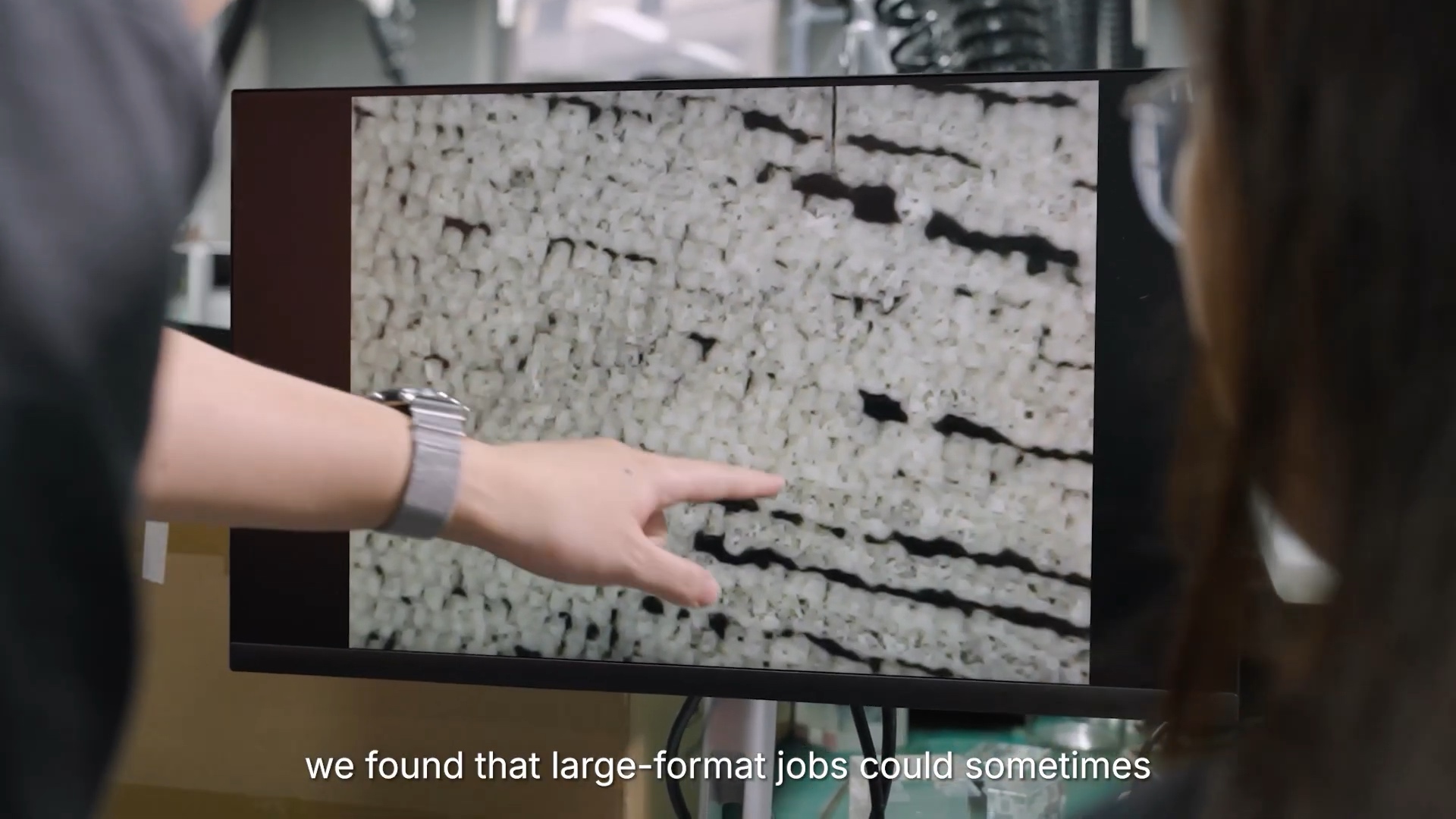
The early test pieces sometimes had visible seams. X1’s software now blends the boundaries between zones, the team says. That’s a more useful detail than a bare speed claim. If those joins show up in a finished sign or decorative panel, the machine’s fast motion won’t be much consolation. The video shows the problem the engineers were trying to remove; it doesn’t give an independent measure of how the joins hold up across different designs and materials.
Swapping the laser is easier than sharing the optics
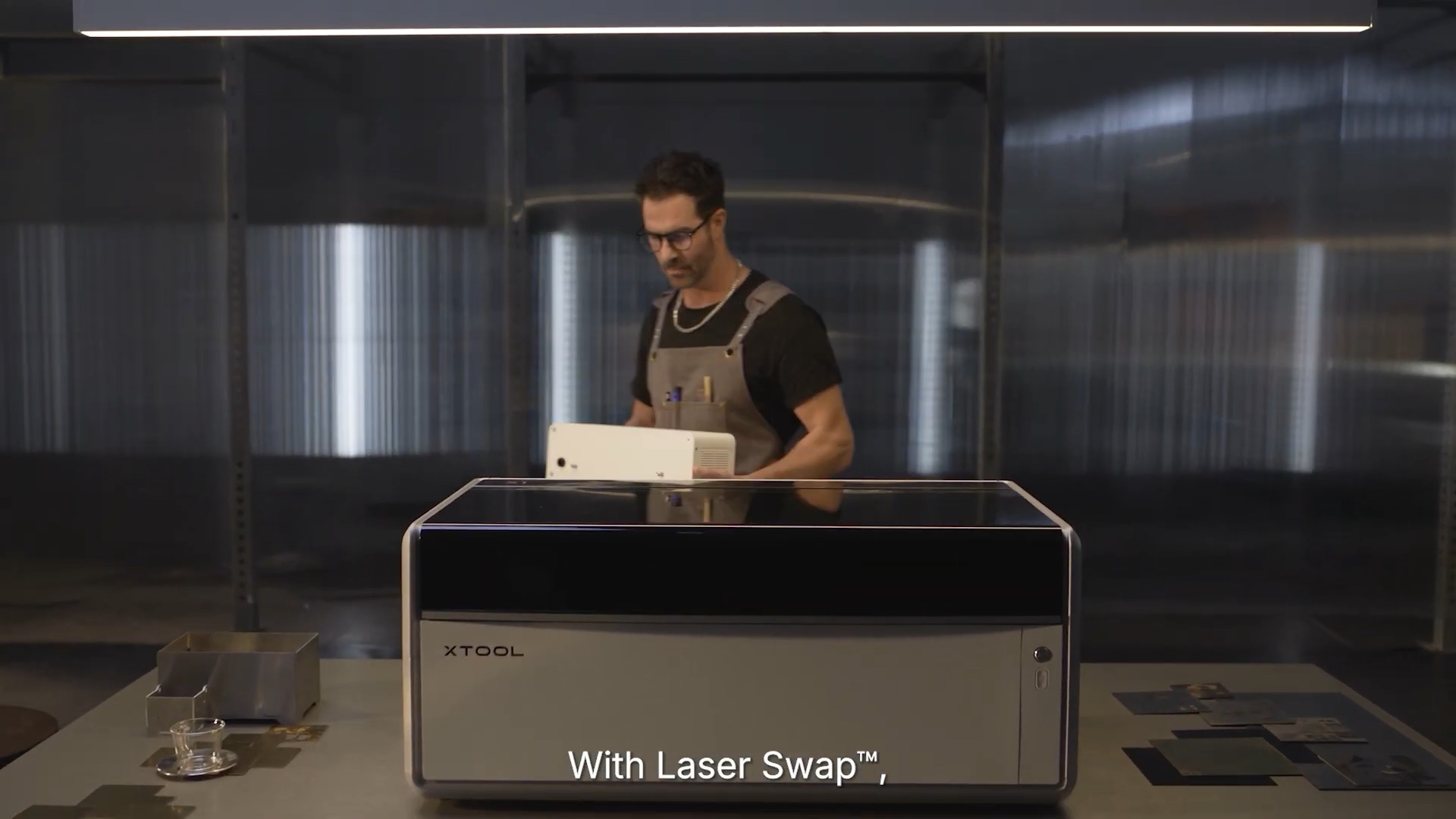
The second challenge starts with the materials. Wood, acrylic, metal, and glass don’t all respond to laser light in the same way. The straightforward solution would be to install more laser sources in the machine, but carrying every source at once would add weight and make expansion harder. X1 instead uses swappable sources.
That doesn’t mean each source gets its own completely separate machine inside the enclosure. Three kinds of laser source feed into one flying-galvo optical path. The longest path is approximately 1.8 meters, and the beams have to arrive at the same working point. The team says it had to control that alignment within 30 microns, after more than 50 optical iterations and over a thousand calibration tests.
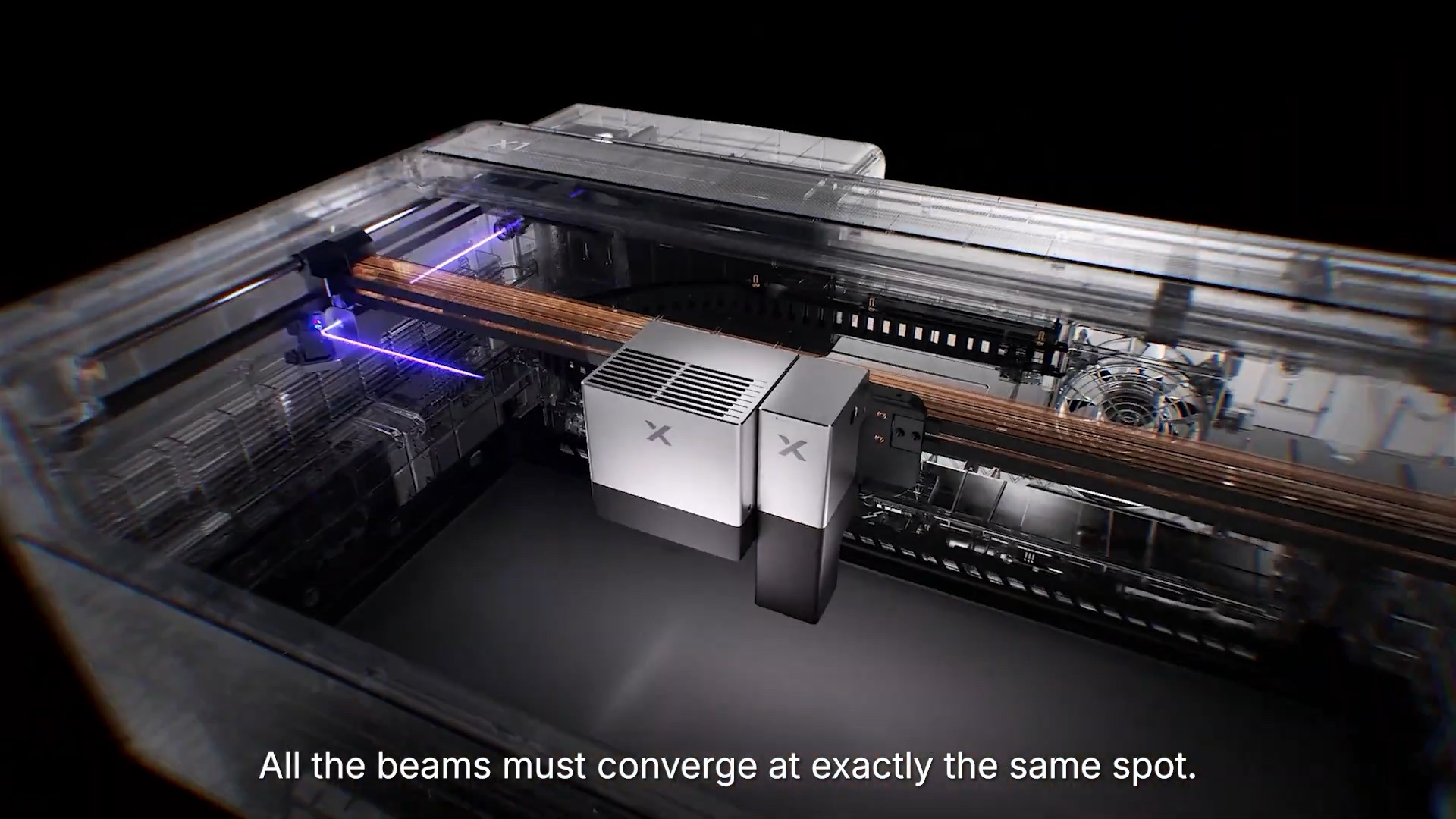
That 30-micron figure describes the alignment challenge in the video. It isn’t a measured engraving resolution or a promise that every finished job will be accurate to 30 microns. The distinction is easy to miss, and it’s central to understanding the design: changing the source only helps if the beam still lands where the machine expects it to land.
Calibration could have made every source swap a chore. The process used to take seven precise steps that required experience. X1 uses vision algorithms to automate those steps: place a calibration sheet, click once, and let the machine complete the sequence, according to the video. If that works consistently in day-to-day use, the benefit is straightforward. A maker could move to a different material without adding another workstation or manually realigning a complicated optical system each time.
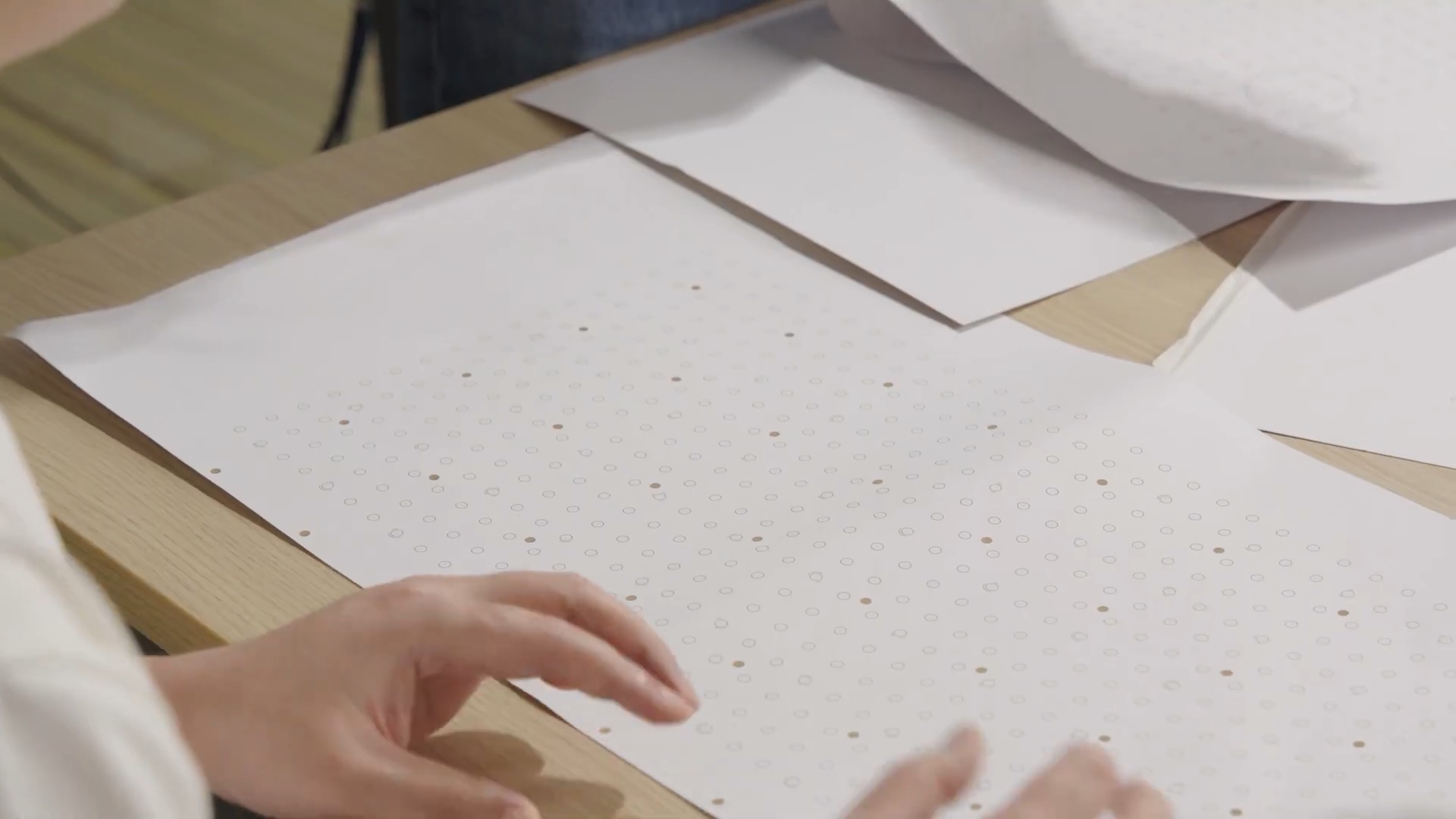
The video doesn’t spell out which source handles each material, what comes with a given X1 configuration, or how long a swap and calibration take. It explains the architecture, and that’s enough to see why the swap mechanism is more than a convenience feature. It’s what makes the shared platform possible.
Why the frame is part of the precision story
Fast motion and a long, shared optical path put a lot of pressure on the structure holding them. The team originally planned an assembled frame with more than 200 parts. As the machine grew larger and faster, each additional joint introduced another place for small errors to accumulate.
The final design uses a die-cast frame and removes roughly 268 screws, according to the video. Fewer assembly points should make the structure more consistent from unit to unit and help it hold alignment over time. The team also shows X1 operating on a vibration table and says it stayed precise while the table shook.
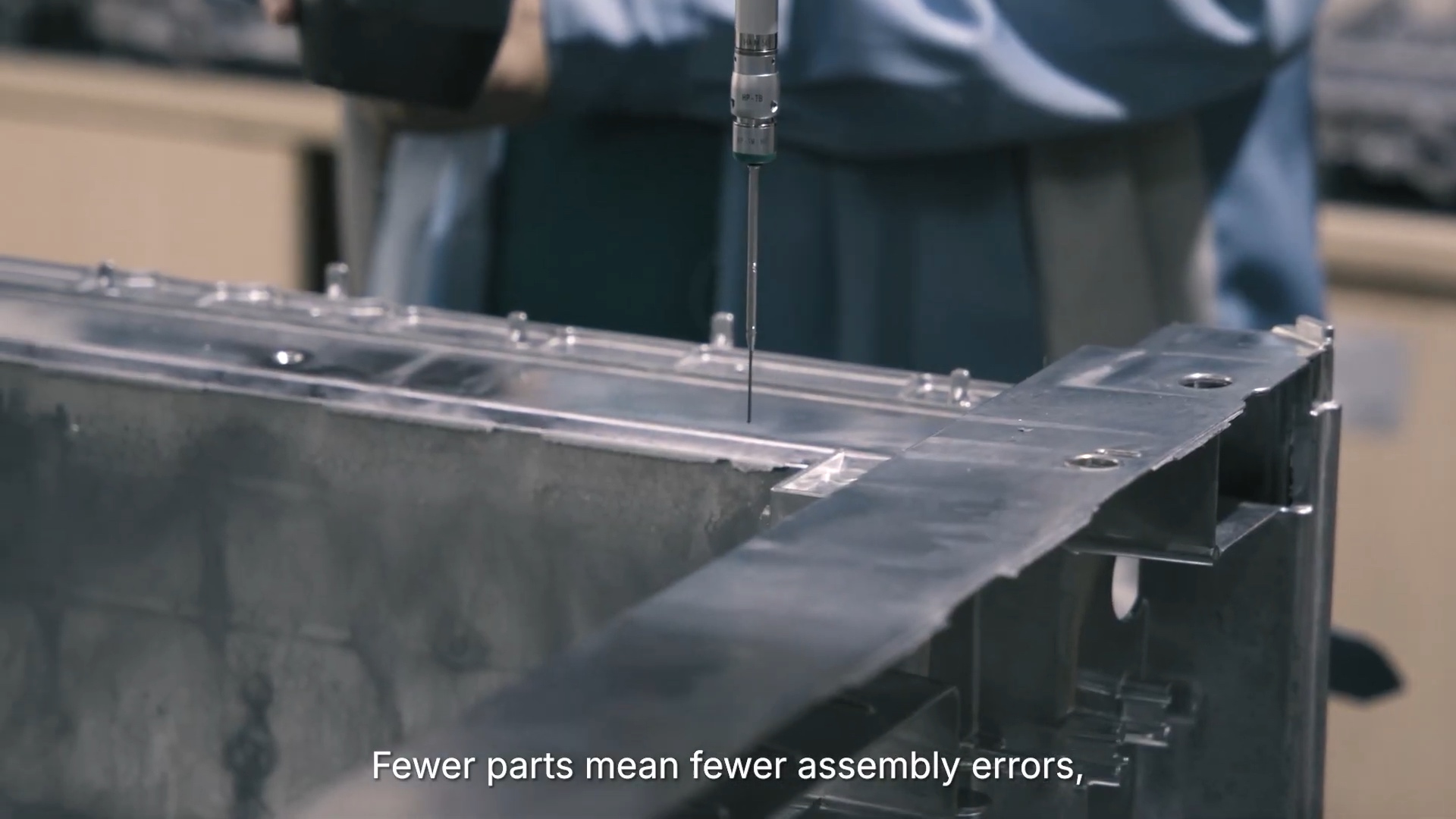
That demonstration helps explain the design choice, though it’s still a controlled demonstration. The questions for a working shop are how the machine holds alignment after repeated source changes, long jobs, and ordinary bumps and movement. The video doesn’t answer those yet.
What it does show is a connected design. The moving scanner needs the software to hide zone boundaries. The swappable sources need a shared optical path that can be calibrated without a specialist. Both depend on a frame that keeps everything in place. Take one piece away, and X1 starts looking less like one versatile workstation and more like several difficult machines sharing a box.
That’s why X1 is intriguing. Its promise isn’t simply that it can do more jobs. It’s that switching among those jobs could feel like using one coherent tool. The engineering video makes that ambition clear. The real payoff will depend on whether the seams stay invisible, swaps stay simple, and alignment holds when the machine leaves the demonstration table and gets put to work.