
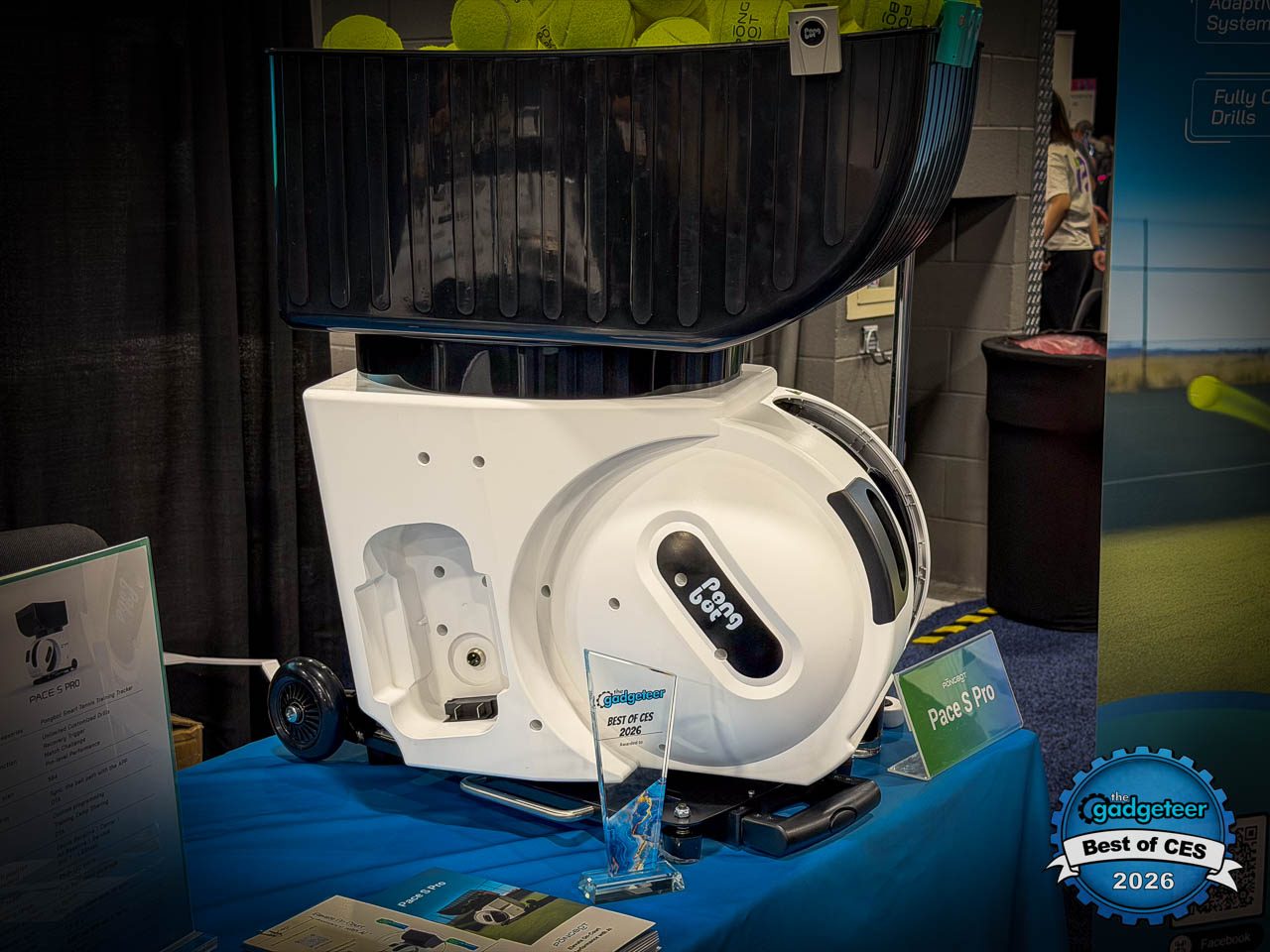
CES 2026 NEWS – Traditional tennis ball machines train repetition. They fire balls at predictable intervals, forcing players into mechanical patterns that feel nothing like an actual match. The problem isn’t output consistency. The problem is that consistency itself creates bad habits. Real tennis requires reading, recovering, and reacting. Static ball machines eliminate all three.
So the real question is whether solo practice can become adaptive without needing a coach on the next court.
Pongbot’s Pace S Pro is an AI powered tennis training robot built around a different premise: the machine should respond to the player, not the other way around. At CES 2026, the flagship model occupies booth 56554 at the Venetian Expo, positioned in the Lifestyle category rather than pure sports equipment. That placement matters.
Price: $2,199
Where to buy: Pongbot
Pongbot isn’t marketing hardware. It’s marketing a training philosophy rooted in adaptive feedback and real time tracking. What’s changing now is that consumer sports tech is moving beyond tracking stats toward feedback loops that actively shape how athletes train.
The core belief driving Pongbot’s design is simple: solo training fails when the system ignores player behavior. Most recreational players don’t have consistent hitting partners. Coaches cost money and require scheduling. Ball machines fill the gap, but they do so by removing the variability that makes tennis difficult. What remains is repetition without decision making, practice without pressure, and drills without consequence.
What Pongbot Does Differently
The Pace S Pro is the first tennis ball machine to integrate Ultra Wideband technology for player tracking. UWB operates independently of lighting conditions, which means outdoor sessions at dusk or indoor facilities with inconsistent overhead lighting don’t degrade tracking performance. That independence matters because most training happens in variable conditions, not studio environments.
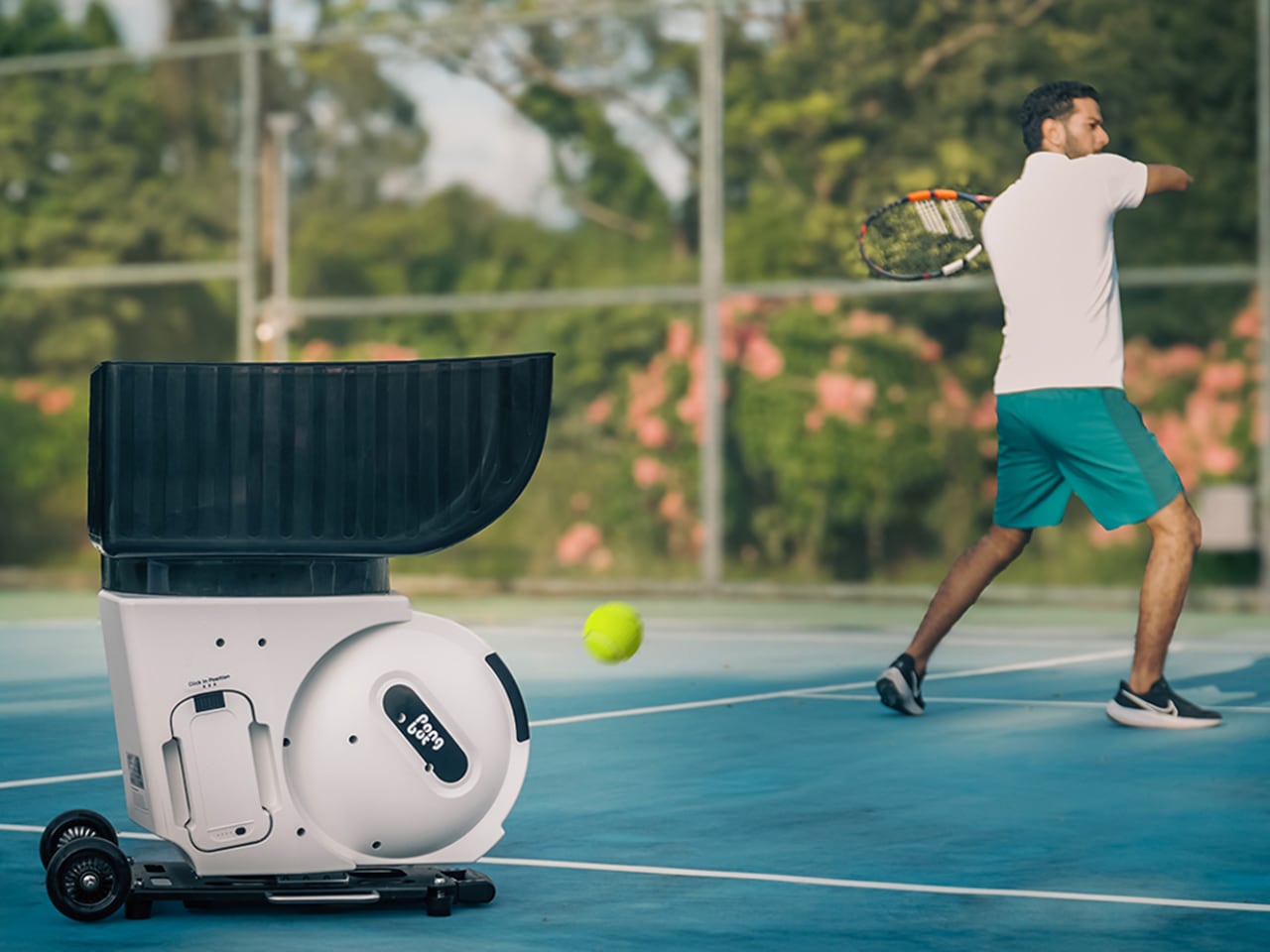
Standard camera based systems can drift by up to 100 cm under suboptimal conditions. Pongbot’s UWB tracking maintains accuracy within 10 cm. That tenfold improvement means the system knows where you are, not where it guesses you might be.
Tracking speed compounds the accuracy advantage. The system samples at 100 Hz, more than three times faster than typical camera based alternatives. That sampling rate allows the machine to detect player movement in real time rather than interpolating position between frames. When you shift your weight to recover from a wide forehand, the Pace S Pro registers that movement before you’ve fully planted.
Recovery Trigger technology translates tracking data into adaptive ball delivery. The system detects when you’ve returned to a pre programmed recovery zone before releasing the next ball. Beginners aren’t overwhelmed by rapid fire sequences they can’t handle. Recreational players control their own rhythm without pausing to adjust settings. Advanced players train footwork discipline because the machine waits for proper positioning before continuing the drill.
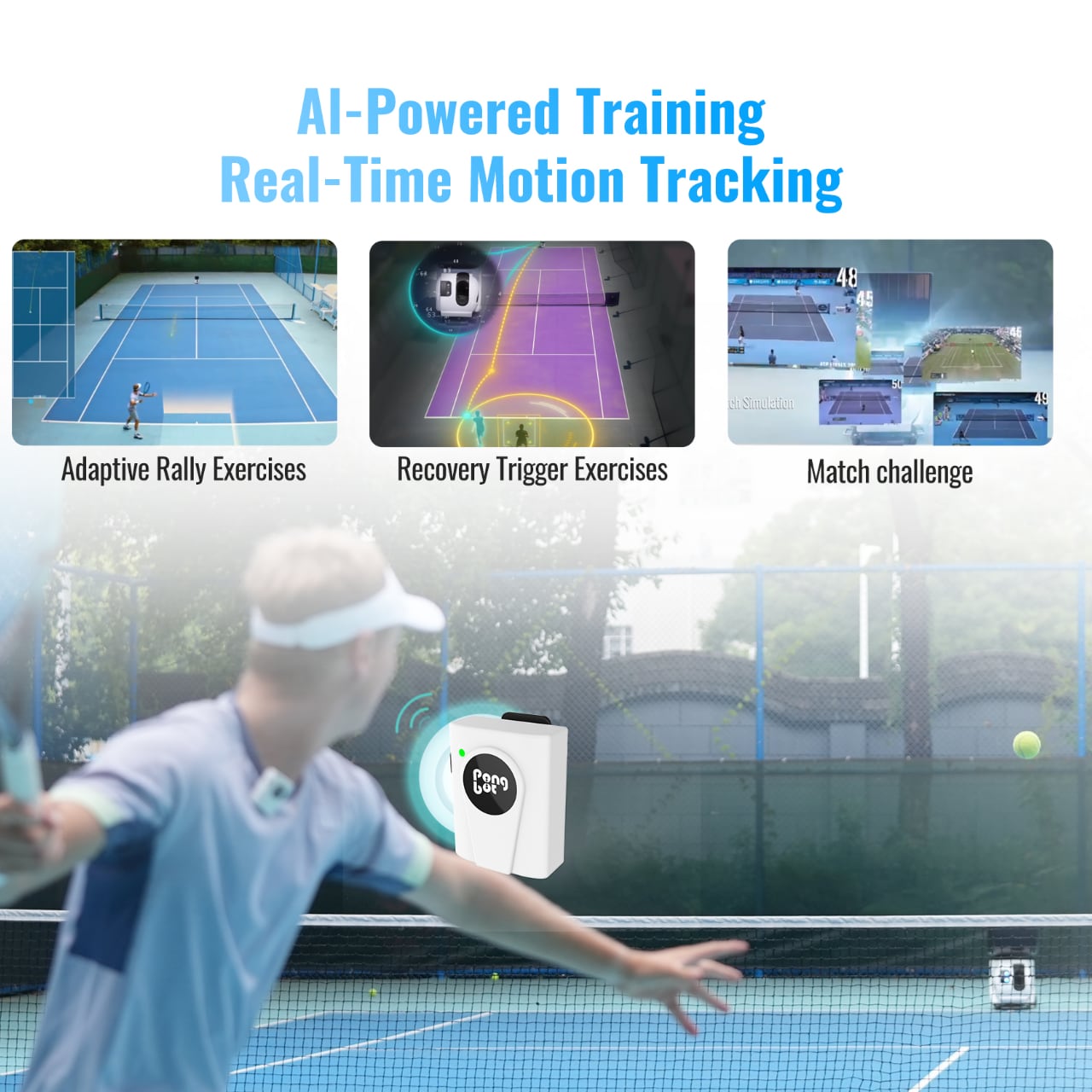
The combination of UWB tracking and Recovery Trigger creates what Pongbot calls a closed loop training ecosystem. The machine doesn’t just throw balls. It senses, waits, and responds. That feedback loop is the architectural difference between the Pace S Pro and traditional ball machines.
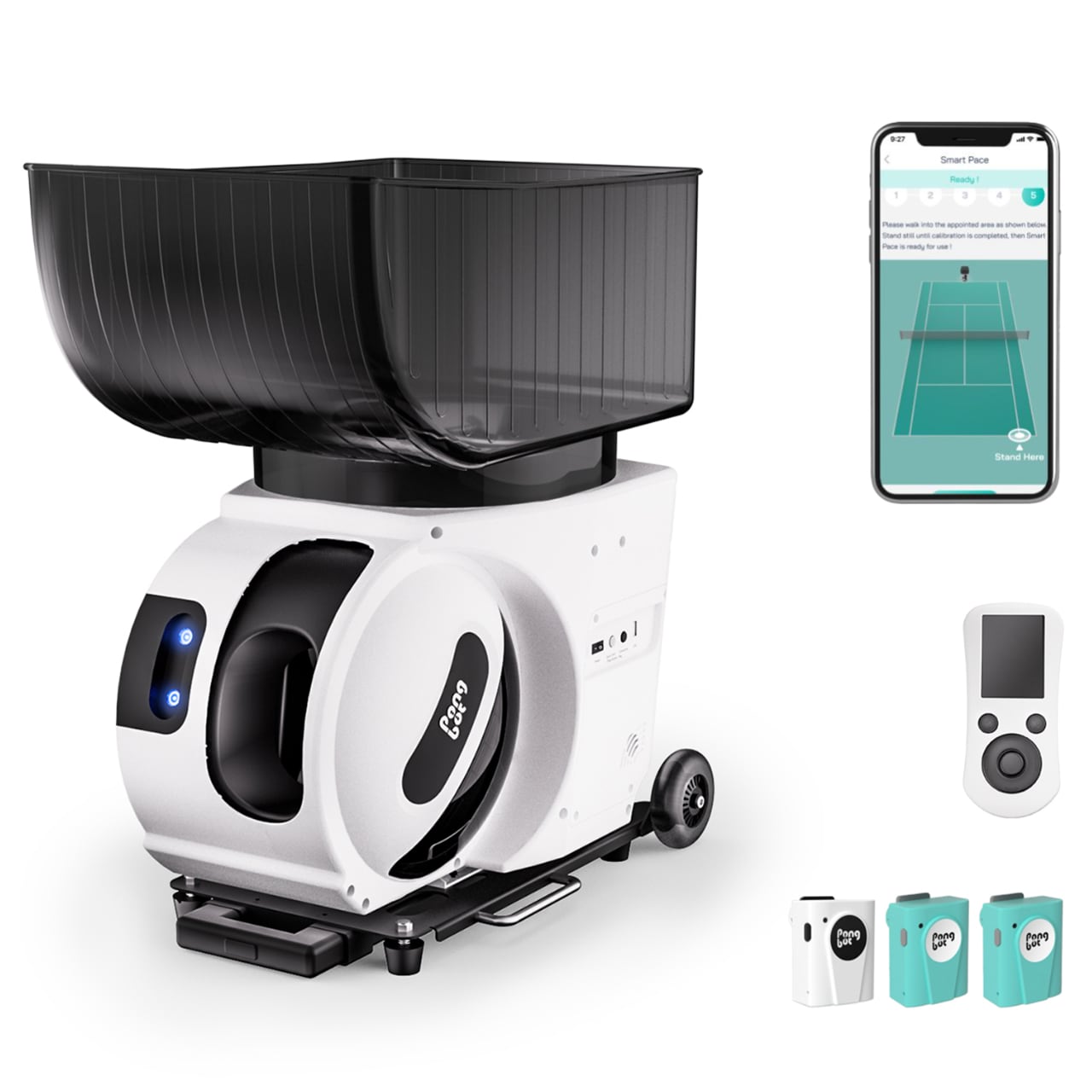
The app functions less as a remote control and more as a coordination layer. Drill creation, trajectory visualization, and community sharing exist to expose players to patterns they might not design on their own. OTA updates quietly evolve the system over time, reinforcing the idea that the Pace S Pro is not a fixed machine but a training framework that adapts alongside the player.
What That Changes in Real Use
Match rhythm becomes trainable without a partner. Traditional ball machines fire at fixed intervals, which means players either rush to keep up or wait awkwardly between shots. The Pace S Pro’s position aware system adjusts timing based on where you are, not where the machine expects you to be. Your recovery speed sets the tempo.
Footwork stops being theoretical. Coaches talk about split steps and ready positions, but most players never internalize the timing because standard practice doesn’t enforce it. Recovery Trigger technology creates immediate consequences for lazy footwork. If you don’t return to position, the drill pauses. The machine doesn’t lecture. It simply waits until you’re ready.
Rally realism improves because shot combinations become unpredictable. AI Match Training mode randomizes serves and ball patterns using logic trained on over 100,000 real matches. According to the CES 2026 Factsheet, this data foundation allows the system to simulate tactical sequences rather than just mechanical feeds. You’re not hitting against a ball cannon. You’re hitting against a system that understands how points actually unfold.
Add The Gadgeteer as a preferred source to see more of our coverage on Google.
How Serious It Actually Is
Maximum ball speed reaches up to 80 mph, which approximates the pace of competitive club level groundstrokes. That ceiling matters for reaction time training. Players who only practice against 50 mph feeds develop timing habits that collapse against faster opponents. The Pace S Pro lets you gradually increase intensity without switching machines or finding a stronger hitting partner.
Spin capability tops out at 60 rps. That ceiling matters because competitive tennis involves heavy topspin and sharp slice that recreational players rarely face in practice. The Pace S Pro can simulate those shots rather than approximating them.
The effect is immediate. One heavy topspin ball pushes you deep behind the baseline, and the next arrives flatter and faster, forcing adjustment instead of repetition.
Switching speed between spin types takes 1.5 seconds. That quick transition introduces unpredictability mid rally. You might face topspin on one ball and slice on the next, forcing continuous adjustment rather than grooved stroke production.
Lob height extends to 8.1 meters. That range means defensive situations and overhead practice fall within the system’s capabilities without requiring a second machine or a patient hitting partner.
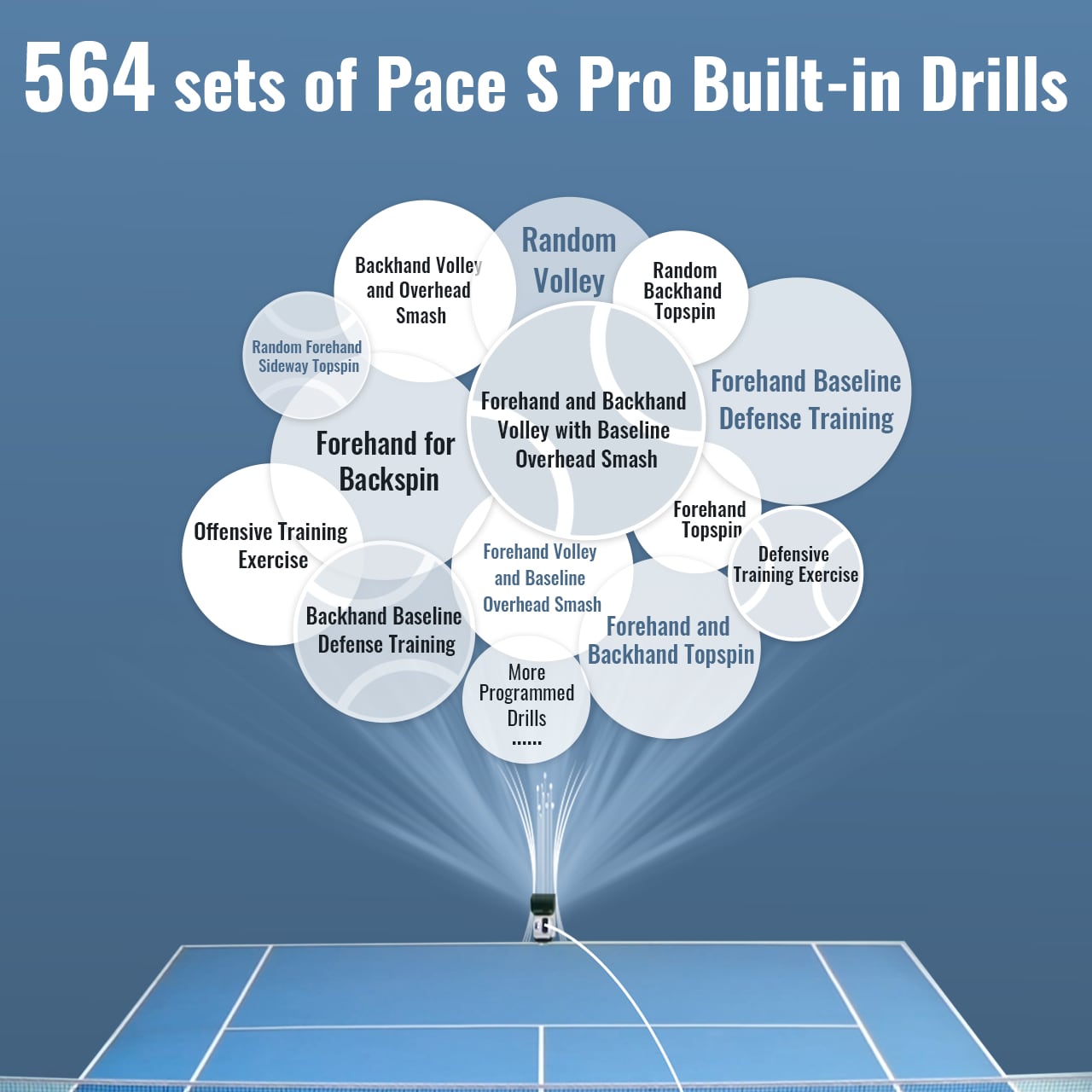
Drill depth spans 564 pre programmed patterns. That library covers structured progressions rather than random feeds, giving players repeatable sessions without needing to design drills from scratch.
Coverage extends from NTRP levels 1.0 through 7.0, with dedicated drill sets for both right handed and left handed players. The app allows full customization of speed, spin, placement, trajectory, and timing for users who want specific patterns.
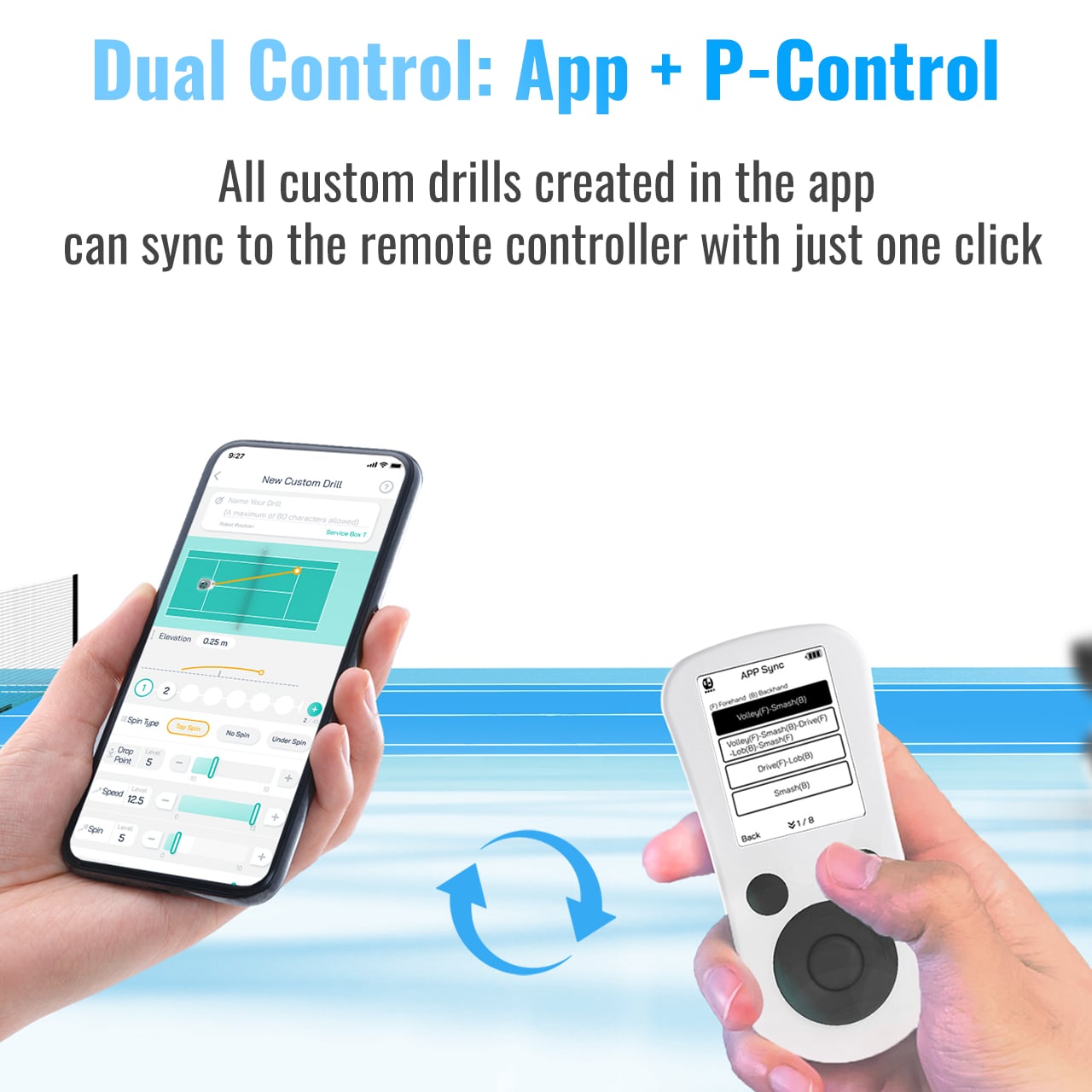
Beyond the built in library, users can download from a community collection containing tens of thousands of shared drills. That ecosystem means the system’s variety grows over time without requiring firmware updates.
Court coverage reaches baseline, net, and doubles sidelines through six positioning modes. Users select landing points and angles directly through the app’s trajectory visualization system.
The Pace S Pro works on hard court, clay, and grass. Surface versatility matters because players who train on one surface and compete on another face adjustment periods that static machines don’t address.
Battery life exceeds eight hours per charge. That endurance covers multiple practice sessions without requiring mid training interruptions or the anxiety of watching a charge indicator during drills.
What Training Looks Like After the First Month
The benefit of an adaptive system shows up with repetition. The Pace S Pro keeps a controlled pace that puts the focus on movement and positioning. Recovery Trigger reinforces proper spacing and quickly exposes bad habits. Miss a recovery step and the drill pauses to show exactly what needs fixing.
As sessions accumulate, the system starts to feel less forgiving without the user changing any settings. Footwork efficiency begins to matter more than stroke speed. Because timing is tied to movement rather than a preset interval, players who recover cleanly move faster through drills, while sloppy movement quietly slows everything down. The difficulty increases through consequence, not configuration.
For advanced players, the shift is subtle but important. Instead of chasing raw pace or heavier spin, sessions become about consistency under variable conditions. The unpredictability introduced by AI Match Training and rapid spin switching forces constant adjustment. Over time, practice stops feeling like ball feeding and starts feeling like problem solving. The machine does not get easier. The player gets cleaner.
Who This Is For
The Pace S Pro targets players who train alone and want that solo time to count. Beginners benefit from Recovery Trigger’s pacing control and the extensive drill library covering fundamentals. Recreational players gain access to match simulation features that were previously only available through expensive coaching or unreliable hitting partners. Advanced players get a training tool that enforces footwork discipline and introduces tactical variability.
Parents investing in junior tennis development face a clear value proposition. The system delivers coach designed drills that allow young players to build consistency, footwork discipline, and match awareness outside of lesson time, without relying on constant supervision.
Pongbot’s early traction reinforces that positioning. The company raised over US$2.7 million on Kickstarter, earned the top Tech and Sports Campaign ranking in 2024, and holds 69 R&D patents covering utility models, product design, and software copyrights.
Where the Pace S Pro Fits in a Real Training Setup
The Pace S Pro is not a replacement for match play, and it is not a substitute for coaching. Live opponents still introduce emotional pressure, improvisation, and chaos that no machine can replicate. Coaches still provide external feedback and correction that technology cannot fully replace. Pongbot is not trying to remove those elements.
What the system replaces is low quality solo repetition. For players who train alone, the alternative is often unfocused hitting sessions that reinforce timing mistakes and positional shortcuts. The Pace S Pro turns that otherwise unstructured time into sessions with consequences. Recovery matters. Decision making matters. Fatigue reveals weaknesses instead of hiding them.
In a real training routine, the system works best as a multiplier. It fills the gap between coached sessions, match play, and conditioning work. Used consistently, it keeps players honest about footwork and readiness. Used casually, it still provides structure that static machines cannot. The value scales with engagement, not with settings.
Who Should Skip This
Players who want simple ball feeding without position tracking don’t need the Pace S Pro’s complexity. If your practice sessions involve standing in one spot and hitting forehands until muscle memory sets in, traditional ball machines accomplish that goal at lower cost. The adaptive features create value only when you’re willing to move.
Players who resist app based control or technology integration should also look elsewhere. The Pace S Pro operates through mobile app and remote controller. Drill customization, trajectory visualization, and OTA updates all require digital engagement. If you prefer equipment that works without screens or connectivity, this system fights against that preference rather than accommodating it.
The Bottom Line
The system represents a bet that tennis training can become responsive, data informed, and adaptive without requiring a human coach on court. That bet may prove correct for players who’ve exhausted what static machines can offer and don’t have reliable hitting partners.
Pace S Pro: $2,199
Pace S Pro + 100 Balls: $2,375
Pace S Pro + Serve-Trigger Sensor: $2,331
Pace S Pro + Spare Battery: $2,520
Pace S Pro + Battery + 100 Balls + Dust Cover: $2,740
Pace S Pro (Two Units): $4,410
Where to buy: Pongbot
CES 2026 matters here because the Lifestyle category placement signals where Pongbot sees itself heading. This isn’t sports equipment competing on specs alone. It’s a training ecosystem competing on intelligence. Whether that intelligence translates into measurable skill improvement depends on how seriously players engage with the adaptive features. The hardware enables the approach. The results require the work.
📡 CES 2026 Coverage
Want more from the show floor?
We’re covering the biggest announcements, wildest concepts, and gear that actually matters from CES 2026.

Apple AirPods Pro 3 Wireless Earbuds, Active Noise Cancellation, Live Translation, Heart Rate Sensing, Hearing Aid Feature, Bluetooth Headphones, Spatial Audio, High-Fidelity Sound, USB-C Charging
(as of April 9, 2026 16:26 GMT -05:00 - More infoProduct prices and availability are accurate as of the date/time indicated and are subject to change. Any price and availability information displayed on [relevant Amazon Site(s), as applicable] at the time of purchase will apply to the purchase of this product.)
