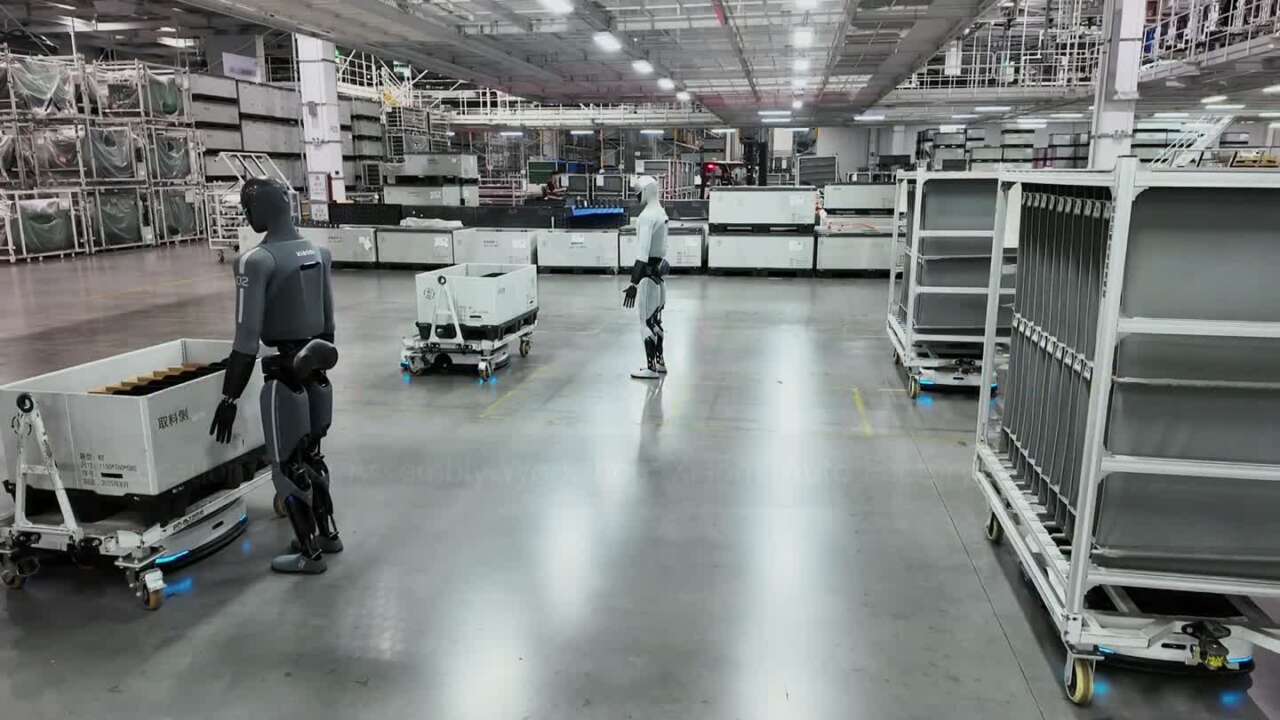
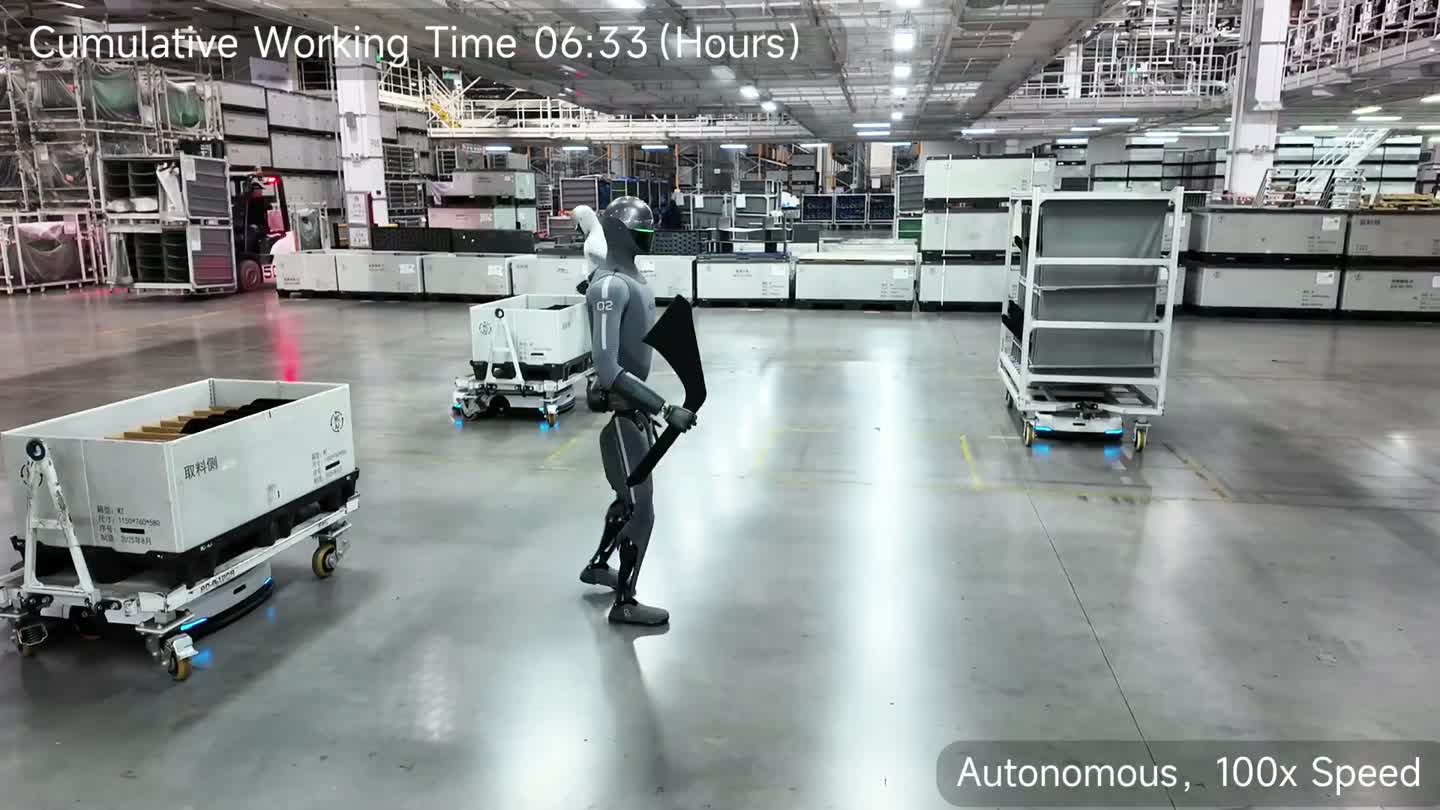
Two of Xiaomi’s CyberOne 02 humanoids, one black and one white, just worked the center console side cover sequencing station inside the final assembly shop at Xiaomi’s car factory, on a run CLS reports at 8 hours and 5 minutes of accumulated work. The job is unglamorous on purpose: pull a large, flexible interior panel out of a material box, turn it the right way around, and slot it into a rack in the order the cars coming down the line need it. Xiaomi calls the run an internship, its own word for this stage, and grades it as a first validation of production-line-grade work. The eight hours are the headline. The audit is in the disclosed details: two reported charging breaks inside the shift, a dropped panel CLS reports as recovered by a different robot, and no rate card published for the run.
The job is panel sorting, in build order
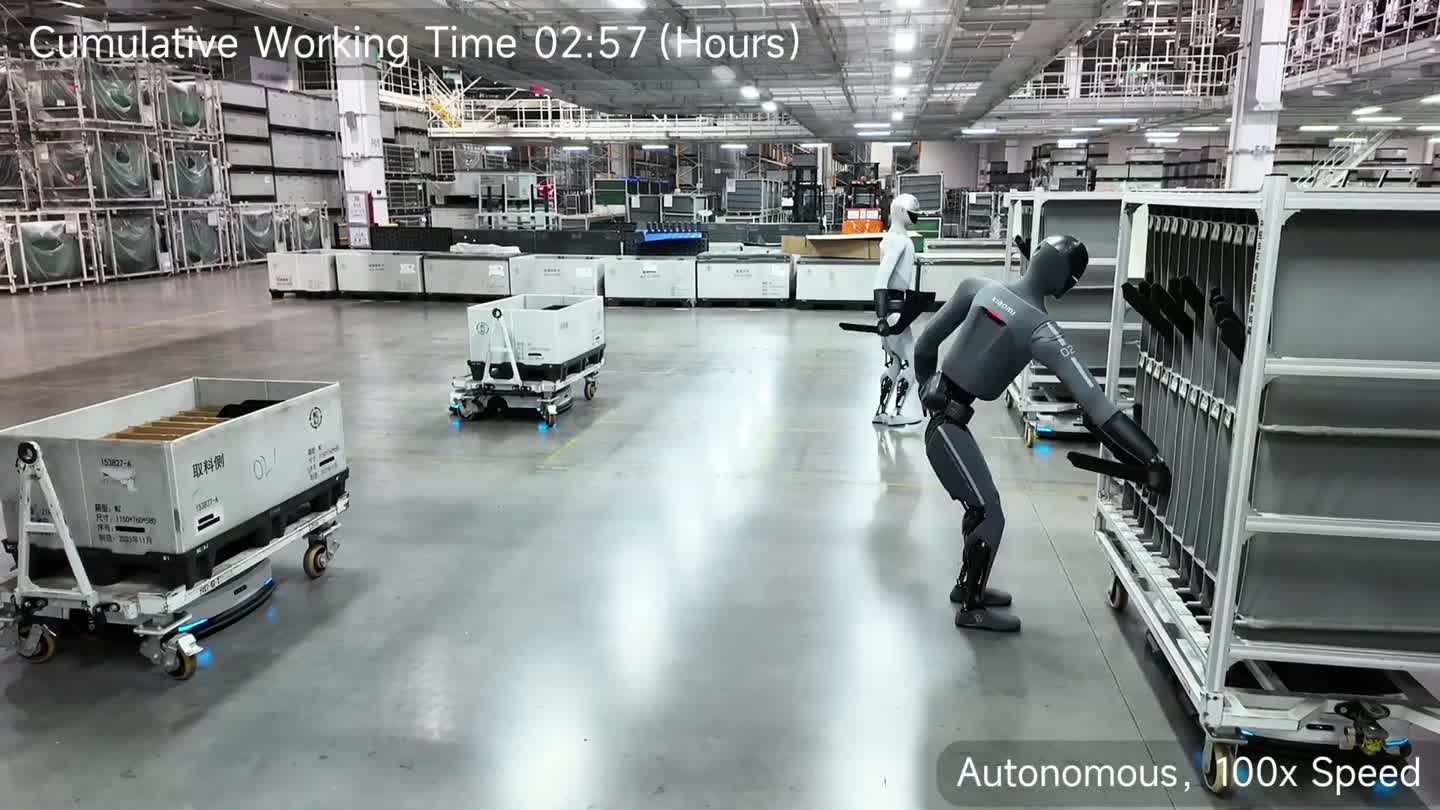
The station sits in the SPS sequencing supply part of final assembly logistics, the corner of the factory where parts arrive in bulk and leave in build order. The panels are big, soft, and irregular, and they land in the box in random orientations. The robots read the model sequence coming down the line, pick the right panel, reorient it, and place it into the matching rack slot while keeping the line’s pace: a find, reorient, and place loop run against a moving sequence. Lei Jun leaned on that point when asked why a humanoid belongs in a factory at all: “This is a general-purpose humanoid robot. The hardware doesn’t need to be modified, and it can adapt to more different positions and scenarios.”
The pair worked in step with the line, adjusting their pickup routes and stride around the autonomous mobile robots feeding them material, and waiting when one of those carts swapped out. Xiaomi says the humanoids detect and correct anomalies on their own, and coordinate with the factory’s production line system while they do it.
The public cut compresses the shift into 5 minutes and 59 seconds, sped up as much as 100 times in places. Watch Xiaomi’s official X post.
Two charging breaks inside the eight hours
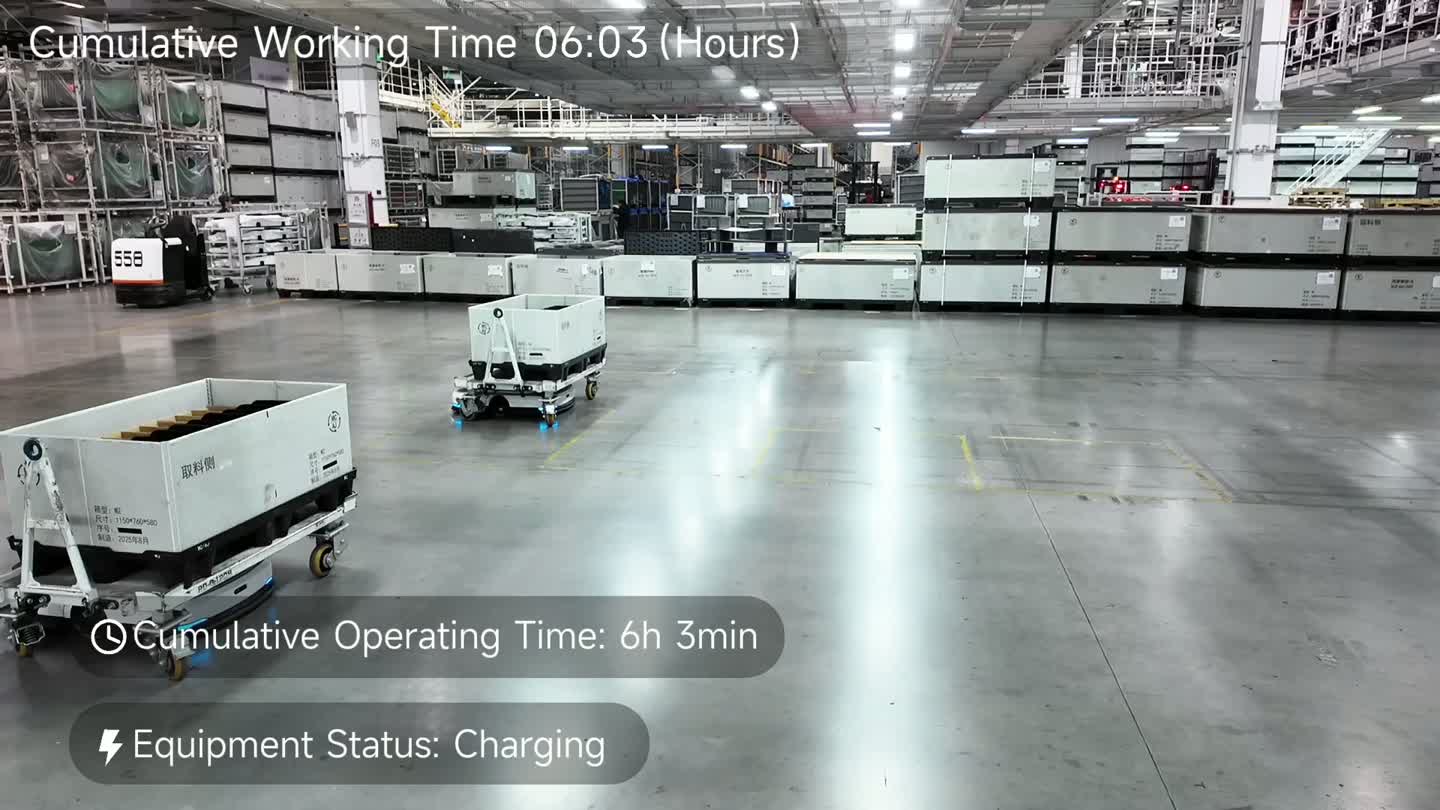
CLS’s report of the run puts two charging breaks inside the shift, at 3 hours and 2 minutes and again at 6 hours and 3 minutes on the video’s cumulative work counter. Those are marks on a counter inside an edited, sped-up video, not readings off a wall clock. Xiaomi presents the run as a staffing result, a full production day covered at one station, and the disclosed duration is a real operational claim for a humanoid program. What the published record does not establish is the mechanism behind the coverage: uninterrupted wall-clock staffing, a charging rotation between the two robots, or eight hours of endurance from either unit on its own. Xiaomi has published nothing about the battery behind the run, no capacity, no charge time, no word on whether the pack plugs in or swaps out. The eight-hour headline sells the strongest version. The record supports the duration and the breaks, and stops there.
What broke during the run?
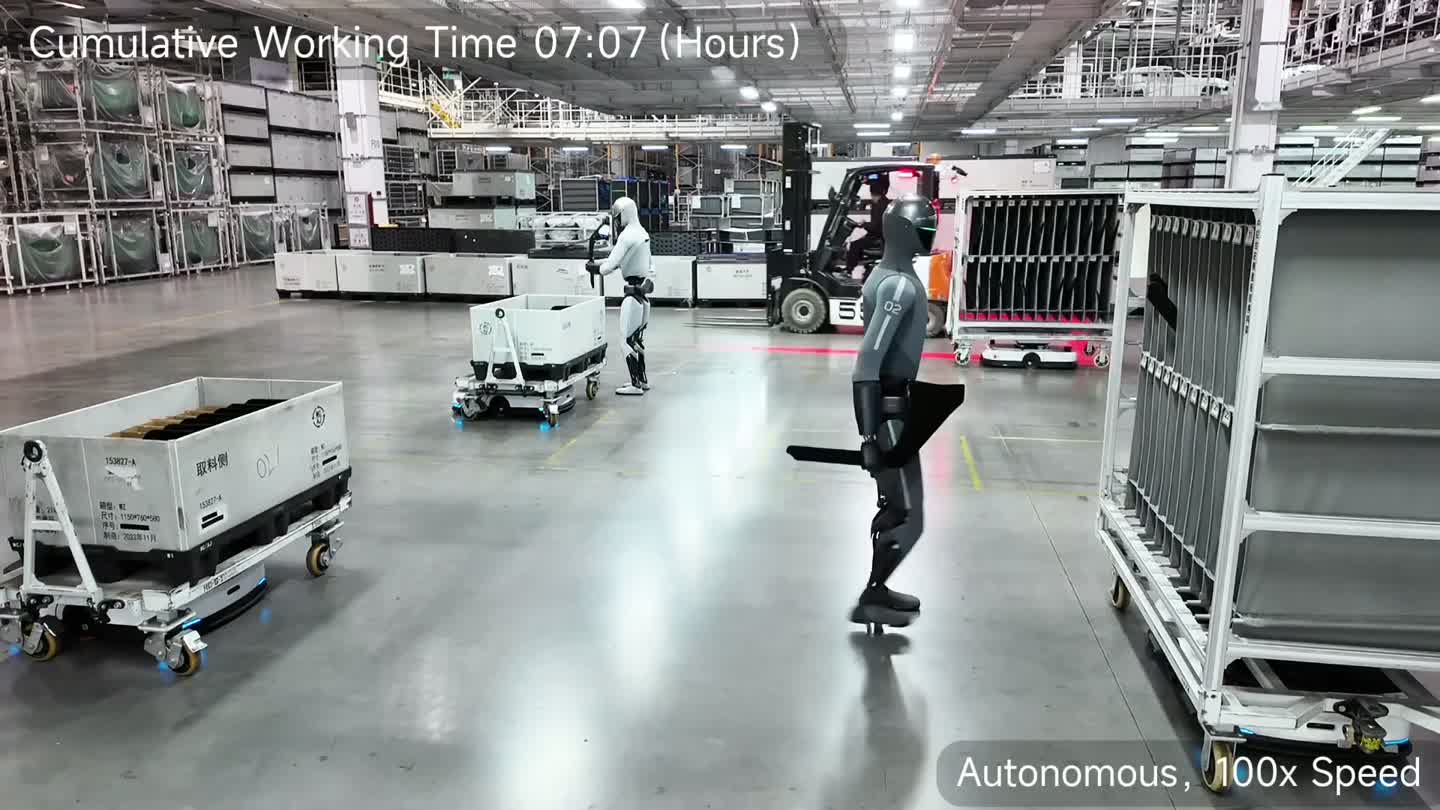
CLS’s report of the run describes one robot dropping a part on the floor in the second half, and a wheeled robot rolling over and picking it up. That is the one failure the reports describe, and it cannot be read as the shift’s failure count: Xiaomi published no count, so the drop is a disclosed incident, not a ledger. The drop still draws a useful line, between correcting deviations inside a task and recovering from failures outside it. Xiaomi describes the first capability as built in.
Which numbers did Xiaomi leave off this run?
Parts handled, success rate, human interventions: Xiaomi published none of them for this run. The silence carries weight because this same program has published success rates for its earlier runs. In March, Xiaomi’s humanoids ran three hours at a self-tapping nut station and the company reported a 90.2 percent success rate against the line’s 76-second takt. The July figures are company-reported rates for different tasks on a different date: 98 percent at the nut-loading station, and a reported 90 percent at each of the sorting and box-folding stations. Those are task success rates, not throughput, part-count, or intervention logs, and they describe March and July, not this run. For this run, Xiaomi published a duration and stopped there.
Xiaomi-Robotics-1 (XR-1) is the embodied model the company released in July. XR-1’s paper supports the model’s training claims: more than 100,000 hours of human manipulation trajectories, with roughly 10,000 post-training hours that mix robot and UMI trajectories rather than solely autonomous robot operation.
What a full shift proves, and what it doesn’t
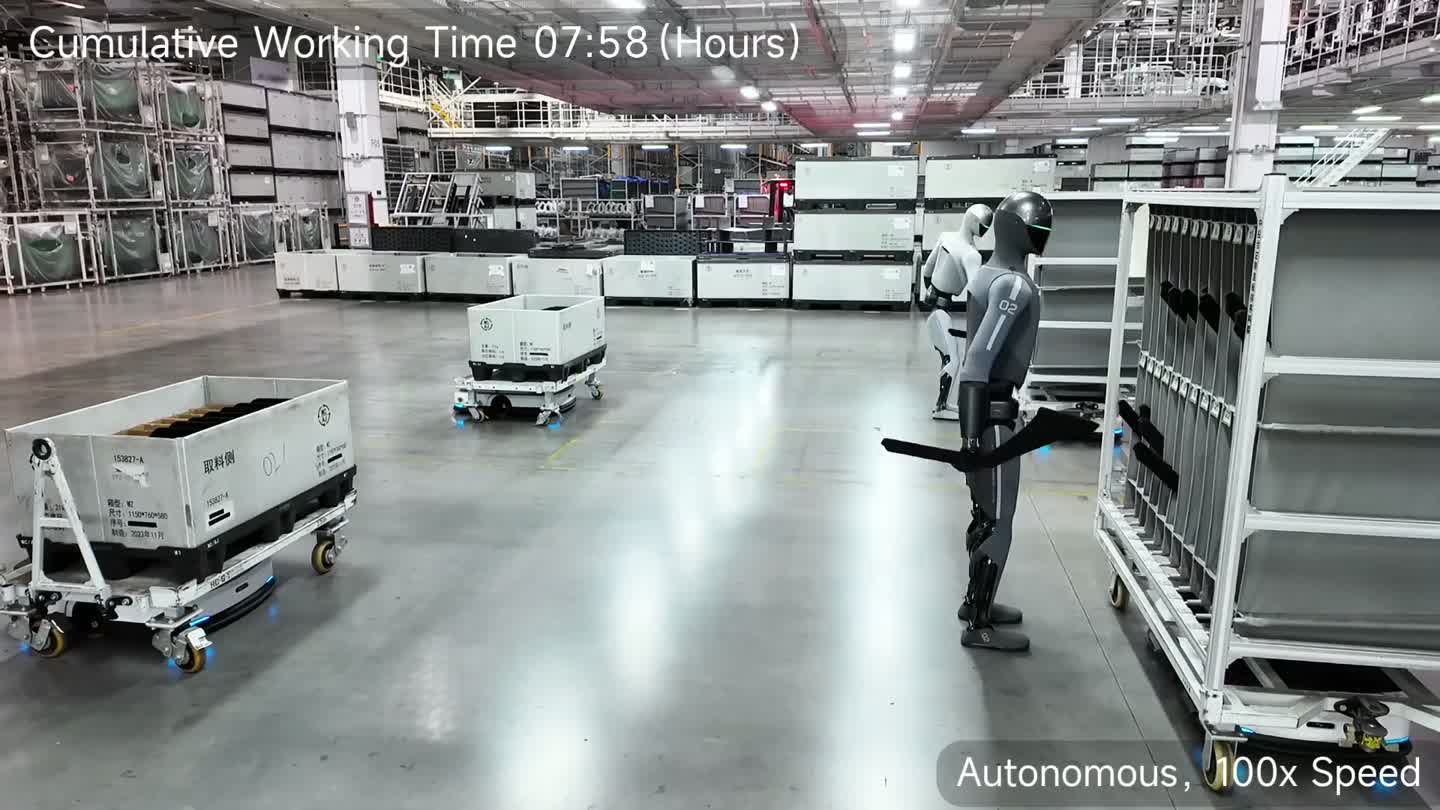
What the record supports is narrower than the headline and still new for this program: a disclosed run at a real station on a real line, with the charging breaks left in the cut. Xiaomi’s own label for the stage is an internship. The promotion case needs the rate card.