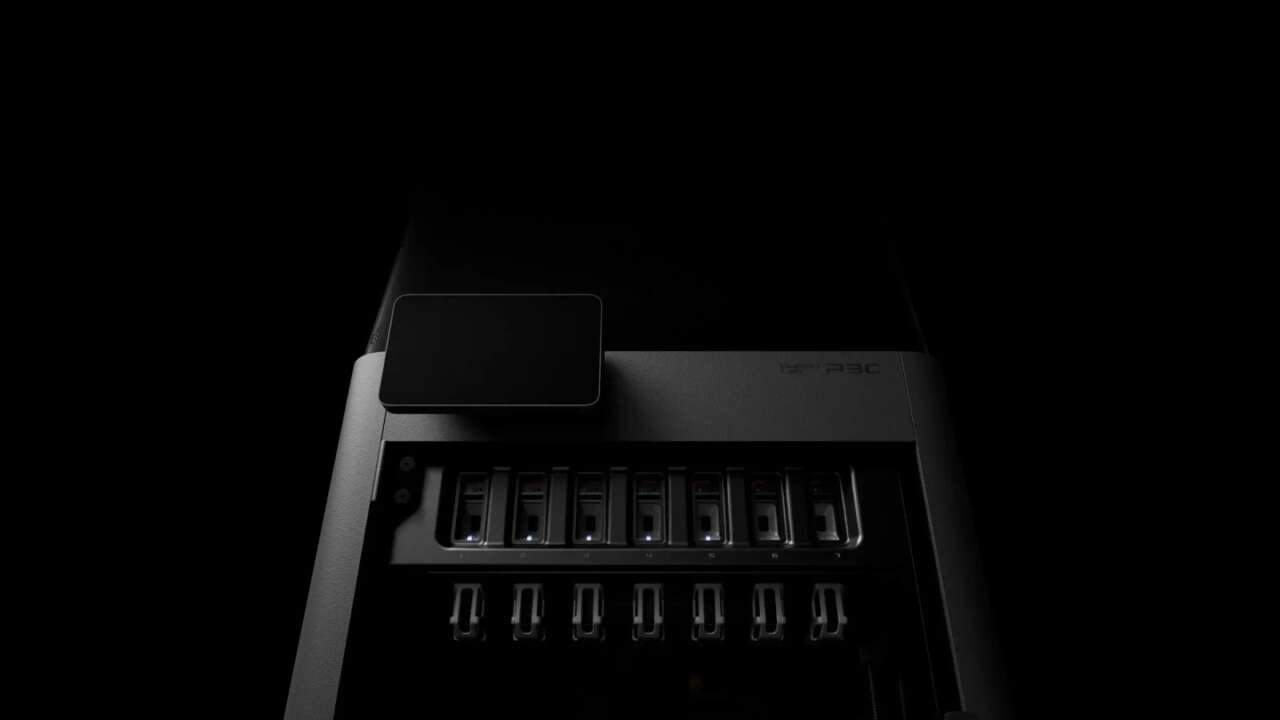
Bambu Lab’s P3C puts five PrintTools on a retractable rack inside a P-series printer and starts at $1,149 with the AMS 3P included. It’s the H3C idea at half the money.
Five 0.4 mm PrintTools come fitted as standard, each one carries a hardened-steel nozzle, and two open slots wait for optional tools like the dedicated 2.85 mm TPU PrintTool or the CraftTool kit. That layout covers standard colors, flexible filament and craft work on one bench.
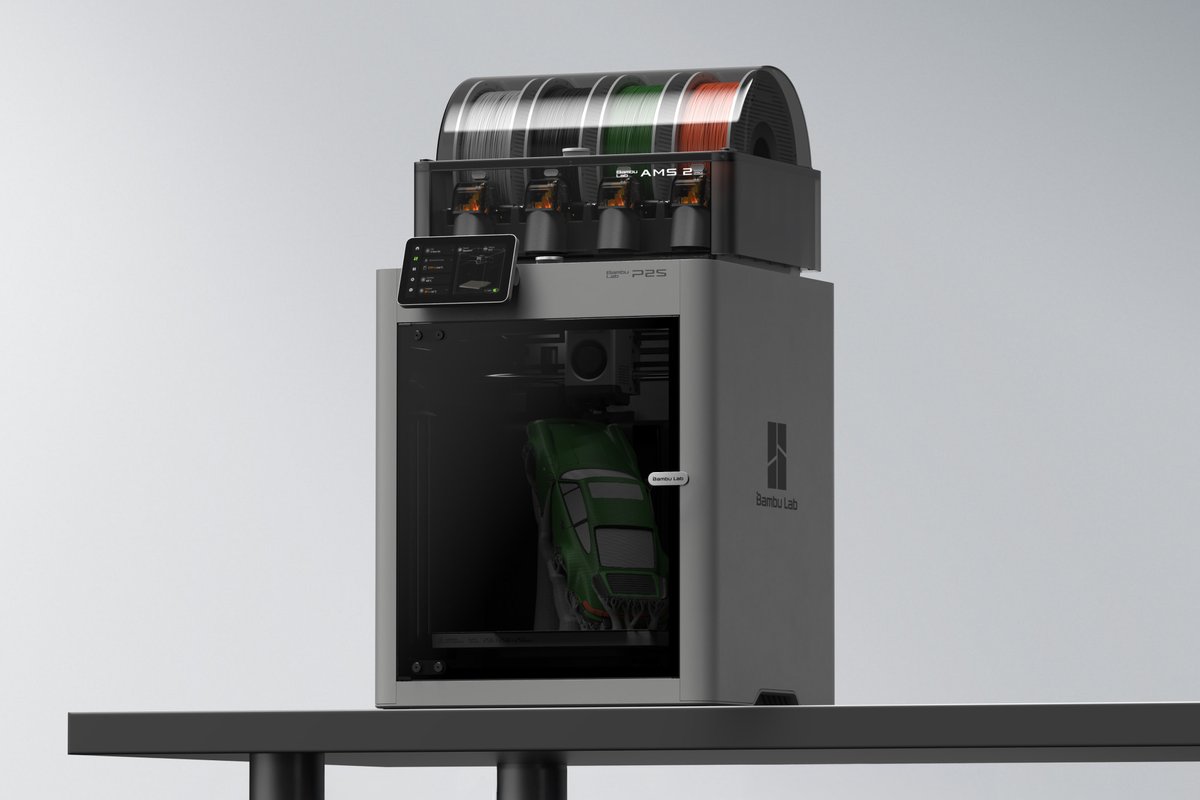
If you want the same P-series footprint and 256 mm build volume with multi-color printing from Amazon, the Bambu Lab P2S Combo is the carried route in this family. It costs less and gives up the tool changer. The P3C itself sells maker-direct only, through Bambu Lab’s P3C store page.
Bambu Lab P2S Combo
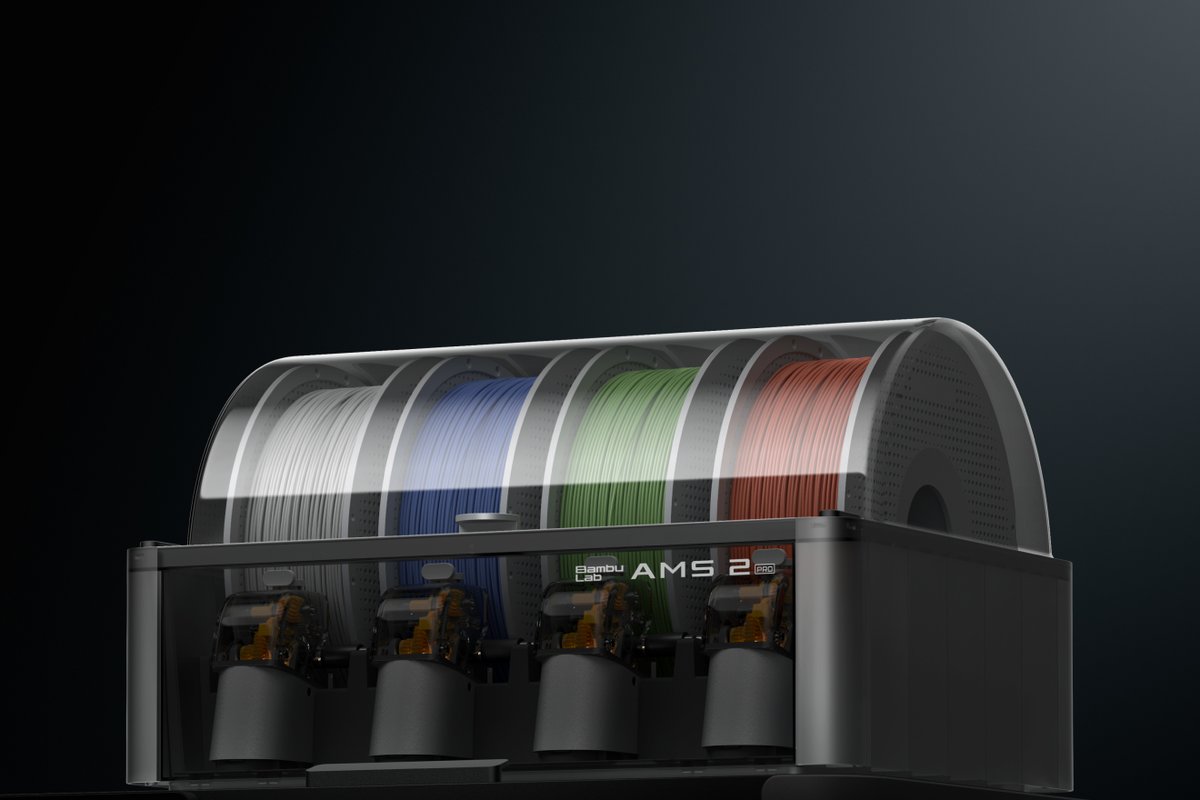
Prints four colors · AMS 2 Pro filament system
Price: $779
Where to buy: Buy on Amazon
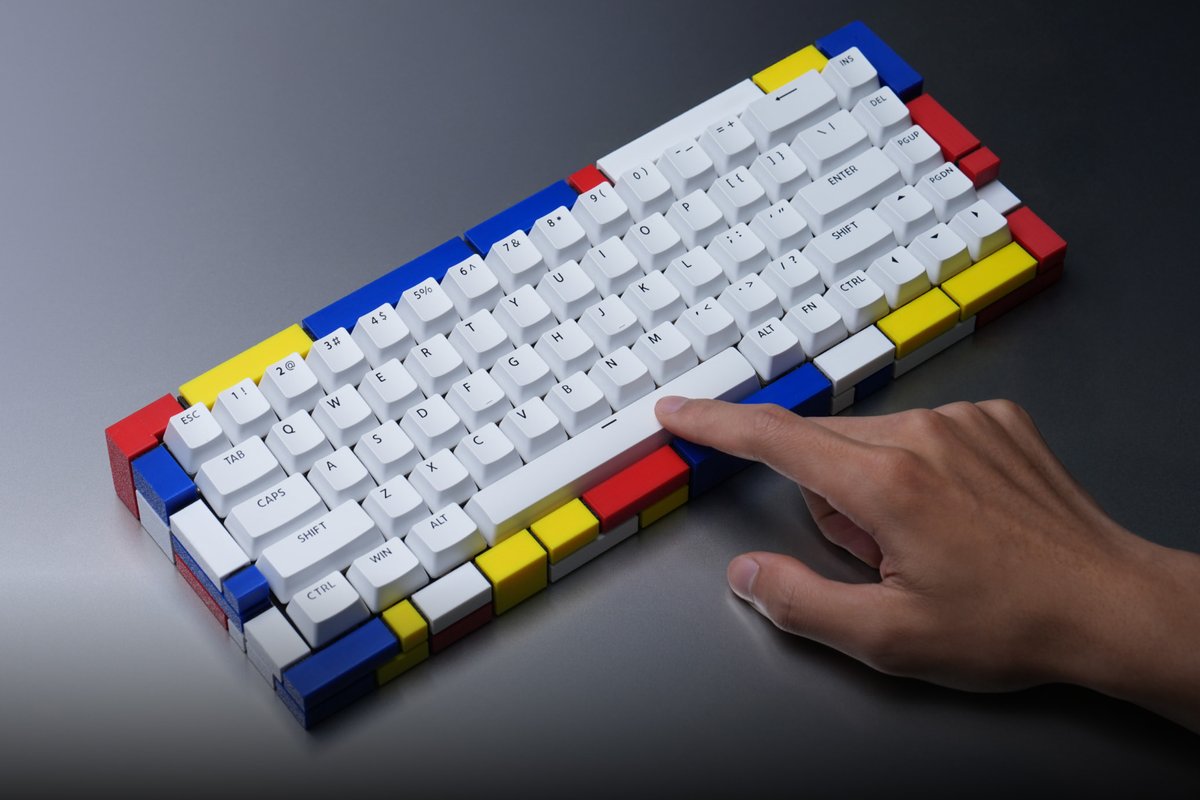
The P2S Combo is the Amazon-carried route in this family, and its sample work runs to a multicolor mechanical keyboard case printed in four colors. It gives up the tool changer and the sealed seven-spool chamber, so it fits buyers who want color prints without a maker-direct order.
Bambu Lab P3C Combo with AMS 3P
Five 0.4 mm PrintTools fitted as standard, two open slots, material swaps in as little as 6 seconds · Build volume 256 x 256 x 260 mm · AMS 3P holds seven spools sealed inside the printer
Price: $1,149
Where to buy: Buy at Bambu Lab
Five tools, six-second swaps
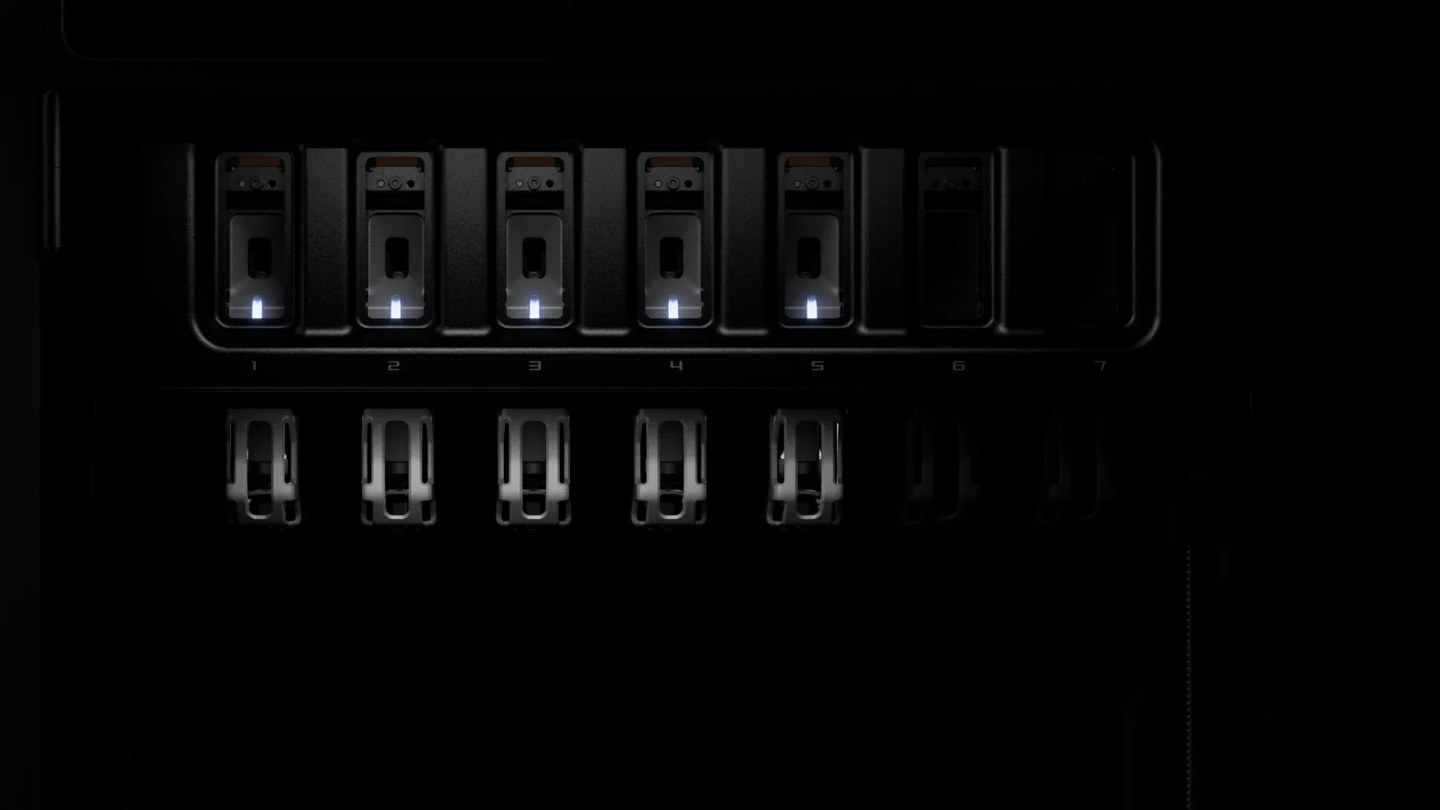
Single-nozzle purging looks slow beside it. Swaptek swaps tools automatically, Active Pre-Heat warms the next nozzle while the current one prints, and Bambu rates the change at as little as six seconds with PLA Basic in filament-saving purge mode.
Full-auto calibration handles tool and nozzle offsets before a job starts, so the five fitted tools align without manual adjustment from the person running the printer on a deadline. The printer checks those offsets itself, so a tool sitting a fraction off doesn’t quietly ruin the first layer of a long print.
Color mixing from five base colors
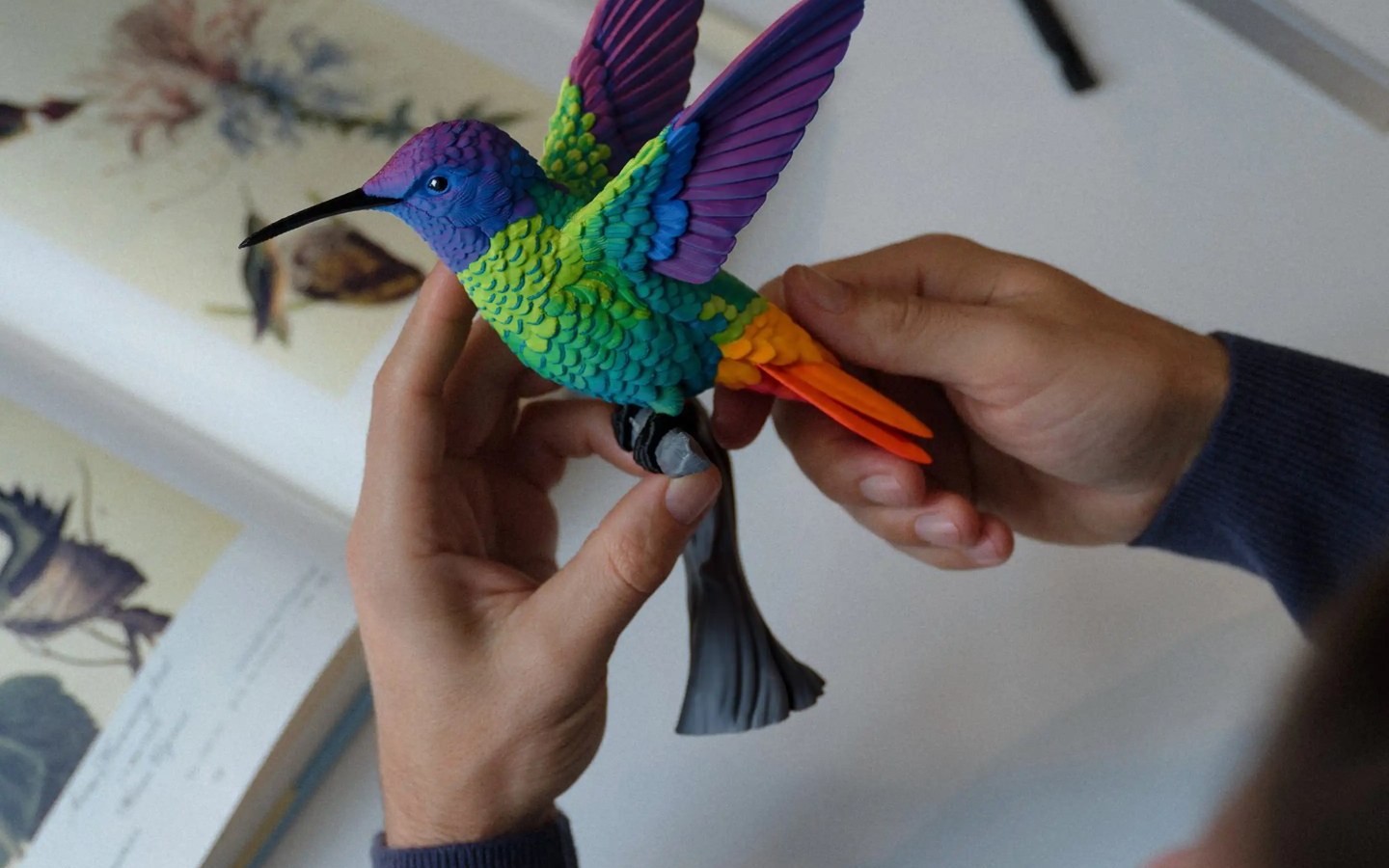
The palette lives in the tools. Each fitted PrintTool is dedicated to one CMYKW color, and the printer mixes shades through layered deposition with CMYKW PLA Palette filament, so a gradient print doesn’t need a separate spool for every shade. The rainbow hummingbird print in the photo above shows how far that mixing stretches, with a gradient that runs across the whole bird while two hands hold it steady.
An auxiliary AMS unit connects through the first PrintTool and extends the system to up to 22 materials, which gives existing Bambu owners a way to reuse the AMS hardware already sitting beside their older printers. That headroom suits shops that keep a full library of materials loaded instead of swapping spools between jobs.
Soft prints get their own path
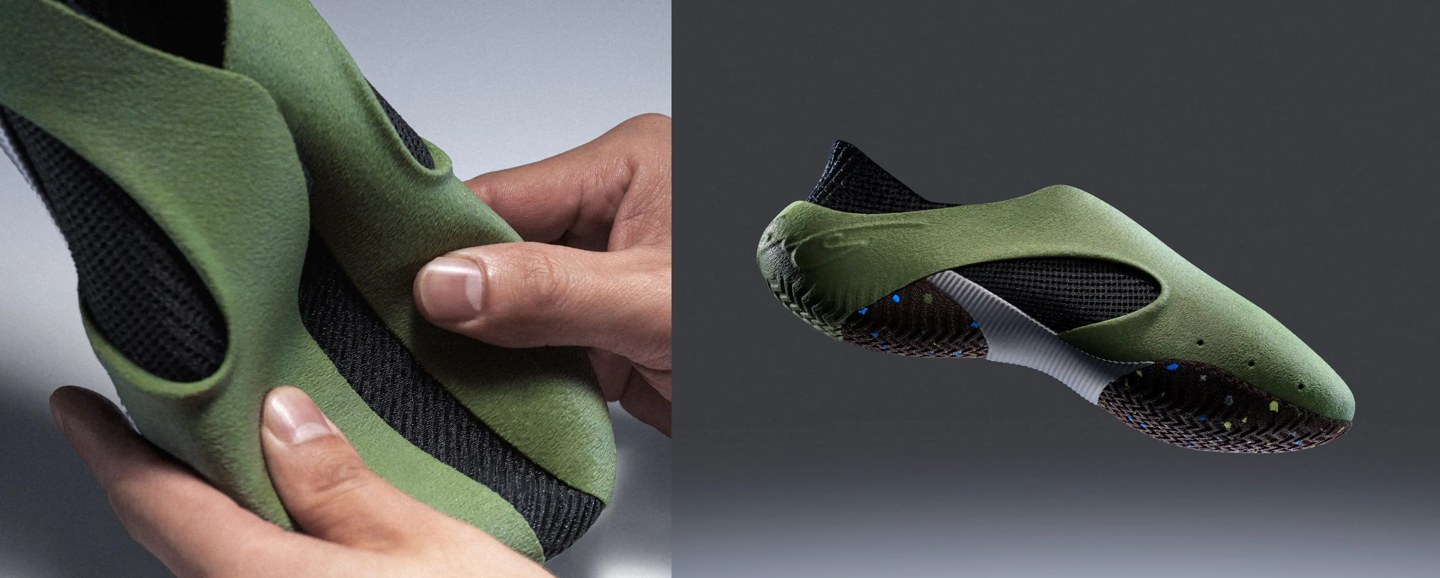
Soft prints stop being the exception. FlexFeed supports both 1.75 mm and 2.85 mm filament, and Bambu says materials as soft as 75A TPU print with up to three times the maximum volumetric flow rate of 1.75 mm feeding. Bambu’s own example is a green TPU shoe, printed soft enough to bend by hand and shown from the side in the second view.
For flexible work, the optional dedicated TPU PrintTool pairs with 2.85 mm TPU for more reliable feeding, since thicker filament resists bending and buckling on its way toward the nozzle. The dedicated tool keeps that thicker filament on its own path, separate from the five standard color tools.
The AMS 3P tradeoff
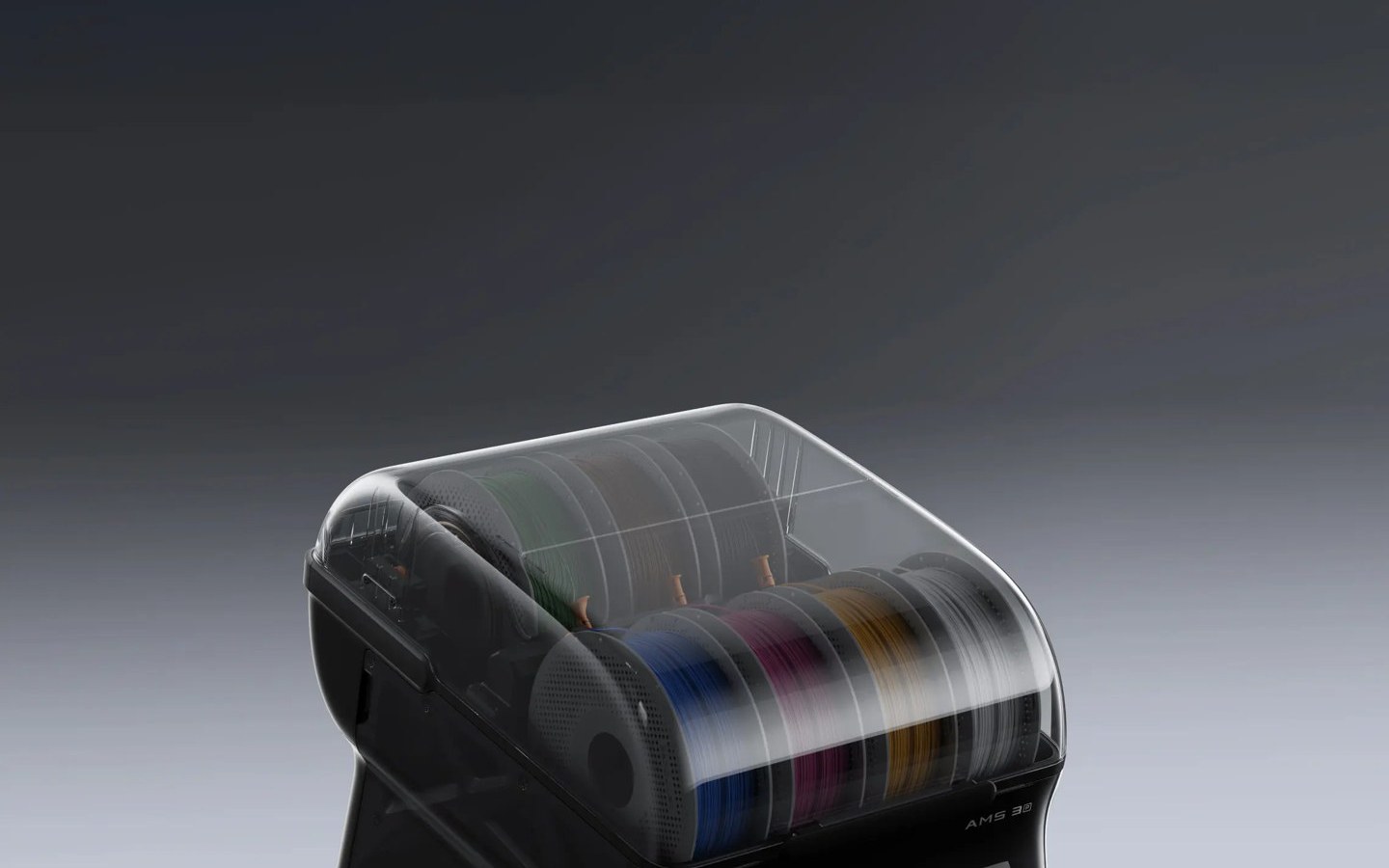
You load every spool by hand. The AMS 3P keeps seven spools sealed inside the printer with dedicated internal paths, though Bambu states plainly that it doesn’t feed filament automatically and no official accessory adds that feature.
Inside that same sealed chamber, the optional Dryer Module adds 75°C active drying to two of the seven slots, so moisture-sensitive filament gets prepared while the rest of the spools stay stored. Two slots can dry while the other five simply wait, so one damp spool doesn’t hold up a print that runs on dry filament.
P3C or H3C
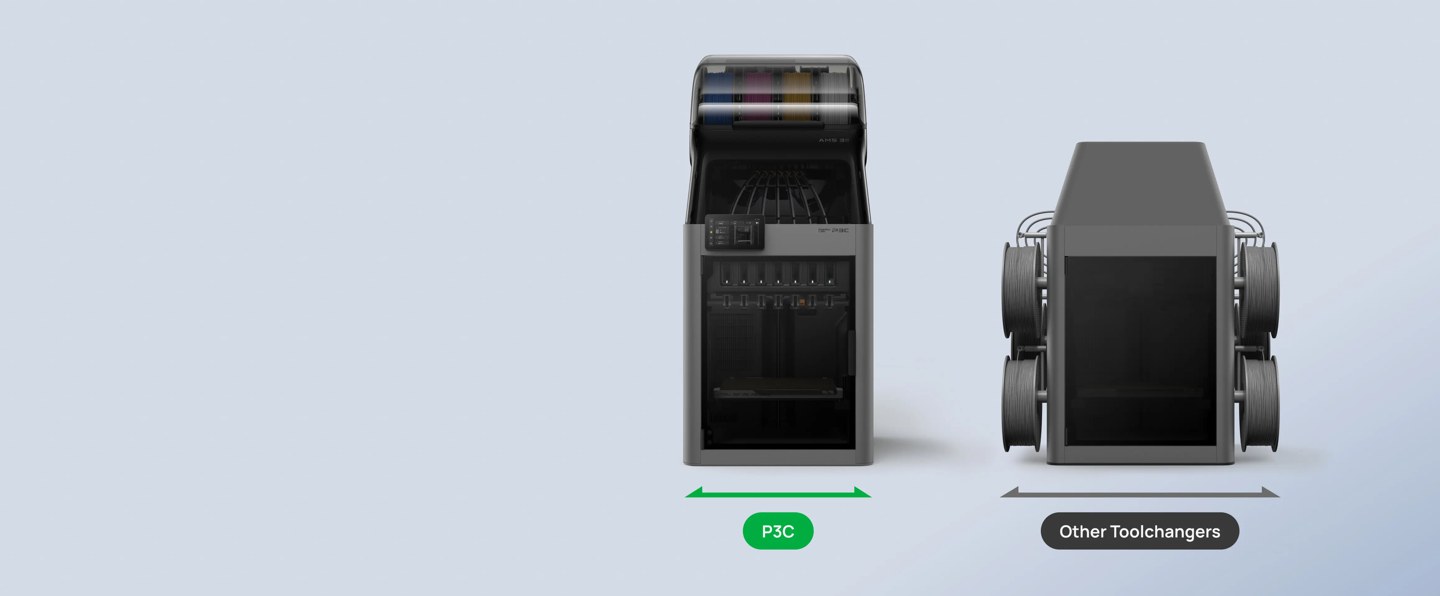
Five tools cover most desks. The H3C costs $2,499 with nine tools and a larger 330 x 320 x 325 mm build volume, while the P3C costs $1,149 with five fitted tools and a 256 x 256 x 260 mm build volume.
Bambu Lab P3C Combo with AMS 3P
Five 0.4 mm PrintTools fitted as standard, two open slots, material swaps in as little as 6 seconds · Build volume 256 x 256 x 260 mm · AMS 3P holds seven spools sealed inside the printer
Price: $1,149
Where to buy: Buy at Bambu Lab
Buy the P3C at $1,149 if five tools and color mixing cover your work, pay $2,499 for the H3C if you need nine tools and the bigger chamber, and skip both if one nozzle already does everything you print. The P2S Combo at $779 on Amazon is the cheaper middle path if four colors and automatic feeding beat a tool changer for your work.