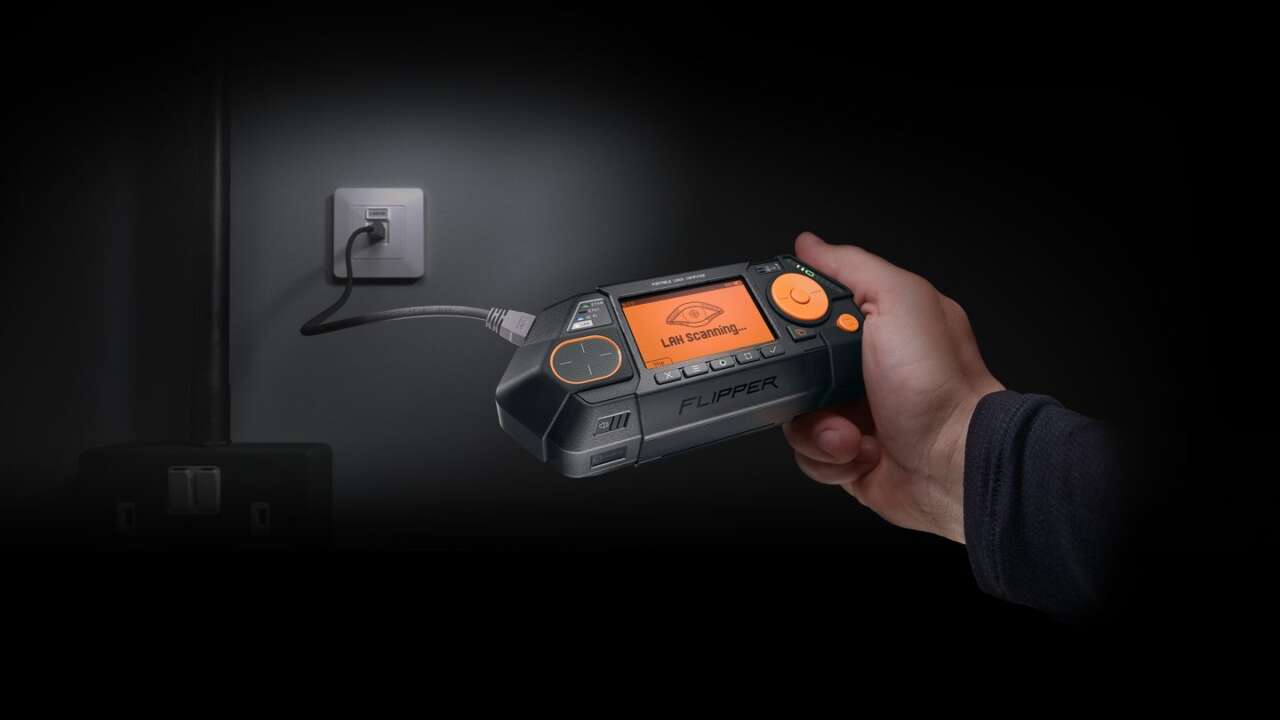
Flipper One is a pocket Linux computer built as a network multi-tool, and its Kickstarter campaign has already passed $17 million from more than 32,000 backers. Flipper Devices set the funding goal at $300,000, and the campaign is all-or-nothing.
Flipper One
Open Linux multi-tool · Rockchip RK3576 plus RP2350 · Wi-Fi 6E · Two Gigabit Ethernet ports
Price: $399 on Kickstarter, estimated retail $550
Campaign ends December 17, 2026 · Estimated delivery July 2027
Where to buy: Back on Kickstarter
The One isn’t sold on Amazon, and official Flipper Zero stock isn’t listed there either. The closest pocket network tool you can buy today on Amazon is GL.iNet’s Beryl AX travel router, linked below.
Amazon alternative: GL.iNet Beryl AX (GL-MT3000) Wi-Fi 6 travel router
Price: $84.14
Where to buy: Amazon
Backers are buying a computer with a networking habit, built for serious network work in the field. A second chip keeps the screen and controls alive.
A mainline Linux build on two processors
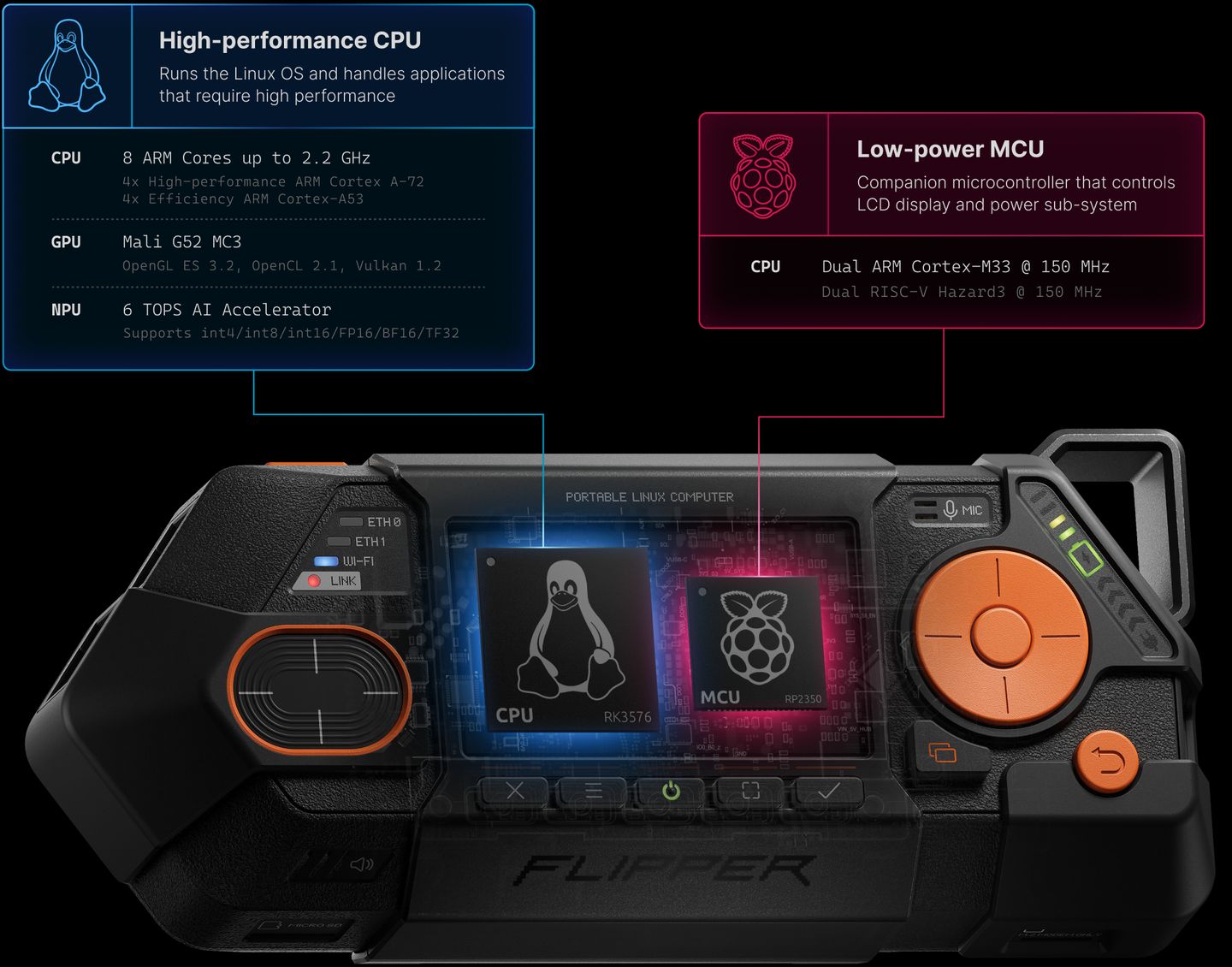
The main chip is a Rockchip RK3576: four Cortex-A72 cores and four Cortex-A53 cores running up to 2.2 GHz, a Mali G52 graphics processor and a neural processor rated at 6 TOPS for on-device inference work. That’s laptop-adjacent silicon in a handheld shell. The same board drives the HDMI 2.1 output, the on-device interface and the desktop mode on an external display at the desk or in the field.
A Raspberry Pi RP2350 runs beside it, driving the LCD, the touchpad and the D-pad. Power and boot control sit with it. The battery is a 7,000 mAh cell marked not final, and the final weight is still to be determined.
Collabora is bringing the RK3576 into the mainline kernel with Flipper Devices, so the One runs open Linux with no vendor-locked BSP and no binary blobs. Storage is 64 GB of UFS 2.2, with RAM listed as LPDDR4 or LPDDR5, the type and size both undecided.
Two Ethernet ports, Wi-Fi 6E and a built-in power meter
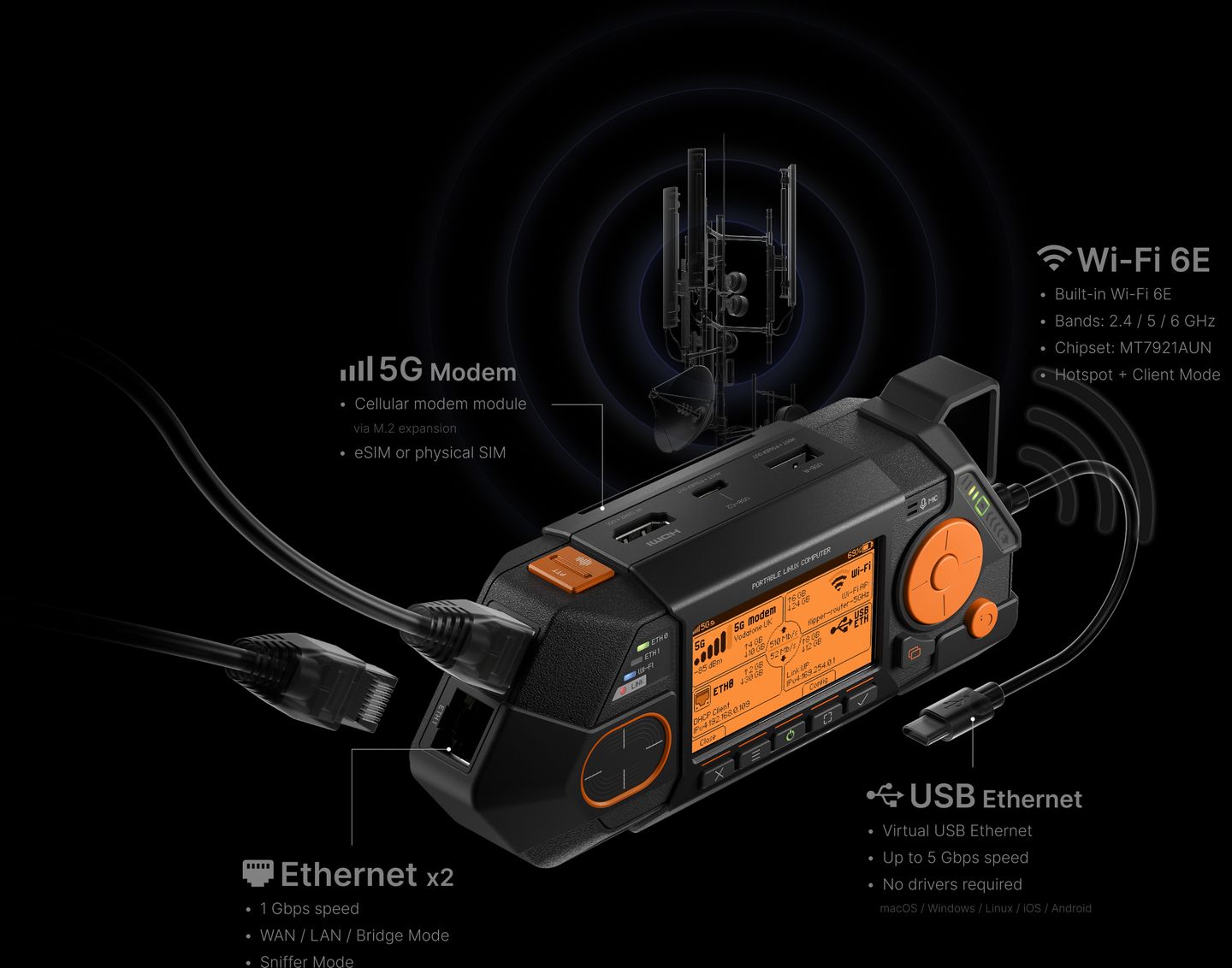
Two Gigabit Ethernet ports anchor the toolkit. The One can juggle up to five uplinks with routing, failover, load balancing and firewall rules running at once.
It maps wired and wireless networks, finds live hosts, scans ports and services, and runs a passive sensor mode that watches traffic for attacks and reports anomalies as they surface. The built-in radio is a MediaTek MT7921AUN on Wi-Fi 6E across the 2.4, 5 and 6 GHz bands with monitor mode for packet capture, Bluetooth 5.2 rides alongside, and a power meter reports the system’s draw in real time. The Wi-Fi antenna is a tri-band 2×2 MIMO board.
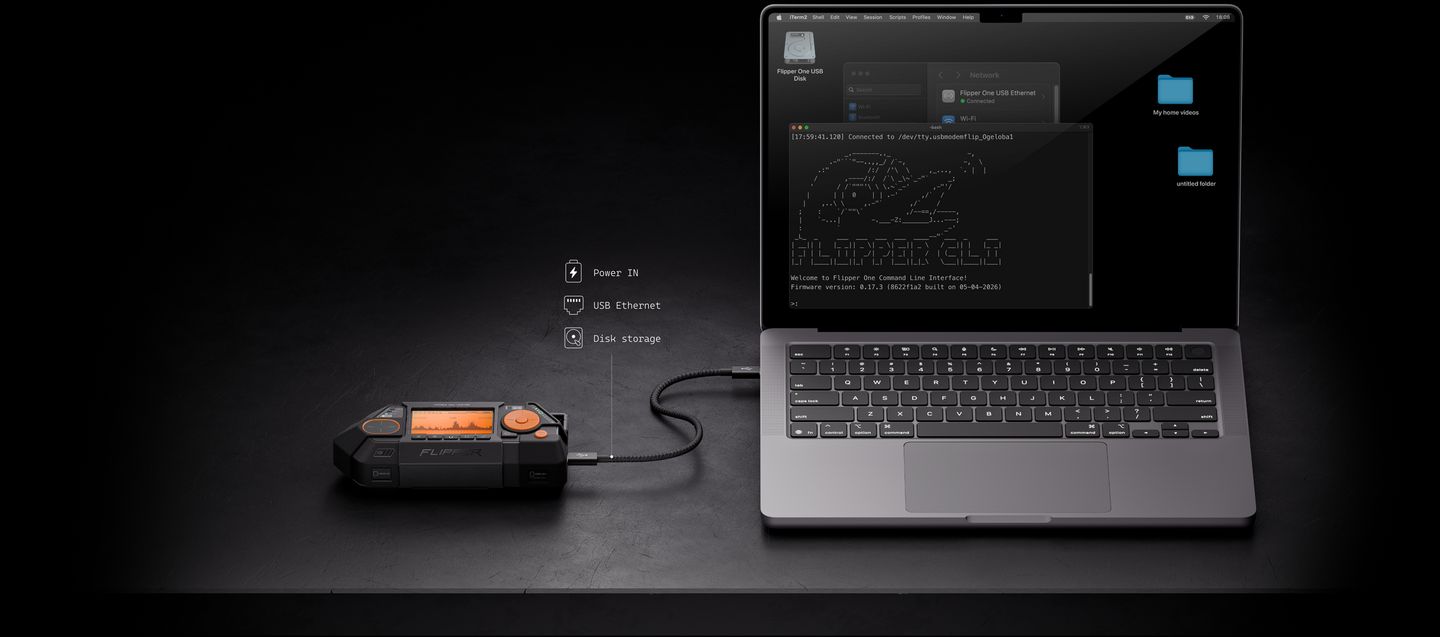
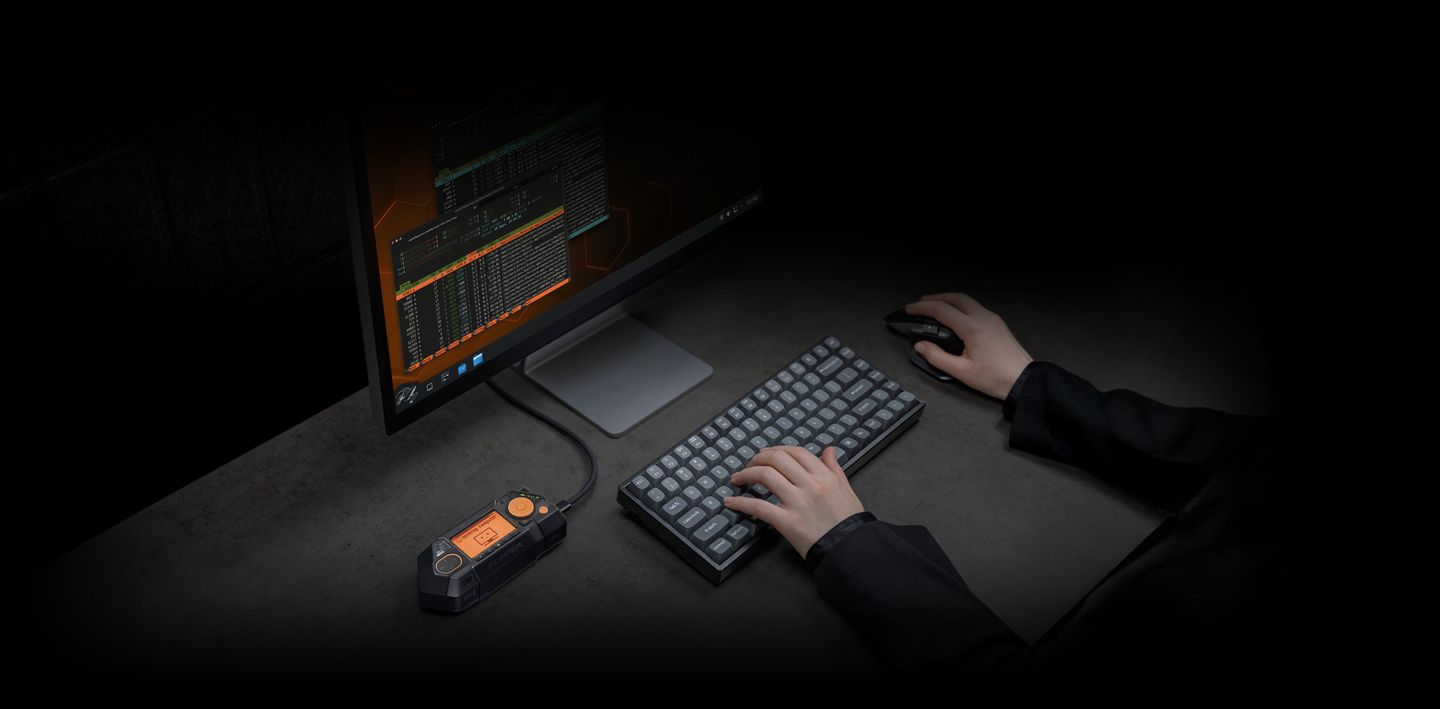
One USB-C cable carries SSH access, a virtual network adapter, a serial port and mass storage, with the virtual adapter showing up as a network interface on the host machine. No drivers need installing on macOS, Windows, Linux, iOS or Android, and the cable also feeds the device during the session, so one cord does everything.
A pocket router, scanner and meter share one shell. Nothing else in a pocket does all three jobs.
None of the Flipper Zero radios are built in
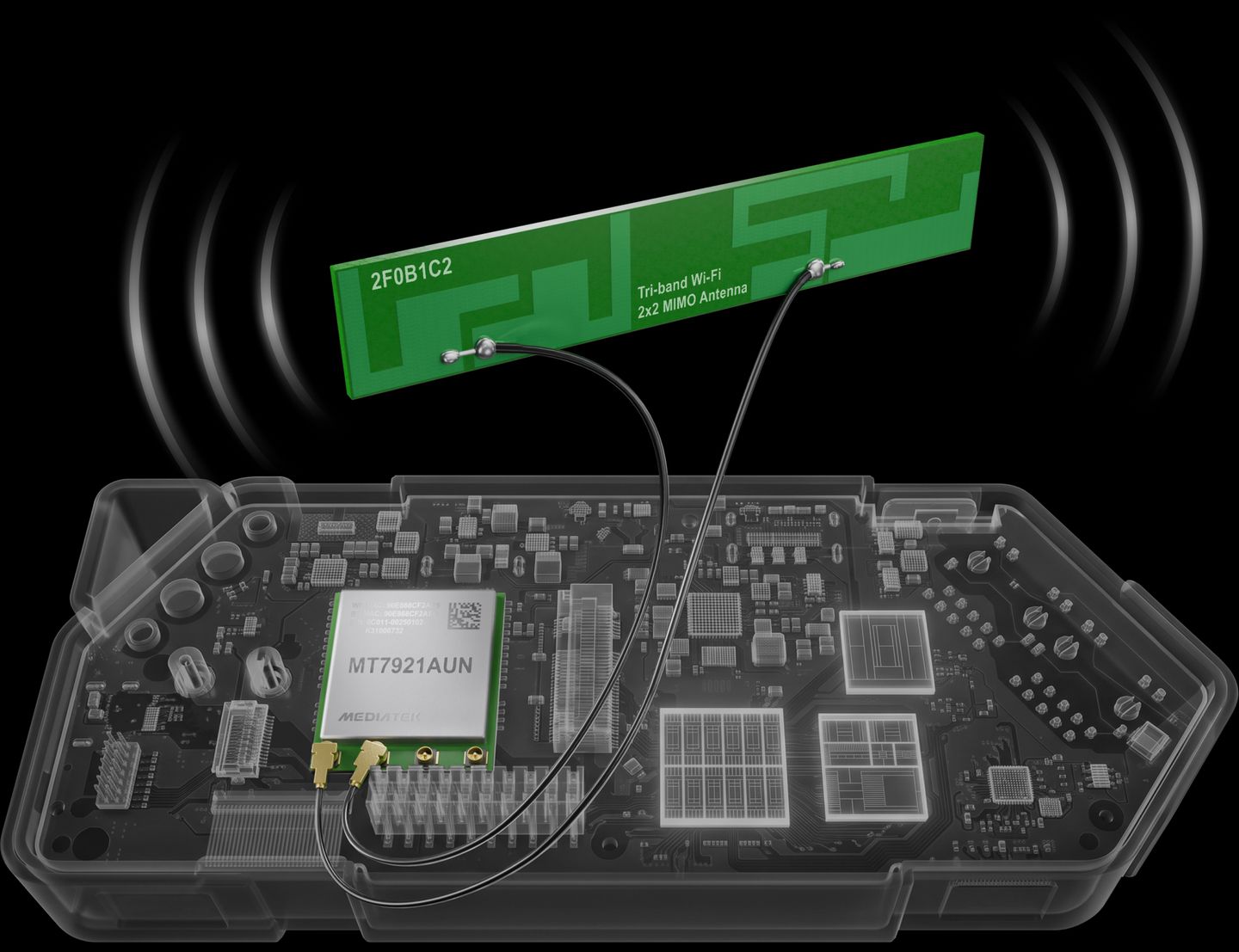
The One drops the Zero’s Sub-GHz radio, NFC, RFID reader and infrared transceiver, and it carries no cellular radio in the box either. In exchange, backers get a general-purpose Linux computer. Its networking runs deep enough to operate a small network outright, from routing and scanning to metering. It can sit between two networks as a bridge, or run one network outright as its router and firewall, with routing, scanning and metering built in rather than bolted on afterwards.
Flipper Devices positions the One as a different product rather than a Zero successor, and the hardware backs that up: every radio decision points at IP networks instead of the air around them. The Zero stays in the lineup as the radio tool, and the One takes the network jobs it was never built for.
Modules add LoRa, SDR and 5G through the expansion slot
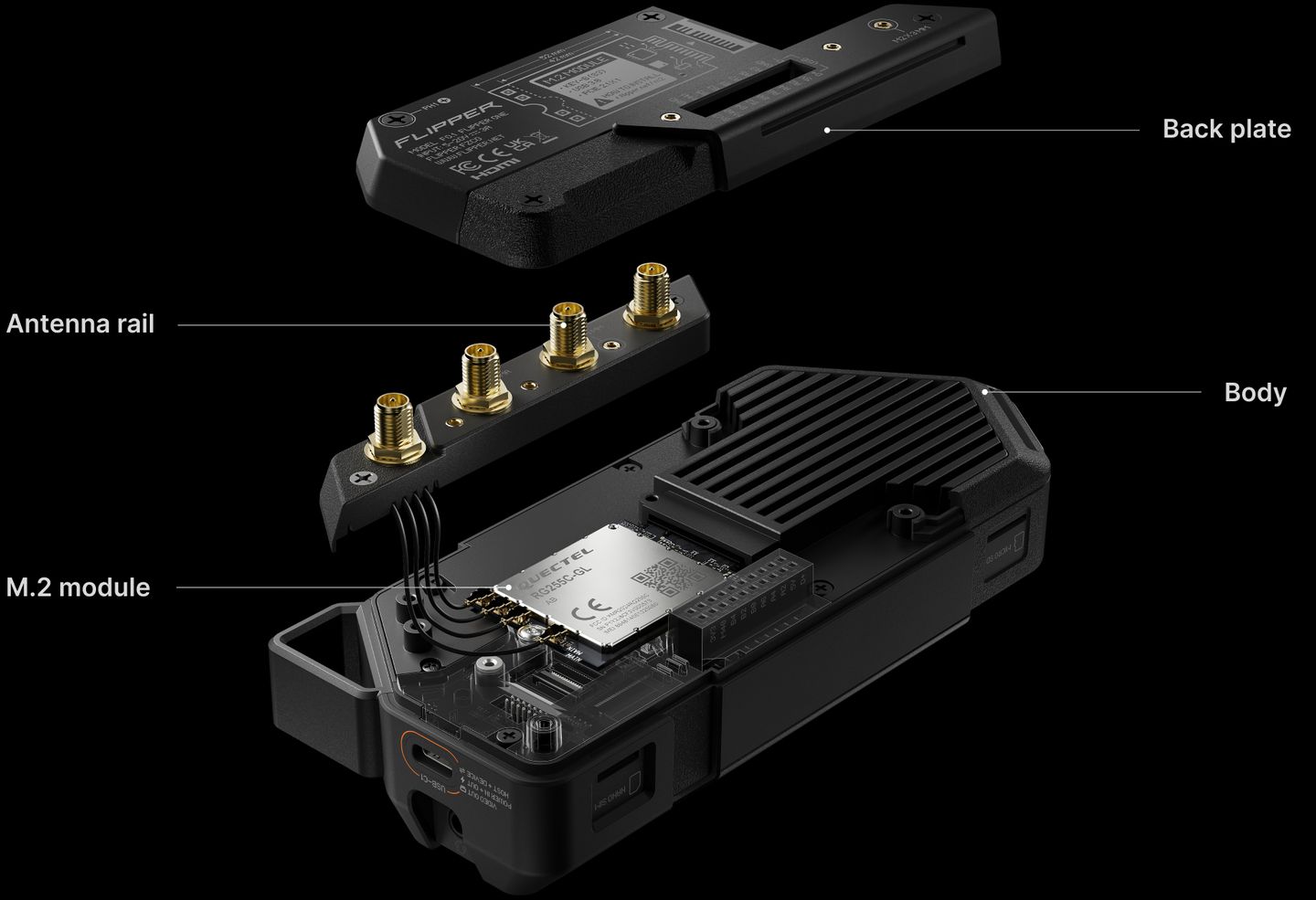
An M.2 Key-B slot under the back plate takes the expansion modules, and the mounting hardware designs are open source for anyone building their own modules, mounts, protective cases and add-ons. The LoRa module runs a Semtech SX1262 with LoRaWAN support and Meshtastic use intended, the SDR module tunes from 24 to 1700 MHz with its own antenna rail, and a GPIO header takes DIY modules on standard 2.54 mm pins.
The 5G module is a Quectel RM520N-GL, sub-6 GHz only. A Nano SIM slot and a built-in eSIM wait for it, and the eSIM accepts your own carrier profiles. Cellular arrives by module, never by default.
The tier ladder runs from a sold-out Early Bird to the Ultimate Bundle
Early Bird backers paid $379 for a tier priced 30% under the $550 estimated retail, and it’s sold out. The $399 standard tier is the real entry point for new backers.
Holders of the $20 pre-order coupon hold a quieter deal: a hidden $359 tier that totals $379 once the coupon is paid in full. The ladder above the standard tier prices the modules one at a time: $439 with LoRa, $539 with SDR, $599 with 5G and the $759 Ultimate Bundle with all three modules in a single pledge. Add-ons price separately at $59 for LoRa, $149 for SDR, $219 for 5G and $369 for the all-modules pack.
Shipping and taxes sit outside the pledge, at an estimated $15 to $30 in the pledge manager, and every tier carries the same July 2027 delivery estimate. Flipper Devices covers the import duties itself.
The campaign names its own biggest risk in direct terms: the RAM and component shortage has pushed part prices up many times over, suppliers are quoting delays, and the campaign says so openly. The spec sheet still sits at about 90% final, and the campaign states plainly that spec adjustments, including a cut to the RAM capacity, aren’t ruled out before production, and neither are delivery delays.
Amazon alternative: GL.iNet Beryl AX (GL-MT3000) Wi-Fi 6 travel router
Price: $84.14
Where to buy: Amazon
Back the $399 tier if you run networks for a living and want the whole lab in a jacket pocket. Keep the Zero if your work is remotes, badges and door readers. Those jobs get done today, without a pledge, and the Zero sits in the drawer ready while the One is still a campaign.
Flipper One
Open Linux multi-tool · Rockchip RK3576 plus RP2350 · Wi-Fi 6E · Two Gigabit Ethernet ports
Price: $399 on Kickstarter, estimated retail $550
Campaign ends December 17, 2026 · Estimated delivery July 2027
Where to buy: Back on Kickstarter
The campaign closes on Thursday, December 17, 2026 at 10:00 AM CST, and funding is all-or-nothing. Miss the goal and every pledge refunds.