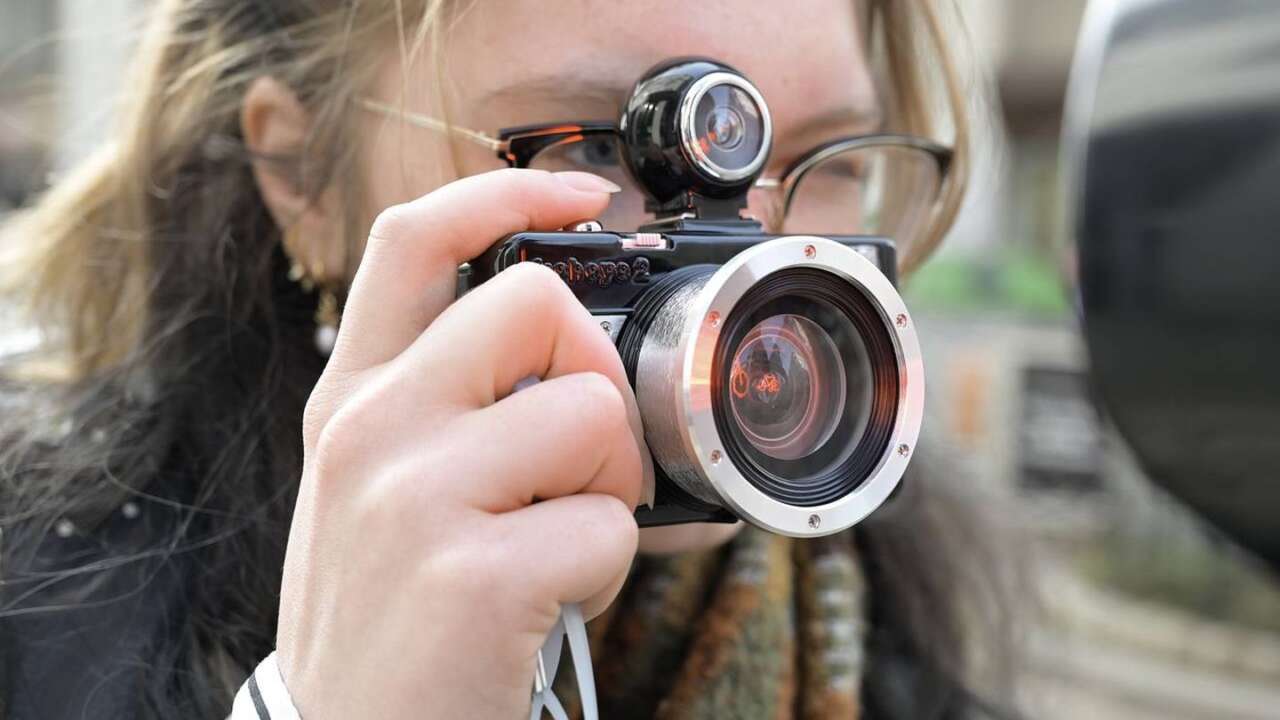
September 2007, Venice: Brad Pitt walked into his own premiere holding a plastic fisheye camera and pointed it back at the photographers. The camera was a Lomography Fisheye No. 2, and Lomography still sells it today at $59.
Lomography Fisheye No. 2 35 mm Camera
10 mm fisheye lens with a 170° field of view · Built-in flash and multiple exposure mode · Runs on a single AA battery
Price: $59.00
Where to buy: Buy at Lomography
Pitt was in Venice for The Assassination of Jesse James by the Coward Robert Ford, and the photographers were lined up in a row. He came through the crowd holding the little black and silver camera up at them, shooting the shooters. Lomography’s spokeswoman identified the camera at the time as a Fisheye 2 and said the company hadn’t supplied it. Nobody ever settled whether a fan had handed it to him or it was already his.
The clip is doing the rounds again, and the joke hasn’t aged. A festival premiere runs on telephoto lenses and camera bodies costing more than a small car, and his cost $59.
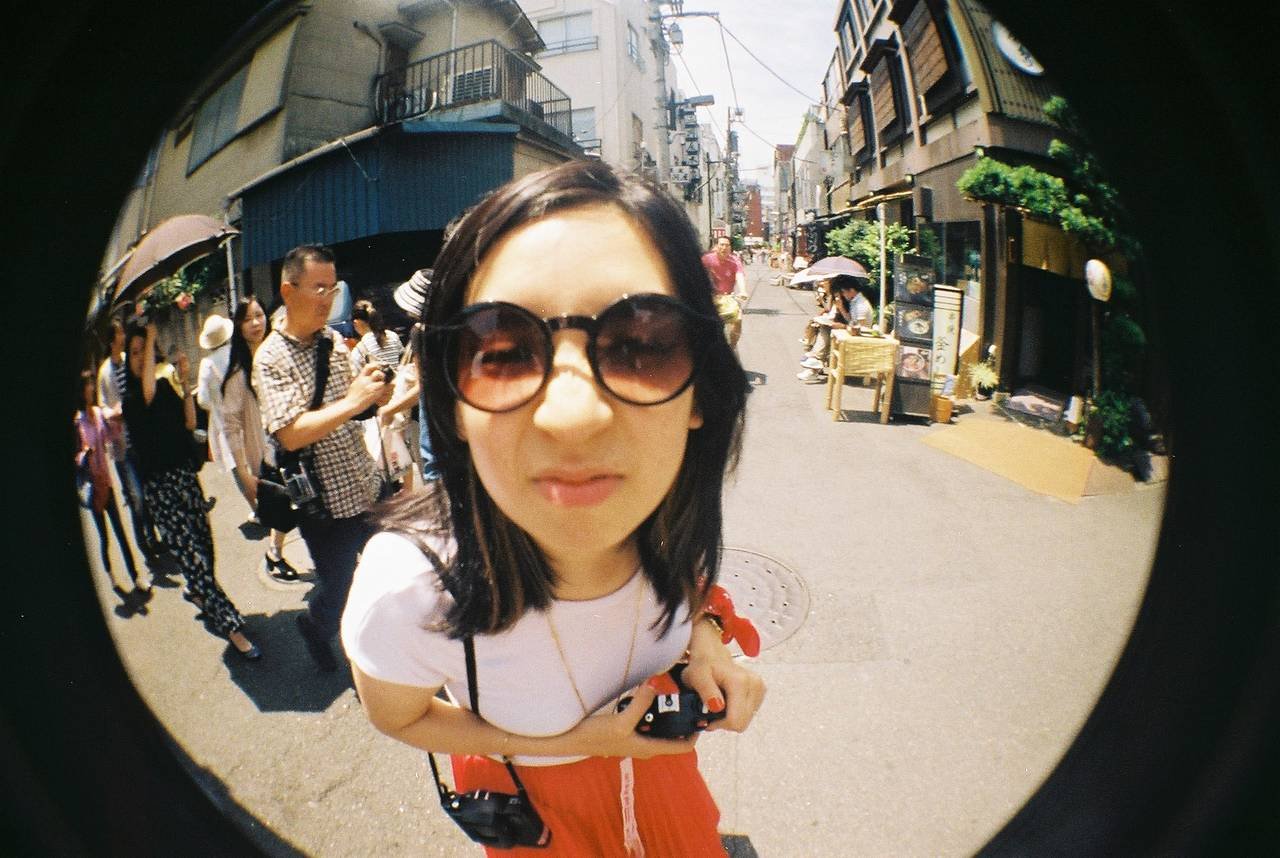
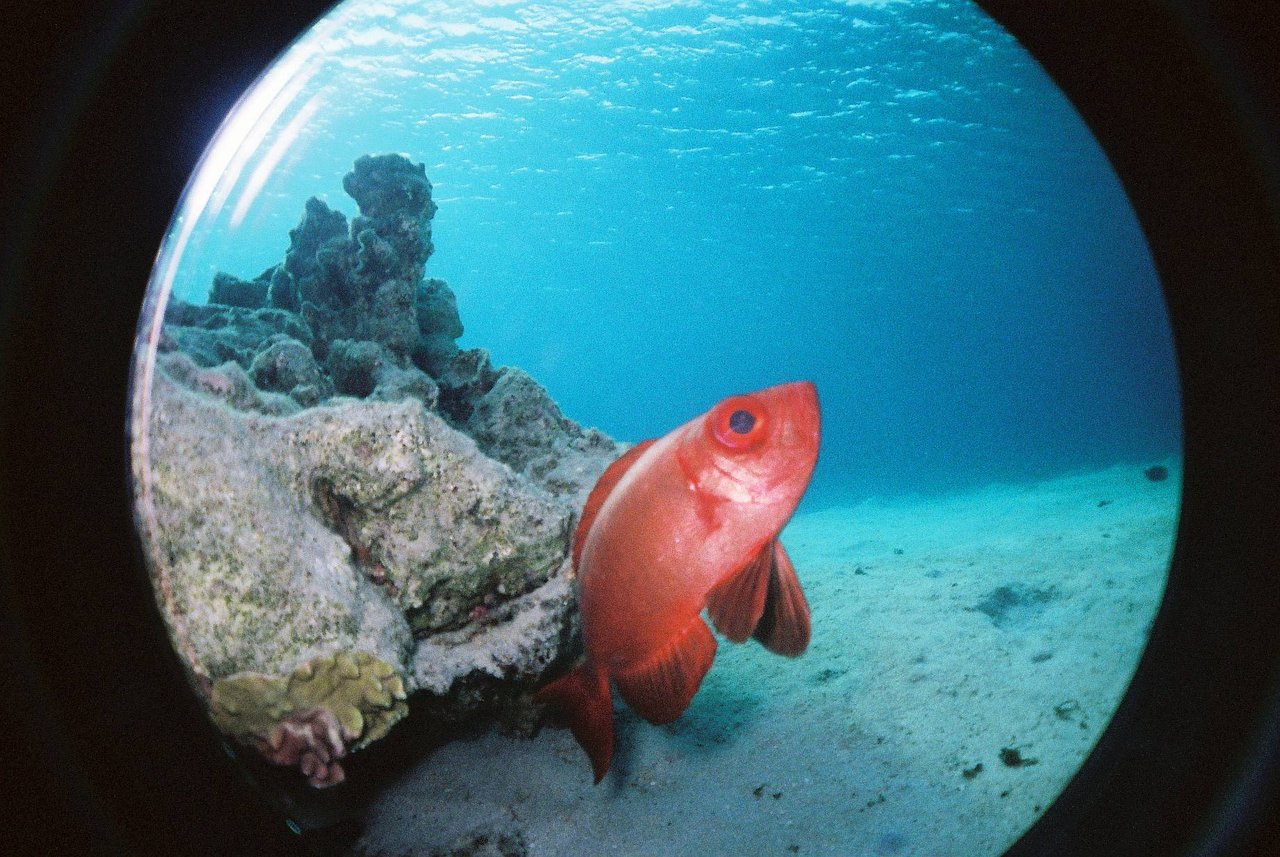
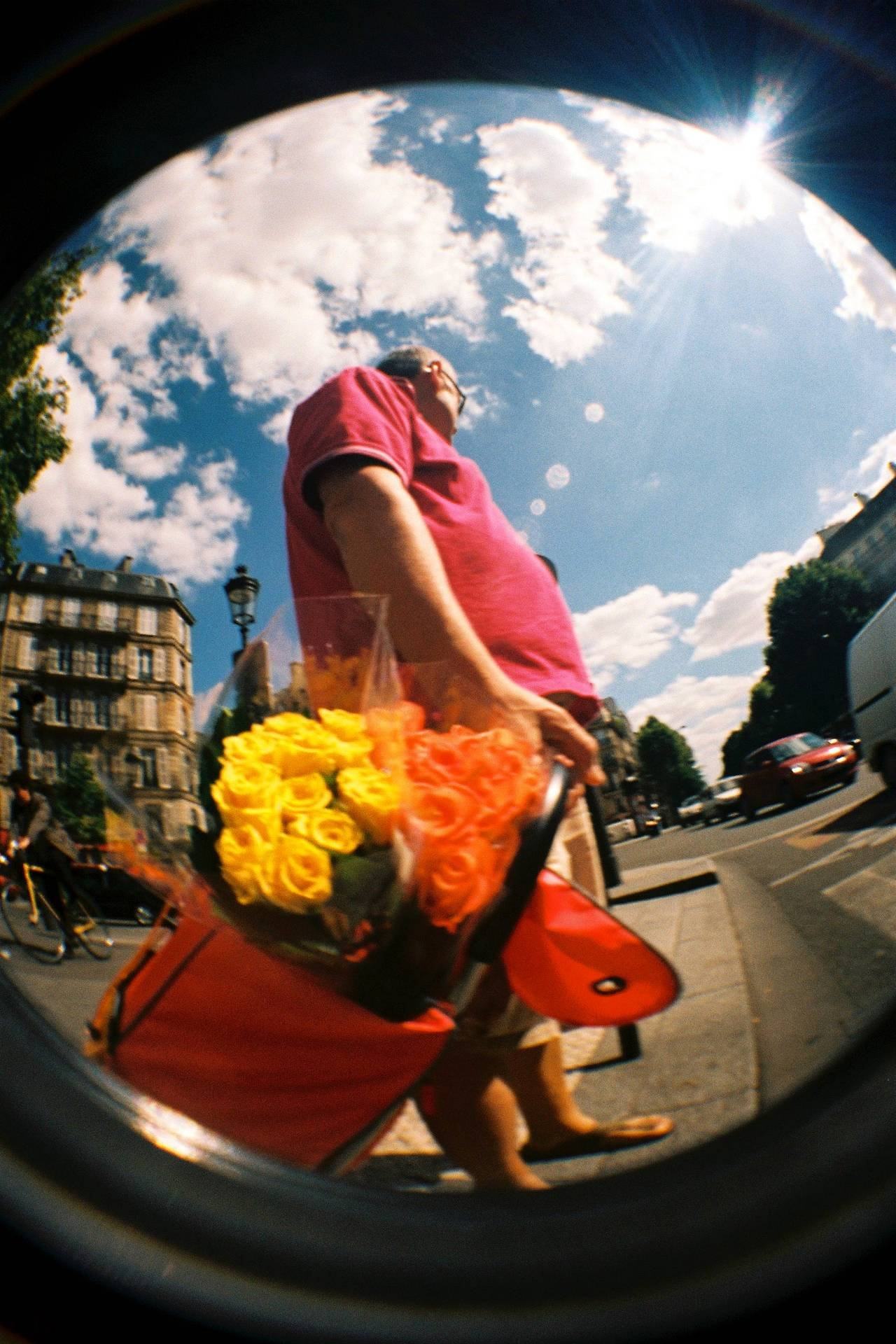
Physicist Robert W. Wood described the fisheye lens in 1906, and the circular frame it draws went on to become the visual language of skate videos, album covers and party photos shot at arm’s length. A fisheye doesn’t flatten the world the way a normal lens does; it bends the world into a ball, edges curving away, the middle rushing at you.
He shoots film like he means it
Pitt isn’t posing with a prop: by the following year, a magazine had built a cover story out of his own film photographs of Angelina Jolie at home, shot on a large format camera he’d been given for Christmas. That’s serious kit and serious intent, and the Fisheye sits at the opposite end of his shelf, the cheapest and simplest camera he could carry, the one he took into a crowd.
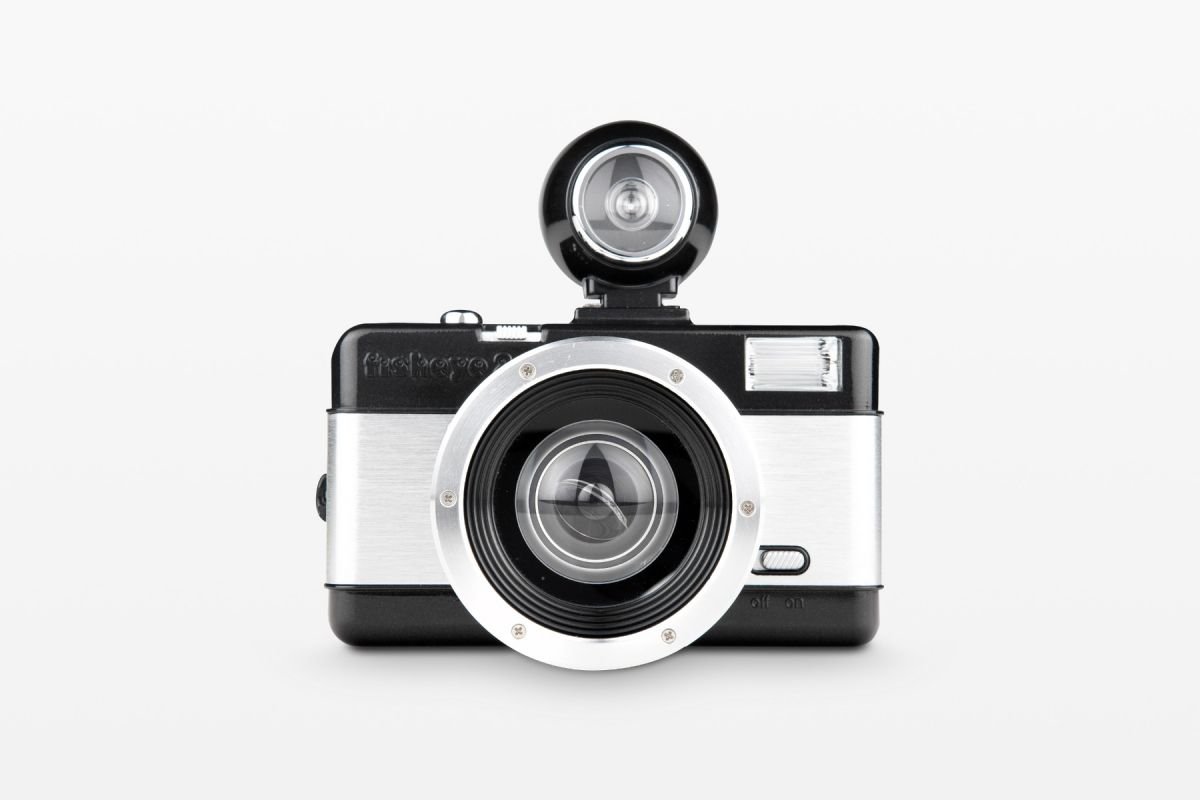
Black and silver is the standard finish, the one from Venice. Lomography rotates color editions through its shop alongside it, including the sea blue La Mer at $69 and the Grape Jam and Papaya Pop editions at $59. The camera inside is identical whichever shell you pick, so the choice is a shelf decision rather than a photographic one.
Fixed lens, fixed focus, fixed aperture
Everything on the Fisheye No. 2 is fixed by design, not by a missing feature list. The lens is a plastic 10 mm fisheye that sees 170 degrees and prints a circle mid-frame. Aperture is f/8, focus is set at the factory, and the shutter fires at 1/100 of a second, with a bulb setting for holding it open.
| Film format | 35 mm |
|---|---|
| Lens | 10 mm fisheye, 170° field of view |
| Aperture | f/8, fixed |
| Shutter | 1/100 (N), Bulb (B) |
| Flash | Built-in flash, hot shoe |
| Multiple exposure | Yes |
| Closest focus | 10 cm |
| Battery | 1 × AA |
No screen, no settings menu, no firmware update, ever.
There’s no ISO dial, because the film sets the sensitivity, and there’s no tripod socket, because nobody mounts this camera on anything: load the film, wind on, and shoot.
Get close, use the flash, layer the frames
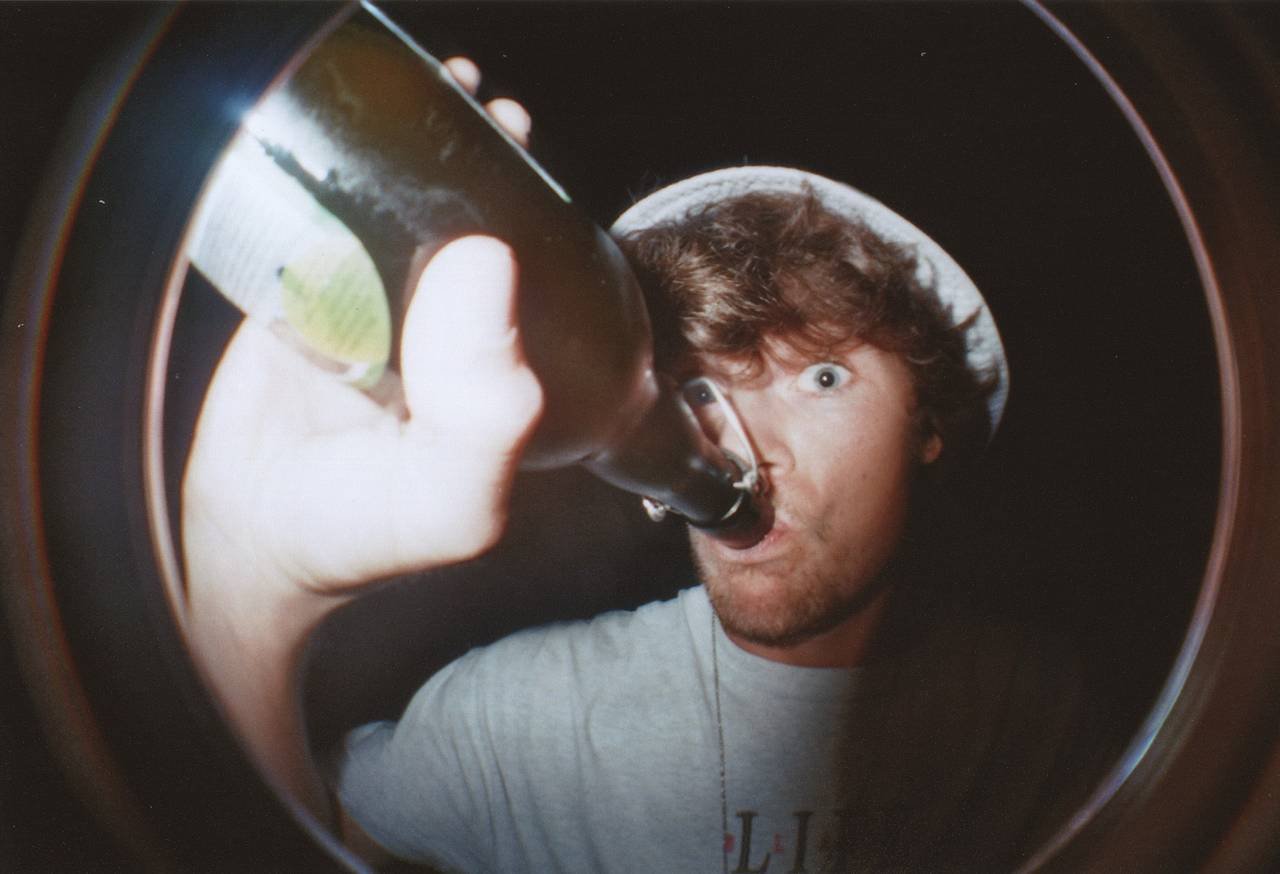
Focus runs down to 10 cm, close enough to fill the circle with a face, a dog’s nose or a birthday cake. Get that close and faces balloon, noses first, which is exactly the portrait style this camera built its name on, and subjects in the middle stay recognizable while the room wraps around them. Keep your fingers out of the bottom of the frame, because at 170 degrees the lens sees them even when you don’t.
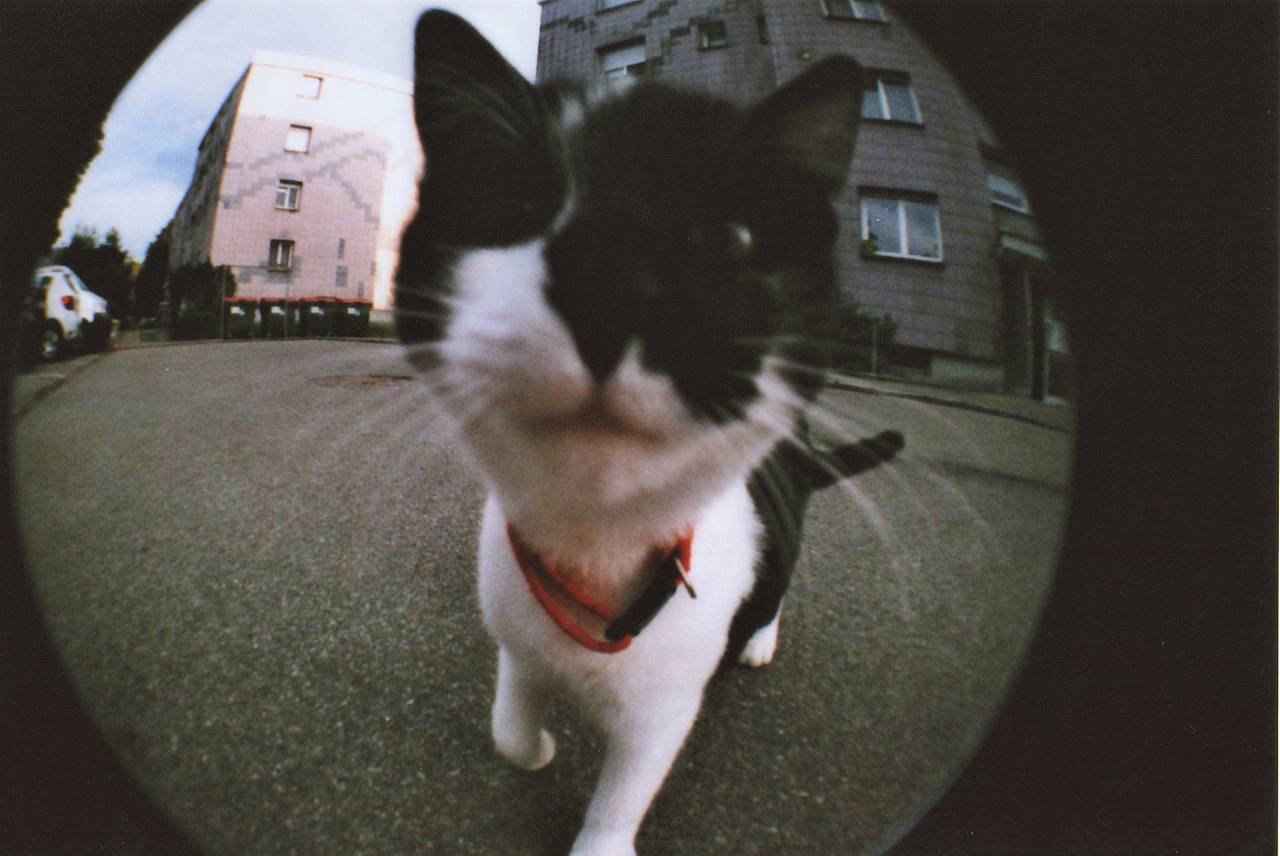
After dark, the built-in flash does the work, hard and direct, and the hot shoe takes a bigger external flash when you want one. A multiple exposure mode lets a second shot land on the same frame, and one AA battery powers the flash, the only part of the camera that needs power at all. Beyond its reach, the corners of the frame fall off to darkness.
The camera is cheap, the habit isn’t
$59 buys the camera once, and every roll after that costs money, the running total climbing faster than most people expect when they do the arithmetic over a year of shooting. A three-pack of Lomography’s own Color Negative 400 film runs $44.90, and a lab charges again to develop and scan each roll you drop off. Thirty-six frames, no screen, no delete key, no second take.
Lomography Color Negative 400 ISO 35 mm Film, 3 Pack
3 rolls, 36 exposures each · ISO 400 color negative · Fine grain with saturated color
Price: $44.90
Where to buy: Buy on Amazon
Load 400-speed film first, because the fixed lens is happiest in daylight and 400 keeps the flash from carrying every indoor frame, while slower film belongs on bright beaches.
Results come back days later, and some frames are always ruined: fogged, blinked, a finger over the corner of the lens. That’s the deal this camera offers, and the hits repay it, because the circle is drawn by glass and chemistry rather than applied by a filter afterward, and you remember the roll differently when every frame cost you something. The envelope comes back from the lab and the roll tells a story you’d forgotten.
Who should buy it, who should skip it
Buy it if you shoot parties, trips and friends and you want the camera to be part of the fun rather than a chore. Buy it as a first film camera for a teenager, where the stakes stay low. If you want the wide view without the circle eating the frame, Lomography’s LomoApparat shoots a 21 mm wide angle on 35 mm film for $89. Skip the Fisheye if your photographs need straight lines, sharp corners and predictable results.
Pitt could have carried any camera made, and in Venice he carried this one.