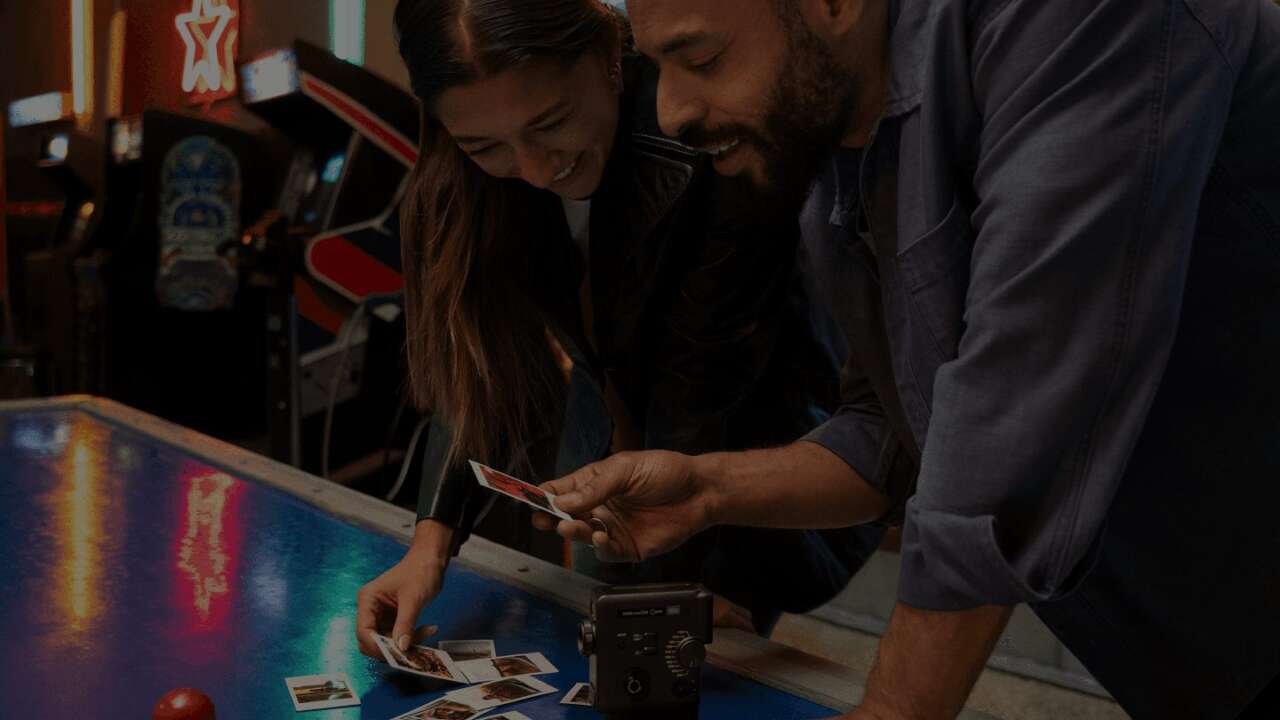
Some cameras record your life and bury it in a phone gallery you’ll never open again, behind screenshots and receipts. This one prints it.
Three jobs in one little camera
The mini Evo Cinema shoots stills, records short video clips, and prints photos straight from your phone over Bluetooth, no cables anywhere. Earlier instax hybrids did stills and phone printing. This one adds movies.
Fujifilm instax mini Evo Cinema
Shoots stills and short clips, prints instax mini photos with QR video playback for the fridge door
Price: $378.98 (list $409.95) (save $30.97, 8% off)
Where to buy: Buy on Amazon
A switch on top flips between Cine and Still, so nobody digs through menus mid-moment. It stands five inches tall.
The Eras Dial turns ten decades into effects
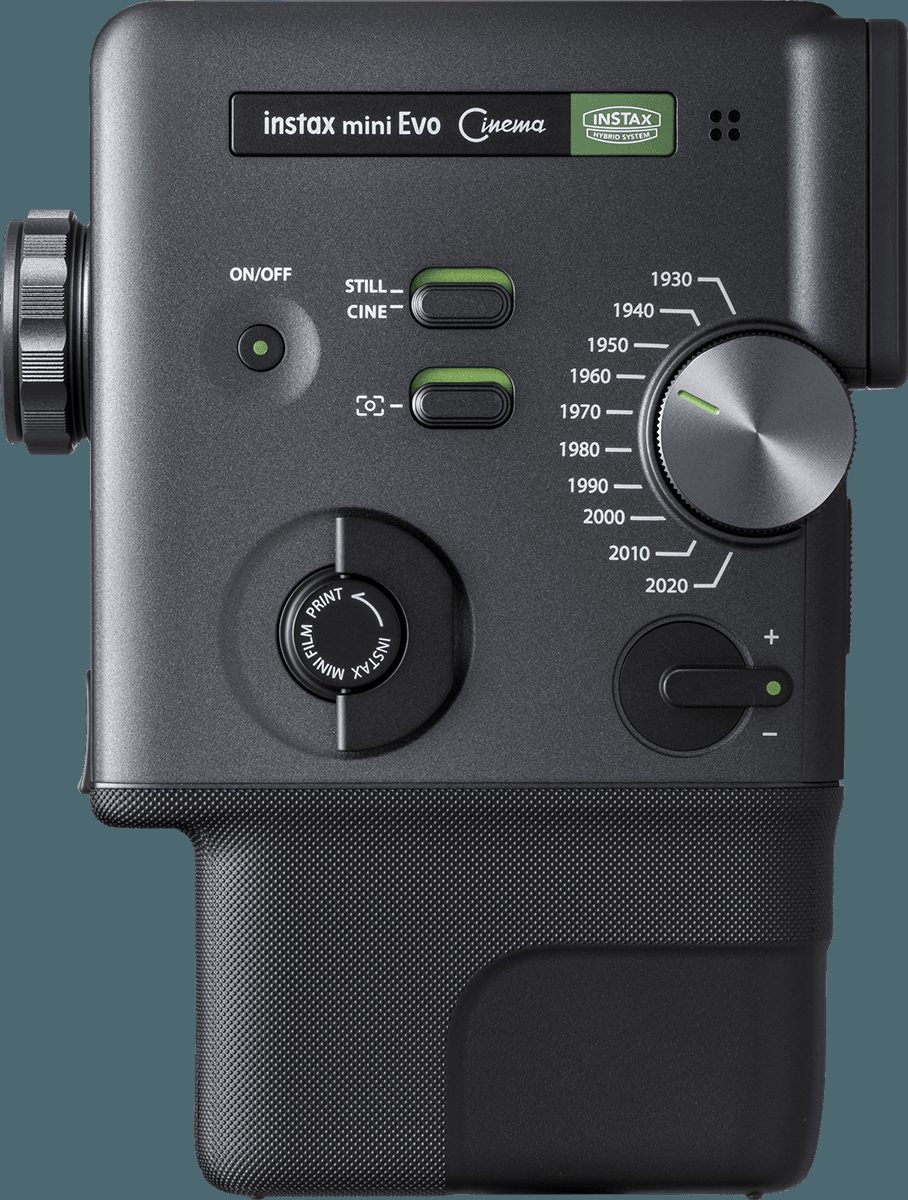
One big dial on the back clicks through ten looks, one for every decade from the 1930s to the 2020s. Each era changes the footage and the recorded sound together. A 1960s clip gets grain and the muffled audio to match. Resistance is real. Sound is half the joke, and the dial treats it that way.
A second dial fine-tunes the chosen era across ten levels of color, contrast and noise, and a Frame Switch adds a border styled for that decade’s screens and players. Ten eras times ten degrees makes a hundred combinations. The eras also frame your stills, not just your clips.
Clips stitch themselves into tiny movies
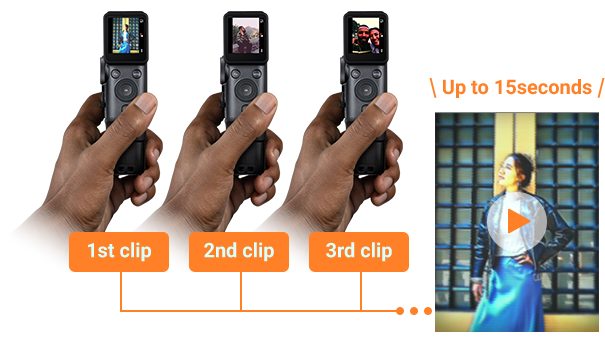
Press the shutter in Cine mode and the camera captures one short clip, then another and another, stitching them automatically into one film of up to 15 seconds. No timeline appears anywhere.
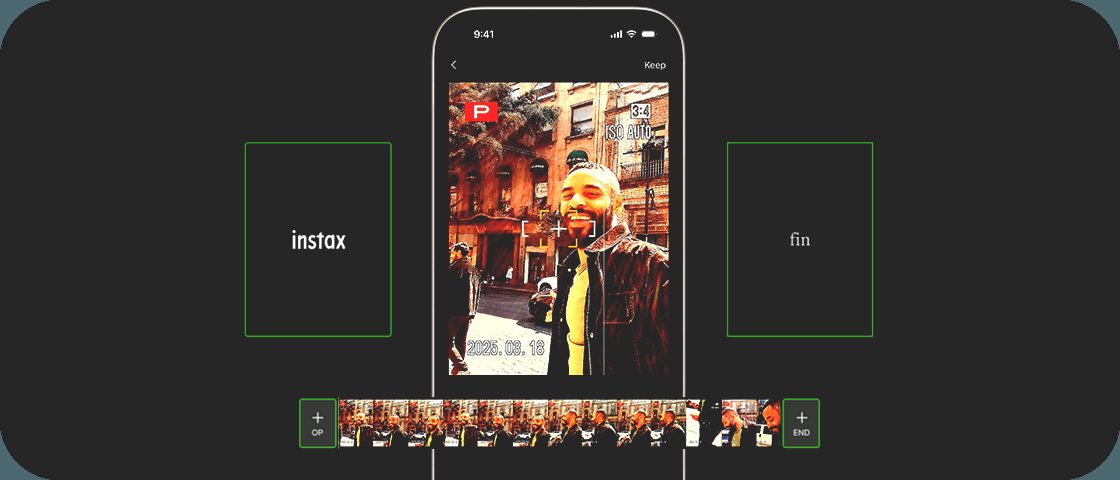
The free instax mini Evo app stretches the edit to 30 seconds with trimming, reordering, opening titles and ending cards.
Specs stay modest on purpose. A small sensor sits behind a 28mm f/2.0 lens, standard video runs 600 x 800, and the 2020 era unlocks a cleaner 1080 x 1440 mode for anyone who wants it. Internal memory holds roughly 50 stills or 10 clips, and a microSD card stretches that to about 800 shots per gigabyte. Clips look soft and a little dreamy. Fifteen seconds is shorter than most toasts. The 2020 look is the sharpest of the ten.
A print with a QR code plays the video on any phone
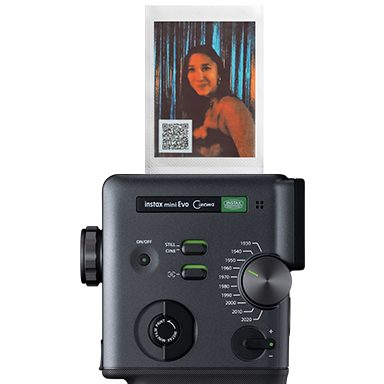
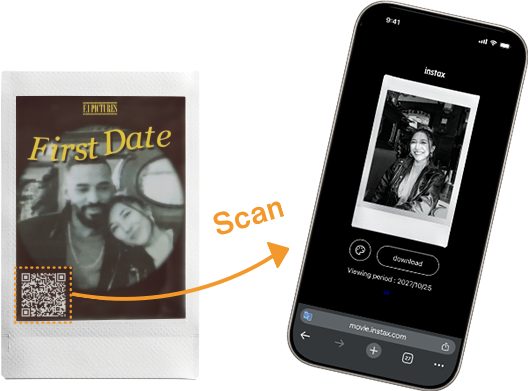
Lift and twist the chunky print lever and the camera spits out a print of your clip, QR code tucked into the corner of the frame. Anyone who scans the code watches the video on their phone. No app on their end. Kids will scan it twice.
Fujifilm stores the video and audio for 24 months, so a fridge-door print keeps playing long after the party. Stills and phone photos print too, in instax-Natural or instax-Rich color modes. Prints come out credit-card sized, ready for wallets and phone cases.
Analog controls do the fun parts

The body wears its controls outside, all dials, levers and switches in matte black with green accents, real metal-feeling dials and zero touchscreen fuss. A chunky grip fills the palm. A zoom lever handles digital zoom. A built-in flash and continuous light cover dim rooms, and the app fires the shutter remotely for group shots.
The 1.54-inch rear screen handles framing. A selfie mirror sits up front. Everything tactile beats a touchscreen here. Fujifilm packs a viewfinder attachment, a grip attachment and a premium hand strap, while USB-C handles charging and a microSD slot handles storage. Film loads the usual way.
The original mini Evo still prints for a lot less
Anyone who skips the video idea entirely saves serious money with the original instax mini Evo, the hybrid that started this line. It shoots stills, prints phone photos, and the charm survives intact.
Fujifilm instax mini Evo (Brown)
Hybrid instant camera that shoots stills and prints photos from your phone, with a selfie mirror for group shots, credit-card-sized instax mini prints and direct prints from the instax mini Evo app
Price: $219.89 (list $234.95) (save $15.06, 6% off)
Where to buy: Buy on Amazon
It gives up Cine mode, the Eras Dial and the QR prints, and the gap buys film. For stills-only shooters, it’s plenty. Budget a film habit either way.
Who should buy the Evo Cinema
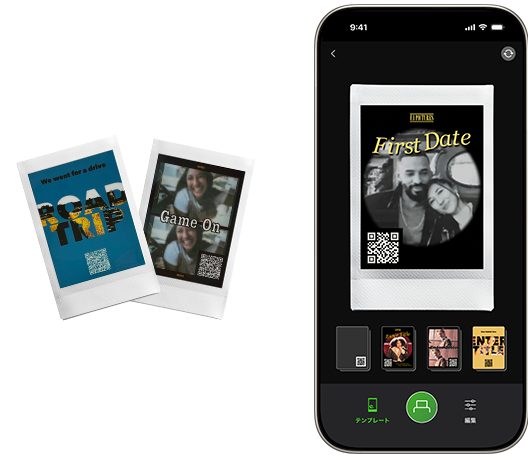
Buy it if your favorite photos live on a fridge, a dorm wall or a wedding guest book, since this camera prints the moment and hides a movie inside it. Skip it if sharpness rules your buying decisions. That trade defines it.
Gift it to the friend who films everything and watches nothing.