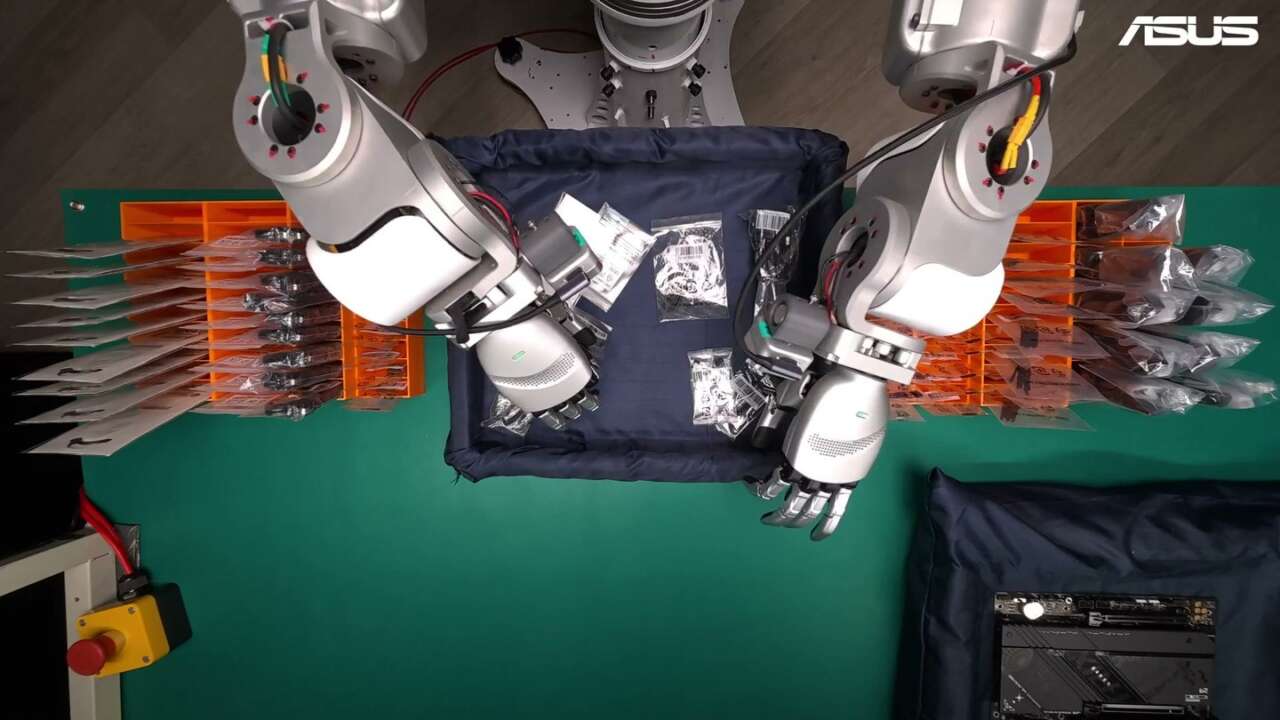
Gallop packs motherboard accessories at an ASUS group factory, and it learned the job the way a person does, by watching experienced workers do it first. ASUS is grading the robot against a human standard at a real station, not against a demo script.
The station sits inside an ASUS group electronics plant, where Gallop’s job is packing the accessories that ship with a motherboard. Each board takes 15 small parts, and many of those parts arrive sealed inside thin, clear plastic bags.
Gallop
ASUS’s first humanoid robot · Two arms on a fixed base
Where to buy: More details at ASUS
Fifteen small parts, twenty seconds a board
The humanoid shape is the bet underneath the program, because factories are built around people, with stations, tools and trays sized for human hands. Traditional automation is excellent for fixed, high-volume work, though it struggles once a production run changes shape and the line has to do something new. A two-armed robot works at the stations that already exist.
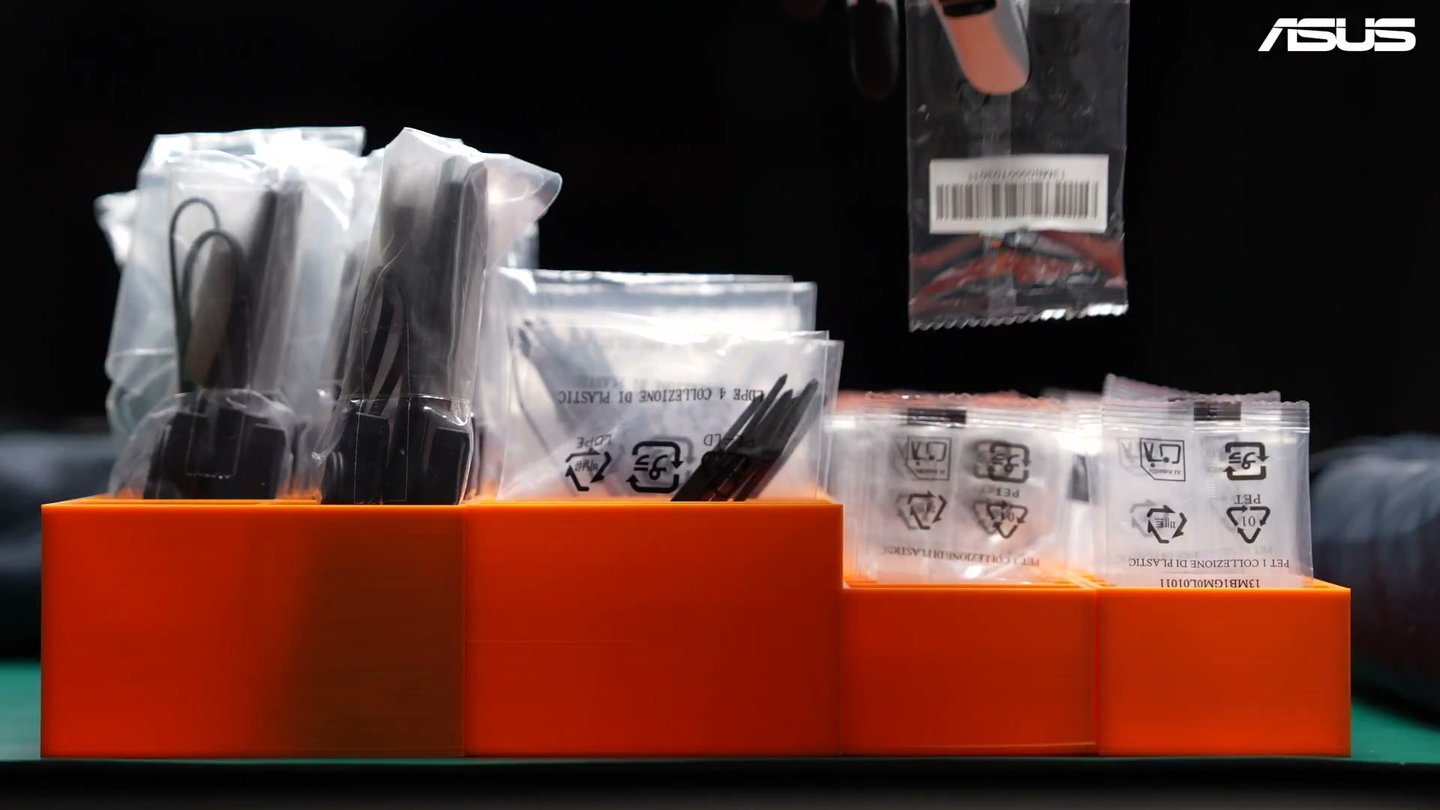
ASUS picked this station because it’s hard, and because it tests the rule the company judges itself by. Small, thin and soft parts are exactly what a simple gripper can’t handle, so the job exposes weak hands fast.
A chaperone defeats the purpose. If a person still has to stand beside the robot through every board, the station has gained nothing at all.
The target is 99.5% success inside 20 seconds a board, and ASUS describes that figure as the same standard it holds a person to at the same station.
ASUS hasn’t published the rate Gallop hits today, so the target is public and the score isn’t.
It starts by watching people work
Teaching Gallop works the way training a new colleague works, and ASUS lays the process out in five stages. The robot starts from leading open AI models that already understand how hands and objects behave, because ASUS doesn’t build its own giant model.
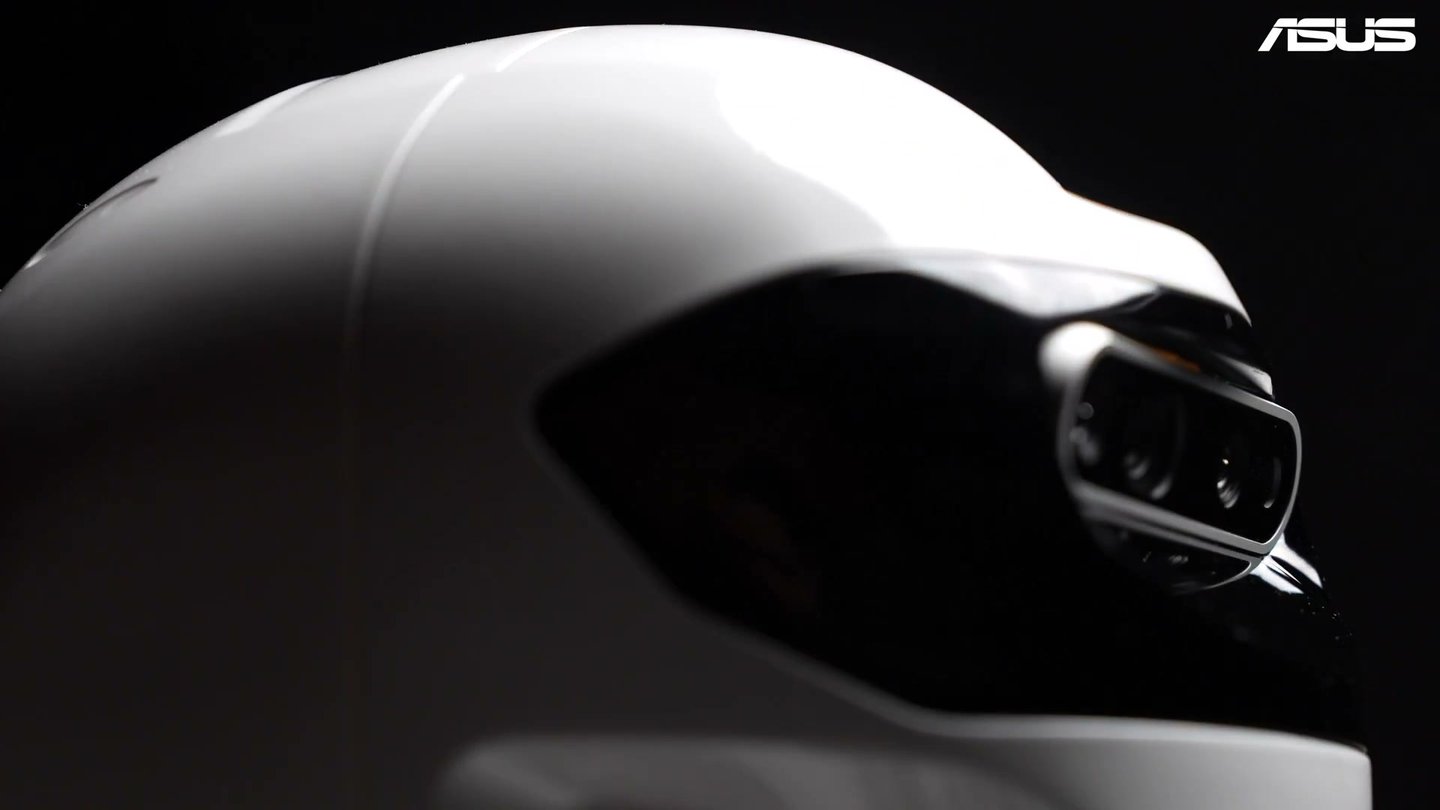
Experienced workers then wear a small head camera, with their consent, and Gallop studies the recordings to learn how the job is really done. Simulation spins each recorded example into variations, so a part sitting slightly wrong on the line doesn’t arrive as a surprise. An operator in a VR headset and gloves then guides the robot through the task itself, working on the same parts and through the same cameras as the real station.
Once Gallop works the station, what it records on the line feeds back into its own training, and the loop keeps running. ASUS says its edge isn’t more data. It’s the right data: a real station, real parts and real quality rules, with its own workers as the teachers.
ASUS also owns the test lab, because its group runs the EMS factories where Gallop trains, on real parts and under real quality rules, and most robotics companies have to rent that access.
Four layers, and a hand ASUS builds itself
Inside the robot, four layers split the work between planning, checking, skills and direct control. A planner looks at the scene, understands the job in front of it and breaks that job into individual steps. A supervisor, a second AI, checks every step the planner sets and re-plans the sequence when something goes wrong.
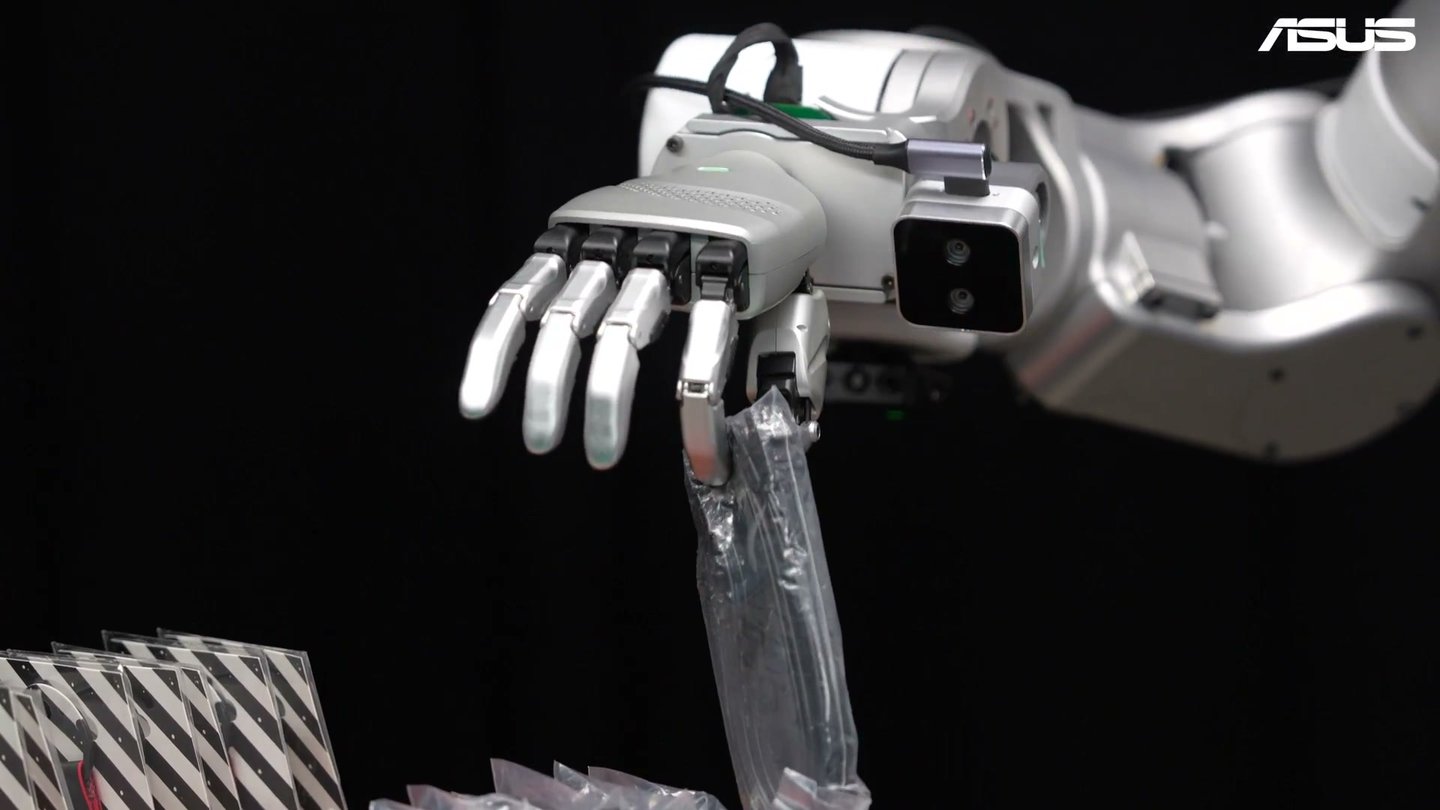
The skills layer handles reaching, grasping and placing, while the control layer moves the arms and hands precisely and stops instantly if anything is wrong. Fixed interfaces join the layers, so ASUS can swap a better AI model into the stack without rebuilding the robot around it.
All four layers run on a single NVIDIA Jetson AGX Thor computer inside the robot, using standard robotics software.
ASUS designs the body and the hand in-house, the hand carries a sense of touch, and motors and other standard components come from established partners. ASUS calls the hand the hardest part of any humanoid, and it’s the one component the company refuses to buy in. The hand stays in-house.
Wheels next year, customers in 2028
Today Gallop works from a fixed base with two arms, and its strength is pick-and-place work at a single packing station inside the plant. Over the coming year ASUS will bring its own dexterous hand into the robot and put the same machine on wheels. ASUS shows the robot to customers at Computex 2027, with pilot deployments planned across that year.
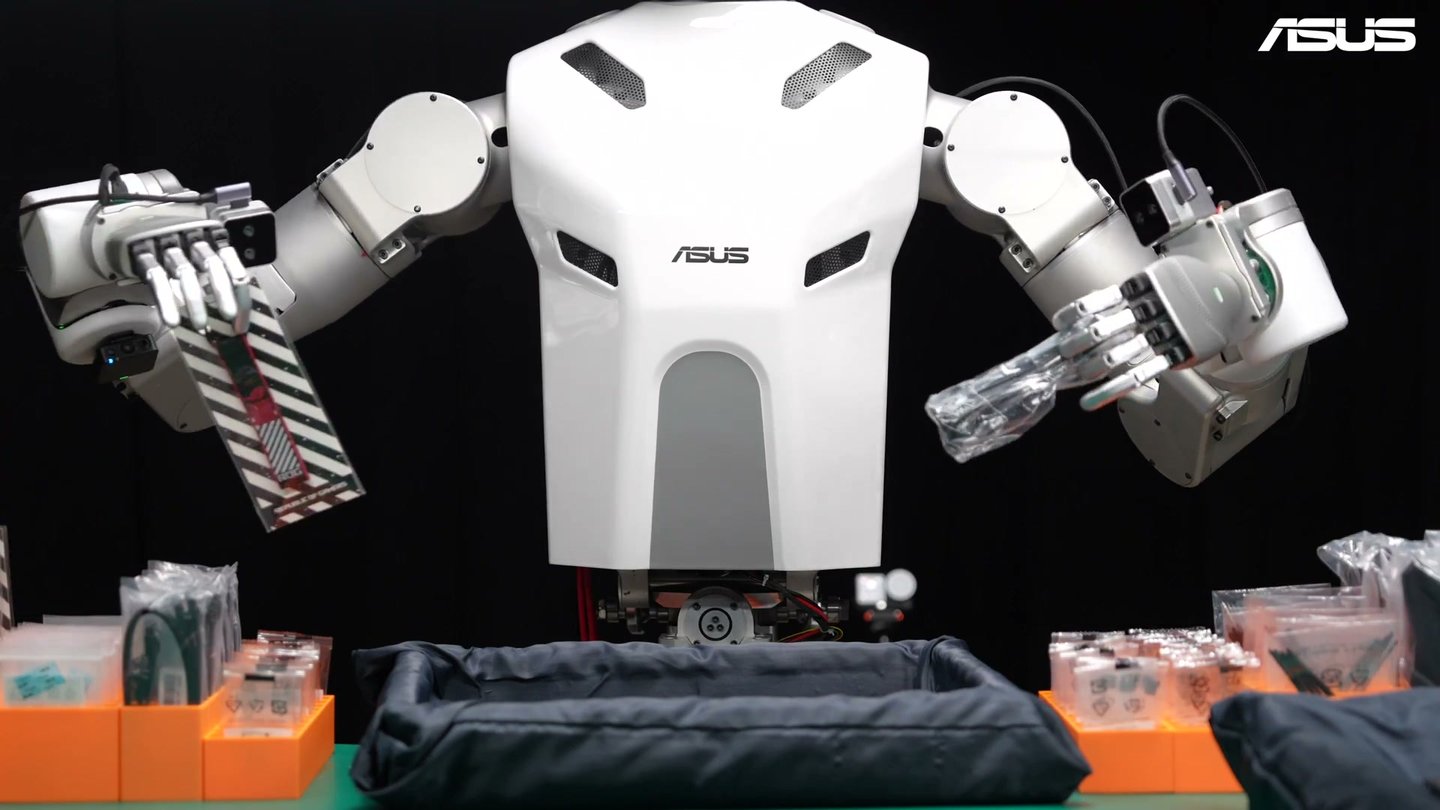
The program started in early 2026, so Gallop reached a working station in under a year, though a sellable product sits much further out on the calendar. No customer can buy one before 2028. Market availability is targeted for the second half of 2028, and electronics manufacturing gets the robot ahead of the other industries ASUS names. Hospitals and service sites come later, once the pick-and-place skills learned at one station carry over to similar work elsewhere.
Gallop
ASUS’s first humanoid robot · Two arms on a fixed base · Learns the packing station from ASUS’s own workers · Market availability targeted for the second half of 2028
Where to buy: More details at ASUS
ASUS says Gallop isn’t built to replace the people who teach it, and the stations it targets are the repetitive, physically demanding ones that are hardest to staff. The teachers move into setting up, supervising and improving the robots, and the company says their experience becomes more valuable in those roles, not less.