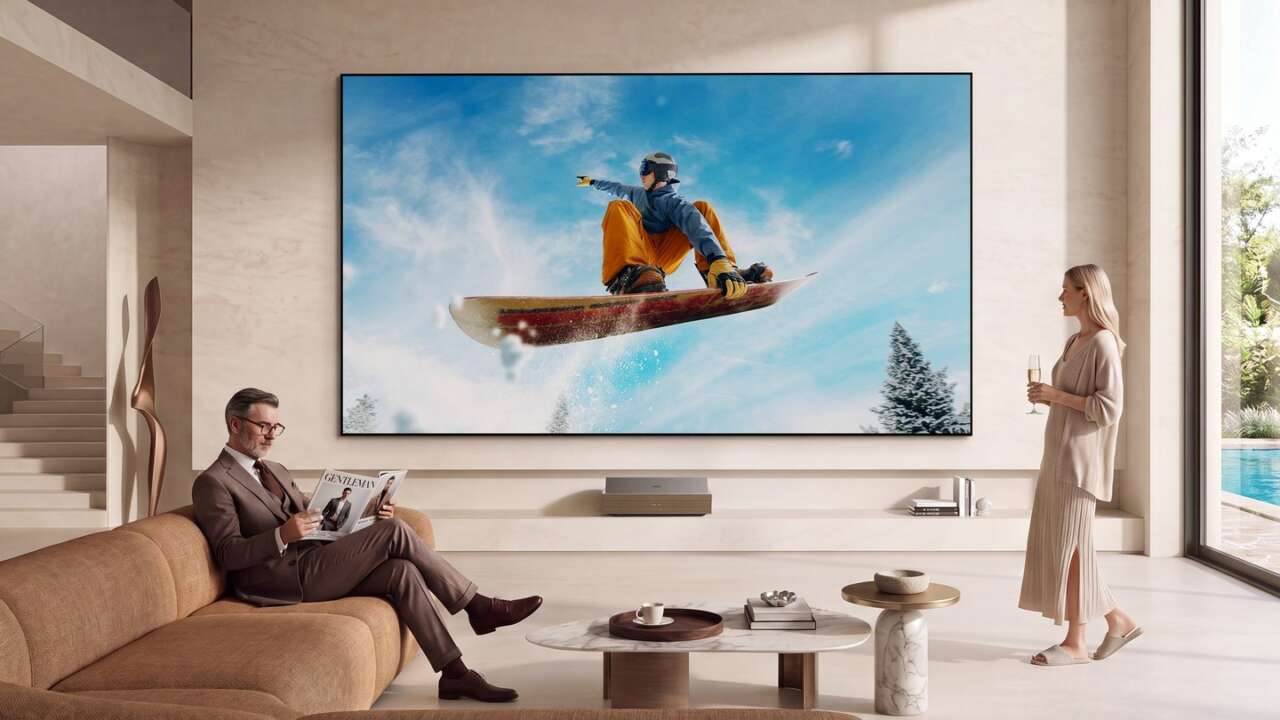
Ultra short throw only earns its keep when the picture survives a bright room, and XGIMI built the AURA 3 Series around that single test. The Max and the Pro share one platform and split on brightness and contrast alone.
The campaign opened on October 20 and closes on December 4, with launch pricing that cuts the Max by more than half against its retail figure. XGIMI sells the pair through Kickstarter first, with Google TV, an 80W Harman Kardon system and the streaming apps already inside the box. Twenty days remain.
XGIMI AURA 3 Pro, Launch Special
4K RGB triple laser UST laser TV · 4,100 ISO lumens · 7,000:1 native contrast · Estimated delivery December 2026
Price: $2,199 at Kickstarter (save $1,800, 45% off, retail $3,999)
Where to buy: Back on Kickstarter
What the brightness and iris do in a bright room
The Max is rated at 5,700 ISO lumens and the Pro at 4,100, both from an RGB triple laser source that covers 110% of the BT.2020 color space on either model.
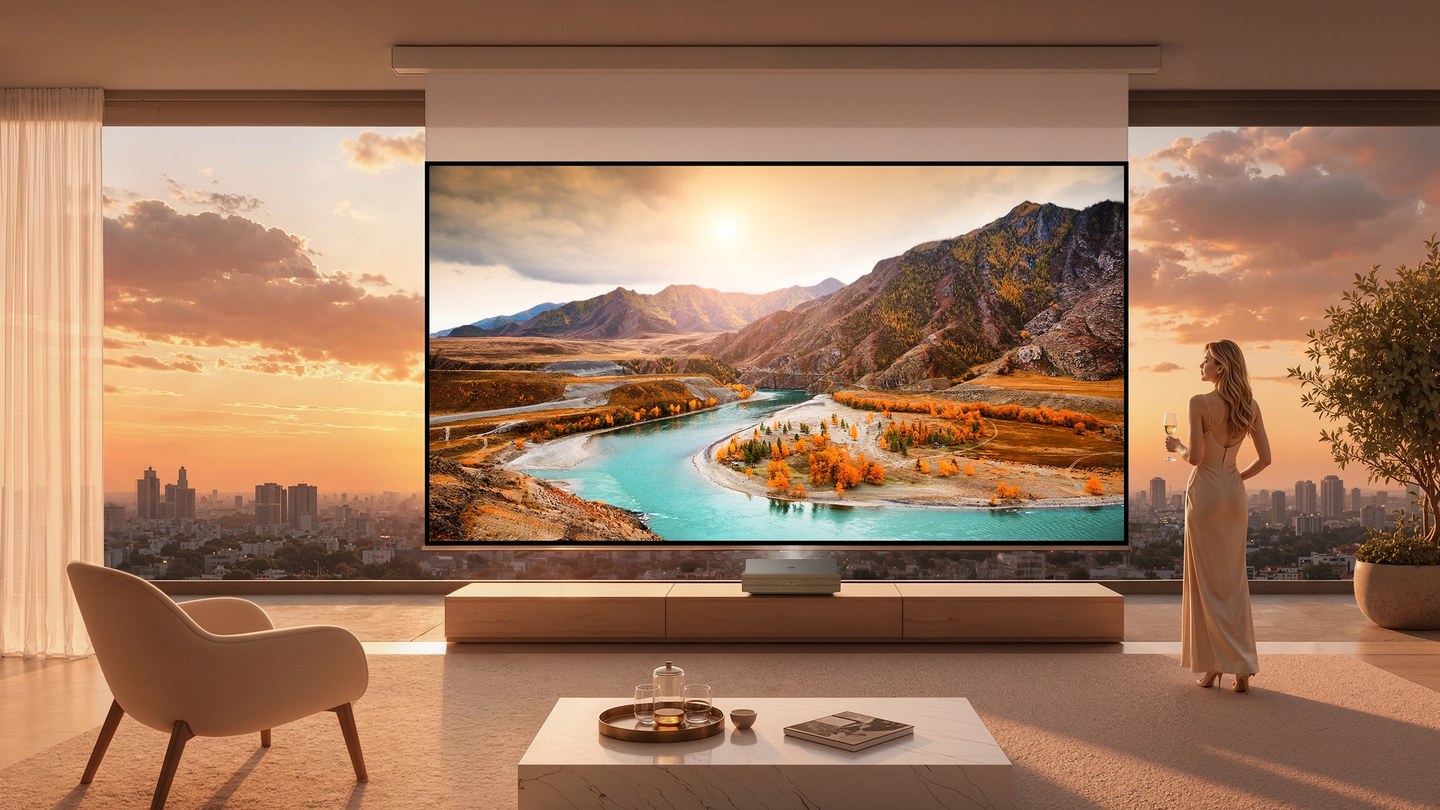
A dual iris sits in the light path with five manual steps from f/2.0 to f/7.0, plus a Dynamic mode that follows scene brightness frame by frame.
Contrast is set optically, not digitally.
At the tightest step the Max reaches 8,000:1 native contrast, measured full on and full off with no forced laser dimming, and the Pro reaches 7,000:1 on the same platform.
DBLE, the dynamic black system, then works scene by scene to hold shadow detail in dark frames while the iris sets the ceiling, and the two systems run together in the same light path.

X-VISION, the onboard AI processor, rebuilds detail and retunes HDR scene by scene, and the format list runs through IMAX Enhanced, Dolby Vision, HDR10+ and Filmmaker Mode for streaming and disc alike. Its dynamic tone mapping adjusts HDR highlights frame by frame.
Motion, film cadence and games
Native 4K runs at 120Hz through dual TI controllers, and Global MEMC interpolation keeps fast pans and sports coverage from smearing across a screen this size.

Films keep their native 24fps cadence at a clean 5:5 rhythm instead of the uneven pulldown a 60Hz panel imposes, and Anti-RBE processing suppresses the rainbow flashes single-chip DLP can throw. The fine print sits on the inputs: 4K 120Hz arrives only through HDMI 2 or HDMI 3 with the port’s EDID set to 2.1, and USB media playback cannot carry it at all.
Consoles belong on HDMI 2 or 3.
In Game mode the campaign lists input lag at 1.9ms for 4K 120Hz and 1ms for 1080p at 240Hz, with VRR, ALLM and AMD FreeSync covering tear-free play. Two pairs of DLP-Link 3D glasses ride in the box, covering Blu-ray Frame Packing and the streaming 3D formats.
Sound, streaming and the eight-inch setup
An 80W Harman Kardon system with Dolby Atmos and DTS Virtual:X handles sound, so the console stays clear of a soundbar that would block the light path.
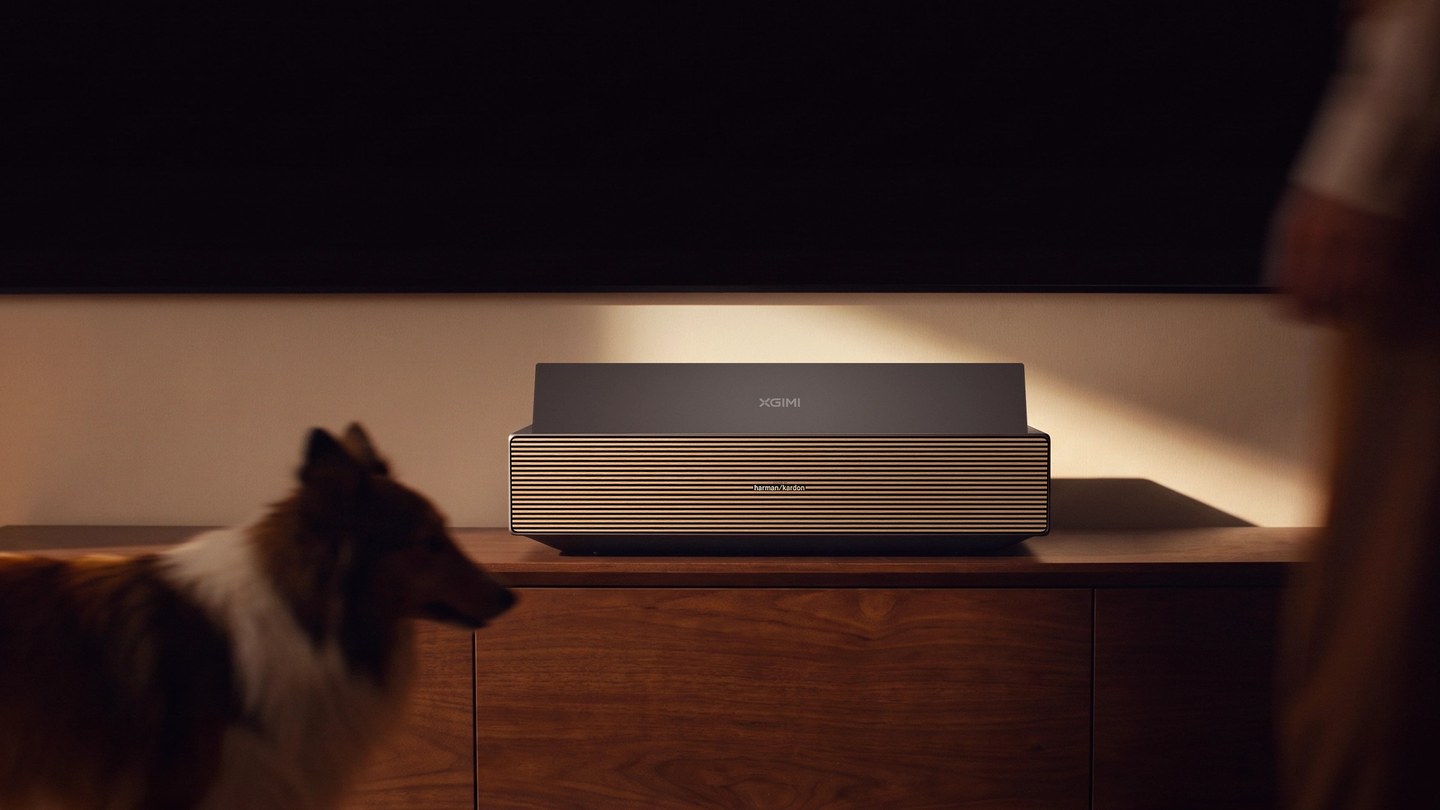
Google TV is built in with Netflix, YouTube and Prime Video on board, plus Google Home and voice control from the remote. The 0.163:1 throw ratio puts a 120-inch image on the wall with the body about eight inches out, and the supported range runs from 80 to 200 inches. The slatted front panel hides the speaker array behind a furniture finish, so the unit sits in the room like a sideboard instead of a projector. Image size runs from 80 to 200 inches on that throw.
Cooling stays under 28 dB at a meter in XGIMI’s lab conditions, and auto focus, keystone and wall adaptation square the picture without a test pattern interrupting it. Setup is a tape measure, not a project.

Max or Pro, and what backing one costs
The Pro is the value play at $2,199 against a $3,999 retail figure, and the Max asks $2,399 for the extra brightness and contrast headroom.
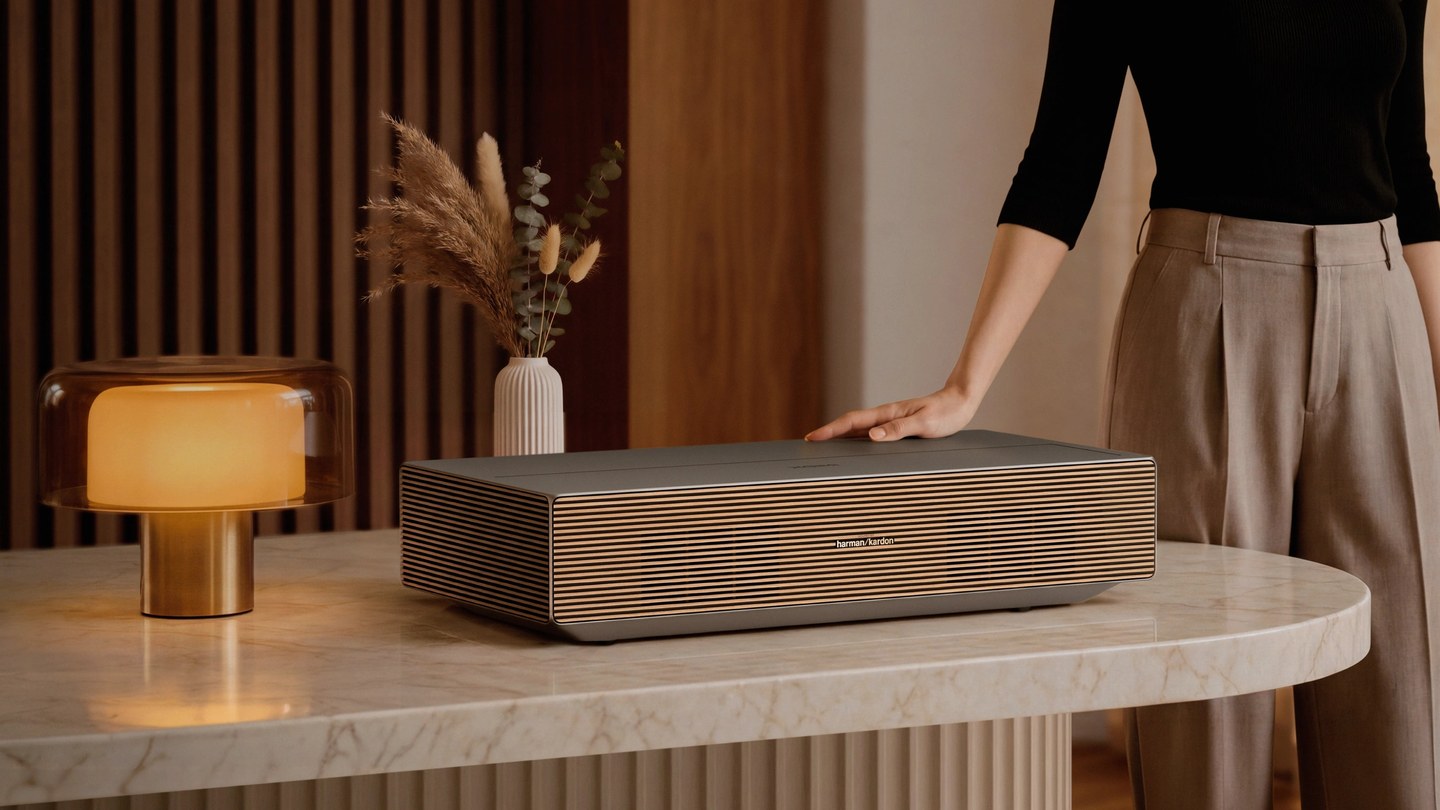
Screens ride along as bundles: the Max with a 120-inch Fresnel ALR screen runs $3,699, and the Ascend floor-rising screen takes the same projector to $4,999 at 120 inches. The fixed Fresnel panels run 100, 120, 140 and 150 inches across the bundle ladder.
The Ascend brings its own 170W Harman Kardon sound system and syncs power with the projector, rising when the picture starts and folding away when it ends. It spans 75 to 120 inches.
Every reward lists December 2026 for delivery, with address confirmation opening mid December and units shipping in backer number order, earliest pledges first. Screens ship separately from the projectors, with the fixed ALR panels following in January and the Ascend screens in February. Taxes and VAT settle later through a post-campaign survey rather than at pledge, so the tier price stops short of the final total for most backers.
Order early if you back one.
XGIMI AURA 3 Max, Launch Special
4K RGB triple laser UST laser TV · 5,700 ISO lumens · 8,000:1 native contrast · Estimated delivery December 2026
Price: $2,399 at Kickstarter (save $2,600, 52% off, retail $4,999)
Where to buy: Back on Kickstarter
Buy the Pro if your room has blinds and the screen stays under 120 inches, because the platform, the iris and the 120Hz pipeline are identical. Step up to the Max if daylight hits the wall or the image grows past 120 inches, since brightness is the one gap no setting closes. Skip both if the projector has to land before Christmas week, because December delivery in backer order leaves no slack for a holiday deadline.