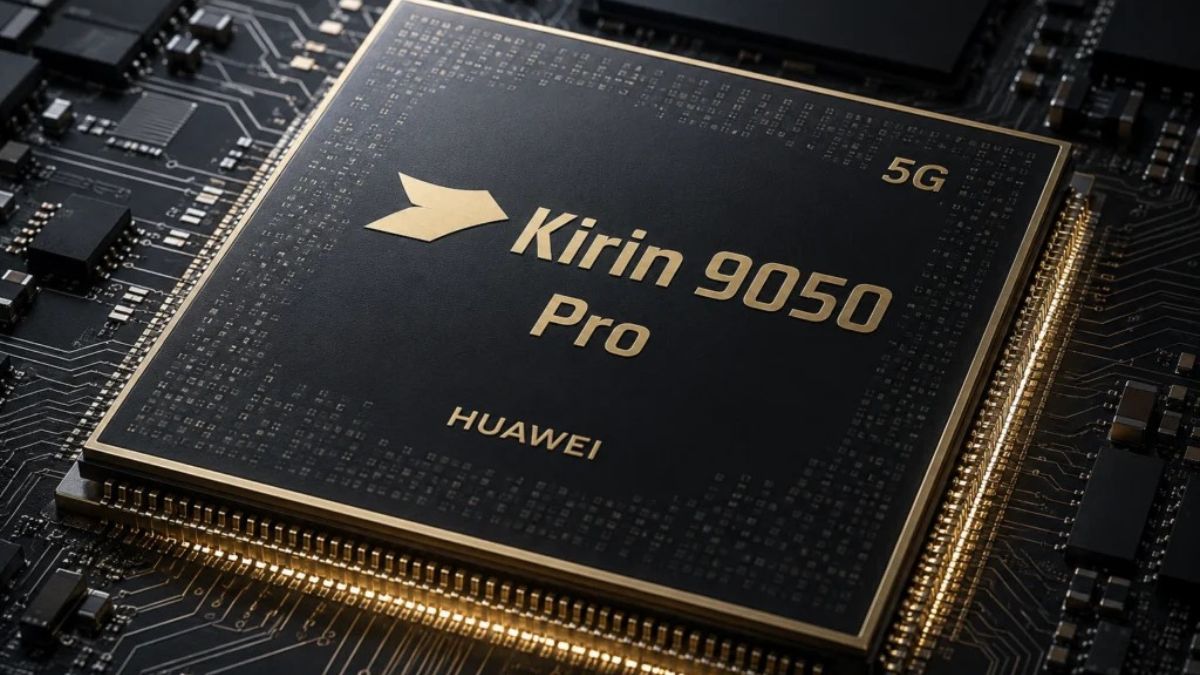
Thirty billion parameters is a number that belongs in a data center. Huawei says its Kirin 9050 series runs a model that size entirely on the phone, no cloud round trip, and the company has now laid out the machinery that makes the arithmetic work.
The short answer is that the phone cheats twice. The model never wakes all 30 billion parameters at once, and the parameters it stores are packed far tighter than the headline number suggests.
Only two billion parameters wake up for each answer
Huawei’s model is called Pangu 30B-A2B, and it’s built as a mixture of experts. A conventional model answers everything with everything it knows. An MoE model splits the job across specialized sub-networks, called experts, and a router sends each request to the few experts that fit it.
Per answer, about two billion parameters are active. The other 28 billion stay dark.
The experts specialize as training progresses. Some end up handling language patterns, others visual input, others structured data, and the router learns the sorting along with everything else the model learns.
That split is what makes the numbers work. A dense 30B model would burn 30 billion parameters of compute on every token it produces. This one carries a 30B model’s knowledge and pays roughly a 2B model’s compute bill per pass, which is how the work fits inside a phone’s power and heat budget at all. Every word the model writes is a fresh routing decision, made in milliseconds.
Smaller numbers, stored tighter
Parameters are stored numbers, and storage is the second wall. Thirty billion parameters held at standard 16-bit precision take about 60 GB, several times the memory in any phone. Huawei stores the weights at low bit widths instead, a technique called quantization, where each number is rounded into a shorter representation, a quarter of the size or less.
The cost of rounding is precision. Fine detail gets thrown away, and a badly quantized model gets dumber. Low-bit methods have improved to the point where the loss stays small on the work phones actually run, which is why some version of this now ships in nearly every flagship. The craft is in rounding unevenly, protecting the weights that carry the most signal and squeezing the rest harder.
Done aggressively, quantization shrinks a model’s footprint by multiples, and the stored model stays small enough to live on the device.
Huawei’s figures for the result: the 30B model takes under 2.5 GB of extra memory, loads 25 percent faster than the previous generation’s arrangement, and the setup cuts memory use by 75 percent against that same baseline.
The Da Vinci NPU keeps memory and compute in step
The silicon running this is a new generation of Huawei’s Da Vinci NPU. Its headline job in the 9050 is coordination. Huawei describes multi-level memory-compute collaboration, which in plain terms means the weights are staged close to the cores that consume them, in tiers, so the processor spends its cycles computing instead of waiting on data to arrive.
Huawei rates the new NPU’s AI performance 140 percent above the previous generation. The Da Vinci name runs through the company’s whole AI stack, from Ascend data-center accelerators down to Kirin phone chips, and this is its newest phone iteration.
The stack doesn’t wake the big model for small work. It also runs a 7B dense model and a 1B vision model, so routine jobs stay on routine hardware.
The chip around the NPU is new too. The 9050 series is Huawei’s first on LogicFolding, a construction that stacks logic layers vertically so signals travel shorter paths inside the silicon.
What the big model does all day
The features Huawei shows on top are practical, not theatrical. AI screen reading looks at what’s on the display and acts on it. Eye-tracked page turning follows your gaze down a page and flips when you reach the bottom. The photo library sorts and organizes itself on the device, with no upload and no server involved.
Huawei’s Xiaoyi assistant draws on the same local model, which is why the responses don’t need a connection to work. The 30B model is multimodal, so the system that reads a page can also look at a photo and describe what’s in it.
Local processing carries its own plain advantages: the answer comes back without a network round trip, and your photos stay on your phone while the library organizes them.
Every flagship chip now races on on-device AI, and the ceiling has been model size. Small models fit the phone. The capable ones live in a data center and bill by the request. Huawei’s route around the ceiling is to change the model’s shape, not to wait for a bigger chip.
That approach fits a company designing under tight manufacturing limits. It’s the same in-house silicon push behind the Kirin X90 desktop chip in the Qingyun HM650 we covered this week.
Huawei still hasn’t published the 9050’s process node or a TOPS rating, and every performance figure above is the company’s own.
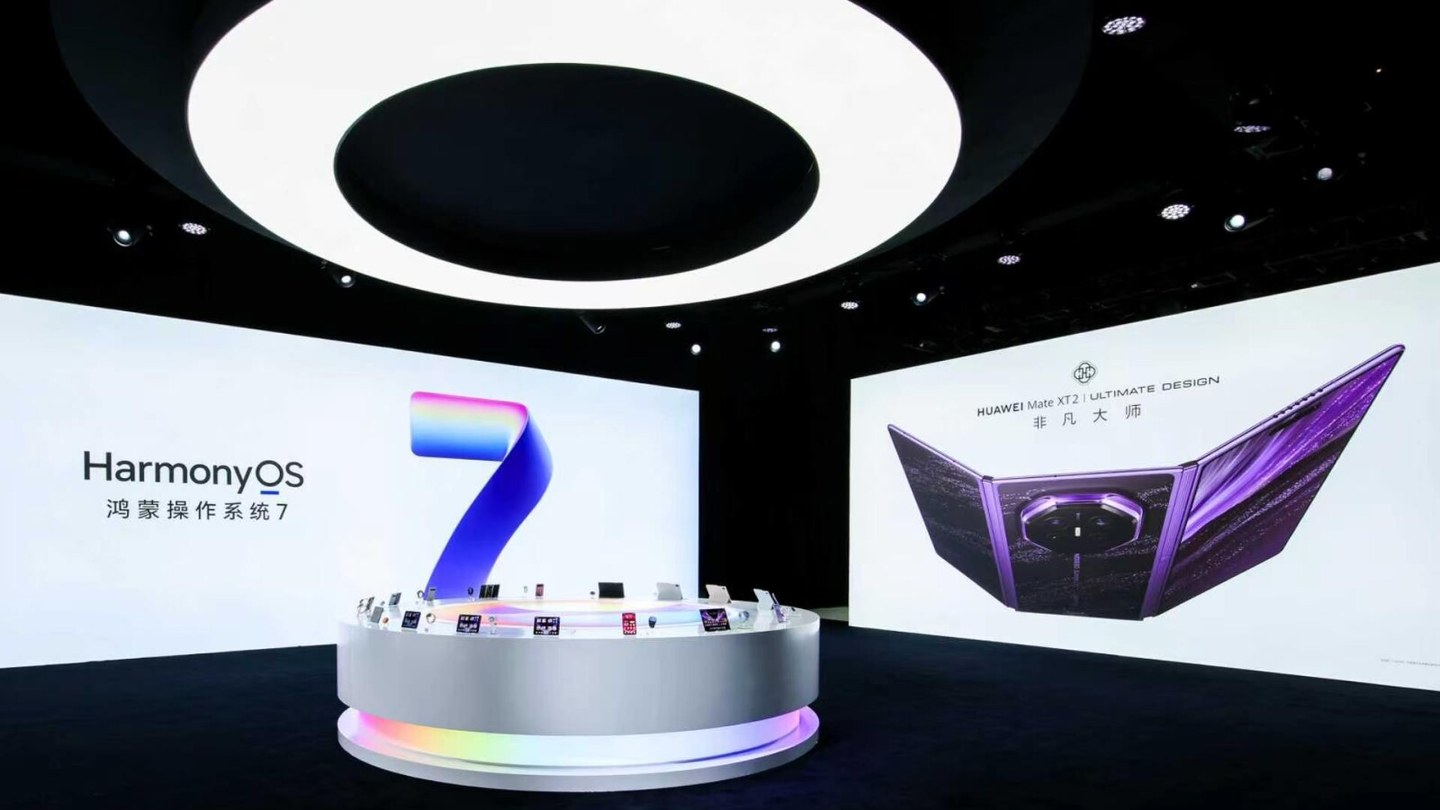
The silicon ships in phones you can name. The Mate 90 Pro Max carries the 9050 Pro, and the Mate XT 2 tri-fold was the first device out with it.
The bar is set anyway: 30 billion parameters, on the phone, no cloud.