Most new cameras promise more shots, faster. Fotorgear built the opposite. Campix is a small standalone digital camera from the Hong Kong brand, live on Kickstarter now, and every part of it slows the shot down: you compose looking into a waist-level finder, you turn an advance dial before the next frame, and at 36 frames the roll simply ends, whether the light is good or not.
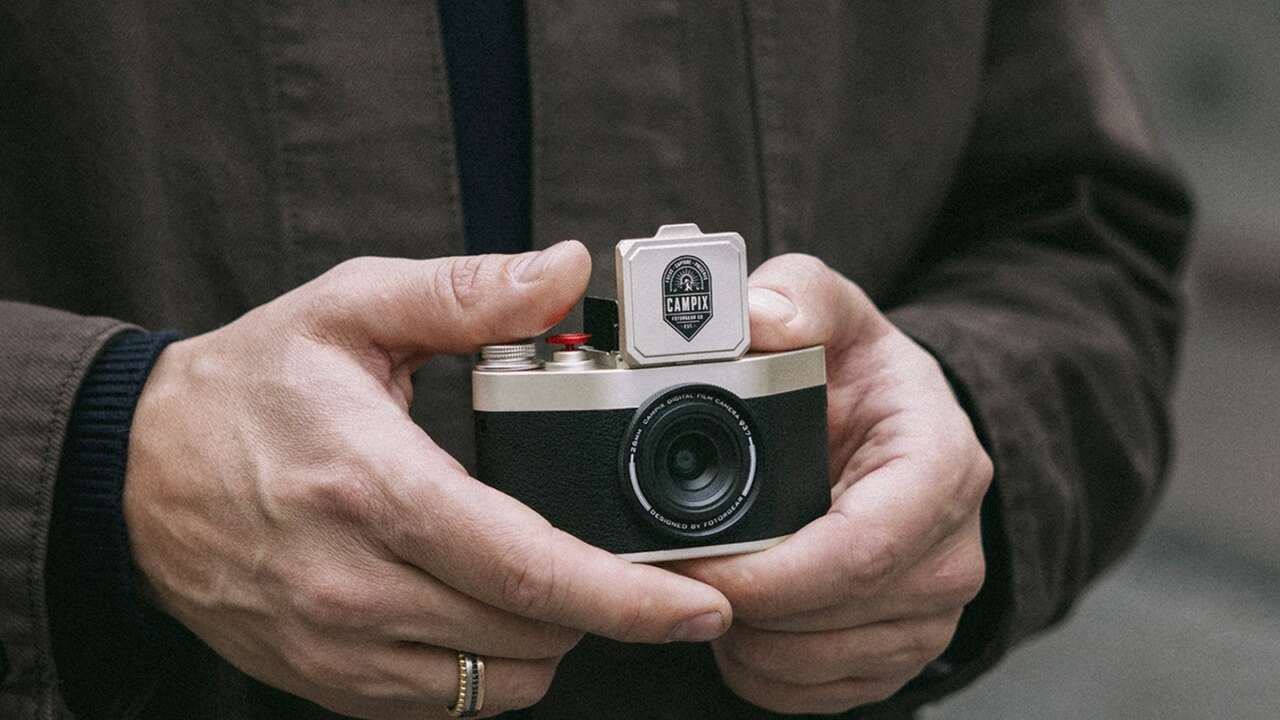
The body explains the idea first. Its curved shoulders and flip-up finder come from the Exakta Varex, Ihagee’s East German SLR line of the 1950s. It is meant to look its age.
Fotorgear Campix
13MP Sony IMX258 sensor · RAW + JPG capture · 129-gram body
Price: $109.00 $209.00 (save $100.00, 48% off)
Where to buy: Back it on Kickstarter
Look down, wind on
Fotorgear calls the stance Look Down. Flip the top panel up and the picture forms on a small screen inside the finder hood, both eyes open, the camera hanging at waist height instead of pressed to a face. The world arrives from a lower angle. Subjects notice the camera less down there, and street shooting loosens up when nobody is staring into a lens held at eye level.
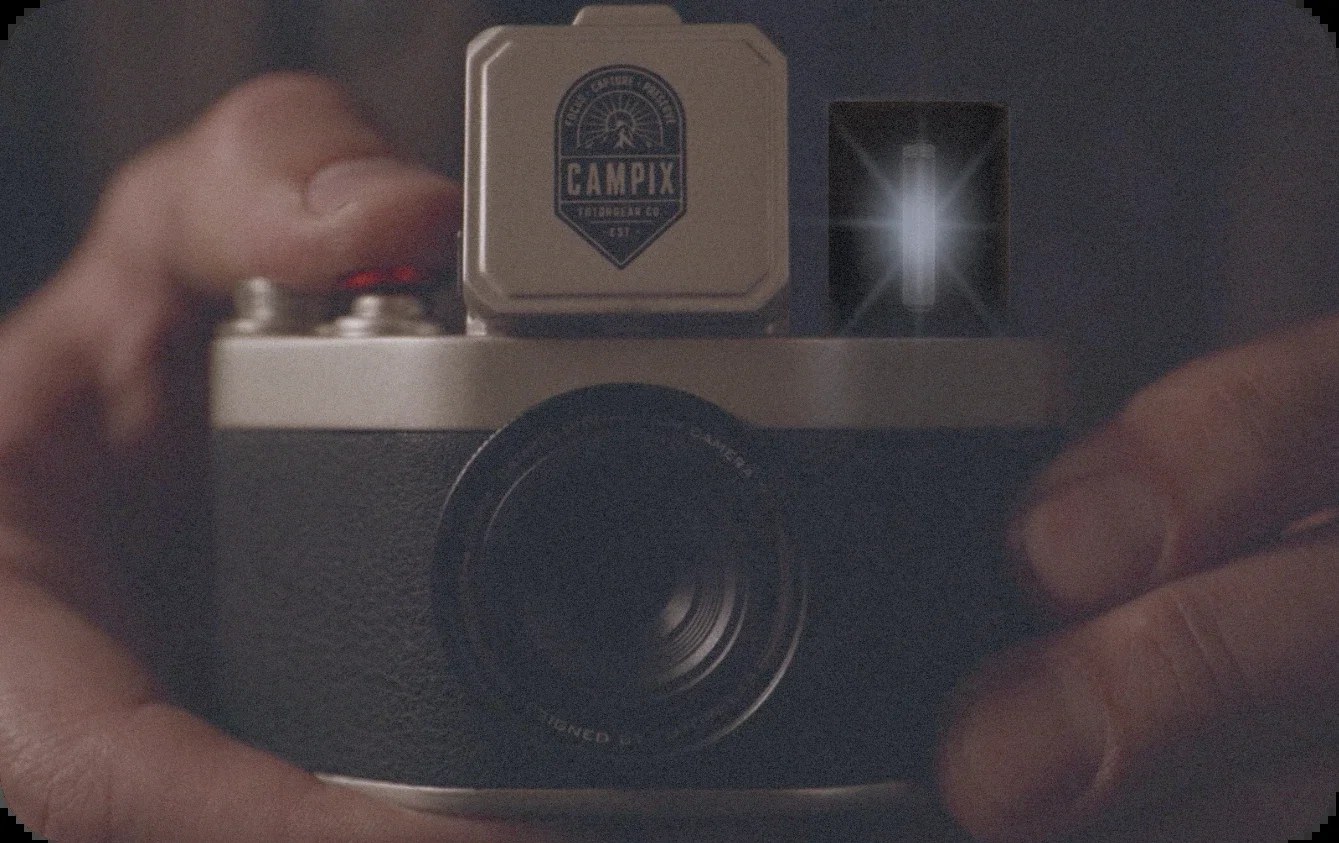
Then comes the part no phone asks for.
A physical wind-on control turns under your thumb after every shot. No turn, no picture. Each digital roll holds 36 frames, then closes in the app. Files reach your phone over Wi-Fi or a USB-C cable. Thirty-six chances concentrates the mind.
The lens swaps, the base stays put
Campix shoots through a fixed 26mm-equivalent lens at f/2.2, focused from 0.9 meters to infinity. Five T-mount lenses thread onto the barrel: an 8mm fisheye, a 16mm wide-angle, a 60mm portrait, a 75mm macro, and a 1.55x anamorphic that stretches the frame for video work. Fotorgear’s store is built on phone lens kits, and the same screw-on logic runs here, on a body of its own. The 26mm is the camera; everything else is an add-on.
Film looks you can change your mind about
Six slots hold film looks wearing film-stock names: EK80, 5219, PT400, PL600. Load the set before the roll. The names are the menu.

Campix writes a RAW file beside every JPG, so a frame developed as EK80 on Tuesday can come back Friday under a different look, and custom looks load in next to the factory set. That second chance splits Campix from the screen-free crowd, where one recipe gets baked into a JPG and the rest thrown away. Anyone who printed the same negative three ways knows the pleasure. The ritual earns that second chance.
Phone-grade hardware, on purpose
A Sony IMX258 does the imaging: 13 megapixels at 4,128 by 3,096, fixed focus, automatic ISO and metering. The flash earns its housing, though. It is a real xenon tube with TTL metering, the kind of light phone LEDs imitate and never match. The shell measures 97 by 35 by 58 millimeters. The 1,000mAh battery is rated around 400 shots with the flash working, 600 without. Small numbers, plainly stated. Nothing about it asks for a menu dive.
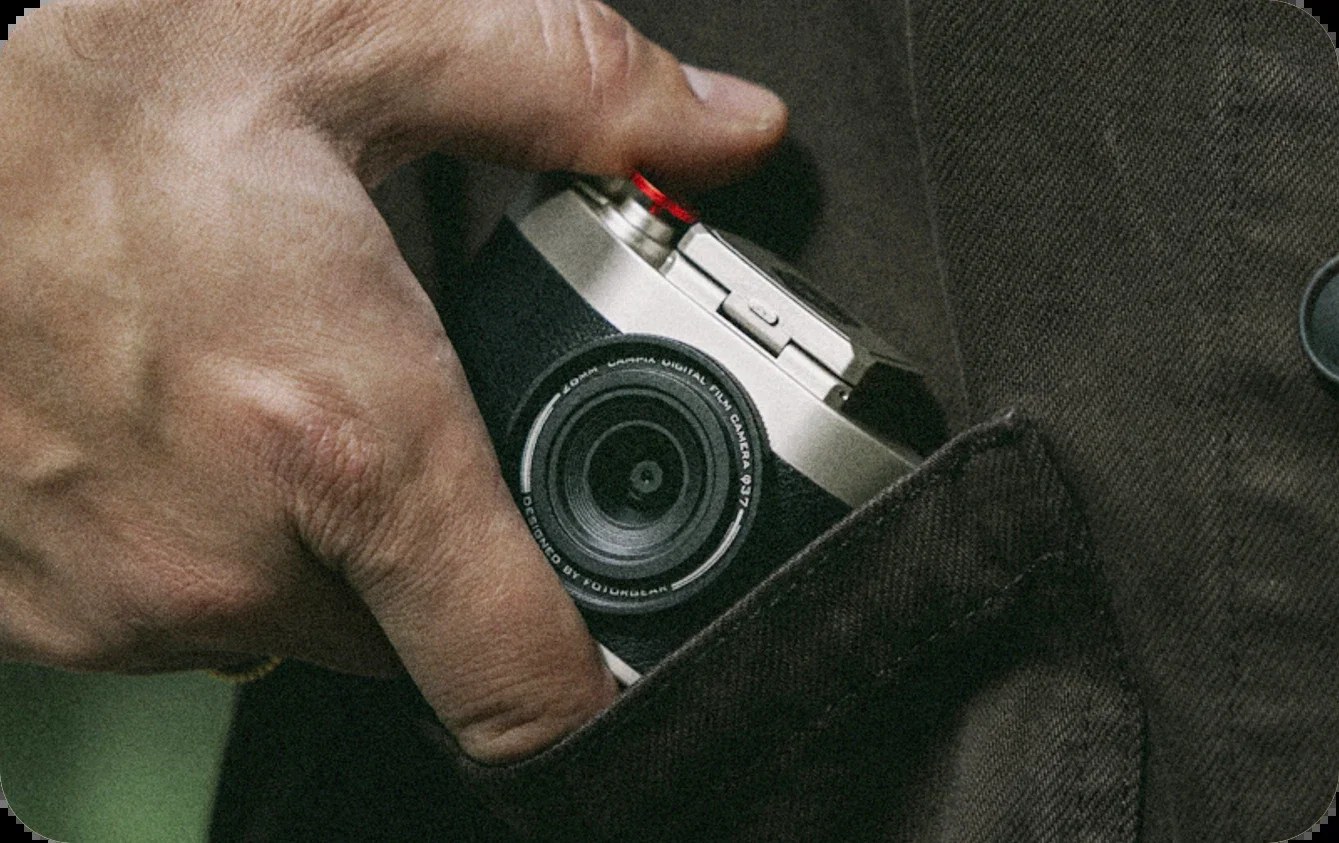
None of it outruns the phone in your other pocket. Thirteen megapixels will not survive a heavy crop, fixed focus hands close work to the 75mm macro, and the sensor is an older, small design. Resolution was never the pitch.
Three ways in, then the wait
Backers choose among three packages, the Basic pairing camera and strap. Stepping to the Set at $199 adds a carry case and the 60mm portrait lens; the Full at $359 adds three more lenses and filters. This morning: 1,059 backers, about $269,000 pledged, a goal near $5,000. It closes Saturday, December 12, deposit holders first in line.
More than fifty times the goal, inside two weeks, says the niche is not hypothetical. Deliberate-shooting cameras keep finding the audience phones created and then abandoned: people who want fewer, better-considered frames and a camera that feels like an object instead of an app.
Shipping starts in January 2027, and that gap sets the real terms. A pledge buys a slot in a first production run from a brand known for phone accessories, and if that run slips, the calendar slips with it, the usual crowdfunding risk riding along in the price. There is no retail shelf at the end of it and no returns desk. Backers are paying for the object and the wait in one price.
The slow-camera idea exists without the wait. Camp Snap’s screen-free compact sits on Amazon at $73.30. It shoots 8-megapixel JPGs through a fixed lens: no finder screen, no RAW, no lens swaps. It gives up the developing and most of the ritual, and its price says so. It is the cheaper, simpler read on the impulse. No waiting list, no pledge.
CampSnap Screen-Free Digital Camera
Room for 2,000 photos · Rechargeable battery · Built-in flash
Price: $73.30
Where to buy: Buy on Amazon
Back Campix if the ritual is the attraction: the look-down frame, the wind-on pause, the roll that runs out. Buy the Camp Snap for the simple version, this weekend. Skip both if your shooting leans on autofocus, resolution, and seeing the shot before you take it, because neither camera pretends to compete on that ground. Campix just happens to know exactly what it is, and that clarity is rare in a crowdfunding pitch. Everything else about it is negotiable.