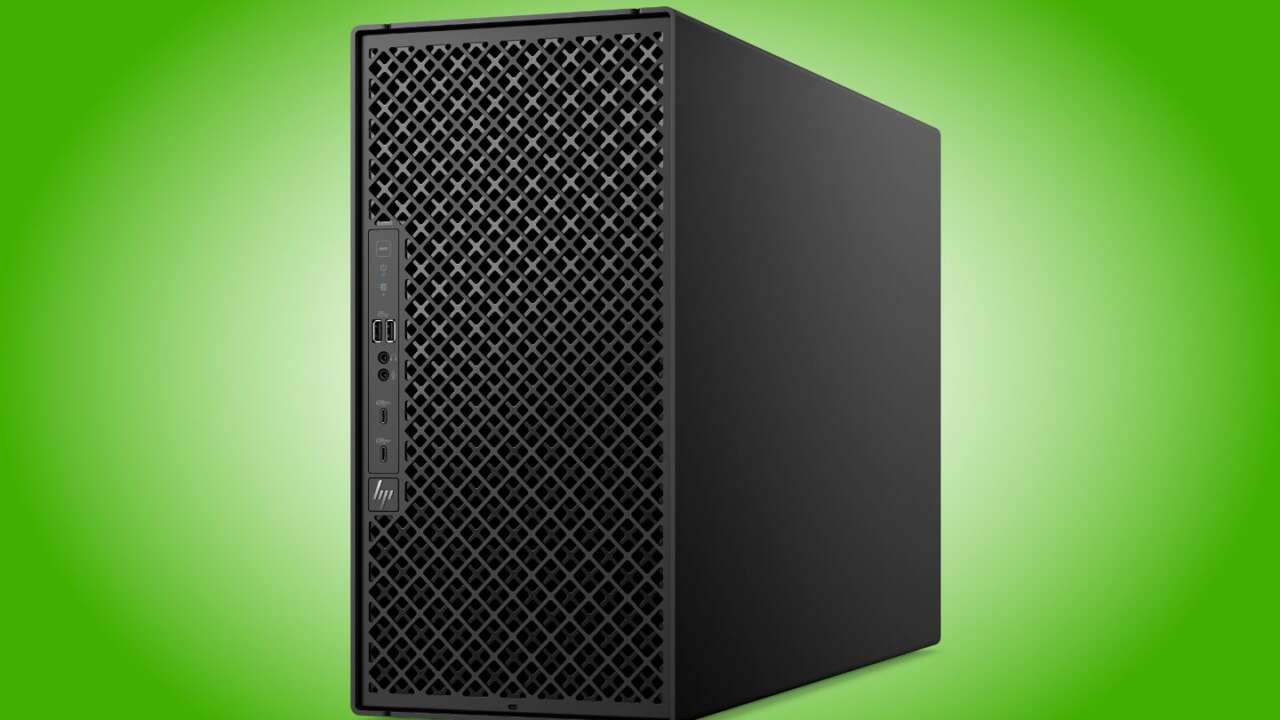
HP’s ZGX Fury G1n AI Station is on sale in the US, and the price is public now: $132,000 for the base machine.
A data center chip sits inside the tower, NVIDIA’s GB300 Grace Blackwell Ultra, next to more memory than most servers carried two years ago.
HP showed the machine at the start of September and kept the number to itself. The store page settles it. Every configuration runs the same chip and the same memory total, and the options list is short: a discrete graphics card, or none.
HP ZGX Fury G1n AI Station
NVIDIA GB300 Grace Blackwell Ultra · 496 GB LPDDR5X · 252 GB HBM3e
Price: $132,000
Where to buy: Buy at HP
One chip, two memory pools
The GB300 puts a Grace processor and a Blackwell Ultra GPU on one package. The processor side runs 72 Arm Neoverse V2 cores. The GPU side carries 252 GB of HBM3e memory, moving data at 7.1 TB/s.
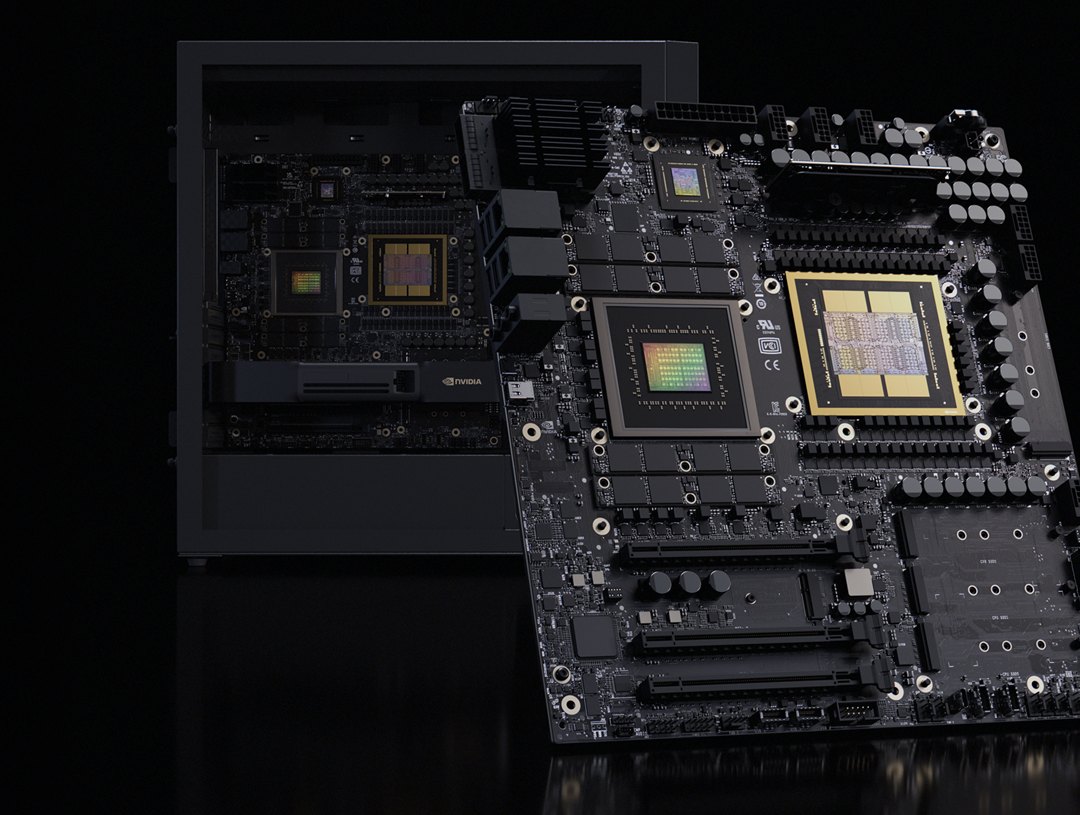
System memory is 496 GB of LPDDR5X-6400. HP counts the two pools together and calls the sum 748 GB of unified memory, which is how the machine should be read: a model too large for the HBM pool spills into system memory instead of falling off the box, and both pools stay coherent behind one address space.
HP rates the machine at up to 20 petaFLOPS of FP4 AI performance. It also says the tower can host models of up to a trillion parameters locally, with fine-tuning work landing in the 100-billion-parameter class. Those are the maker’s figures, and they describe a box built to run big models in the room where the data lives.
HP splits its AI station family by the size of the job. The lighter machines handle development at a single desk. The GB300 towers are the heavy end: training, large-scale inference, and simulation, on hardware the IT group keeps inside its own walls.
| Chip | NVIDIA GB300 Grace Blackwell Ultra Superchip |
| Processor | 72 Arm Neoverse V2 cores |
| GPU memory | 252 GB HBM3e at 7.1 TB/s |
| System memory | 496 GB LPDDR5X-6400 |
| Unified memory | 748 GB |
| Graphics options | RTX Pro 2000 Blackwell (16 GB GDDR7) or RTX Pro 4000 Blackwell (24 GB GDDR7) |
| Expansion | 3 PCIe Gen5 slots, 2 QSFP112 ports at 400 Gbps |
| Storage | M.2, expandable to 32 TB |
| Operating system | Ubuntu 24.04 LTS |
| Starting price | $132,000 |
One machine serves the whole team
HP doesn’t pitch this as one person’s desktop. The Fury is a shared system: several developers can fine-tune in parallel on the same box, and it serves inference to multiple users at once.
The software arrives loaded. Ubuntu 24.04 LTS is the operating system, with the NVIDIA AI stack, HP’s Z Toolkit and HP Z Runtime on top, so a team pulls a model from Hugging Face and serves it without building the plumbing first, even on day one.
HP’s whole argument sits in its datasheet headline: on-prem AI, no usage-based token costs.
A liquid-cooled tower that fits a rack
The case is a liquid-cooled tower, and it’s rackable, so the same machine sits beside a desk or slides into a rack next to its peers.
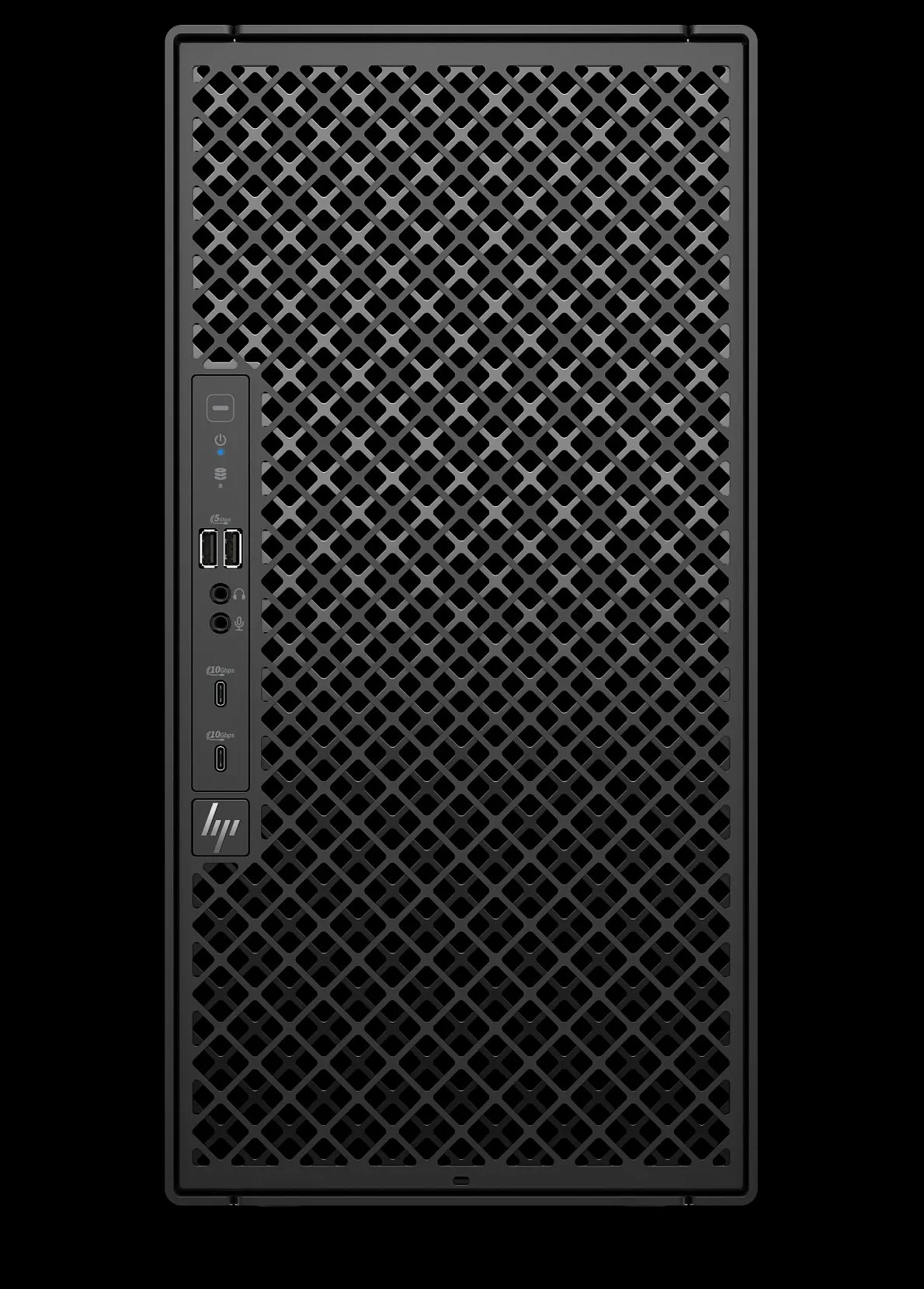
The front is one large diamond-mesh grille, with the power button, two USB-A ports, two USB-C ports, and the audio jacks running down a narrow strip at the left edge.
There’s no Windows version of this story. HP’s spec sheet states plainly that the platform doesn’t support Windows, and Ubuntu is the only operating system on the order page. Order a Fury and the Linux stack is part of the deal, not an option picked from a dropdown. That suits the buyers HP is chasing here: the Fury’s market runs Linux shops already, and the spec sheet just makes the arrangement official.
Two ports exist to link a second machine
Expansion runs to three PCIe Gen5 slots and two QSFP112 ports at 400 Gbps each. The QSFP112 pair is the interesting part. Link two of these towers together and the pair pools its compute for the jobs that outgrow a single box. HP put the port pair on the board for exactly that pairing.
Storage is M.2 throughout, with room to expand to 32 TB in total. HP’s own configuration pages disagree with each other about which drives ship inside each SKU, so the figure that holds across all of them is the platform one: up to 32 TB, with the layout set by the configuration ordered.
The graphics options are the small numbers
The base machine renders through the GB300 itself and skips a discrete card. An RTX Pro 2000 Blackwell with 16 GB of GDDR7 adds $1,000, to $133,000. The RTX Pro 4000 Blackwell carries 24 GB and adds $4,000, landing at $136,000.
Count the card’s memory together with the HBM pool and the Pro 4000 configuration reaches 276 GB of video memory in total. That figure belongs to the top configuration only. The base machine and the Pro 2000 build sit at 252 GB and below that mark.
Run the arithmetic and the size of the pool explains itself. At a byte per parameter, 276 GB holds a model of more than 200 billion parameters in a single piece, with room left for the working data around it. Models that size normally get split across a rack. Here they sit in one tower, under one power supply.
HP ZGX Fury G1n AI Station with RTX Pro 4000 Blackwell
24 GB GDDR7 discrete GPU · up to 276 GB total VRAM · 748 GB unified memory
Price: $136,000 (with RTX Pro 2000 Blackwell: $133,000)
Where to buy: Buy at HP
The buyer here is a department, not a person.
Picture a team whose models can’t leave the building, or whose cloud bill has grown teeth. For that shop, $132,000 is more than a house deposit in most zip codes, and against a year of rented accelerators the arithmetic can still favor the tower that runs models all day, every day, on its own power bill.
HP’s store shows estimated arrival between December 2 and 7. HP also sells a smaller sibling called the ZGX Nano for the desk-scale end of this work, and B&H carries the base ZGX Fury listing as well, so US buyers have two storefronts for the same machine on day one. The September tease is over: the machine is real, it’s expensive, and it’s aimed at rooms full of people rather than desks. Deliveries start landing in early December.