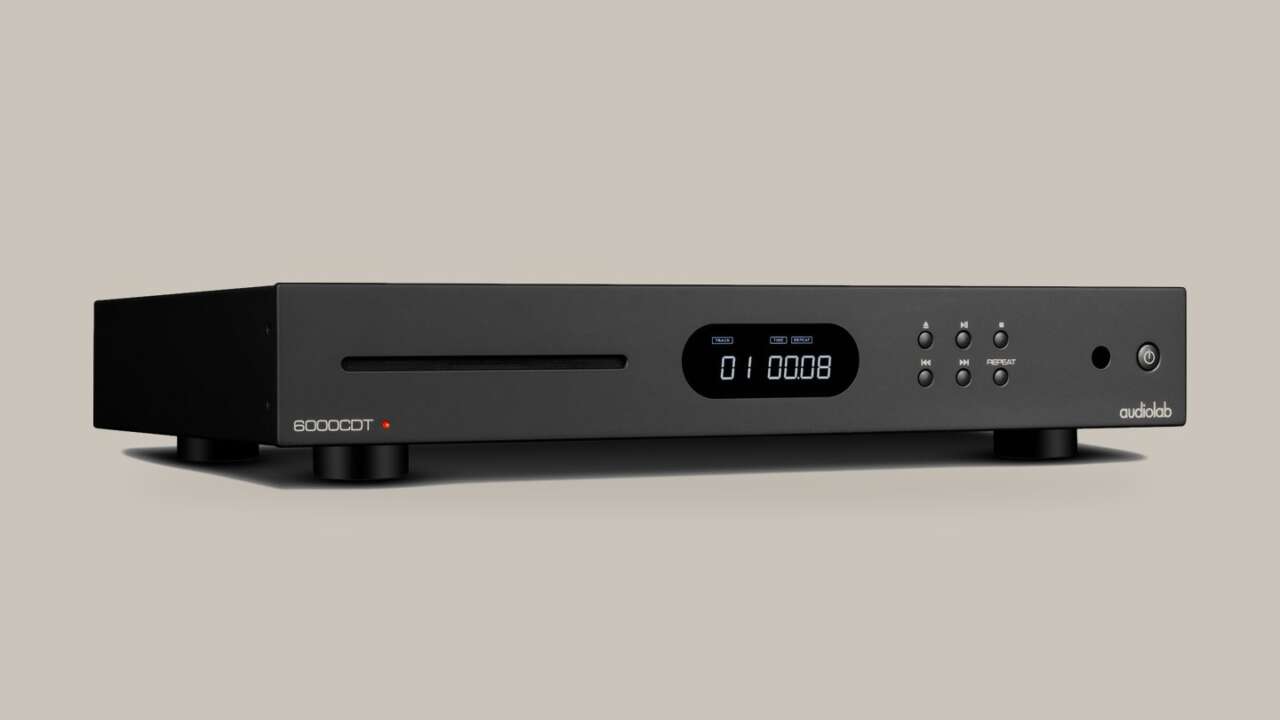
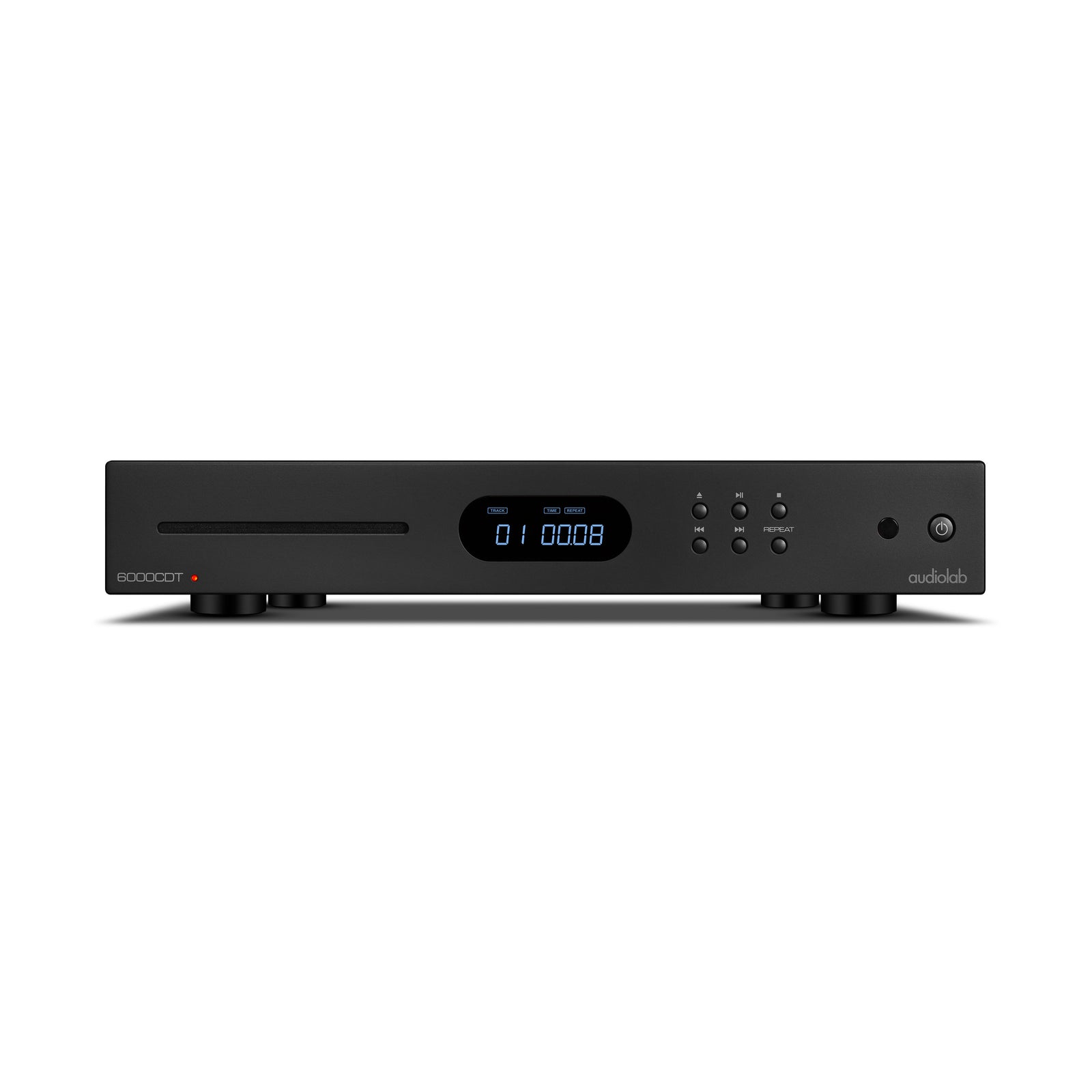
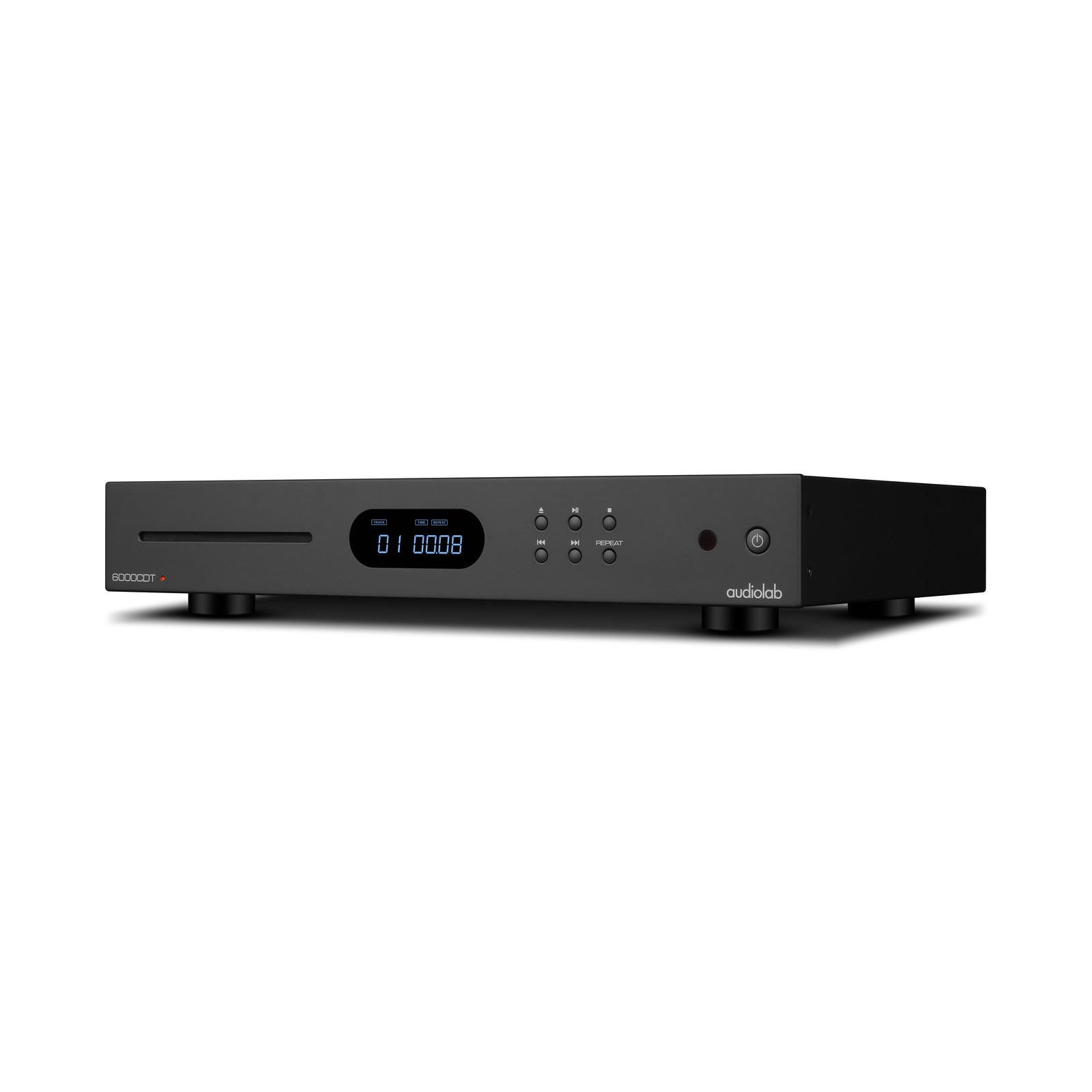
A CD transport does one job, and the Audiolab 6000CDT MkII is built to do only that. It reads the disc, holds the data steady, and passes a clean digital signal to a DAC outside the box. There is no DAC inside, no analogue output stage, and nothing to stream with, because conversion belongs to the amplifier or standalone DAC the transport feeds.
Eight years on from the original 6000CDT, the MkII reworks five areas of the design: the disc mechanism, the servo control, the power supply, the transformer, and the master clock. The slot in the front panel and the full width case carry over.
A completely new mechanism does the reading
The MkII is based on a completely new CD mechanism. It was developed from the disc up for improved physical stability and lower operating noise. Loading and track changes respond quicker than the outgoing model managed, and careful control of disc rotation, laser positioning, and vibration gives the laser a steadier target to read. A disc that wobbles cannot be read cleanly, however good the correction behind it.
A revised servo architecture runs the mechanism, continuously controlling laser focus, tracking, and disc speed as the laser crosses the playing surface. The system adjusts for changes in rotational speed, surface imperfections, and disc eccentricity, which keeps corrective activity down and data recovery stable. That control also makes fuller use of CD error correction on imperfect or lightly damaged discs, so the scratched copy a lesser player gives up on stands a real chance of playing through.
Well-loved collections are the point here. Most discs in a real library are not mint.
Power built around a spinning disc
The demands of a spinning disc mechanism are very different from those of a precision clock or a digital output stage, and the reworked power supply is designed around that difference, working with an updated, custom-specified transformer to support consistent delivery to the mechanism and the servo while limiting how far motor and control noise can reach into the sensitive digital circuitry.
What the DAC downstream receives starts here. A transport that lets supply noise ride along with the signal hands the converter a problem it cannot undo, and Audiolab has spent the redesign budget keeping that handoff clean. The mechanism gets the stable feed it needs without the digital side paying for it.
Precision clocking, two ways out
A temperature-compensated crystal oscillator anchors the high-precision master clock architecture, holding timing steady as the case warms through a long session. Timing consistency at the output is the whole game for a transport, since the converter downstream can only work with the stream it is given.
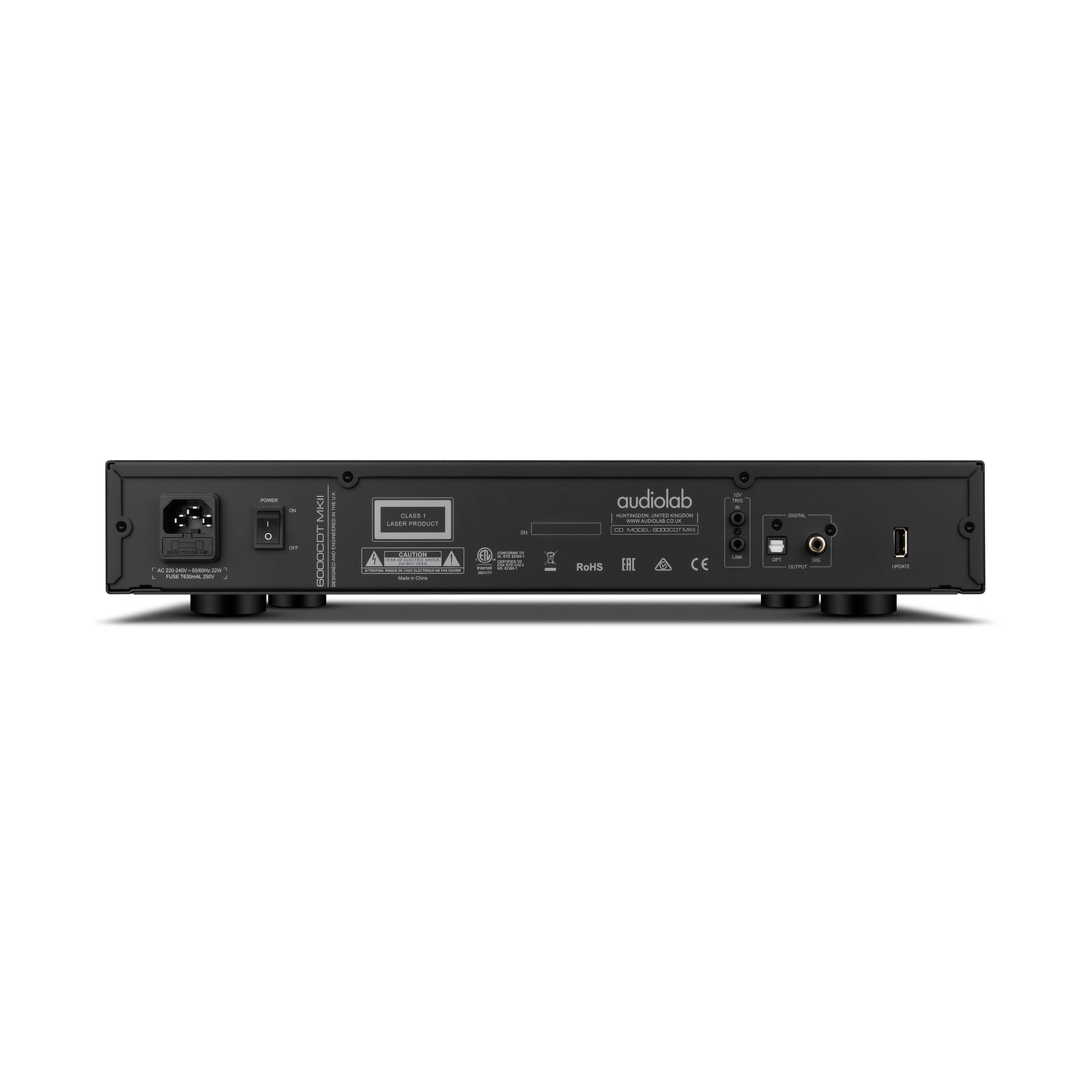
Two outputs carry that stream, one coaxial at 75 ohms and one optical, both S/PDIF, and the optical link isolates the transport electrically from the component receiving it. Around the back sit a USB-A port for firmware updates and 12 volt trigger connections in and out, so the transport powers up and down with a compatible amplifier, and a hard power switch sits beside the mains inlet.
Every disc in the library still plays
The transport plays standard CDs and CD-R and CD-RW discs, plus data CDs carrying FLAC, WAV, WMA, MP3, or APE files at sample rates up to 96kHz depending on the format of the files on the disc. Direct track access, repeat, and random playback run from the remote or the front panel, and a program mode strings up to 99 tracks into a running order of your choosing.
Selectable auto-standby and a display on/off control cover the everyday settings, drawing under half a watt.
The case measures 445 by 80 by 307mm and weighs 5.5kg net, the full width footprint the rest of the 6000 series uses.
The natural partner is the 6000A MkII
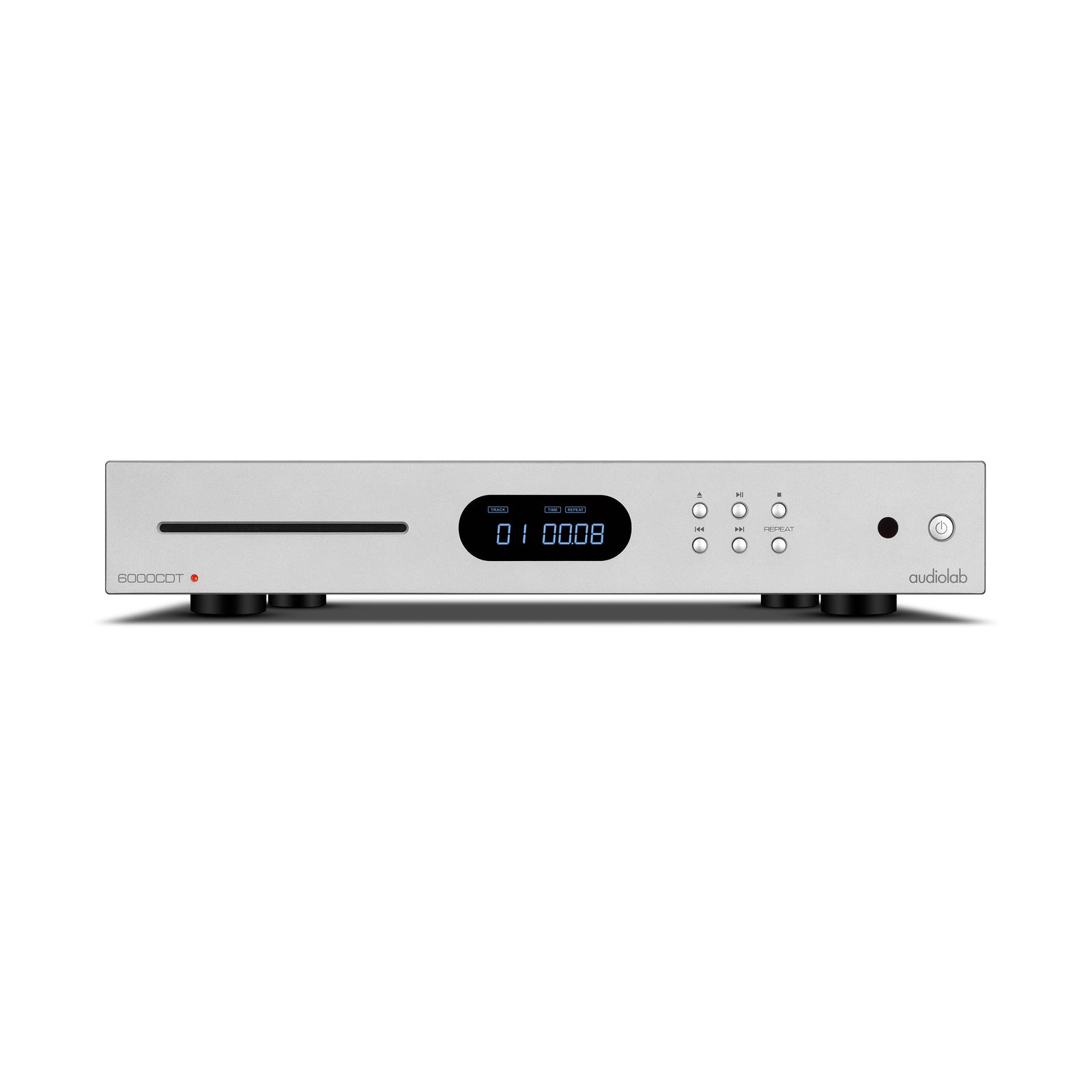
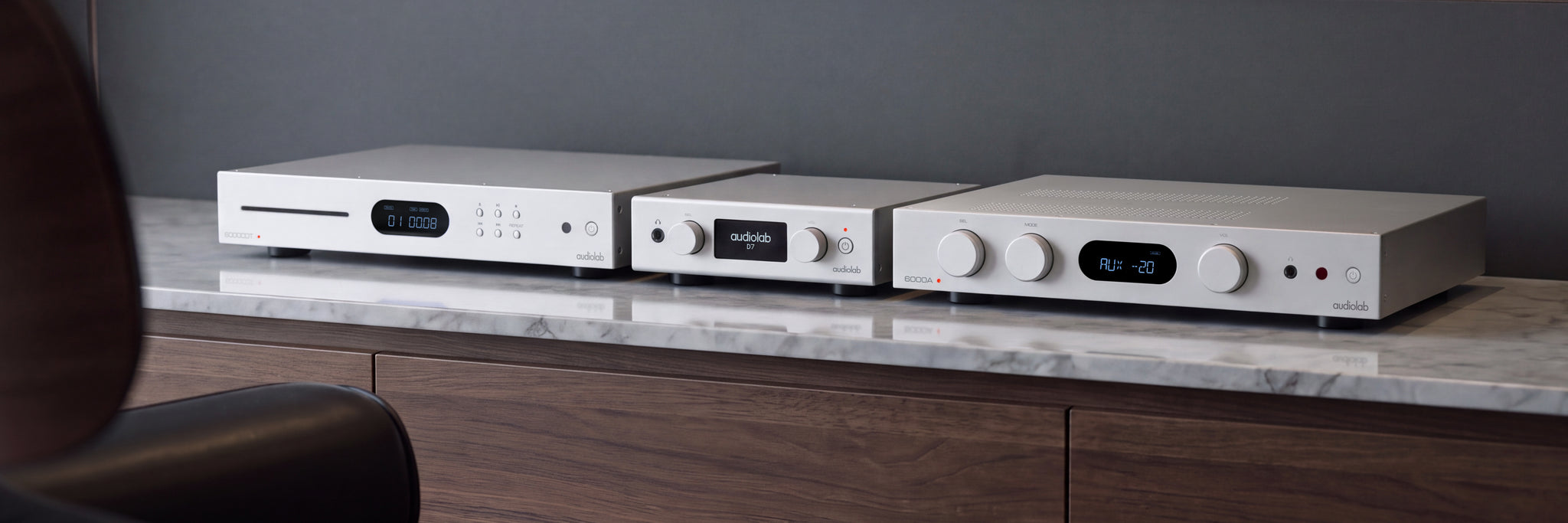
With matching casework in black or Deep Silver, the MkII is shaped to sit beside the 6000A MkII integrated amplifier, whose ES9038Q2M DAC takes the digital feed and handles conversion.
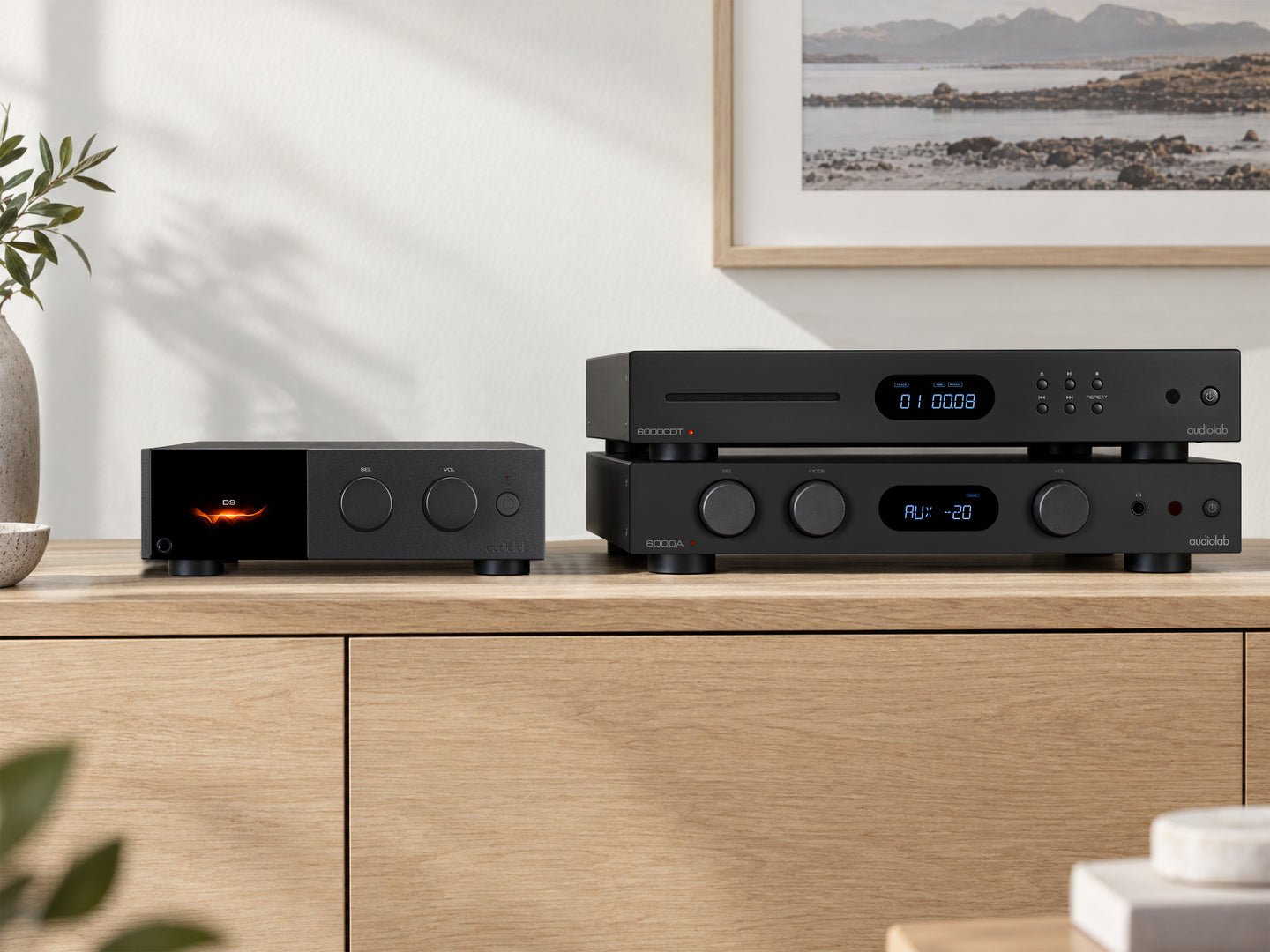
The fit runs wider than one amplifier. Suitably equipped 7000 and 9000 series components take the feed, as do the D7 and D9 standalone DACs, and coaxial plus optical connections make the transport an easy add to digital-input amplifiers from other manufacturers as a system changes around it. The redesign draws on eight years of development across the 6000, 7000, and 9000 series. The MkII is the entry point that work now feeds.
The original 6000CDT is still on sale
Dealers get the MkII in late November. Until it lands, the original 6000CDT stays on sale as the buyable one. It shares its slot-loading mechanism with the flagship 8300CD and feeds the same pair of digital outputs.
Price: $599
Where to buy: Amazon
Upgrading later is a one-box swap, since any DAC that takes the original takes the MkII over the same cables.
A transport makes sense in a specific kind of system, one with a capable DAC already in place and a shelf of CDs worth hearing properly. It also needs a player old enough that its laser is living on borrowed time. The MkII answers that with new mechanics under warranty.
Audiolab has not posted pricing on its own product page yet. Sales start in late November through the authorized dealer network, in black and Deep Silver, with the 6000A MkII amplifier and the D7 and D9 DACs already on sale as partners.