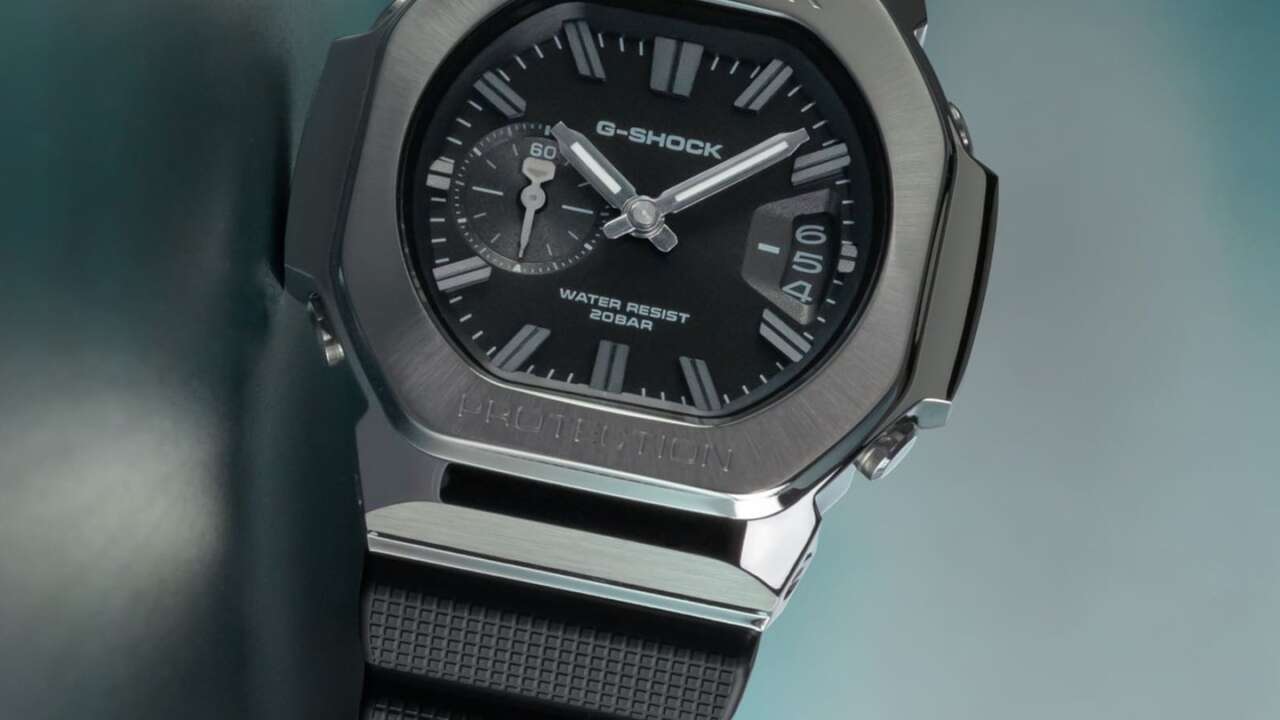
The first G-SHOCK was a digital square, and Casio has spent decades dressing that shape up in screens and sensors. The GMC-2500 line goes the other way. It keeps the square, drops the digital side completely, and runs as a pure analog watch: two hands, a small seconds dial, and a date wheel, all behind an octagonal stainless steel bezel. Five models share the layout, and prices run from $280 to $350 at Casio US.
No Bluetooth, no solar panel, no app. What you get instead is a brass dial with real depth to it. Raised bar indexes catch the light, the hands use the same parallel-line design, and the finish changes with the color. Silver and black dials get a sunray or honing treatment, and the polished metal bezel is what gives the watch its presence on the wrist.
Price: $350
Where to buy: Casio
The original square recut in metal and resin
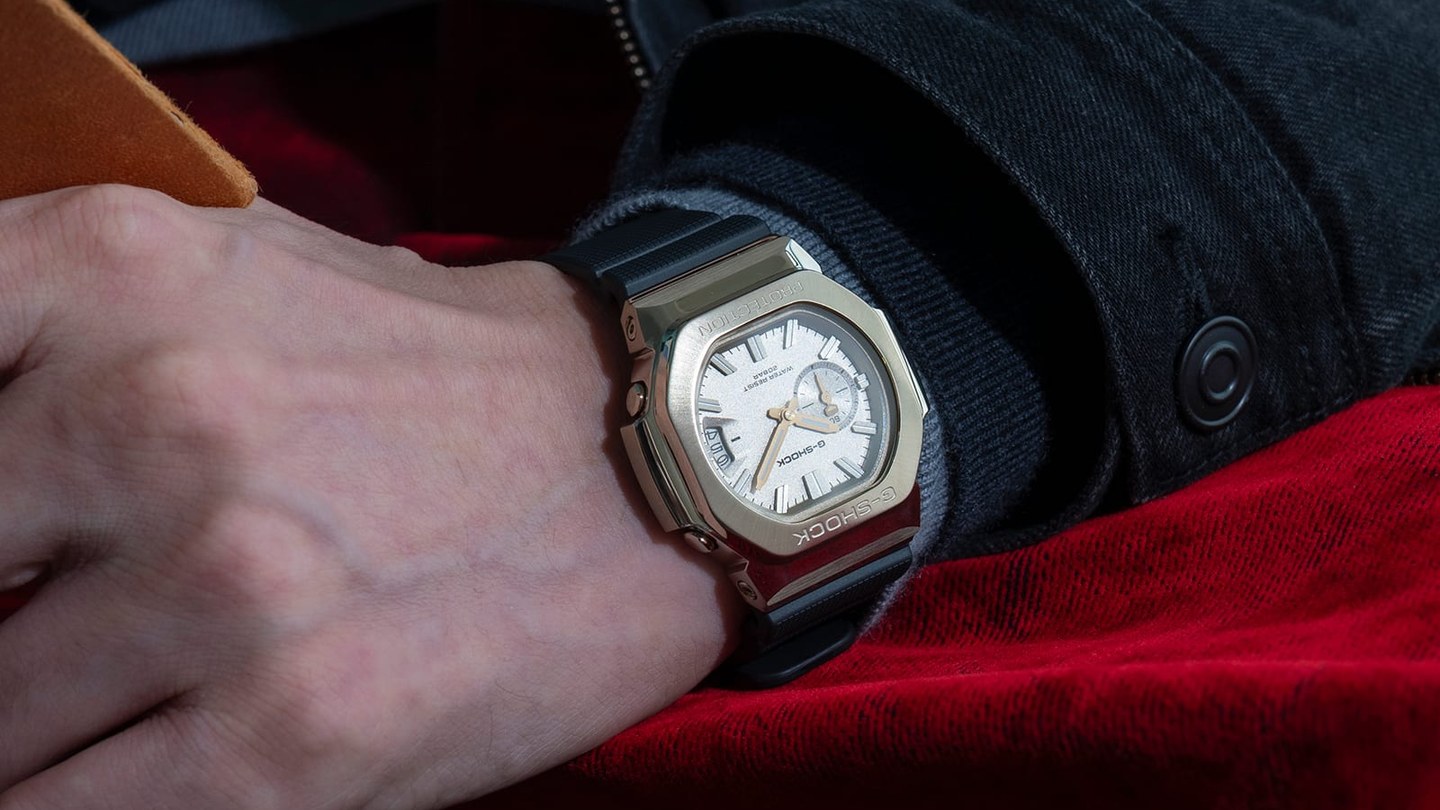
Every model builds on the DW-5000C, the first G-SHOCK from 1983, and keeps its squared outline under the octagon. Casio pairs a resin and bio-based resin case with the steel bezel, so the watch reads as metal from the front and stays light where it counts. Case size runs 46.7 by 43.8 by 12.9 mm across the line. That’s big on paper, but the resin case keeps the weight down, so it wears smaller than the numbers suggest.
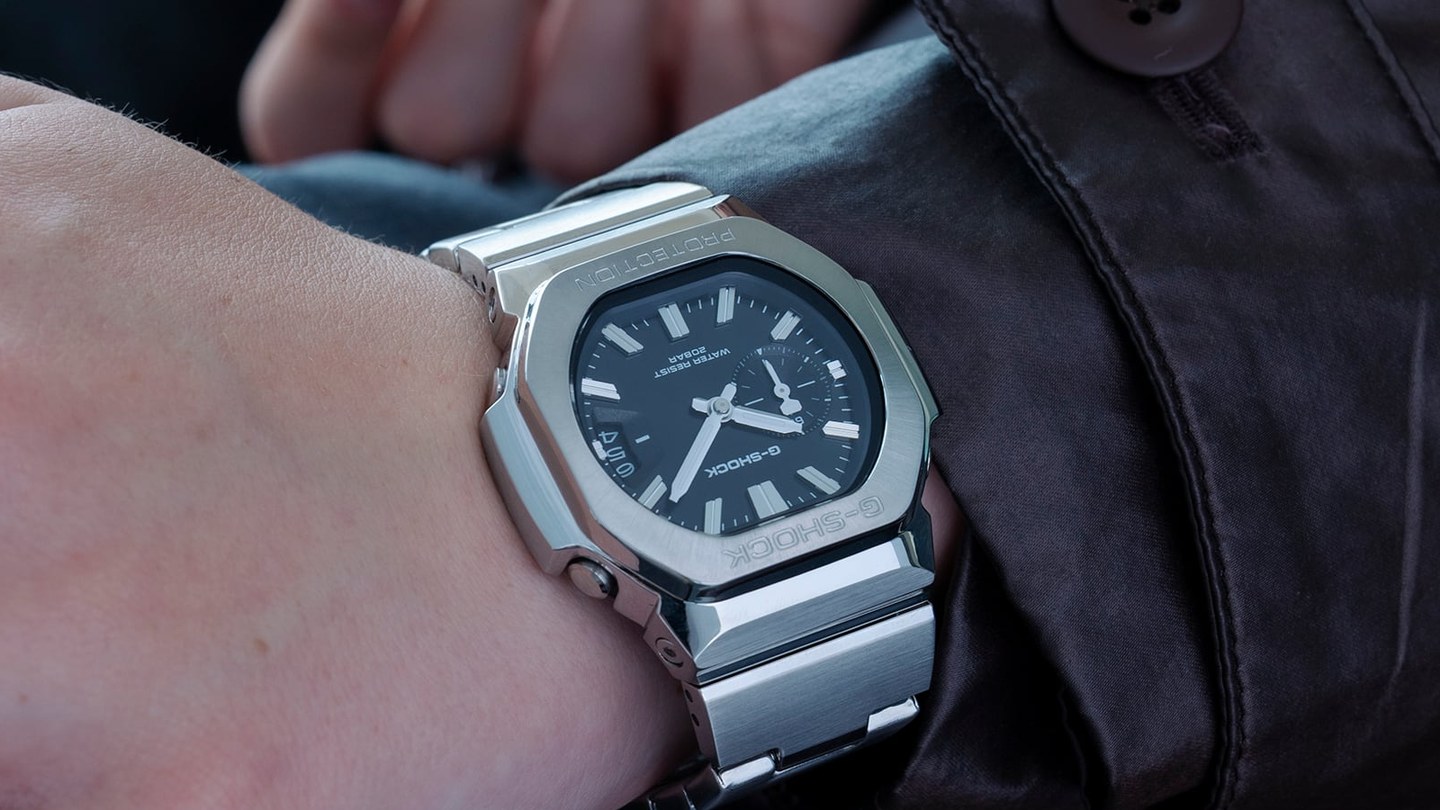
Weight splits the range in two. Resin-band models weigh 68 g and fit wrists from 145 to 215 mm, light enough to forget you’re wearing one. The steel-bracelet pair weighs 138 g and fits 150 to 205 mm. A textured bio-based resin band carries the cheaper models, and the bracelet closes with a one-touch three-fold clasp, so it snaps on and off without a fight at the gym locker or the airport tray.
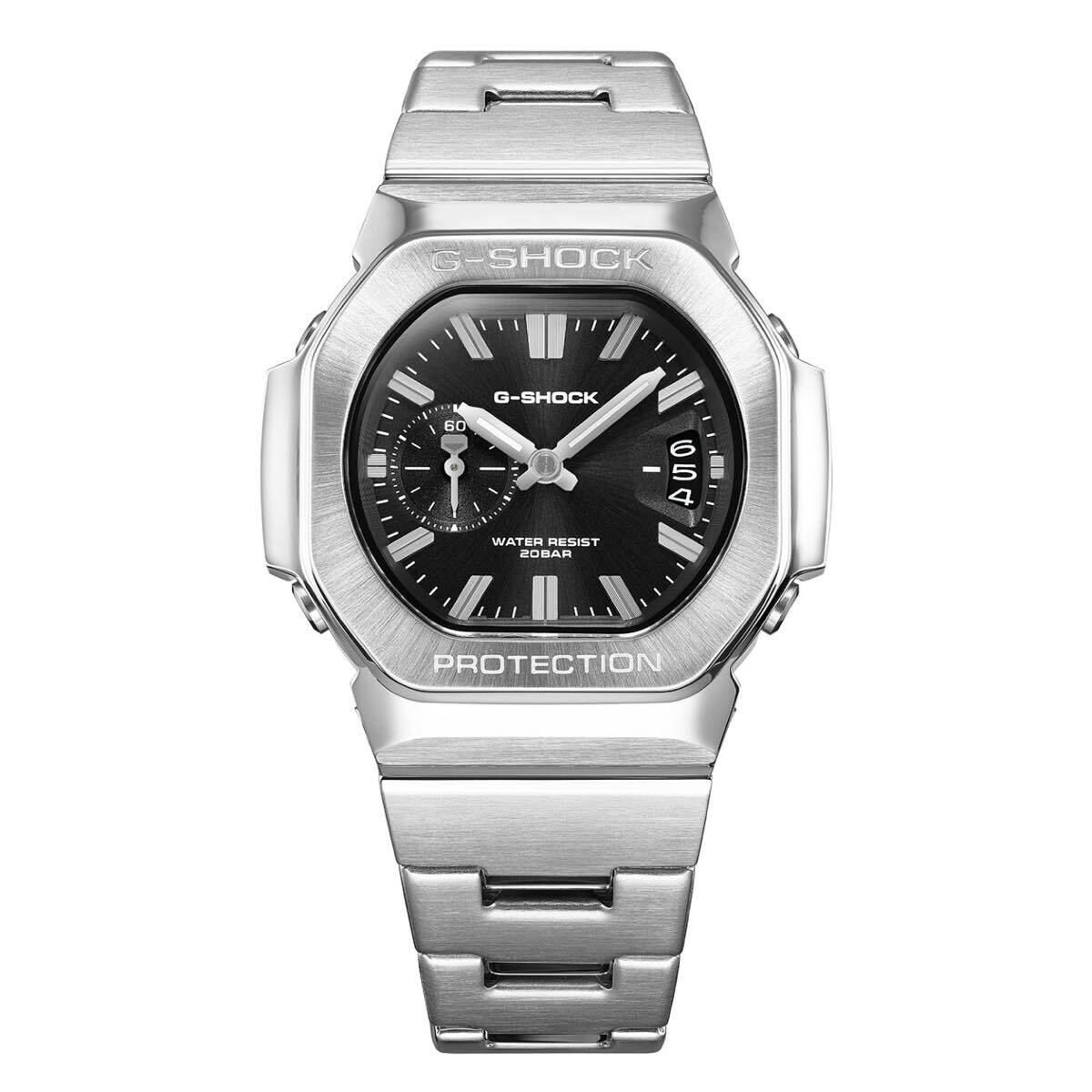
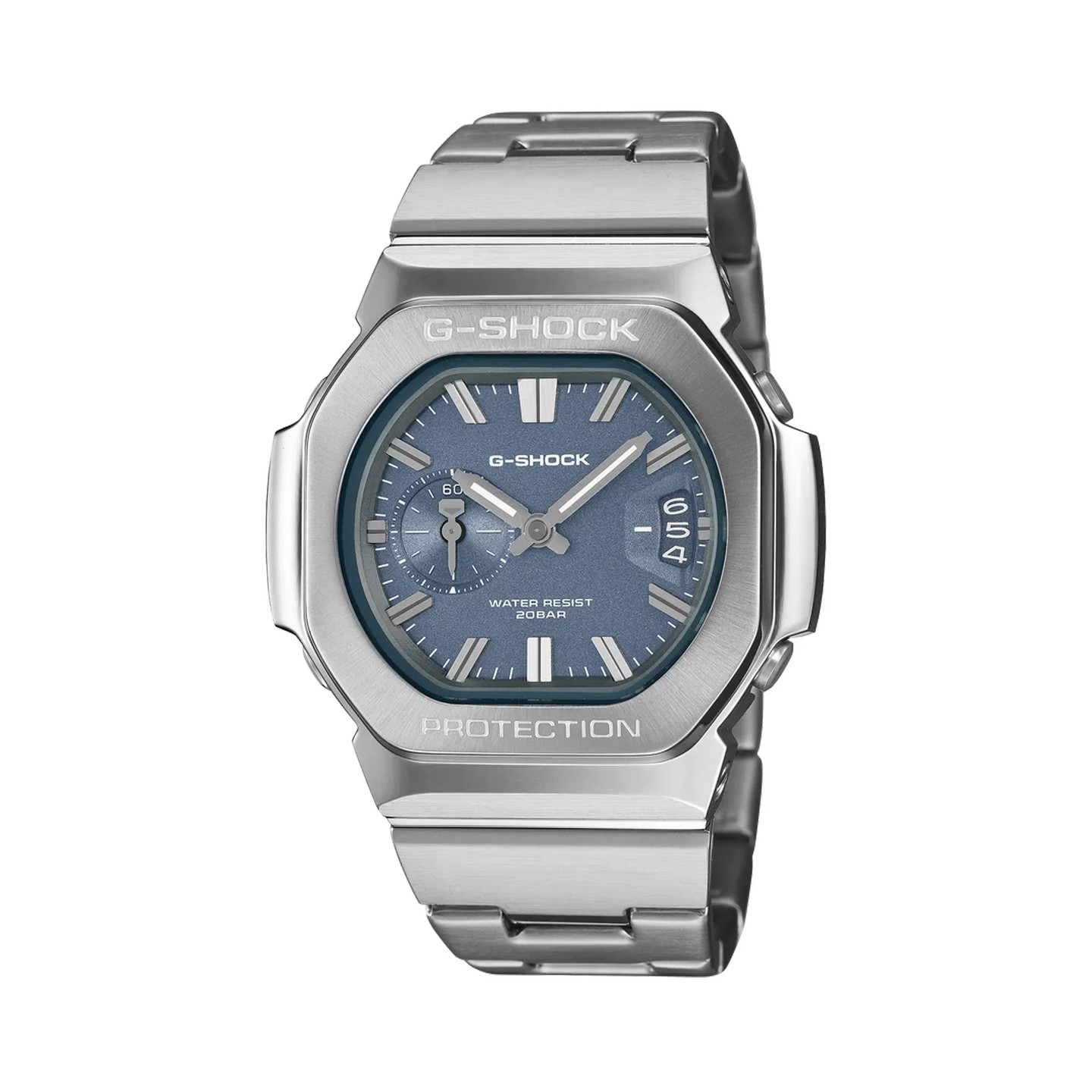
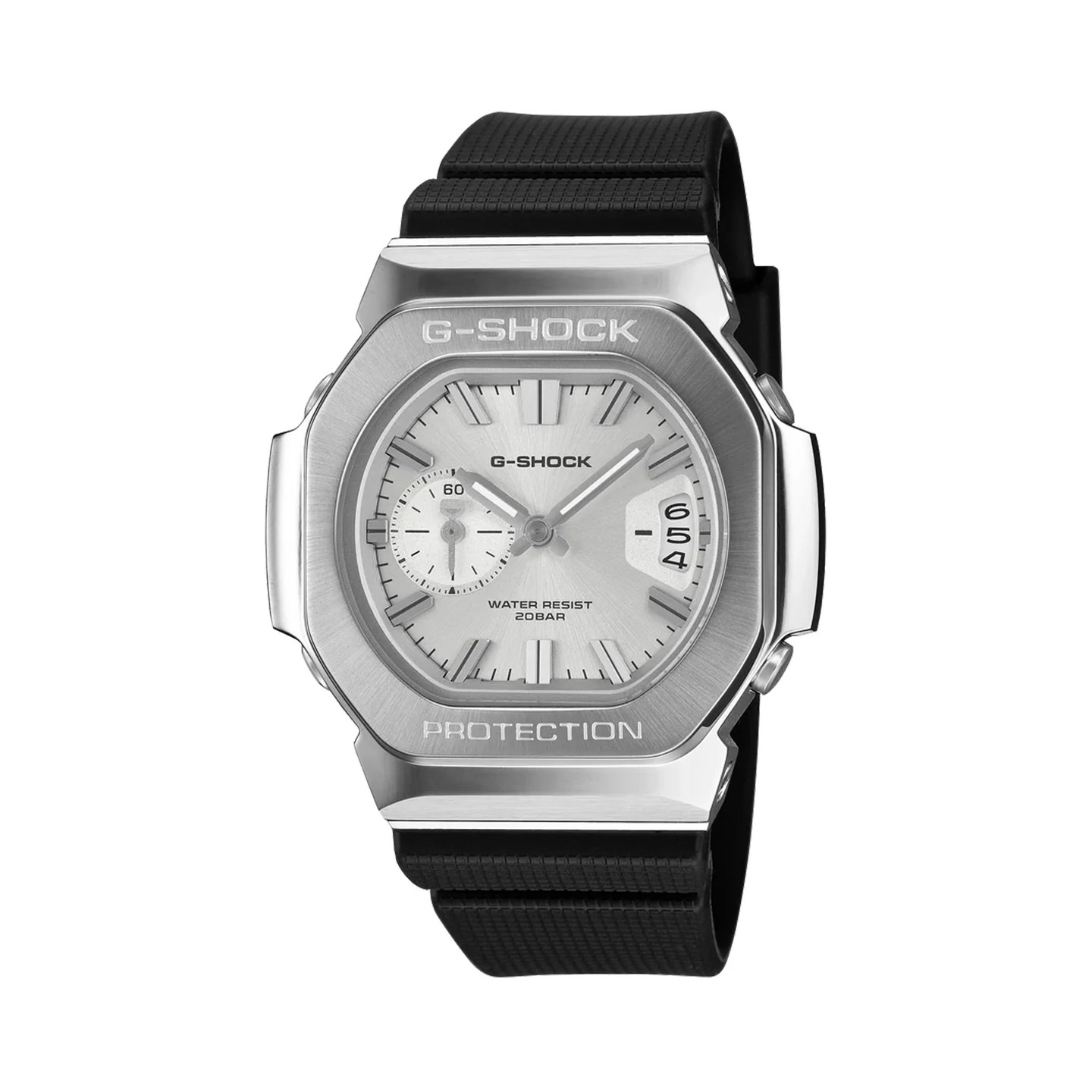
Finishes separate the two bracelet models from the rest. A horizontal hairline finish runs from the bezel straight into the steel band on the GMC-2500D pair, so the head and bracelet read as one piece of metal. Resin-band models keep a polished bezel against the matte textured band, which is a sharper contrast and the more classic G-SHOCK look of the two.
A seconds dial and a date wheel run the dial
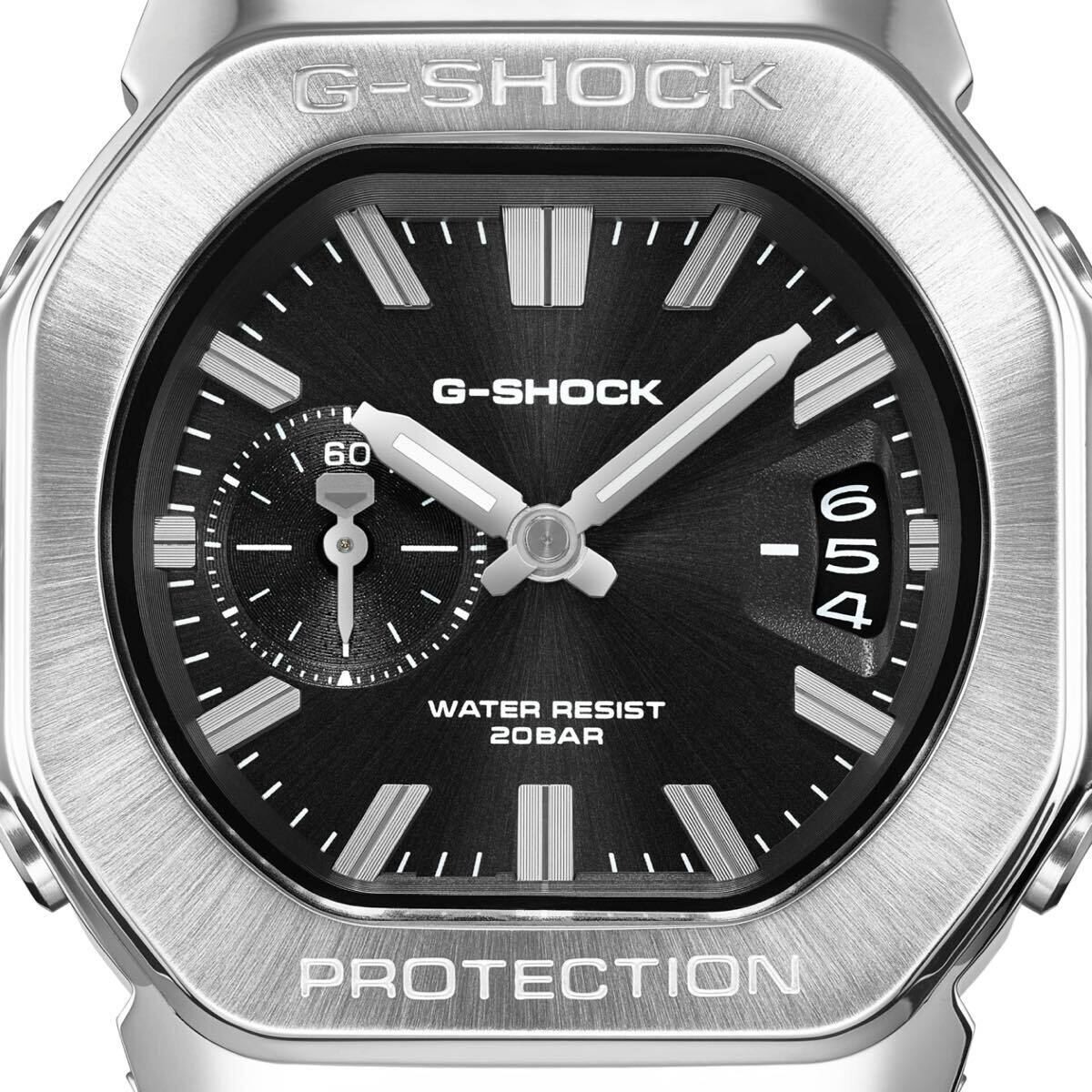
A small seconds subdial sits at 9 o’clock, and its hand carries the Shock Resist mark on its tail. That same dial doubles as the meter for a 1-second stopwatch that measures up to 29 minutes 59 seconds, so a timing run reads off the left side of the face.
At 3 o’clock, a three-cell date wheel shows the day of the month in a color matched to the dial, which keeps contrast low and the time easy to read at a glance. Casio calls the layout Multi-Mission Date, and a full auto-calendar runs to 2099 once it’s set. An amber LED light with afterglow covers the dial after dark.
Hands and indexes share one design language. Both use parallel lines, and the raised bar indexes mirror the shape of the case, so the dial reads as one drawn object instead of a stack of parts. It’s a small thing, and it’s why the face looks calm despite two sub-registers.
A minute hand held on by magnets
Module 5757 runs the line, and its party trick is magnetic. The minute hand isn’t fixed directly to its shaft. Magnets hold it in place instead, so a hard knock lets the hand give, absorb the hit and settle back. Casio calls it the Shock Release Hand.
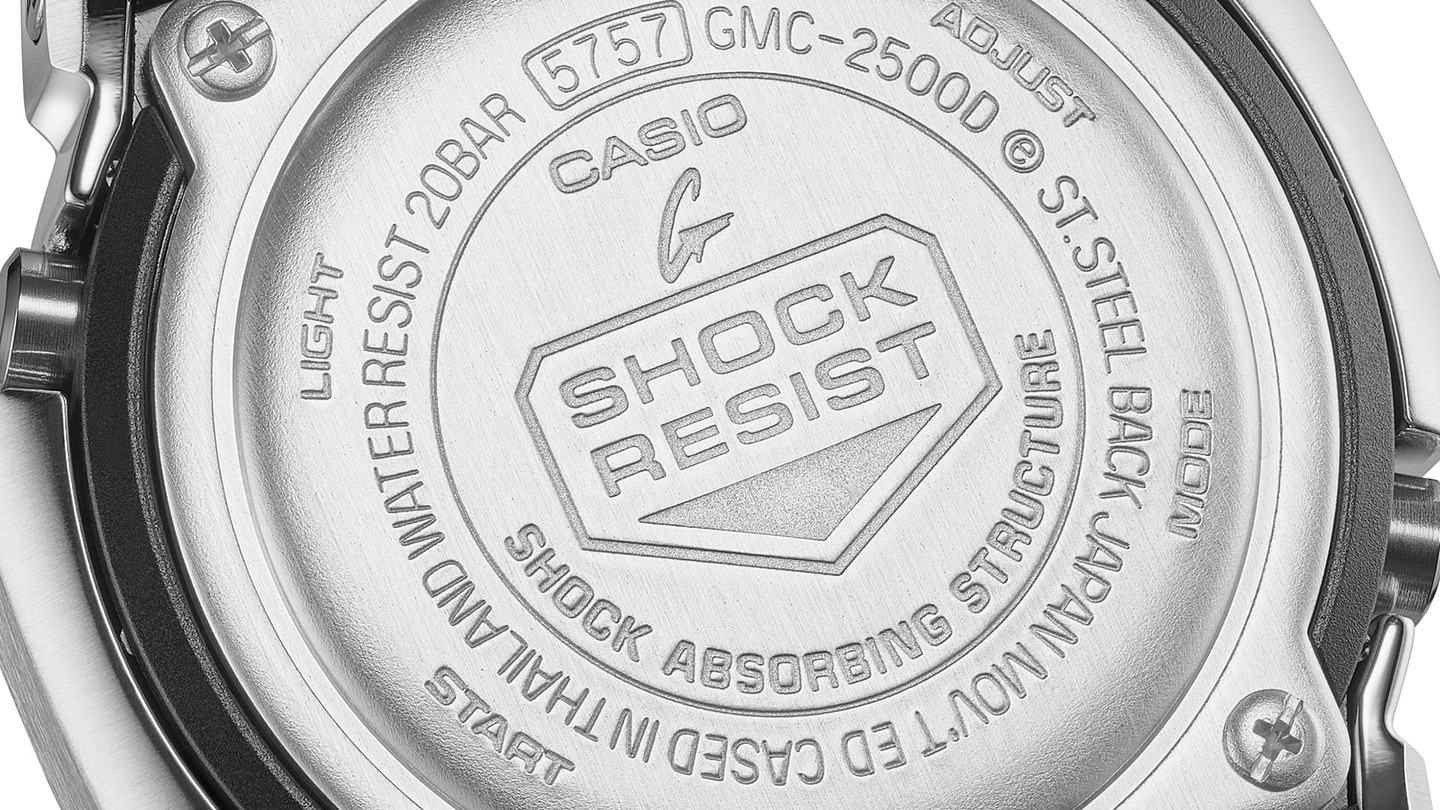
That design has one quirk worth knowing. Right after an impact or strong vibration, the minute hand can sit slightly out of position, and it returns to the correct spot within a few minutes on its own. So if yours looks a minute off after a drop, give it a moment before you panic. Shock resistance and 200 m water resistance stay standard G-SHOCK issue, under mineral glass.
Power comes from a CR1025 battery rated at about two years. A sleep function stops the small seconds hand when you don’t need it running, and Casio rates battery life at about five years with that function working. Accuracy runs at about 15 seconds a month.
Five models from $280 to $350
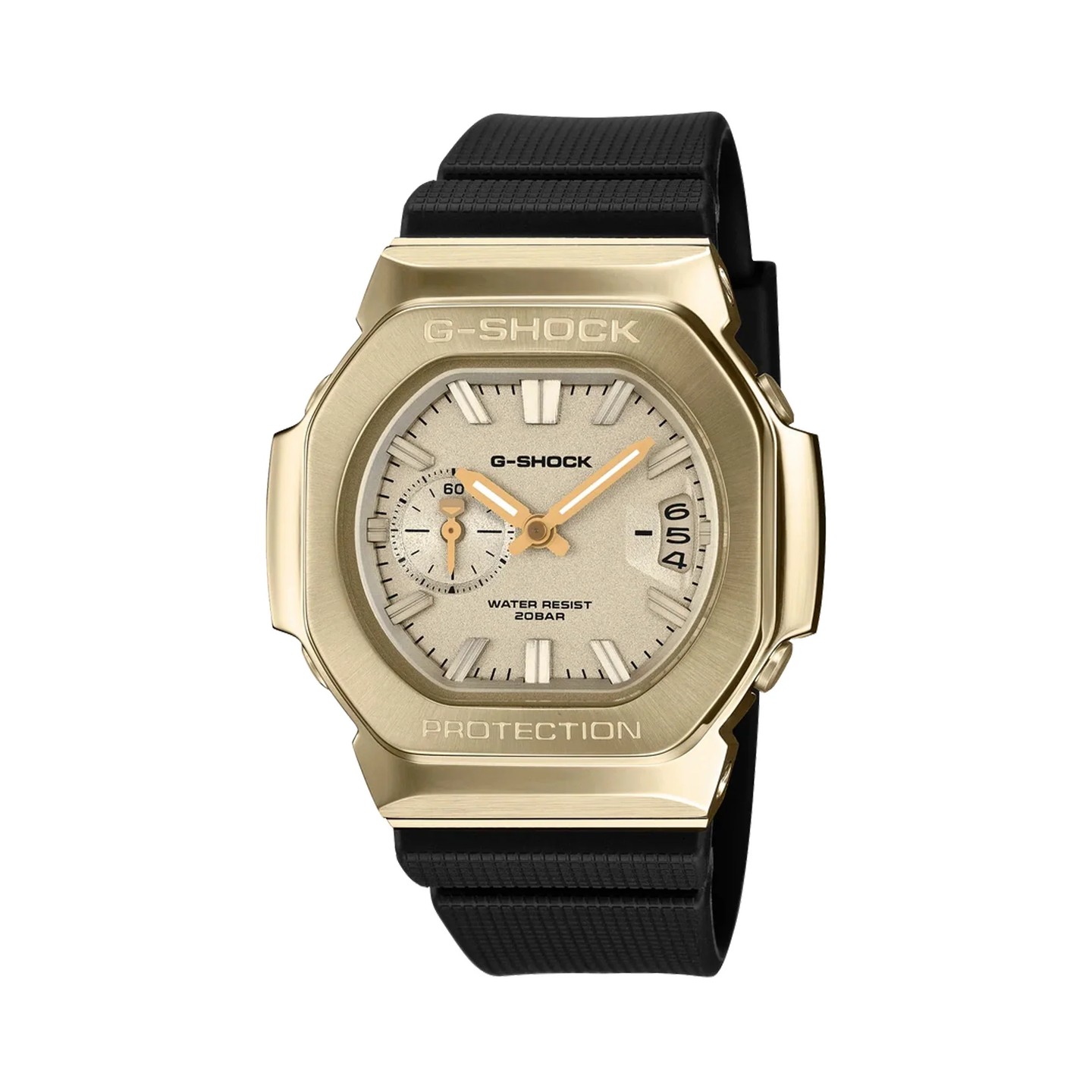
Three models ride on resin bands and two wear steel bracelets, and the dial color sets each one apart. Black and silver dials open the range at $280, gold sits in the middle at $300, and the bracelet pair tops the line at $350. Stock is mixed at Casio US heading into the weekend. The silver 1A8 and the gold G-9A are in stock, the black resin-band 1A is out, and of the steel pair, the black-dial D-1A is in stock while the blue gray D-1A2 is out.
| Model | Dial | Band | Weight | Price |
|---|---|---|---|---|
| GMC2500-1A | Black | Resin | 68 g | $280 |
| GMC2500-1A8 | Silver | Resin | 68 g | $280 |
| GMC2500G-9A | Gold | Resin | 68 g | $300 |
| GMC2500D-1A | Black | Steel bracelet | 138 g | $350 |
| GMC2500D-1A2 | Blue gray | Steel bracelet | 138 g | $350 |
Casio’s front shots show how much the dial color changes the watch, even though the case and layout stay identical underneath.
Price: $350
Where to buy: Casio
Pick by band first and dial second. The $280 resin-band models give you the same case, the same module and the same two-eye dial for $70 less than the bracelet pair. The $350 steel models look richer and wear heavier at 138 g. Stock moves around by color at Casio US, so check your pick before you settle on a dial. Either way, you get the original square’s shape with nothing on the dial that needs a phone, a charger or an update. That’s kind of the whole appeal here.