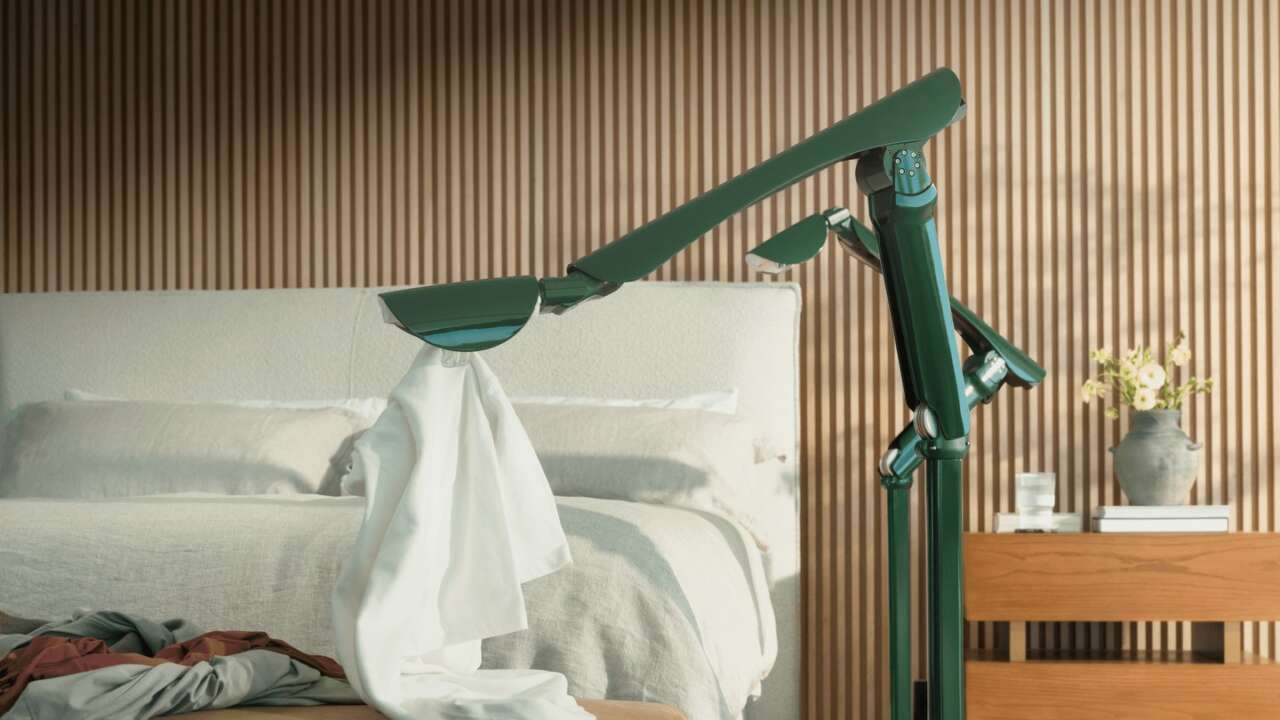
Lume is a floor lamp with a robot folded inside it. Parked in the corner, it’s a slim column of anodized aluminum that lights the room. Asked to work, it unfolds an articulated arm, rolls to the bed or the laundry pile, and gets through the soft chores: folding clothes, making the bed, resetting pillows, tidying what got left out. When the work is done, it folds itself back into a lamp.
The company behind it is Syncere, a Palo Alto startup founded by roboticists Aaron Tan and Angus Fung. Their bet runs against the humanoid playbook: instead of building a person-shaped machine and asking your home to accept it, they hid the robot inside a piece of furniture you already own. Lume starts at $2,699, and TIME named it one of its Best Inventions of 2026.
Price: $2,699
Where to buy: Syncere
A floor lamp first and a robot second
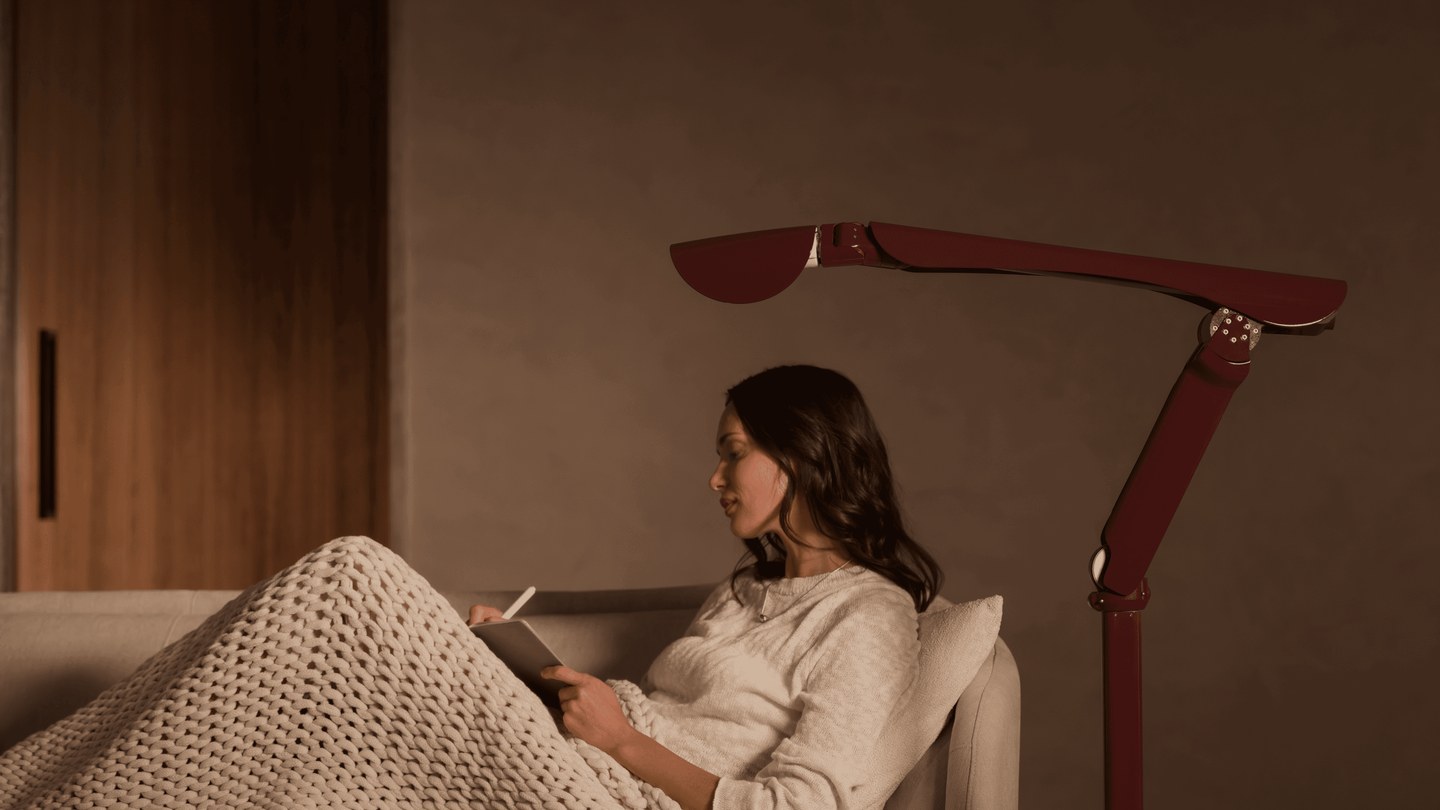
Folded, Lume measures about 11 by 15 by 45 inches, roughly the footprint of a standard floor lamp, so it lands where a lamp already lives: beside the bed, next to a reading chair, in the corner of the living room. The body is anodized aluminum with high-gloss finishes, white is the included finish, and a charging dock keeps it fueled.
Syncere’s design language is deliberate here: quiet, slow movement, nothing that reads as machinery while it sits still. The whole pitch depends on the lamp being furniture you’d keep even if it never folded a single shirt.
How the chores actually get done
Lume navigates the home on its own, moving room to room and returning to its spot when there’s nothing to do. The work itself comes from the arm and the perception system packed into the column: Syncere builds the product around robotic manipulation, onboard perception, and local AI compute, so the seeing and the deciding happen on the device. Today’s task list is specific, and it runs on soft goods only: make the bed, fold the laundry, reset the pillows, help tidy the room. Syncere’s feature list adds dishes and fetching items you ask for.
Owners teach it their way of doing things. Every Lume ships with a Personalization Band used during onboarding, so you demonstrate how you fold and how you like the bed made, and the robot learns your preferences instead of a factory default. Tasks run from the Syncere app. On safety, Syncere’s own FAQ keeps it plain: movement is controlled, the robot reads its surroundings, and it only works when there’s enough clear space to finish the job safely.
The light side has no spec sheet yet
As a lamp, Lume splits its output two ways: a focused beam for reading and desk work, and ambient light that fills the room softly, with the light adapting to your space and your routines.
That’s where the published detail stops. Syncere lists no lumen output, no color temperature range, and no dimming specs on its site, so the lighting side of Lume is a design claim today rather than a measured one. For a $2,699 product whose day job is being a lamp, those numbers need to exist before the value case is complete.
The price, the add-ons, and the real cost of owning one
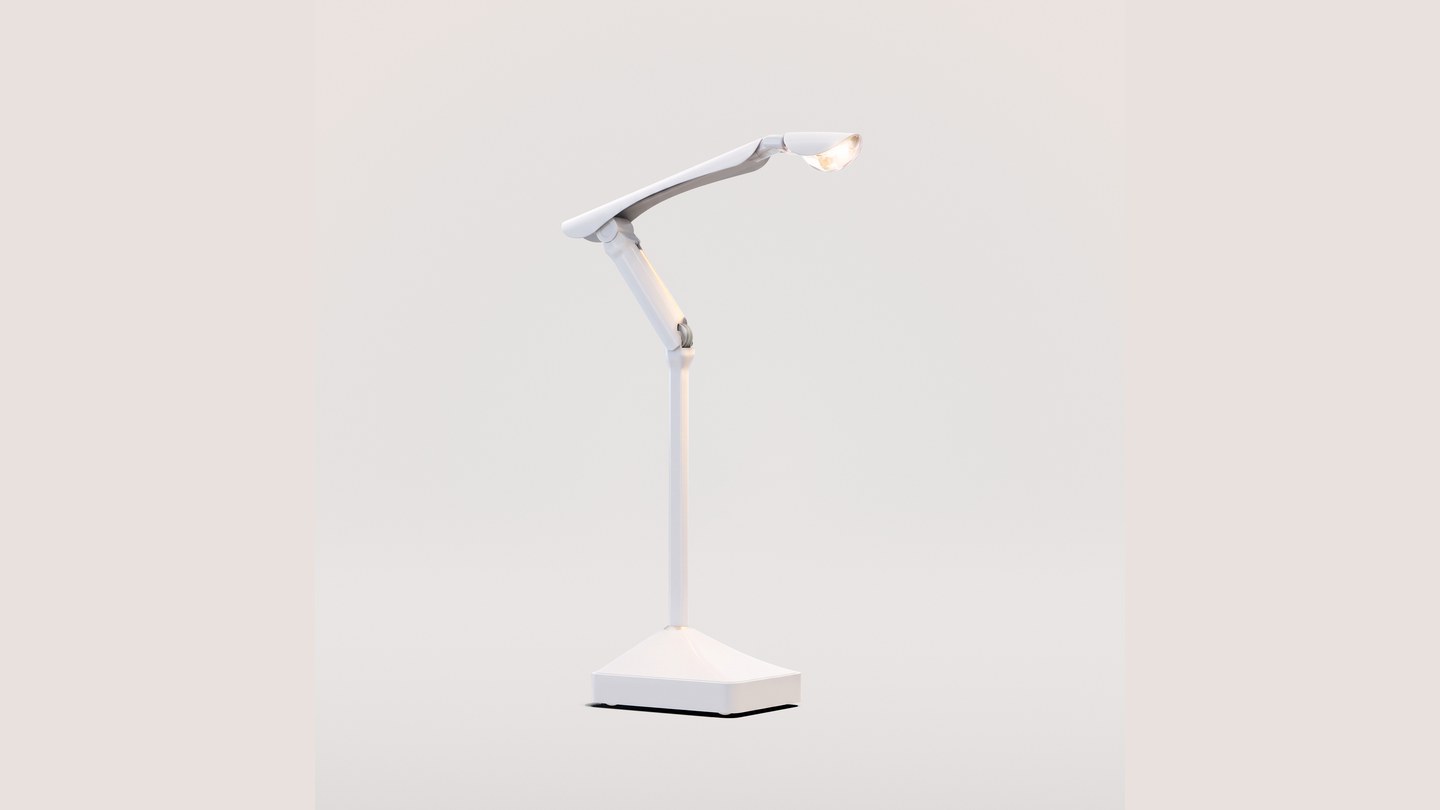
One Lume is $2,699. The Duet, two lamps that work together across a bigger home, is $5,199. The box carries the lamp, the charging dock, the Personalization Band, a USB-C cable, and stickers.
Two add-ons sit on top of the hardware. LumeCare runs $489 for lifetime service on eligible hardware repairs and battery replacements, with same-day concierge support. Autonomy is the bigger decision: $679 buys lifetime access to new features, software improvements, and future tasks, or you can pay $79 a month per lamp starting in the second quarter of 2027. Run the monthly route and you pass the lifetime price in about nine months, so the one-time fee is the rational pick for anyone keeping the lamp.
Ordering is gated. Syncere sells by invitation through an eligibility check on its site, prioritizing early customers in New York and the San Francisco Bay Area, and the company’s own delivery guidance puts initial deliveries in the first and second quarters of 2027. The return policy is generous on paper: 365 days, in original condition, and first-batch buyers get a lifetime warranty. The company’s terms still call preorder timelines estimates, so the 2027 window is a plan, not a promise.
The $11 million behind the lamp
Syncere has closed an $11 million pre-seed round led by a16z Speedrun, with Draper Associates, Physical World, Sequel, and SeaX Ventures in the round. The money goes to three things: getting more Lumes delivered, scaling manufacturing, and pushing the same physical AI into commercial work beyond the home.
Tan’s argument for the lamp is a data argument: home robots can’t get reliable without real households to learn from, and they can’t get into households until they’re reliable, so the way in is a product people want in the room before it does anything clever. Syncere says preorder demand already runs into the millions of dollars, and every shipped unit makes the fleet smarter through software updates.
Price: $2,699
Where to buy: Syncere
So the honest read on Lume is a split decision. As a lamp and a piece of design, it justifies its corner today, and the chore list it ships with is narrow but real. As a robot, most of what you’re buying at $2,699 is the trajectory: a machine that folds laundry now and is supposed to learn the rest of the house over time. Buyers who want finished automation should wait. Buyers who want the first credible home robot that doesn’t look like one are exactly who the invitation list is built for.