Chinese humanoid robot makers are done treating South Korea as a stage. The dancing demos and showroom displays are giving way to factory trials, cafe pilots and paid deliveries, because Korea has the factories, the money and a shrinking workforce, and it doesn’t have a humanoid maker of its own shipping robots at scale.
That gap is the whole story. Four Chinese companies are working it in earnest: UBTech Robotics, Unitree Robotics, AgiBot and Beijing startup Anyverse Dynamics. They aren’t chasing applause anymore. They’re chasing purchase orders, trial slots and the certifications that turn a demo into a deployment.
UBTech got there first
UBTech, the Shenzhen maker listed in Hong Kong, has sold robots in South Korea since 2019, and the company says the count is past 10,000 units across dozens of corporate and government customers. Its newest machine in the country is the U1, a lifelike humanoid standing 1.68 meters tall and priced around $25,000. Seoul entertainment venue Galaxy Robot Park agreed to buy one after its Shenzhen debut and took delivery in September.
The bigger test is industrial. UBTech is trialing humanoids on a Korean automotive parts production line with local partner Duksan JM Robotics and parts maker Ajin Industrial, and several of its models are running on-site operational tests in the country. Getting legal took hardware work, too: South Korea’s KC certification pushed UBTech to adapt its communications modules and radio frequency settings to local rules.
Cafes first and factories second
Anyverse Dynamics is coming in through the service door. The Beijing startup’s founder, Zhang Yufeng, previously worked at SK Telecom and Hyundai Motor, and his company has teamed up with Korean coffee chain Hollys to test robots that serve drinks, clear tables and reset seats. The robots are trialing at a cafe in Beijing first, with Korean cafe trials planned for the fourth quarter and manufacturing work after that.
The trade figures say this runs wider than two companies. Chinese customs data ranks South Korea as China’s third-largest export market for intelligent bionic robots over the first nine months of 2026, at $20 million, or 9.7 percent of the $207 million China shipped worldwide. The customs category covers humanoids and robot dogs, and it counted 16,559 robots exported to 108 countries and regions. By one industry count, eight of China’s ten top-selling humanoid makers are already testing the Korean market through certification, trademark filings or sales channels.
Seoul is putting serious money behind physical AI
South Korea’s government has proposed 3.1 trillion won, about $2.3 billion, for physical AI in its 2027 budget, up from 900 billion won this year. The bill is in front of the National Assembly now. The industry ministry’s Manufacturing AI Transformation program, called M.AX, targets 500 AI factories by 2030, and its industry alliance is aiming at humanoid mass production from 2029. The alliance pulls in more than 1,000 companies, universities and research institutes, and Industry Minister Kim Jeong-kwan has set the aim plainly: global leadership in manufacturing AI transformation by 2030.
The early returns explain the confidence. More than 170 factory sites have taken M.AX support so far, and the sites reporting results averaged a 30 percent productivity gain with defect rates down 15.5 percent. The driver underneath all of it is demographic: Korea’s working-age population is shrinking, and the government would rather automate the work than watch the industry leave.
Korea’s own champions are racing too
Samsung Electronics has folded its scattered robotics work into a dedicated office called RX, reporting directly to the CEO and led by Lee Dong-kun, who ran robotics strategy at Hyundai Motor Group. The plan starts at home: a robot data factory at Samsung’s Gumi complex, humanoids deployed on Samsung’s own production lines first, then homes and retail, with Rainbow Robotics, the Korean humanoid maker Samsung controls, as the hardware base.
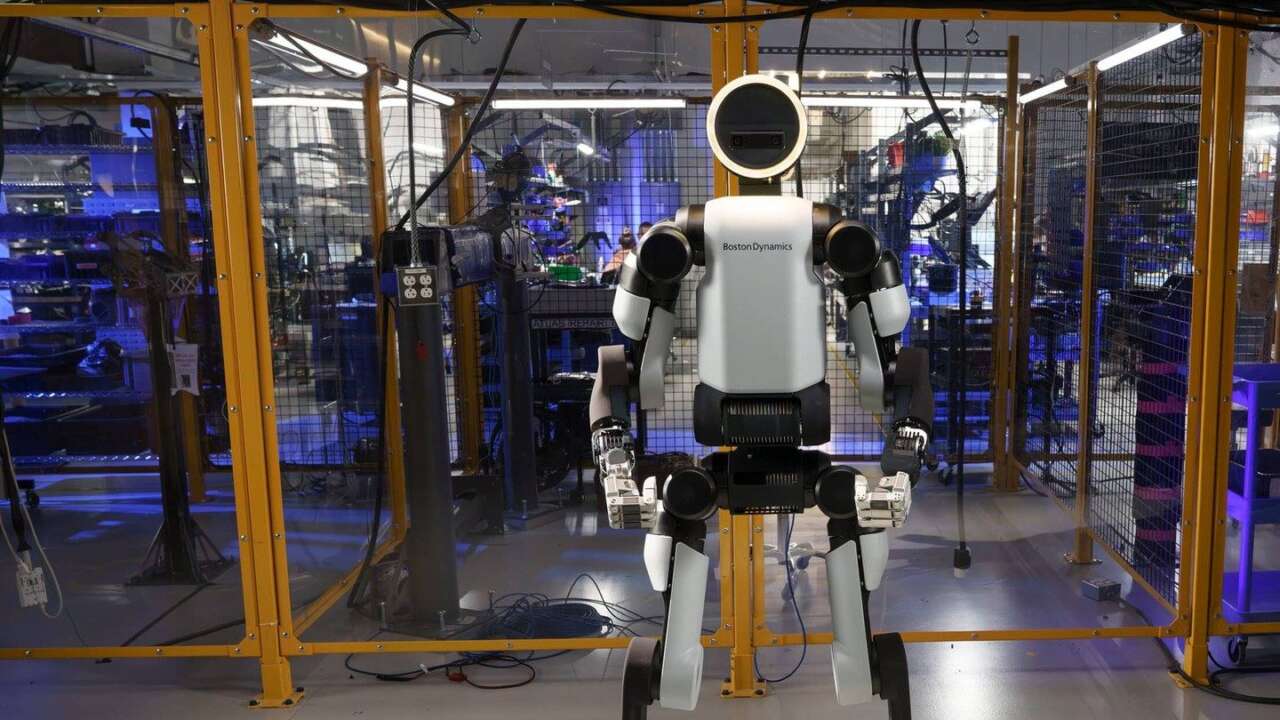
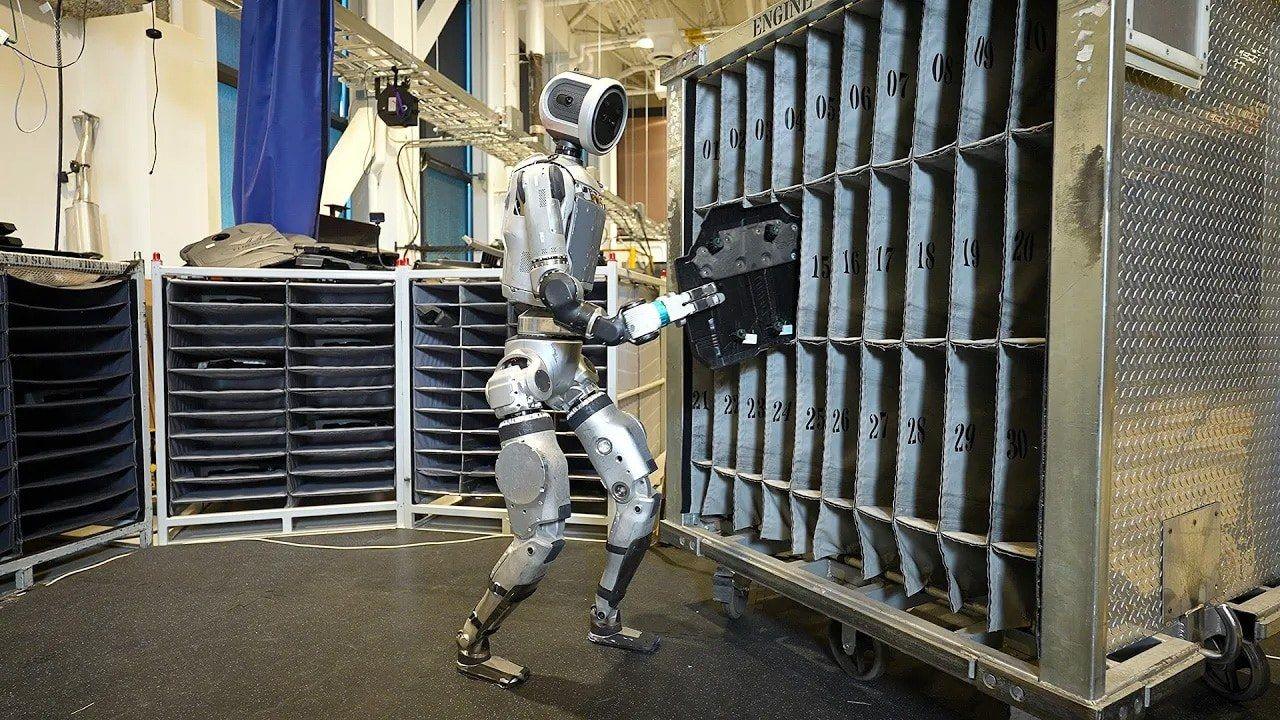
Hyundai Motor Group is further along in public. Boston Dynamics’ Atlas humanoids are training at a dedicated center inside Hyundai’s Georgia Metaplant in the US, learning parts sequencing and material handling on real factory tasks. Line deployment is set for 2028, component assembly follows from 2030, and Hyundai plans roughly 25,000 Atlas units across its Hyundai and Kia plants over the coming years.
The argument has already reached parliament
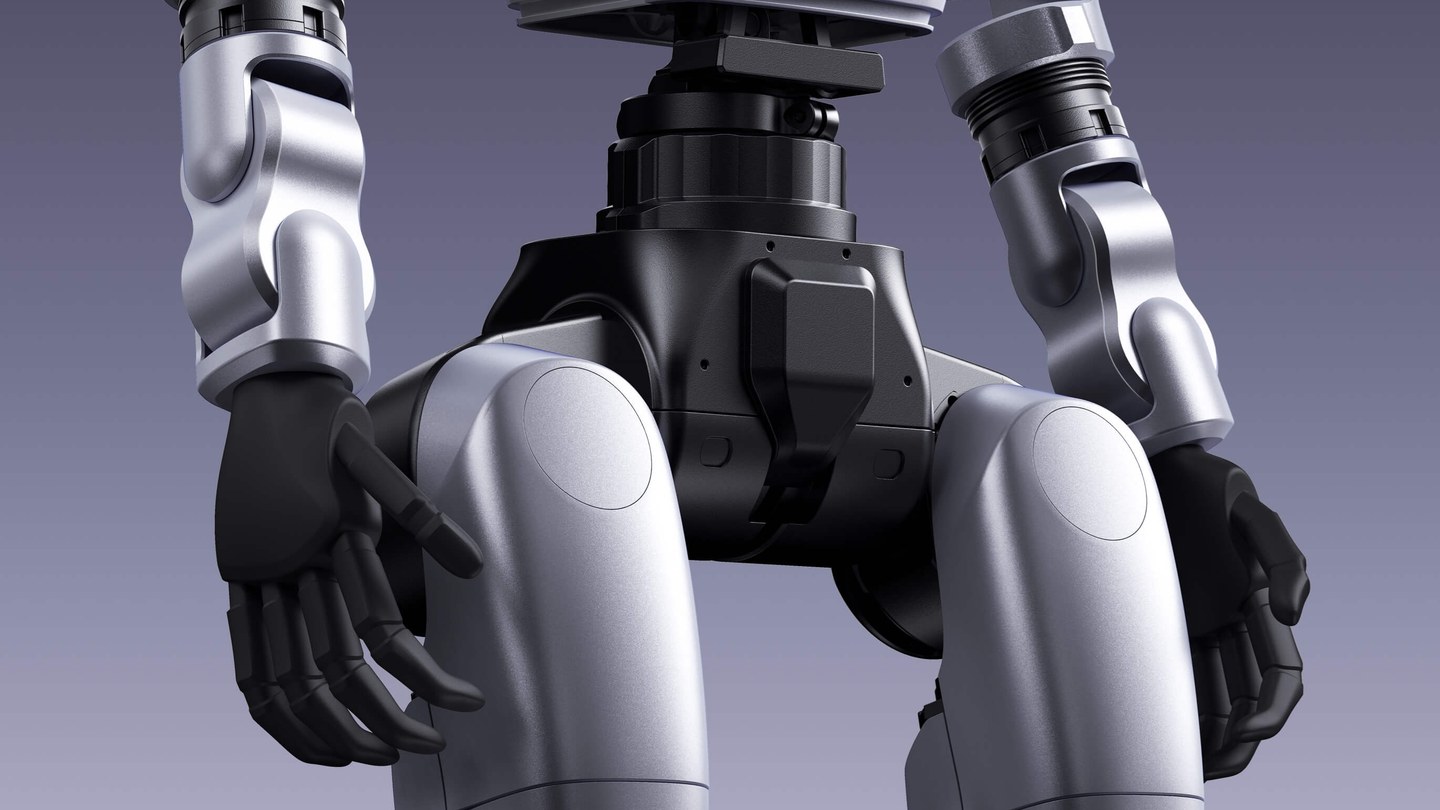
At an October 6 parliamentary audit, lawmaker Lee Jeong-heon brought Unitree and AgiBot robots into the hearing to press the government on South Korea’s competitiveness, while Ahn Cheol-soo questioned whether the Chinese machines had passed security checks at all. Deputy Prime Minister Bae Kyung-hoon answered with a call for bigger targets, pointing at how fast China is deploying humanoids in the field and collecting the data that comes with it.
For the Chinese makers, the hard part isn’t the hardware. It’s finding a Korean customer willing to run a proof-of-concept trial on a live line, which is why local partners like Duksan JM Robotics and chains like Hollys carry so much weight in these early deals.
That tension is where this lands. Korean plants need flexible labor the country can’t hire, Chinese makers need demanding customers who can prove their machines, and Seoul is spending to make sure Korea owns a piece of the industry either way. Watch the Ajin parts line: a Chinese humanoid that holds a real factory job there says more than a hundred stage demos ever will.