An AI assistant that reads a long document needs room to keep track of what it’s reading. Multiply that by dozens of people using the same service, and memory becomes a practical limit on what the computers behind it can handle.
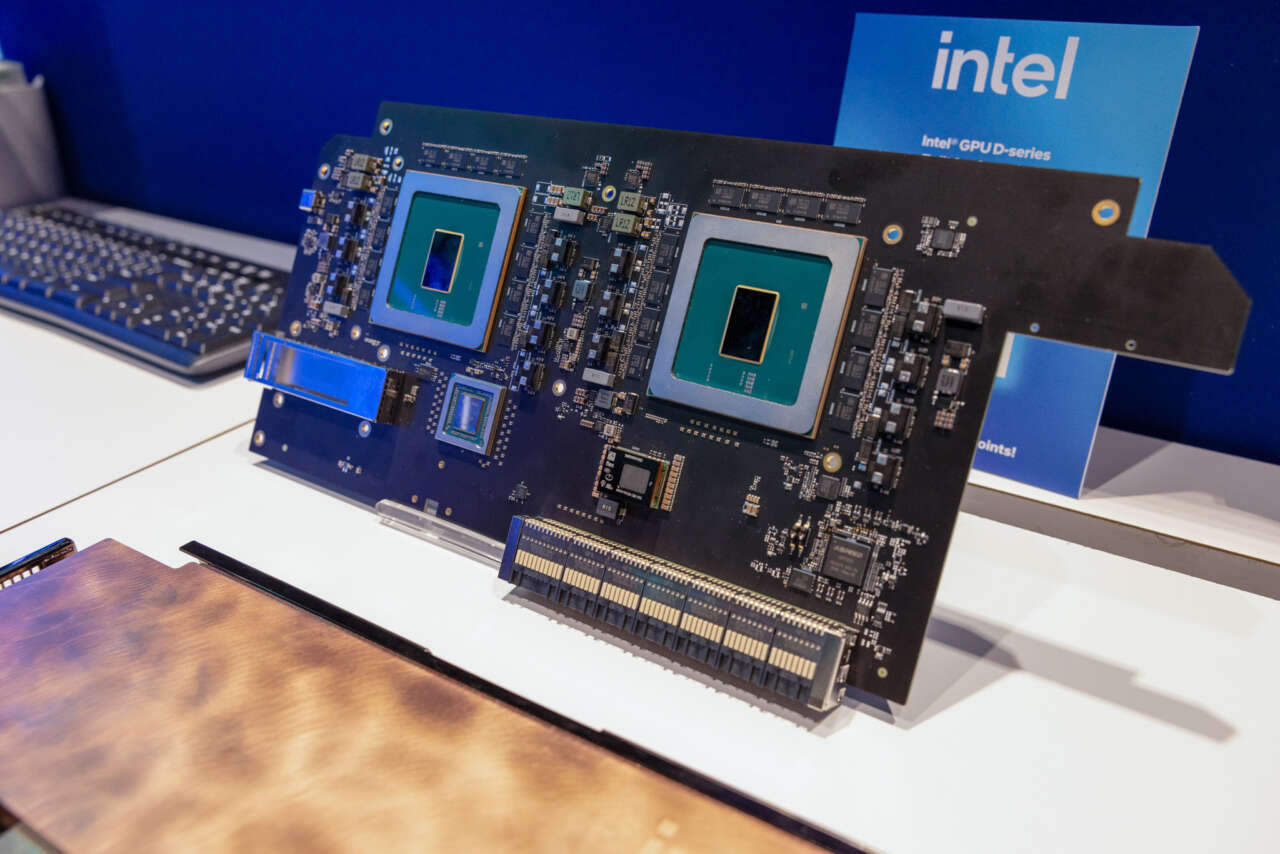
Intel’s GPU D-series takes aim at that problem. The company shared new details on October 12 at the Open Compute Project Global Summit, and its D270 product page describes a server accelerator built around large amounts of memory, ordinary air cooling and the job of running AI models.
This is the hardware previously called Crescent Island, which Intel first announced in October 2025. This week’s update brings the D-series name, more specifications and confirmation that customer sampling is underway. It’s a data-center product, so its connection to your daily life is through the AI services you use.
Inference is the part where AI does the job
Training is how an AI model learns patterns from data. Inference is what happens when that trained model processes a new request: summarize a report, help write code or generate an image.
Think of training as learning a recipe and inference as cooking from it. A service that handles thousands of requests has to keep doing the cooking, even after the learning stage is finished.
Intel is designing the D270 for that repeat work. Its listed uses include enterprise assistants, document processing, coding assistants and image-generation models. The company also emphasizes AI agents, which can make several model calls and use software tools while working through a task.
A single request can therefore become several rounds of reading, processing and responding. The hardware needs to handle the input as well as produce the answer.
The big memory number needs one important distinction
Intel’s own PCIe card has 160GB of LPDDR5X memory. The design also lets manufacturing partners build cards with as much as 480GB, according to a footnote in Intel’s announcement.
Memory gives an AI system space for the model itself and information it keeps while processing a conversation or document. Longer inputs and more simultaneous users increase that demand. More capacity can help keep the work on fewer accelerators, though the actual requirement depends on the model and how it’s configured.
Intel says the family can support models with up to 300 billion parameters on one card, or more than a trillion across eight GPUs. Parameters are the numerical values a model learns during training. Those figures describe Intel’s supported model-size claims; they don’t tell you how quickly an answer will arrive. The announcement doesn’t identify the exact model, numerical format or card-memory configuration behind those limits.
Intel also lists 1.5 terabytes per second of memory bandwidth, which describes how quickly data can move to and from memory. That tells you about data movement, rather than how many chatbot answers the system can deliver each second.
For someone running an AI service, the useful result is how many requests the system can finish at an acceptable response time, with the chosen model and software.
A server card that uses air cooling
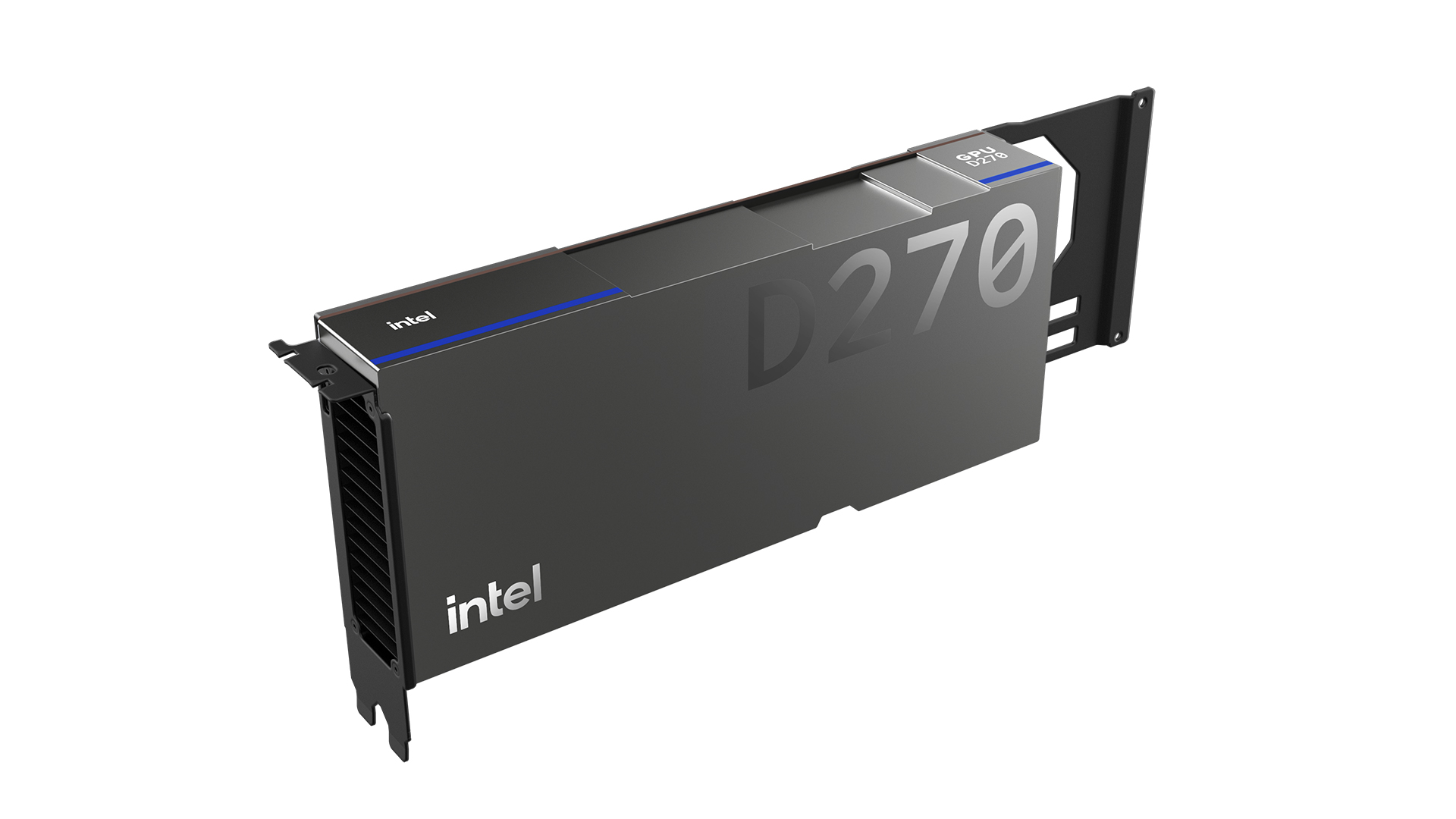
The D270 uses Intel’s Xe3P architecture and a standard PCIe 5.0 connection. Intel specifies a 350-watt power envelope and passive air cooling, with the server supplying the airflow.
That makes the deployment pitch straightforward: put inference hardware into suitable existing servers without adding a specialized liquid-cooling system. The 350-watt figure applies to the accelerator, not the electricity use of the whole server.
Software is part of the same pitch. Intel names PyTorch and vLLM, tools developers use to build and serve AI applications, and says the D-series shares a software foundation with its other Xe GPUs. Familiar tools can reduce the work involved in bringing an application across, while actual performance still depends on the finished configuration.
What this changes for AI users
For readers using AI assistants, the D270 explains a less visible side of the AI hardware race. Long documents, extended conversations and many people using a service at once create demands beyond raw computing speed. Intel is putting memory capacity and server compatibility at the center of its answer.
Customer sampling means selected customers are evaluating the hardware. Intel’s October announcement doesn’t provide general availability or pricing. The practical promise is more room for the models and conversations those services need to keep working on.