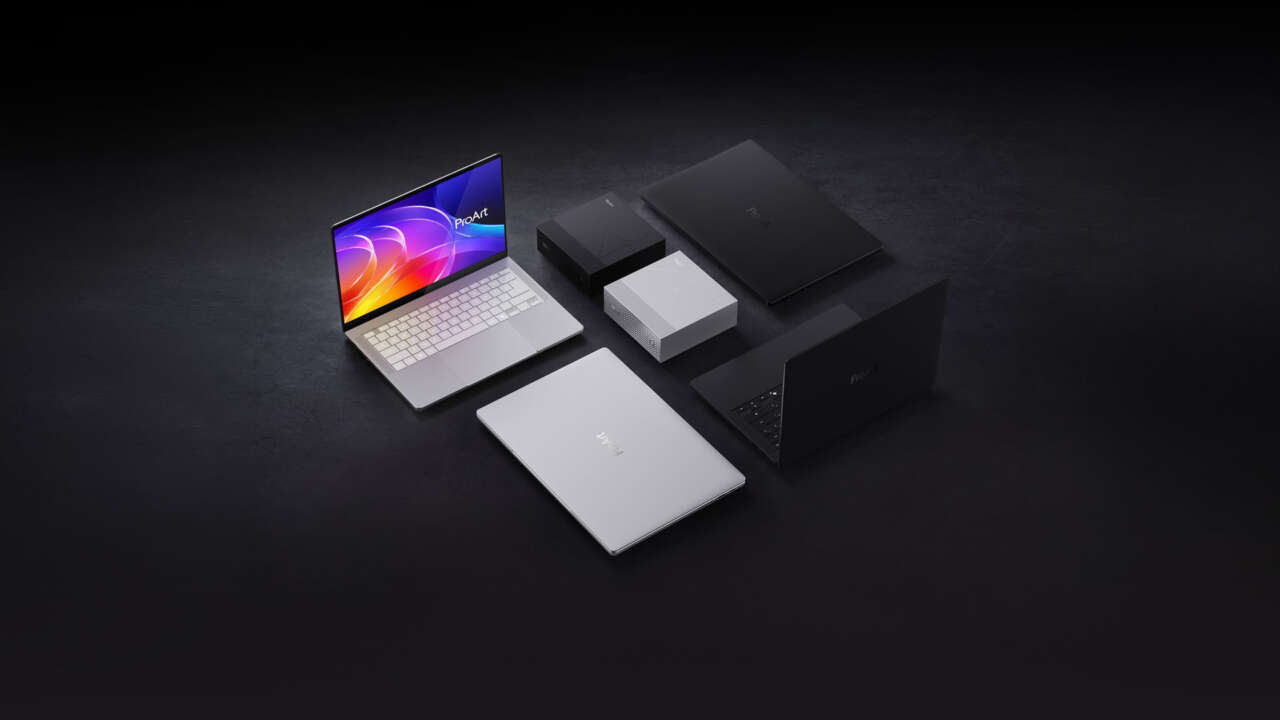
ASUS’s new ProArt laptops put a price on the move to local AI: $2,599.99 for the 14-inch P14 and $2,799.99 for the 16-inch P16. Preorders opened October 7, with Best Buy listing an October 16 release for the entry configurations. Both use NVIDIA’s RTX Spark platform, and both offer configurations reaching 128GB of unified memory.
That last number is the reason to pay attention. Instead of splitting system RAM and graphics memory into separate pools, RTX Spark lets the CPU and GPU share memory. For someone building an AI workflow around large models, image generation, and creative apps, that changes how much work can fit on a laptop.
Price: $2,599.99 for ProArt P14, 24GB / 512GB / 3K OLED
Where to buy: Best Buy
Price: $2,799.99 for ProArt P16, 24GB / 512GB / 4K OLED
Where to buy: Best Buy
The starting price buys 24GB, not 128GB
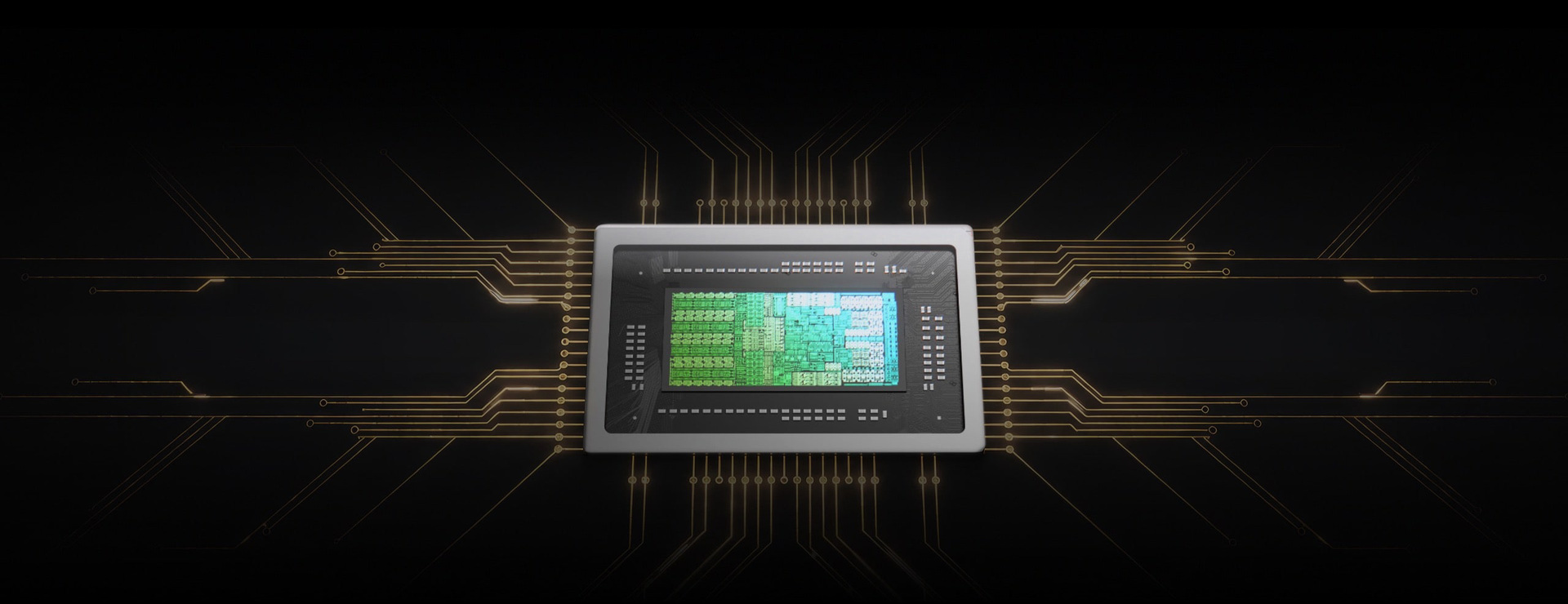
The entry P14 pairs 24GB of unified memory with a 512GB SSD and a 14-inch 3K OLED touchscreen. The $200 step up to the base P16 buys a larger 16-inch 4K OLED touchscreen, with the same 24GB/512GB capacity. Both Best Buy listings specify an 18-core Grace CPU and a Blackwell RTX GPU with 5,120 cores.
ASUS’s headline specifications reach higher: up to a 20-core CPU, a 6,144-core GPU, 128GB of memory, and one petaflop of FP4 AI performance. Those figures describe the top end of the range. The $2,599.99 P14 isn’t the configuration behind all of them.
Memory is the first choice to make before screen size. ASUS positions the 24GB and 32GB models for lighter generative work and workflows that combine local and cloud tools. The larger memory configurations leave more room for models and creative applications running together. Its examples involving selected 70-billion- and 120-billion-parameter models call for suitable quantization and a 128GB configuration; model size alone doesn’t tell you how quickly a job will finish.
ASUS is connecting the apps around the chip

The launch also fills in the software story from ASUS’s earlier ProArt showcase. MuseTree handles local generative creation with FLUX and Wan models, while StoryCube helps categorize and organize media. ASUS is bringing those applications together with Hermes Agent from Nous Research and ComfyUI’s visual workflows.
The useful idea is a connected sequence: give an agent a creative task, have it work with the appropriate tools, and keep the models and assets on the PC when the workflow supports local execution. ASUS says a dedicated Hermes skill connects the agent to MuseTree. ComfyUI adds reusable workflows and resource packs, while ASUS’s own Zenni Claw assistant focuses on integration across its applications and devices.
For a creator working through repeated image variations, the payoff is reusing a workflow and choosing the models that fit the job. Running the model locally avoids the cloud provider’s per-request token bill for that processing; optional cloud services and paid software still have their own terms.
P14 portability or P16 workspace


- ProArt P14: 3.26 pounds, 90Wh battery, and a 14-inch workspace.
- ProArt P16: 3.90 pounds, 99.9Wh battery, and a 16-inch workspace.
Both measure up to 0.63 inches thick, use haptic touchpads, and offer Wi-Fi 7.
For photographers and video editors, the practical differences extend to the card slot. The P16 has an SD Express 7.0 reader; the P14 uses SD 4.0. Both include USB-A, three USB4 Type-C ports, HDMI 2.1, and a headphone jack, so the move to a thin chassis hasn’t eliminated the everyday connections.
Display specifications also depend on the exact configuration. The base P14’s retailer listing specifies a 3K screen with up to 1,100-nit peak brightness, while the base P16 lists 4K and up to 1,600 nits. ASUS’s specifications include 120Hz OLED panels across the range. Check the selected model’s screen and memory together rather than treating every P14 or P16 as interchangeable.
What’s available to order
Price: $2,599.99 for ProArt P14, 24GB / 512GB / 3K OLED
Where to buy: Best Buy
Price: $2,799.99 for ProArt P16, 24GB / 512GB / 4K OLED
Where to buy: Best Buy
The two entry configurations are listed at Best Buy at $2,599.99 and $2,799.99, with October 16 shown as their release date. ASUS’s own store also lists premium configurations, including a 48GB/1TB P14 at $3,699.99 and a 64GB/1TB P16 at $4,399.99; both showed out of stock when checked on October 7.
ASUS also has a desktop option coming later this year. The compact ProArt GR1X puts RTX Spark into a 150 × 150 × 51mm enclosure, with 64GB and 128GB configurations planned through selected retailers. It gives the same local-AI idea a permanent home on a desk instead of putting it in a travel bag.
For the laptops, the decision starts with the work you want to keep local. A smaller P14 makes sense when carrying it matters most; the P16 gives you more screen space and the faster card-reader standard. Spend time choosing the memory configuration first, because the entry price and the 128GB headline describe very different machines.